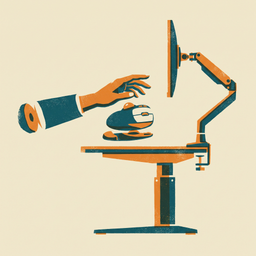
Build an ergonomic home office around the way you work and the budget you have. Start with desk and screen height, then work through monitor arms, ergonomic mice, split keyboards and walking pads, learning what to measure before buying and what to adjust on the gear you already own. Why does a standing desk wobble? Will an arm hold your monitor through the desk's full travel? What does a walking pad's horsepower claim tell you about daily use? Episodes explain the mechanics behind these decisions and the specifications worth checking against a manual or review. Walking pads get particular attention, including belt size, noise, maintenance and the practicalities of walking while working. The show draws on OCDevel's product research and comparison tables, revisiting equipment as models, prices and recommendations change. For desk workers building a first setup or improving an existing one, the lessons cover purchase priorities, assembly, upkeep and repair, so the cost of ownership stays part of the buying decision. This show's audio is narrated by AI-generated synthetic voices.
A home trial week for a walking pad under a standing desk, measured against real work before the return deadline. If the pad stays, the chapter covers tracing faults, which parts fail, warranty claims and running costs. It closes with October changes in pad availability and safety notices. This episode is narrated by AI-generated synthetic voices.
22 Oct 2026
7. The Walking Pad Decision at Full Desk Height
A free test at the FlexiSpot E7's full 49.4-inch height decides whether the station can take a walking pad, and declining is a valid outcome. If the desk passes, a deck of about 7 inches or lower narrows the choice, followed by setup, trial walking sessions and belt tracking and tension care. Return windows, warranty registration and a Sperax safety warning round it out. This episode is narrated by AI-generated synthetic voices.
15 Oct 2026
6. Whether a Walking Pad Belongs Under Your Desk
Whether a walking pad can fit under an already working sit-stand station, starting with free height, floor and call checks. It covers how to read motor, duty, noise and warranty claims on a spec sheet, and recent recalls including the Sperax warning. This episode is narrated by AI-generated synthetic voices.
8 Oct 2026
5. Fitting the Keyboard to Long Typing
Watching your own typing at both desk heights shows what the keyboard needs. Free changes confirm the typing height, and a remapped, layered layout mostly solves shortcut reach. Hand width is the one open problem that might justify a split keyboard. This episode is narrated by AI-generated synthetic voices.
1 Oct 2026
4. Fitting the Pointer to the Hand and the Work
Free changes to the pointing setup come before buying anything: mouse placement beside the keys, acceleration off and one remapped button. Then the chapter compares mice, vertical mice and trackballs, including bearings, connections and polling rates. This episode is narrated by AI-generated synthetic voices.
24 Sept 2026
3. Putting the Screen Where the Eyes Actually Are
A worked check of whether a monitor on its own stand still meets the eyes at both sitting and standing desk heights, and what to measure and weigh if it doesn't. It then covers choosing between risers, arms and poles, the minimum-load trap, clamp and grommet mounting, and cable slack for a moving desk. This episode is narrated by AI-generated synthetic voices.
17 Sept 2026
2. Making a Desk Reach the Heights You Already Measured
Turning a seated and standing elbow height into a sit-stand desk requirement, then buying and building against it: frame height versus surface height, why the minimum is the specification that fails, what a lift rating does not tell you about wobble, and the assembly, leveling, reset and preset sequence that follows. This episode is narrated by AI-generated synthetic voices.
10 Sept 2026
1. Measure First: Reading Your Own Body Before You Buy Anything
Measure seated and standing elbow/eye heights from one floor reference, then test a free adjustment on an illustrative sample workstation. Raising the seat changes both elbow and eye heights; raising the laptop worsens keyboard reach. The sample’s borrowed monitor stand can fit the raised-seat position, while desk and input choices remain open. This episode is narrated by AI-generated synthetic voices.
Contact Ergonomic Battlestation
Guest appearances
Does not typically book guests
Based on episode analysis; this does not confirm that the show is currently accepting guests.
Host of Ergonomic Battlestation?
Claim your podcast to manage its listing and keep your show details accurate.
Pod Engine is an independent podcast discovery and analytics service and is not affiliated with or endorsed by this podcast. Artwork and show content belong to their owners. Full legal notice.
Explore this show Podcast research with Pod Engine