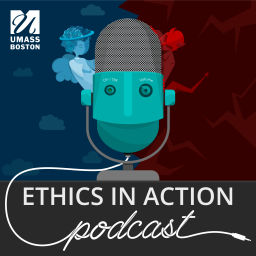
Part of UMass Boston’s Philosophy Department, the Applied Ethics Center promotes research, teaching, and awareness of ethics in public life. In this podcast, Applied Ethics Center Director Nir Eisikovits hosts conversations on the intersection of ethics, politics, and technology.

Ethics in Action Podcast
Claim This Podcastby Nir Eisikovits
Podcast Authority
Beta
Podcast Overview
Part of UMass Boston’s Philosophy Department, the Applied Ethics Center promotes research, teaching, and awareness of ethics in public life. In this podcast, Applied Ethics Center Director Nir Eisikovits hosts conversations on the intersection of ethics, politics, and technology.
Language
🇺🇲
Publishing Since
1/24/2018
Unlock The Full Podcast Authority Score Report
See how your podcast performs across key metrics
Podcast Authority
Beta
Recommendations available
Unlock the full report to see detailed tips
Unlock comprehensive insights including:
- • YouTube presence analysis
- • Social media reach metrics
- • RSS compliance scoring
- • Podcast 2.0 features
- • Technical standards
Detailed Analytics
- Complete breakdown of all 19 authority metrics
- Personalized recommendations for each metric
- Industry benchmarks and comparisons
- Technical RSS feed analysis and compliance scoring
Growth Strategies
- Step-by-step action plans for improvement
- Quick wins to boost your score immediately
- Pro tips from successful podcasters
See how your show performs across every key metric
High authority scores make your podcast more attractive to industry leaders and influencers who want to appear on credible shows.
Sponsors look for podcasts with proven authority and engagement. Your score demonstrates your podcast's value to potential partners.
Understanding your strengths and weaknesses helps you make data-driven decisions to expand your listener base effectively.
Reach the team behind Ethics in Action Podcast
Verified contact details for this show aren't on file yet — sign up to get notified when they land.
Recent Episodes

February 18, 2025
Neural Decoding: A Conversation with Stephen Rainey
In this ninth episode of our series on brain-computer interfaces, we are joined by Stephen Rainey. Dr. Rainey is Assistant Professor in Philosophy and Technology at Delft University of Technology, specializing in neuroethics and neurophilosophy. He is the author of the 2023 book Philosophical Perspectives on Brain Data, which raises and addresses questions about how neurotechnologies can and ought to be used. His current research focuses on exploring the intersections between neurotechnologies and artificial intelligence, especially Large Language Models and the prospect of mind-reading technology. Dr. Rainey applies his research findings in the form of policy advice, working with committees of the European Commission and the WHO. In this episode, we discuss several aspects of Dr. Rainey’s work, including what brain data is and how it differs from other types of personal data, the distinction between mind reading and neural decoding, neuromarketing and neurocapitalism, science fiction prototyping, the possibility and risks associated with the use of neurotechnology in the criminal justice system, and the debate surrounding neurorights.

February 2, 2025
Cyborg Ethics: A Conversation with Stefan Lorenz Sorgner
In this eighth episode of our series on brain-computer interfaces, we are joined by Stefan Lorenz Sorgner. Dr. Sorgner is a philosophy professor at John Cabot University in Rome, Director and Co-Founder of the Beyond Humanism Network, Fellow at the Institute for Ethics and Emerging Technologies (IEET), and Editor-in-Chief and Founder of the Journal of Posthuman Studies. Dr. Sorgner is well known for his work on transhumanism, Nietzsche, philosophy of music, and ethics of emerging technologies, and is the author of many books, including most recently We Have Always Been Cyborgs: Digital Data, Gene Technologies, and an Ethics of Transhumanism and Philosophy of Posthuman Art. In this episode, we discuss several aspects of Dr. Sorgner’s wide-ranging work, including Nietzschean philosophy and its connection to transhumanism, Sorgner’s concept of metahumanism and how it differs from transhumanism and posthumanism, his cyborg thesis, his critique of traditional utopianism, the differing data collection models in the U.S., China, and the EU, his critique of the EU’s GDPR privacy laws, and his proposal for government-managed anonymized medical data collection to enhance technological competitiveness and support universal healthcare, among other topics.

December 18, 2024
Brain Pioneers: A Conversation with Sara Goering
Dr. Sara Goering, Professor of Philosophy at the University of Washington, explores the intersection of philosophy of disability and neuroethics, revealing the importance of user-centered design in brain-computer interfaces to prioritize needs over technological advancements.
39 total episodes available
Recent guests on Ethics in Action Podcast
Guests from recent episodes — sign up to see every guest that has ever appeared on this show.
Sara Goering
Guest
Deep-dive analytics for Ethics in Action Podcast
Frequently asked questions
Have a different question and can't find the answer you're looking for? Reach out to our support team by sending us an email and we'll get back to you as soon as we can.
- What is Ethics in Action Podcast?
- How often does this podcast release new episodes?
This podcast updates bi-weekly.
- Where can I listen to this podcast?
This podcast is available on 10 platforms including Apple Podcasts, Spotify, and more. You can also use the RSS feed directly.
- Does this podcast accept guests?
Yes, this podcast regularly features guests.
Legal Disclaimer
Pod Engine is not affiliated with, endorsed by, or officially connected with any of the podcasts displayed on this platform. We operate independently as a podcast discovery and analytics service.
All podcast artwork, thumbnails, and content displayed on this page are the property of their respective owners and are protected by applicable copyright laws. This includes, but is not limited to, podcast cover art, episode artwork, show descriptions, episode titles, transcripts, audio snippets, and any other content originating from the podcast creators or their licensors.
We display this content under fair use principles and/or implied license for the purpose of podcast discovery, information, and commentary. We make no claim of ownership over any podcast content, artwork, or related materials shown on this platform. All trademarks, service marks, and trade names are the property of their respective owners.
While we strive to ensure all content usage is properly authorized, if you are a rights holder and believe your content is being used inappropriately or without proper authorization, please contact us immediately at hey@podengine.ai for prompt review and appropriate action, which may include content removal or proper attribution.
By accessing and using this platform, you acknowledge and agree to respect all applicable copyright laws and intellectual property rights of content owners. Any unauthorized reproduction, distribution, or commercial use of the content displayed on this platform is strictly prohibited.