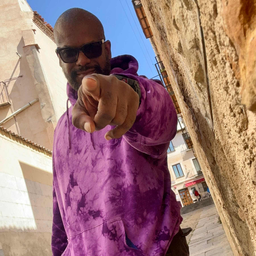
Exploring Cultures Through Art. Esp 8
Will Knight
5.0from 2 ratings
- 63
- Episodes
- 2
- Ratings
- Daily
- Cadence
- 2025
- First episode
- 132K
- YouTube views
About Exploring Cultures Through Art. Esp 8
Our approach is simple, "HAVE VISION" We produce great things for extraordinary people. sirwillknight.substack.com (https://sirwillknight.substack.com?utm_medium=podcast)
- Publisher
- Will Knight
- Category
- health & fitness · society & culture
- Language
- en
- Explicit
- No
- First episode
- 30 May 2025
- Latest episode
- 13 Oct 2026
Latest episodes
63 episodes in the feed.
13 Oct 2026
Domestic violence: Daniel R. Hernandez Attorney at Law Season 2 Episode 41
Family dynamics can be profoundly affected by domestic violence, which creates an environment of fear, control, and emotional turmoil. Victims often endure physical, emotional, and psychological abuse, leading to long-lasting trauma that can impact not only their well-being but also the overall health of the family unit. Children who witness domestic violence may experience a range of negative effects, including anxiety, depression, and difficulties in forming healthy relationships later in life. Breaking the cycle of domestic violence requires comprehensive support systems, including access to counseling, legal assistance, and safe housing, as well as community awareness and education to foster a culture of respect and non-violence. Addressing this issue is crucial for the safety and stability of families and for promoting healthier, more resilient communities. This is a public episode. If you would like to discuss this with other subscribers or get access to bonus episodes, visit sirwillknight.substack.com (https://sirwillknight.substack.com?utm_medium=podcast&utm_campaign=CTA_1)
4 Oct 2026
From the Streets to City Hall: Race, Lineage and My Journey Through Public Service
By Will Knight A recent conversation about African lineage, family, race and identity caused me to reflect on something I don’t always spend much time talking about: my own journey. In many African cultures, lineage carries enormous importance. Family is not simply about the people living in your household today. It represents generations—those who came before you, those living alongside you and those who will come after you. For many Africans, the idea of someone being unable to trace their family roots can be difficult to comprehend. Ask someone, “Do you have family?” and the response might almost be, “Who doesn’t have family?” For many Black Americans, however, lineage can be much more complicated. Our history in America means that tracing our ancestry can eventually lead to incomplete records, changed names, forced separations and generations whose stories were never properly documented. That conversation about lineage eventually led to another subject: race. And that brought me back to my own career. Starting on the Streets My career in Chicago city government didn’t begin behind a desk or inside City Hall. It began as a paramedic. I was working directly with people during some of the most difficult moments of their lives. When someone calls for an ambulance, you’re often entering their world during a medical emergency, an accident, a tragedy or a moment of complete uncertainty. You learn quickly that emergencies don’t care about your race, income, neighborhood, title or political connections. You have a job to do. I eventually worked my way through the ranks and became a paramedic-in-charge. Later, I was appointed Commander. That progression changed not only my responsibilities but also my perspective. I had gone from responding to emergencies on Chicago’s streets to participating in conversations about how a major American city prepares for and responds to them. Moving Into Leadership As my career progressed, I began working closely with senior leadership within the Chicago Fire Department and city government. My responsibilities brought me into contact with the Fire Commissioner, the Mayor’s Office and the Mayor’s Press Office. I worked in public relations and communications for the Chicago Fire Department, where part of my responsibility was helping communicate during incidents that could quickly become major news stories. Emergency communications requires a particular discipline. Information moves quickly. Reporters want answers. Government officials need accurate information. Residents want to know whether they’re safe. Meanwhile, firefighters, paramedics, police officers and other emergency personnel may still be actively managing the incident. You have to understand what is happening, determine what information is confirmed and communicate without creating additional confusion. That experience taught me the importance of remaining calm when everything around you isn’t. Seeing Government From Different Sides My career eventually extended beyond the Fire Department. I had opportunities to work in different areas of Chicago government, including the Law Department, Human Resources and the Office of Emergency Management and Communications. Each position gave me another perspective on how government actually works. There is the government the public sees—the press conferences, announcements, elected officials and television interviews. Then there is the enormous operation behind it. There are employees planning for emergencies that haven’t happened yet. There are people coordinating agencies, reviewing procedures, managing communications and preparing for events involving thousands or even millions of people. During my career, I interacted with mayors, senior city officials and, at times, state officials in connection with incidents, emergencies and advance planning. I had started my career treating patients. Eventually, I found myself in rooms where decisions were being discussed. That transition matters to how I understand race today. Race and Success Can Exist in the Same Story During a conversation about my experiences with racism, someone pointed out something interesting to me. I could describe incidents involving race without appearing consumed by them. That doesn’t mean those experiences weren’t significant. And it certainly doesn’t mean racism didn’t exist simply because I was able to build a successful career. Those two things can exist at the same time. A person can encounter discrimination and still succeed. A person can break through barriers and still recognize that those barriers shouldn’t have existed. A Black person reaching a leadership position doesn’t automatically prove that race stopped mattering once they entered the room. Sometimes getting into the room simply allows you to see things from another perspective. From Being in the Field to Having a Seat in the Room Perhaps the simplest way to explain my career is this: I know what it feels like to be the person in the field, and I know what it feels like to have a seat in the room. I’ve been the paramedic responding to an emergency. I’ve been the supervisor. I’ve worked in communications. I’ve participated in emergency planning. I’ve worked around commissioners, mayors, government executives and other decision-makers. That doesn’t mean I always had power. Having access to a room and controlling what happens inside that room are two very different things. But access gives you perspective. You begin understanding how decisions are made, who makes them, whose voices are heard and sometimes whose voices aren’t. Why Lineage Matters to This Story That brings me back to where the conversation began: lineage. Our careers become part of our lineage too. The people who came before us created opportunities—sometimes without ever receiving the opportunity themselves. The next generation inherits not only what we accumulated, but also the stories of what we experienced and what we overcame. That’s why preserving these stories matters. My career wasn’t simply a progression from paramedic to Commander or from emergency response into administration and communications. It was also the experience of a Black man navigating institutions, building expertise, developing relationships and eventually entering spaces that might once have seemed far removed from where the journey began. I experienced government from the street level and from inside administrative offices. I saw progress. I saw problems. I experienced opportunities. And I experienced moments that reminded me that professional success doesn’t erase race from the American experience. Telling the Entire Story As I’ve gotten older, I’ve become increasingly interested in documenting these experiences rather than simply carrying them around as memories. That’s one reason conversations like this matter. They aren’t necessarily about remaining angry about what happened decades ago. They’re about understanding it. They’re about recognizing where we came from, acknowledging what changed and being willing to discuss what still needs to change. And perhaps that is another form of lineage. We tell our stories so the people who come after us don’t have to wonder what happened before they arrived. Because history isn’t only found in books, government archives or museums. Sometimes history is simply one person saying: “This is where I started. This is what I experienced. This is how far I traveled. And this is what I learned along the way.” This is a public episode. If you would like to discuss this with other subscribers or get access to bonus episodes, visit sirwillknight.substack.com (https://sirwillknight.substack.com?utm_medium=podcast&utm_campaign=CTA_1)
28 Sept 2026
Dr. J. Jones: Bridging Leadership and Community Engagement in Chicago - Season 2 episode 39.
Dr. J. Jones, a candidate for Alderman in Chicago and a prominent figure within the Southside Collective, is committed to driving meaningful change in his community. With a distinguished 25-year career in the Navy, Dr. Jones brings extensive experience in leadership, budget management, and civic engagement to his campaign. He believes that to create real change, individuals must take action rather than merely expressing dissatisfaction with societal issues. Dr. Jones’s journey to leadership began as a surface warfare officer in the Navy, where he developed essential skills in managing large teams and overseeing complex operations aboard massive vessels, including aircraft carriers. His role as a legal officer on his first ship ignited a passion for law, leading him to pursue the Navy’s Leadership Law Education Program. This opportunity allowed him to deepen his understanding of legal principles and their application in leadership roles. In his campaign, Dr. Jones emphasizes the critical importance of diversity, equity, and inclusion (DEI) initiatives. He observes that many people misunderstand the origins and purposes of these initiatives. Originally designed to address the disparities faced by Black individuals and women, affirmative action has often been misinterpreted. Dr. Jones points out that while the intent was to create opportunities for marginalized groups, the benefits have sometimes been perceived as disproportionately favoring certain demographics, particularly white women. He argues that a clearer understanding of DEI is essential for its success. “Many people don’t understand why these initiatives started and what their true purpose is,” he explains. “We need to ensure that the representation in our workforce reflects the diversity of our community.” Dr. Jones is particularly optimistic about the younger generation, especially Gen Z. He recognizes their passion for social justice and their readiness to lead. “I’ve seen so many efforts by younger people who are eager to make a difference,” he says. “They have the energy and ideas to drive progress, and it’s our responsibility to support and empower them.” He encourages young people to engage in civic activities and take an active role in shaping their communities. “If we want to see change, we must be the change,” he asserts. As he campaigns for Alderman, Dr. Jones envisions a Chicago that embraces diversity and fosters inclusivity. He aims to address the pressing issues facing the city, particularly those related to social equity and community engagement. His military background informs his approach to leadership, emphasizing collaboration, accountability, and a commitment to serving the public. Dr. Jones invites the community to join him in this journey. “Let’s work together to create a city that reflects our values and aspirations,” he urges. “We all have a role to play in building a better future.” Dr. J. Jones’s candidacy represents a blend of military discipline, legal expertise, and a heartfelt commitment to community service. As he seeks to become an Alderman in Chicago, he stands ready to lead with integrity and a vision for a more inclusive city. His message is clear: to effect change, we must all engage, participate, and strive for a community that truly represents everyone. For more insights and discussions, tune in to the podcast “All About Nothing,” where Dr. Jones shares his thoughts on leadership, diversity, and the importance of civic engagement. This is a public episode. If you would like to discuss this with other subscribers or get access to bonus episodes, visit sirwillknight.substack.com (https://sirwillknight.substack.com?utm_medium=podcast&utm_campaign=CTA_1)
Reach and audience
Public platform figures. Ratings count people who left a rating, not total listeners.
- YouTube views
- 132,201
- Score snapshot 15 Sept 2025
- Apple Podcasts (US)
- 5.0 / 5
- 1 ratings
- Spotify
- 5.0 / 5
- 1 ratings
Podcast Authority Score: 23 / 100
A composite of feed quality, social presence, YouTube performance and engagement. Read the methodology.
- Quality
- 12
- Social presence
- 0
- YouTube
- 86
- Engagement
- 0
Contact Exploring Cultures Through Art. Esp 8
- Guest appearances
- Books guests
Based on episode analysis; this does not confirm that the show is currently accepting guests.
Host of Exploring Cultures Through Art. Esp 8?
Claim your podcast to manage its listing and keep your show details accurate.
Pod Engine is an independent podcast discovery and analytics service and is not affiliated with or endorsed by this podcast. Artwork and show content belong to their owners. Full legal notice.
Explore this show
Podcast research with Pod Engine