
Sono Francesco Albanese, dottore in psicologia e specialista in psicologia clinica, e questo è FIGLI DIGITALI, il primo podcast che ti spiega perché non riconosci più tuo figlio. Qui analizziamo gli effetti - spesso devastanti - di Instagram, TikTok, gli altri social e i videogame, sui cervelli in fase di sviluppo. Qui non trovi opinioni, ma veri studi sperimentali. Non trovi allarmismo, ma fatti. Se hai figli adolescenti e vuoi capire il perché di certi loro comportamenti che hanno a che fare col telefonino o i videogiochi, iscriviti a FIGLI DIGITALI. Ogni episodio ti darà risposte concrete.
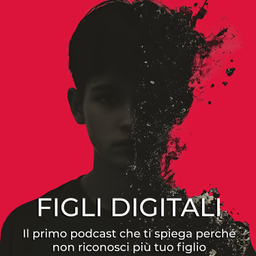
FIGLI DIGITALI
Claim This Podcastby Francesco Albanese
15 episodes
Updated Daily
Accepts GuestsHas SponsorsLocation 🇮🇹
Podcast Overview
Sono Francesco Albanese, dottore in psicologia e specialista in psicologia clinica, e questo è FIGLI DIGITALI, il primo podcast che ti spiega perché non riconosci più tuo figlio. Qui analizziamo gli effetti - spesso devastanti - di Instagram, TikTok, gli altri social e i videogame, sui cervelli in fase di sviluppo. Qui non trovi opinioni, ma veri studi sperimentali. Non trovi allarmismo, ma fatti. Se hai figli adolescenti e vuoi capire il perché di certi loro comportamenti che hanno a che fare col telefonino o i videogiochi, iscriviti a FIGLI DIGITALI. Ogni episodio ti darà risposte concrete.
Language
🇮🇹
Publishing Since
8/14/2025
1 verified contact email on file for FIGLI DIGITALI
Pitch yourself as a guest, propose sponsorships, or reach out directly to the host.
Recent Episodes
November 13, 2025
#15. PERCHÉ TUA FIGLIA NON HA FRETTA DI CRESCERE?
<p>Tua figlia ha quattordici anni, ma sembra più piccola. Nel mondo reale ha paura di tutto… ma online vive in un universo dove non sbaglia mai, dove ogni desiderio è immediato e nessuno le chiede di crescere davvero.</p><p>Il problema non è la pigrizia: è che il digitale le offre un’infanzia infinita. In questa puntata ti spiego perché.</p><p>Ecco le ricerche citate nell'episodio:</p><ul><li>Marciano, L., Camerini, A.-L., & Morese, R. (2021). The developing brain in the digital era: A scoping review of structural and functional correlates of screen time in adolescence. Frontiers in Psychology.</li><li>Victorin, Å. (2020). Excessive Internet use steals time from real-life brain development. Acta Paediatrica.</li></ul><p><br /></p><p>Scrivimi su: https://francescoalbanese.com</p>
November 6, 2025
PERCHÉ TUO FIGLIO NON SA PIÙ INVENTARE GIOCHI?
<p>Tuo figlio ha una stanza piena di giochi, ma si annoia dopo cinque minuti. Non costruisce, non inventa, non trasforma più nulla. Il suo cervello, abituato a stimoli già pronti e preformati, non sa più immaginare senza istruzioni.</p><p>In questo episodio di FIGLI DIGITALI scopri cosa succede quando l’infanzia perde il gioco simbolico — quello in cui un bastone diventa una spada e una scatola un’astronave.</p><p>Ecco le ricerche citate nell’episodio:</p><ul><li>Chrysikou, E., Motyka, K., Nigro, C., Yang, S., & Thompson-Schill, S. (2016). Functional Fixedness in Creative Thinking Tasks Depends on Stimulus Modality. Psychology of Aesthetics, Creativity, and the Arts, 10(4), 425–435. https://doi.org/10.1037/aca0000050</li><li>Cohen, D., Nakai, T., & Nishimoto, S. (2021). Brain networks are decoupled from external stimuli during internal cognition. NeuroImage, 256. https://doi.org/10.1016/j.neuroimage.2022.119230</li><li>Shofty, B., Gonen, T., Bergmann, E., Mayseless, N., Korn, A., Shamay-Tsoory, S., Grossman, R., Jalon, I., Kahn, I., & Ram, Z. (2022). The default network is causally linked to creative thinking. Molecular Psychiatry, 27, 1848–1854. <a href="https://doi.org/10.1038/s41380-021-01403-8">https://doi.org/10.1038/s41380-021-01403-8</a></li></ul><p>Scrivimi su <a href="https://francescoalbanese.com/">francescoalbanese.com</a></p>
October 30, 2025
PERCHÉ TUA FIGLIA CONTROLLA IL TELEFONO OGNI 30 SECONDI?
<p>Tua figlia guarda il telefono in continuazione. Lo sblocca, lo richiude, poi lo sblocca di nuovo — anche se non è arrivata nessuna notifica. La sua non è curiosità. È <strong>FOMO</strong>, la fear of missing out: la paura di essere tagliata fuori.</p><p>Il tredicesimo episodio di <strong>FIGLI DIGITALI</strong> spiega come la FOMO alimenti un ciclo di ansia e controllo continuo, spingendo gli adolescenti a rimanere costantemente connessi per sentirsi accettati e “parte del gruppo”.</p><p>Un bisogno profondo di appartenenza che, con il tempo, diventa una forma di dipendenza sociale.</p><p>Ecco i riferimenti dalla ricerca, citati nell’episodio:</p><ul><li>Yang, C., Ariati, J., Pham, T., & Smith, C. (2023). Motives for digital social multitasking (DSMT) and problematic phone use among adolescents. Journal of Adolescence.https://doi.org/10.1002/jad.12155</li><li>Adorjan, M., & Ricciardelli, R. (2021). Smartphone and social media addiction: Exploring the perceptions and experiences of Canadian teenagers. Canadian Review of Sociology.https://doi.org/10.1111/cars.12319</li><li>Pera, A. (2020). The psychology of addictive smartphone behavior in young adults: Problematic use, social anxiety, and depressive stress. Frontiers in Psychiatry, 11.https://doi.org/10.3389/fpsyt.2020.573473</li></ul><p> Scrivimi su <a href="https://francescoalbanese.com/">https://francescoalbanese.it</a></p>
15 total episodes available
Deep-dive analytics for FIGLI DIGITALI
Frequently asked questions
Have a different question and can't find the answer you're looking for? Reach out to our support team by sending us an email and we'll get back to you as soon as we can.
- What is FIGLI DIGITALI?
- How often does this podcast release new episodes?
This podcast updates daily.
- Where can I listen to this podcast?
This podcast is available on 4 platforms including Apple Podcasts, Spotify, and more. You can also use the RSS feed directly.
- Does this podcast accept guests?
No, this podcast does not typically feature guests.
Legal Disclaimer
Pod Engine is not affiliated with, endorsed by, or officially connected with any of the podcasts displayed on this platform. We operate independently as a podcast discovery and analytics service.
All podcast artwork, thumbnails, and content displayed on this page are the property of their respective owners and are protected by applicable copyright laws. This includes, but is not limited to, podcast cover art, episode artwork, show descriptions, episode titles, transcripts, audio snippets, and any other content originating from the podcast creators or their licensors.
We display this content under fair use principles and/or implied license for the purpose of podcast discovery, information, and commentary. We make no claim of ownership over any podcast content, artwork, or related materials shown on this platform. All trademarks, service marks, and trade names are the property of their respective owners.
While we strive to ensure all content usage is properly authorized, if you are a rights holder and believe your content is being used inappropriately or without proper authorization, please contact us immediately at hey@podengine.ai for prompt review and appropriate action, which may include content removal or proper attribution.
By accessing and using this platform, you acknowledge and agree to respect all applicable copyright laws and intellectual property rights of content owners. Any unauthorized reproduction, distribution, or commercial use of the content displayed on this platform is strictly prohibited.