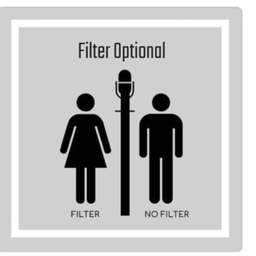
Addiction Counselor Chico West and his wife Shannon lend their years of experience to listeners from all walks of life offering a unique perspective from both the filter (Shannon) and the no filter (Chico). Welcome to Filter Optional.
Sorry Isn’t Enough: How to Apologize, Make Amends & Repair Relationships | #36
In this episode of Filter Optional, Chico and Shannon West explore a question that can transform every relationship:
What makes a real apology?
Most of us know how to say "I'm sorry." But far fewer know how to take responsibility, repair the damage, and rebuild trust. Drawing from addiction recovery principles, personal stories, and insights from researchers like Brené Brown, Chico and Shannon unpack why apologies often fall flat and what it actually takes to make things right.
Through honest conversations about marriage, friendships, parenting, and everyday conflict, they introduce a practical framework for moving beyond guilt and defensiveness toward accountability, healing, and deeper connection.
Key Points
- Why "I'm sorry" is often not enough to repair a relationship
- The difference between apologies, responsibility, and making amends
- How defensiveness keeps us from truly hearing the people we've hurt
- Why adding "but..." can instantly undermine an apology
- The role of accountability in rebuilding trust
- Real-life examples of repairing friendships, marriage, and everyday conflicts
- How recovery principles like "cleaning up your side of the street" apply to every relationship
- Why modeling healthy apologies teaches emotional responsibility to your children
Takeaway
Healthy relationships aren't built on perfect behavior. They're built on the willingness to own our mistakes, repair the harm we've caused, and grow from the experience. A genuine apology isn't just about saying you're sorry. It's about taking responsibility and doing the work to restore trust.
14 Jul 2026
Parenting Adult Children: How to Have Hard Conversations Without Pushing Them Away | #35
Parenting Adult Children: How to Have Hard Conversations Without Pushing Them Away
In this episode of Filter Optional, Chico and Shannon West explore one of the most challenging seasons of parenting: raising adult children while learning to let go.
Whether your child is heading off to college, moving back home after graduation, or navigating early adulthood, parents often find themselves caught between two extremes: saying nothing at all or reacting out of frustration. Chico and Shannon introduce a healthier path, stepping into the messy middle with honesty, curiosity, and clear boundaries.
Through real-life stories and practical examples, they discuss how to navigate difficult conversations about alcohol, house rules, independence, expectations, and respect without damaging the relationship. If you've ever wondered how to support your adult child while still honoring your own needs, this episode offers practical guidance for one of parenting's most complicated transitions.
Key Points
- Why parenting adult children requires a different approach than parenting kids
- The dangers of passivity and impulsivity in difficult conversations
- How to step into the messy middle with honesty, vulnerability, and respect
- Setting healthy expectations when adult children live at home
- The myth that allowing teens to drink at home prepares them for college
- Why fear often keeps parents from having the conversations that matter most
- Practical questions that create dialogue instead of defensiveness
- How coaching, curiosity, and emotional honesty build stronger family relationships
Takeaway
The goal isn't to control your adult children or avoid conflict altogether. It's to create a relationship where difficult conversations can happen with mutual respect, healthy boundaries, and genuine connection. Growth happens when parents are willing to speak the truth with love and trust that healthy conversations are worth the discomfort.
7 Jul 2026
Happy Birthday America: What the World Cup Taught Us About Hospitality, Gratitude & Connection | #34
In this episode of Filter Optional, Chico and Shannon West reflect on an unexpected gift of the FIFA World Cup: seeing America through the eyes of first-time visitors.
As fans from around the world share their experiences online, one theme keeps emerging: Americans are friendlier, more generous, and more welcoming than many expected. From free chips and salsa and Buc-ee's to genuine hospitality and everyday kindness, Chico and Shannon explore what these outside perspectives reveal about our culture, and why it's so easy to overlook the blessings we experience every day.
More than a conversation about America, this episode is an invitation to step away from constant negativity, embrace curiosity, celebrate what brings us together, and remember that meaningful connection begins when we see one another as people, not opinions.
Key Points
How the FIFA World Cup is changing international perceptions of America
Why hospitality and generosity remain defining parts of American culture
The value of seeing familiar things through fresh eyes
How assumptions and media narratives shape the way we view one another
Why gratitude helps us appreciate what we've stopped noticing
The importance of civil conversations over cultural division
How curiosity and shared experiences build connection across cultures
Takeaway
Sometimes it takes an outsider's perspective to remind us what we've been taking for granted. When we choose gratitude over criticism and curiosity over assumptions, we create more opportunities for connection, understanding, and hope, both within our communities and across cultures.
Inside a recent episode
The Messy Middle: How to Have Hard Conversations Without Avoiding or Controlling | #33
Published 30 Jun 2026 · Transcript excerpt
[…] And see, what I'm saying the messy middle is, is that place where we avoid the tough questions, where we avoid the tough conversations. And the two ways that we do the avoiding is passivity or impulsivity. And I'm going to let you go into that. But I'm going to say before, because sometimes you can kind of get ahead. I mean, when you're it's your whole talk, you don't get ahead or whatever. But in this scenario, I think we all know as moms that if we're going to enter into that conversation, even though. Our adult child is asking us for the advice. And if we work closely together or talk on the phone a lot or whatever, we know that whatever we say is probably going to backfire. […]
Pod Engine is an independent podcast discovery and analytics service and is not affiliated with or endorsed by this podcast. Artwork and show content belong to their owners. Full legal notice.
Explore this show Podcast research with Pod Engine