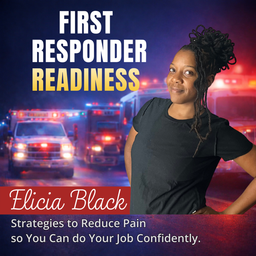
Podcast thumbnail for First Responder Readiness | EMT, Back Pain, Recovery, Sleep Deprivation, Functional Strength Workout

First Responder Readiness | EMT, Back Pain, Recovery, Sleep Deprivation, Functional Strength Workout

Claim This Podcast

by Elicia Black | Athletic Trainer, Strength and Conditioning Specialist

27 episodes
Updated Daily
Accepts GuestsHas Sponsors

Podcast Overview

<p><span style="font-weight:400;">Do you wish your low back pain from lifting patients and long shifts would actually go away?</span><span style="font-weight:400;"><br /></span><span style="font-weight:400;"> Are you tired of feeling exhausted, under-recovered, and unsure whether your body can keep up with the job?</span><span style="font-weight:400;"><br /></span><span style="font-weight:400;"> Do you want a safer, smarter way to lift, move, and perform—without the exhaustion spilling into your days off?</span></p> <p><span style="font-weight:400;">If so, you’re in the right place.</span></p> <p><span style="font-weight:400;">This podcast is here to help you move better through the demands of the job, recover faster between shifts, and feel stronger and more confident when lifting patients, carrying gear, and responding to unpredictable situations. We’ll talk job-specific training, recovery strategies that actually work, and how to build strength and endurance that transfers to real-life calls—not just the gym. Better sleep, better recovery, and a body that’s built to last are the goal.</span></p> <p><span style="font-weight:400;">I’m Elicia Black—an Athletic Trainer and Strength &amp; Conditioning Specialist, and a concerned sister of a paramedic who has battled back pain, shoulder pain, and exhaustion. My brother was stretching, getting massages, and doing his best to lift with proper mechanics, yet the pain and fatigue never truly went away.</span></p> <p><span style="font-weight:400;">That’s when I realized something important: relief wouldn’t come from doing </span><span style="font-weight:400;">more</span><span style="font-weight:400;">—it would come from doing what actually matched the job.</span></p> <p><span style="font-weight:400;">He needed job-specific training that fit his schedule, prepared him for awkward positions and heavy loads, and didn’t add stress or leave him more exhausted. So I built it—and now I’m sharing it with you.</span></p> <p><span style="font-weight:400;">If you’re ready to train for the demands your patients and your job place on your body, recover faster for better on-shift performance, and stop feeling wiped out off shift, this podcast is for you.</span></p> <p><span style="font-weight:400;">Put the caffeine down and lace up your boots.<br />Your shift starts now.</span></p>

Language

🇺🇲

Publishing Since

2/24/2026

Reach the team behind First Responder Readiness | EMT, Back Pain, Recovery, Sleep Deprivation, Functional Strength Workout

Verified contact details for this show aren't on file yet — sign up to get notified when they land.

Recent Episodes

Episode thumbnail for E26 | EMS Lifting vs Carrying | What First Responders Actually Need to Train

June 2, 2026

E26 | EMS Lifting vs Carrying | What First Responders Actually Need to Train

This episode breaks down EMS lifting vs carrying, including why first responders need to train for more than just the lift itself.   Most people think the hardest part is getting the patient off the ground. But in reality? The lift is often just the beginning. Because once the patient is up, you still have to: hold the load walk with it adjust your grip stabilize under fatigue navigate stairs, hallways, obstacles, and awkward environments In this episode of First Responder Readiness, we break down the difference between lifting and carrying in EMS, why they place different demands on your body, and what first responders actually need to train to hold up on shift. Because producing force and sustaining force are not the same thing. What You’ll Learn The difference between lifting and carrying from a performance standpoint Why carrying often becomes more physically demanding than the initial lift How grip endurance, core stability, posture, and single-leg control affect performance Why traditional gym training may miss what the job actually requires How to start training for real-world EMS demands Key Takeaways Lifting and carrying are different physical demands Carrying requires sustained force, not just force production Grip, posture, and core endurance play a major role in performance Fatigue makes carrying breakdown happen faster Training should reflect the full task—not just the first movement 🎧 Continue Listening To better understand how this connects to fatigue, lifting mechanics, and job-specific performance, check out: Episode 12: EMS Lifting Mechanics | Why Patient Lifts Break Down Under Fatigue Episode 14: First Responder Fatigue | How Exhaustion Is Affecting Your Performance Homework This week, add one carry variation to your training. Pay attention to: when your grip starts to fatigue whether posture changes under load if one side feels weaker or less stable how long you can maintain control Awareness is where better training starts. Fit for the Call Insider If you’re trying to build strength that actually holds up through the entire job—not just the first part of the movement—I created something for you. Fit for the Call Insider is where I share practical strategies to help you: train smarter reduce injury risk improve durability stay ready for the job Coaching Call If you’re realizing there’s a gap between how you train and what your job actually demands— 👉 Book a 1-hour coaching session We’ll break down your movement, training approach, and what adjustments will better match your real-world demands. Share &amp; Support If this episode changed how you think about training for the job: Follow the podcast Leave a review Share it with your crew or partner

Episode thumbnail for E25 | Patient Lifting In EMS | Why It Feels Harder Late in Shift

May 26, 2026

E25 | Patient Lifting In EMS | Why It Feels Harder Late in Shift

This episode breaks down patient lifting in EMS, including why lifts feel harder late in shift and how fatigue changes movement, coordination, and performance. You’ve done this lift before. Same type of patient. Same equipment. Same general movement. But this time? It feels heavier. Harder to control. More awkward than it should. So what changed? In this episode of First Responder Readiness, we break down why patient lifting in EMS feels different late in shift and what fatigue is actually doing to your movement, coordination, and force production. Because it’s not that you suddenly forgot how to lift. Your body state changed. What You’ll Learn Why patient lifts feel harder later in your shift How fatigue changes strength, coordination, and movement quality Why technique alone isn’t the full answer The connection between fatigue, injury risk, and performance What you can do to improve how your body handles these demands Key Takeaways Fatigue changes how your body produces and controls force Patient lifting becomes harder when stability and coordination decrease Technique matters—but body state matters too Training should prepare you for lifting under realistic conditions 🎧 Continue Listening To better understand how fatigue affects movement and lifting, check out: Episode 12: EMS Lifting Mechanics | Why Patient Lifts Break Down Under Fatigue Episode 14: First Responder Fatigue | How Exhaustion Is Affecting Your Performance Episode 6: Pain After Long Shifts | How Accumulated Load Causes Back, Knee, and Hip Pain Homework During your next shift, pay attention to: When lifts start feeling harder How many calls you’ve already run Whether your posture or control changes late in shift Start noticing the relationship between fatigue and movement. Fit for the Call Insider If you’re trying to build a body that actually holds up under the demands of the job, I created something for you. Fit for the Call Insider is where I share practical strategies to help you: build strength that transfers reduce injury risk improve recovery stay ready for the job Coaching Call If you’re dealing with lifts that feel harder than they should—or recurring pain that shows up after physically demanding shifts— 👉 Book a 1-hour coaching session We’ll break down your movement, training, and what may be contributing to the issue. Share &amp; Support If this episode resonated with you: Follow the podcast Leave a review Share it with your partner or crew

Episode thumbnail for E24| Lower Back Injuries in First Responders | Why They Keep Happening in Departments

May 19, 2026

E24| Lower Back Injuries in First Responders | Why They Keep Happening in Departments

This episode breaks down lower body injuries in first responders, including why recurring knee pain, hip pain, and low back issues keep showing up across departments. Knee injuries. Hip pain. Low back issues. You see it across the department. Different people. Different shifts. Same problems. So the question is—is this just part of the job… or are there patterns driving these injuries? In this episode of First Responder Readiness, we break down why lower body injuries in first responders keep happening and what’s actually contributing to these recurring issues across departments. Because injuries are rarely random. They’re usually the result of repeated movement patterns, accumulated stress, fatigue, and training that doesn’t fully match the job. What You’ll Learn Why lower body injuries are often patterns—not isolated incidents How repetitive asymmetrical movement contributes to pain and injury The role fatigue plays in movement breakdown Why general fitness doesn’t always translate to injury prevention What both responders and department leadership should be paying attention to Key Takeaways Most injuries develop over time—not in one moment Repeated asymmetrical movement creates long-term stress Fatigue changes movement quality and increases injury risk Training needs to reflect the actual demands of the job Looking at trends—not incidents—is how departments reduce injury patterns 🎧 Continue Listening To better understand the movement patterns behind these injuries, check out: Episode 11: Knee Pain in Police Officers | Why Patrol Cars Are Causing Chronic Knee Pain Episode 21: Hip Pain in First Responders | The Hidden Cause of Knee and Back Pain Episode 23: Getting In and Out of Patrol Cars | Why This Movement Causes Pain Over Time Homework Start looking for patterns. Ask yourself: What injuries show up most often in your department? When do they tend to happen? What movements are repeated every shift? Awareness is the first step toward changing the system. Fit for the Call Insider If you’ve been dealing with recurring pain—or trying to understand why it keeps coming back—I created something for you. Fit for the Call Insider is where I share practical strategies to help you: reduce pain move better recover smarter stay ready for the job Coaching Call If you’re dealing with recurring pain—or you’re in leadership seeing the same injury patterns over and over— 👉 Book a 1-hour coaching session We’ll break down what’s actually driving those issues and what needs to change. Share &amp; Support If this episode made you think differently about injuries in your department: Follow the podcast Leave a review Share it with your crew, training officer, or leadership team

27 total episodes available

Deep-dive analytics for First Responder Readiness | EMT, Back Pain, Recovery, Sleep Deprivation, Functional Strength Workout

Frequently asked questions

Have a different question and can't find the answer you're looking for? Reach out to our support team by sending us an email and we'll get back to you as soon as we can.

What is First Responder Readiness | EMT, Back Pain, Recovery, Sleep Deprivation, Functional Strength Workout?
<p><span style="font-weight:400;">Do you wish your low back pain from lifting patients and long shifts would actually go away?</span><span style="font-weight:400;"><br /></span><span style="font-weight:400;"> Are you tired of feeling exhausted, under-recovered, and unsure whether your body can keep up with the job?</span><span style="font-weight:400;"><br /></span><span style="font-weight:400;"> Do you want a safer, smarter way to lift, move, and perform—without the exhaustion spilling into your days off?</span></p> <p><span style="font-weight:400;">If so, you’re in the right place.</span></p> <p><span style="font-weight:400;">This podcast is here to help you move better through the demands of the job, recover faster between shifts, and feel stronger and more confident when lifting patients, carrying gear, and responding to unpredictable situations. We’ll talk job-specific training, recovery strategies that actually work, and how to build strength and endurance that transfers to real-life calls—not just the gym. Better sleep, better recovery, and a body that’s built to last are the goal.</span></p> <p><span style="font-weight:400;">I’m Elicia Black—an Athletic Trainer and Strength &amp; Conditioning Specialist, and a concerned sister of a paramedic who has battled back pain, shoulder pain, and exhaustion. My brother was stretching, getting massages, and doing his best to lift with proper mechanics, yet the pain and fatigue never truly went away.</span></p> <p><span style="font-weight:400;">That’s when I realized something important: relief wouldn’t come from doing </span><span style="font-weight:400;">more</span><span style="font-weight:400;">—it would come from doing what actually matched the job.</span></p> <p><span style="font-weight:400;">He needed job-specific training that fit his schedule, prepared him for awkward positions and heavy loads, and didn’t add stress or leave him more exhausted. So I built it—and now I’m sharing it with you.</span></p> <p><span style="font-weight:400;">If you’re ready to train for the demands your patients and your job place on your body, recover faster for better on-shift performance, and stop feeling wiped out off shift, this podcast is for you.</span></p> <p><span style="font-weight:400;">Put the caffeine down and lace up your boots.<br />Your shift starts now.</span></p>
How often does this podcast release new episodes?

This podcast updates daily.

Where can I listen to this podcast?

This podcast is available on 4 platforms including Apple Podcasts, Spotify, and more. You can also use the RSS feed directly.

Does this podcast accept guests?

No, this podcast does not typically feature guests.

Legal Disclaimer

Pod Engine is not affiliated with, endorsed by, or officially connected with any of the podcasts displayed on this platform. We operate independently as a podcast discovery and analytics service.

All podcast artwork, thumbnails, and content displayed on this page are the property of their respective owners and are protected by applicable copyright laws. This includes, but is not limited to, podcast cover art, episode artwork, show descriptions, episode titles, transcripts, audio snippets, and any other content originating from the podcast creators or their licensors.

We display this content under fair use principles and/or implied license for the purpose of podcast discovery, information, and commentary. We make no claim of ownership over any podcast content, artwork, or related materials shown on this platform. All trademarks, service marks, and trade names are the property of their respective owners.

While we strive to ensure all content usage is properly authorized, if you are a rights holder and believe your content is being used inappropriately or without proper authorization, please contact us immediately at hey@podengine.ai for prompt review and appropriate action, which may include content removal or proper attribution.

By accessing and using this platform, you acknowledge and agree to respect all applicable copyright laws and intellectual property rights of content owners. Any unauthorized reproduction, distribution, or commercial use of the content displayed on this platform is strictly prohibited.