- 21
- Episodes
- 28
- Ratings
- Monthly
- Cadence
- 2025
- First episode
About Fit For Science
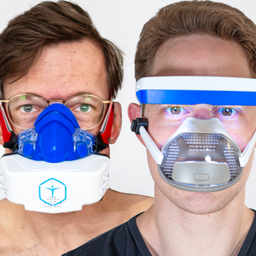
Two scientists discuss how they live their best life, using science, data, tech, wearables, and systems. Fit For Science is a deep-dive podcast hosted by two biological data scientists, Rob and Stephan, exploring the intersection of research, health tech, and data-driven lifestyle design. The hosts provide evidence-based systems, layered with practical "N=2" personal experimentation, to cut through the noise and enable everyone to become their best N-of-1. The Quantified Scientist (Rob): youtube.com/TheQuantifiedScientist Stephan's Website: http://polytechnist.me
- Publisher
- Stephan Reichl and Rob ter Horst
- Category
- health & fitness
- Language
- en
- Explicit
- No
- First episode
- 22 Dec 2025
- Latest episode
- 16 Jul 2026
Latest episodes
21 episodes in the feed.
16 Jul 2026
#21 The Rise of Screenless Wearables in 2026 + Fitbit Air vs Oura & Whoop
Rob and Stephan dissect the rise of minimalist, screen-free health trackers, reviewing the popular Google Fitbit Air against established giants like the Oura Ring and WHOOP. 📝Summary In this episode, biological data scientists Rob and Stephan explore the growing market of screenless wearables, boosted by the recent launch of the Google Fitbit Air and massive investments in companies like Oura and WHOOP. They define the specific characteristics of these minimalist trackers, emphasizing their passive 24/7 tracking, long battery life, and deliberate lack of attention-grabbing notifications. Stephan shares his initial hands-on review of the Fitbit Air after being an Oura user for eight years, highlighting its impressive AI-powered food logging, integrated workout builder, and smart alarms, while critiquing its lack of custom journaling and granular daytime heart rate variability data. The hosts also discuss the inherent form-factor limitations of smart rings during exercise, analyze the dubious claims surrounding the drop-shipped Hume band, and examine how tech giants like Google are using these affordable devices to become ecosystem leaders. Finally, they offer practical tips on syncing multiple wearables via Apple Health without data conflicts. ⏳Chapters 00:00:00 Screenless Wearables: The market shift towards minimalist trackers and the new Fitbit Air 00:01:21 Early Adopter: Why Stephan bought the Fitbit Air after 8 years with Oura 00:11:03 Defining the Category: What makes a wearable truly "screenless" 00:18:57 The Wearable Landscape: Amazfit Helio strap, Polar Loop, and smart rings 00:22:03 The Hume Band Scam: Drop-shipping, AliExpress clones, and fake scientists 00:26:23 Form Factor Limits: Why smart rings struggle with cycling and weightlifting 00:28:50 Divergent Data: Comparing wildly different readiness scores between Oura and Fitbit 00:34:05 Subscription Models: Device costs and the necessity of paid app memberships 00:50:42 Fitbit Air Review (Likes): AI nutrition logging, workout builders, and smart alarms 00:57:48 Fitbit Air Review (Dislikes): Missing custom tags, daytime HRV, and slow activity detection 01:05:30 Data Management: How to safely sync Fitbit Air with Apple Health 01:11:18 Final Verdict: Will Stephan ditch the Oura Ring for the Fitbit Air? 📚Resources The New Google Fitbit Air and Other Fitness Bands Are Losing Screens—and Gaining Fans - WSJ (https://www.wsj.com/tech/personal-tech/fitness-bands-fitbit-air-oura-whoop-ecb94c69) Google Fitbit Air (https://store.google.com/de/product/google_fitbit_air) Sharing upcoming roadmap and improvements - Google Health (https://support.google.com/googlehealth/thread/437068226/sharing-upcoming-roadmap-and-improvements?hl=en) Oura Ring 5 (https://ouraring.com/store/rings/oura-ring-5) WHOOP (https://www.whoop.com/) Correction: The first Whoop band officially became available and started shipping to elite athletes and professional sports teams already in 2015. Same year as the first generation Oura ring, which was sold as an end consumer product. It looks like Garmin is finally preparing its Google Fitbit Air-style screenless band, the Cirqa, for launch — but I hope it doesn't copy Google's approach to revamping its fitness app | TechRadar (https://www.techradar.com/health-fitness/fitness-trackers/it-looks-like-garmin-is-finally-preparing-its-google-fitbit-air-style-screenless-band-the-cirqa-for-launch-but-i-hope-it-doesnt-copy-googles-approach-to-revamping-its-fitness-app) Helio Strap (https://de.amazfit.com/products/helio-strap) Zepp App (https://us.amazfit.com/pages/zepp-app) Amazfit Helio Strap does not require a subscription, but there is an optional premium add-on called Zepp Aura (https://aura.zepp.com/), a personalised Rest and Wellness Service. Ultrahuman (https://www.ultrahuman.com/global/ring/) Polar Loop (https://www.polar.com/en/loop) Hume Band2.0 (https://humehealth.com/pages/hume-bandv2) Explore Galaxy Ring (https://www.samsung.com/us/rings/galaxy-ring/) Correction: Google Health loads for most, but not all, relevant Apple Health entries the last three months. …There is more: complete show notes here (https://docs.google.com/document/d/1LCIm780Aue5573FWVpyDve5Wm_DBTwDqfzoZ5zTqeyY/edit?usp=sharing) 🎙️About Fit For Science is a deep-dive podcast hosted by two biological data scientists, Rob and Stephan, exploring the intersection of research, health tech, and data-driven lifestyle design. The hosts provide evidence-based systems, layered with practical "N=2" personal experimentation, to cut through the noise and enable everyone to become their best N-of-1. Learn more (https://creators.spotify.com/pod/profile/fitforscience/) and subscribe on your favorite platforms: YouTube (https://www.youtube.com/@FitForScience) Spotify (https://open.spotify.com/show/56TjUxuMsPETb0kGEJ7nwf) Apple Podcasts (https://podcasts.apple.com/us/podcast/fit-for-science/id1863479802) Amazon Music (https://music.amazon.de/podcasts/c3e54ee7-4a2c-442e-a59f-553fbfb02b11/fit-for-science) Collection of all show notes (https://docs.google.com/document/d/1LCIm780Aue5573FWVpyDve5Wm_DBTwDqfzoZ5zTqeyY/edit?usp=sharing) ⚠️Disclaimer: This podcast represents our own opinions and is for informational purposes only. It does not constitute medical or financial advice or a professional relationship.
1 Jul 2026
#20 Google Wants Your Fitbit Data for AI! And it’s not (all) bad news!
Rob and Stephan dissect Google’s groundbreaking "Sensor FM" paper, exploring how a foundation model, trained on trillions of wearable data minutes, could revolutionize preventive healthcare and disease prediction. 📝Summary In this episode, biological data scientists Rob and Stephan break down Google's latest research introducing Sensor FM, a massive foundation model trained on over one trillion minutes of multimodal wearable data across 5 million users. They explore the technical mechanics under the hood, including its encoder-decoder architecture, its alignment with deep learning scaling laws, and a unique "AI classroom" setup where collaborating virtual agents optimize 35 distinct clinical health prediction tasks. The hosts discuss the profound implications of using generative AI like Gemini to transform these raw sensor representations into clinician-approved lifestyle recommendations, while critically evaluating the delicate trade-offs between continuous behavioral nudging, hidden human blind spots, and systemic data privacy risks. Finally, Stephan shares his upcoming personal testing protocol for the new Fitbit Air as a potential alternative to his long-term Oura ring setup. ⏳Chapters 00:00:00 Wearable Data Predictions: Google’s motivation for tracking disease and lifestyle indicators 00:01:48 Google Health Platform: The strategic endgame of consolidating consumer health tracking 00:04:00 The Interface Layer: Transforming raw hardware signals into actionable health insights 00:07:13 Introducing Sensor FM: A deep learning foundation model for wearable health data 00:10:15 Overcoming Data Labels: High phenotypic diversity and few-shot learning 00:12:37 Data Privacy vs. Preventive Care: Evaluating the societal trade-offs of deep tracking 00:17:18 Encoder-Decoder Architecture: The science of signal compression and reconstruction 00:18:43 Trillion-Minute Dataset: Mapping 5 million global wearable users 00:22:27 Empirical Scaling Laws: Maximizing compute and parameters for improved performance 00:27:19 The AI Classroom Experiment: Peer collaboration mechanisms among virtual agents 00:39:07 Gemini Judged by Clinicians: Blind evaluation of AI-generated health recommendations 00:44:57 Behavioral Nudging and Alignment: Addressing the blind spots of metric-driven optimization 00:50:42 Insurance Risk Paradigms: The dangers of continuous data history in for-profit healthcare 00:53:26 Fitbit Air vs. Oura Ring: Stephan’s upcoming personal logging experiment 📚Resources SensorFM from Google SenseFM: Towards a General Intelligence and Interface for Wearable Health Data (https://arxiv.org/abs/2605.22759v1) Google Fitbit Air, das Fitness - Tracker-Armband (https://store.google.com/de/product/google_fitbit_air) Google Health (https://healthapp.google/) Foundation model (https://en.wikipedia.org/wiki/Foundation_model) Embedding (machine learning) (https://en.wikipedia.org/wiki/Embedding_(machine_learning)) Generative AI (https://en.wikipedia.org/wiki/Generative_AI) Supervised learning (https://en.wikipedia.org/wiki/Supervised_learning) Few-shot learning (https://en.wikipedia.org/wiki/Few-shot_learning) Wearables with hypertension features: Huawei D2, Apple Watch, Whoop, Oura Nudging (https://en.wikipedia.org/wiki/Nudge_theory) Dimensionality reduction (https://en.wikipedia.org/wiki/Dimensionality_reduction) Prince Charles’ “middle finger” dimensionality reduction example (https://www.reddit.com/r/interestingasfuck/comments/xu1270/this_is_why_you_shouldnt_trust_everything_you_see/) Sam Altman tweet: “there is no wall” (https://x.com/sama/status/1856941766915641580) Correction: The Netherlands is divided into 12 provinces and 3 special overseas municipalities "Life can only be understood backwards; but it must be lived forwards." - Søren Kierkegaard …There is more: complete show notes here (https://docs.google.com/document/d/1LCIm780Aue5573FWVpyDve5Wm_DBTwDqfzoZ5zTqeyY/edit?usp=sharing) 🎙️About Fit For Science is a deep-dive podcast hosted by two biological data scientists, Rob and Stephan, exploring the intersection of research, health tech, and data-driven lifestyle design. The hosts provide evidence-based systems, layered with practical "N=2" personal experimentation, to cut through the noise and enable everyone to become their best N-of-1. Learn more (https://creators.spotify.com/pod/profile/fitforscience/) and subscribe on your favorite platforms: YouTube (https://www.youtube.com/@FitForScience) Spotify (https://open.spotify.com/show/56TjUxuMsPETb0kGEJ7nwf) Apple Podcasts (https://podcasts.apple.com/us/podcast/fit-for-science/id1863479802) Amazon Music (https://music.amazon.de/podcasts/c3e54ee7-4a2c-442e-a59f-553fbfb02b11/fit-for-science) Collection of all show notes (https://docs.google.com/document/d/1LCIm780Aue5573FWVpyDve5Wm_DBTwDqfzoZ5zTqeyY/edit?usp=sharing) ⚠️Disclaimer: This podcast represents our own opinions and is for informational purposes only. It does not constitute medical or financial advice or a professional relationship.
10 Jun 2026
#19 The Harmful “Longevity Bubble” + Updates from Oura, WHOOP, and Google's New FitBit Air
In this episode, biological data scientists Rob and Stephan examine Oura's cardiovascular age validation study, discuss WHOOP's new medical concierge service, critically analyze the overhyped commercialization of the longevity bubble, and explore the citizen science potential of the Google Fitbit Air. 📝Summary In this episode, biological data scientists Rob and Stephan break down recent structural shifts in the consumer health-tech industry, critically analyzing the transparency and financial conflicts of interest within a newly published Oura validation study on cardiovascular age tracking. They critique WHOOP’s new opt-in medical concierge service, highlighting that well-informed users can often interpret their own baseline metrics more effectively. Transitioning into the commercial "longevity bubble," the hosts dismantle overhyped, unproven, and highly expensive products, such as bespoke blood panels and premium health clubs, by explaining that 80% of longevity gains stem from free or cheap, evidence-based fundamentals like consistent sleep, regular activity, a balanced diet, and resistance training. Finally, they evaluate the hardware and subscription-free utility of the new screen-free Google Fitbit Air, exploring its practical applications as a robust tool to capture population-level sleep and activity patterns across diverse demographics within the large-scale Vienna Prevention Project (ViPP). ⏳Chapters 00:00:00 Wearable Updates: Oura, Whoop, and the Google Fitbit Air 00:01:03 Cardiovascular Age: Oura's validation study and conflict of interest concerns 00:06:57 Medical Consultations: Evaluating Whoop's physician integration 00:13:01 The Longevity Bubble: Why extreme spending yields diminishing returns compared to basic health habits 00:19:34 Bryan Johnson's Blueprint: Analyzing the $1 million protocols versus free lifestyle fundamentals 00:27:01 Communicating Science: Why Dr. Mike effectively cuts through health influencer noise 00:30:06 Google Fitbit Air: Discussing the new screen-free, subscription-free tracker 00:35:55 Sleep Inertia: The psychological and physiological benefits of timed wake-ups 00:40:43 The Vienna Prevention Project (ViPP): Deploying wearables to 20,000 citizens for public health 00:48:42 Wearable Accuracy vs App Experience: Finding the Goldilocks zone for tracking devices 📚Resources Pulse wave velocity (PWV) (https://en.wikipedia.org/wiki/Pulse_wave_velocity) New NUS Research Validates Oura’s Vascular Age Estimation, a Key Indicator of Cardiovascular Health - The Pulse Blog (https://ouraring.com/blog/new-nus-research-validates-ouras-vascular-age-estimation/) Vascular age estimation using a consumer wearable sleep tracker | PLOS Digital Health (https://journals.plos.org/digitalhealth/article?id=10.1371/journal.pdig.0001329) WHOOP just hired doctors. - LinkedIn post (https://www.linkedin.com/posts/bas-duijnstee-09a6a0151_whoop-just-hired-doctors-the-wearable-industry-share-7461333488797937665-oUN6?utm_source=share&utm_medium=member_desktop&rcm=ACoAACO_0yIBNf1OhOZm3rDdMn1NkY151nSysLE) VIP medicine (https://en.wikipedia.org/wiki/VIP_medicine) Bryan Johnson (https://en.wikipedia.org/wiki/Bryan_Johnson) Methylation clocks and epigenetic aging (https://en.wikipedia.org/wiki/Epigenetic_clock) [...] the variation from test to test is so high that any given result is essentially statistically meaningless.[...] - Matt Kaeberlein on LinkedIn (https://www.linkedin.com/posts/mkaeberlein_the-truth-about-biological-age-tests-activity-7317018716502667264-BNv5?utm_source=share&utm_medium=member_desktop&rcm=ACoAACO_0yIBNf1OhOZm3rDdMn1NkY151nSysLE) The Truth About Biological Age Tests (https://www.youtube.com/watch?v=8mlRkXZFvi8) Dunedin Pace | Rejuvenation Olympics (https://www.rejuvenationolympics.com/dunedin-pace) Bryan Johnson's $1M 42 point longevity protocol (https://www.linkedin.com/posts/bryanrjohnson_this-is-it-everything-learned-spending-activity-7460370189881221120-YGrq?utm_source=share&utm_medium=member_desktop&rcm=ACoAACO_0yIBNf1OhOZm3rDdMn1NkY151nSysLE) and Stephan's comment (https://www.linkedin.com/feed/update/urn:li:activity:7460370189881221120?commentUrn=urn%3Ali%3Acomment%3A%28activity%3A7460370189881221120%2C7460401739238678529%29&dashCommentUrn=urn%3Ali%3Afsd_comment%3A%287460401739238678529%2Curn%3Ali%3Aactivity%3A7460370189881221120%29) Doctor Mike: Evidence-Based Medical Communicator on YouTube (https://www.youtube.com/doctormike) Google Fitbit Air, Fitness Activity Tracker Band (https://store.google.com/product/google_fitbit_air) Rob's videos on Google's FitBit Air (so far) Fitbit Air: The $99 Future of Fitbit (WHOOP alternative) (https://www.youtube.com/watch?v=3P-kSxGSVEc) The Fitbit Air Found WHOOP’s Weak Spot! (https://www.youtube.com/watch?v=gYq2PRZAtM8) Fitbit: Scientific Sleep Test! (https://www.youtube.com/watch?v=Y9uXiSQn-ak) …There is more: complete show notes here (https://docs.google.com/document/d/1LCIm780Aue5573FWVpyDve5Wm_DBTwDqfzoZ5zTqeyY/edit?usp=sharing) 🎙️About Fit For Science is a deep-dive podcast hosted by two biological data scientists, Rob and Stephan, exploring the intersection of research, health tech, and data-driven lifestyle design. The hosts provide evidence-based systems, layered with practical "N=2" personal experimentation, to cut through the noise and enable everyone to become their best N-of-1. Learn more (https://creators.spotify.com/pod/profile/fitforscience/) and subscribe on your favorite platforms: YouTube (https://www.youtube.com/@FitForScience) Spotify (https://open.spotify.com/show/56TjUxuMsPETb0kGEJ7nwf) Apple Podcasts (https://podcasts.apple.com/us/podcast/fit-for-science/id1863479802) Amazon Music (https://music.amazon.de/podcasts/c3e54ee7-4a2c-442e-a59f-553fbfb02b11/fit-for-science) Collection of all show notes (https://docs.google.com/document/d/1LCIm780Aue5573FWVpyDve5Wm_DBTwDqfzoZ5zTqeyY/edit?usp=sharing) ⚠️Disclaimer: This podcast represents our own opinions and is for informational purposes only. It does not constitute medical or financial advice or a professional relationship.
Reach and audience
Public platform figures. Ratings count people who left a rating, not total listeners.
- Apple Podcasts (US)
- 4.8 / 5
- 4 ratings
- Spotify
- 5.0 / 5
- 24 ratings
Contact Fit For Science
- Guest appearances
- Does not typically book guests
Based on episode analysis; this does not confirm that the show is currently accepting guests.
Host of Fit For Science?
Claim your podcast to manage its listing and keep your show details accurate.
Pod Engine is an independent podcast discovery and analytics service and is not affiliated with or endorsed by this podcast. Artwork and show content belong to their owners. Full legal notice.
Explore this show
Podcast research with Pod Engine