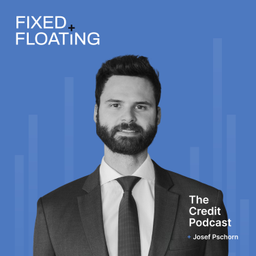
Fixed + Floating is a credit podcast for investors and finance professionals. Hosted by credit portfolio manager Josef Pschorn, the show features conversations with leading voices from investing, research, and academia on private credit, high yield, distressed debt and credit cycles. We break down the technical mechanics of credit markets — from covenant evolution and liability management to restructuring, quantitative credit, and the impact of macro policy. New episodes twice per month.
Why Is CLO Equity Underperforming? And Can Private Credit CLOs Do Better? | Shiloh Bates (Flat Rock Global) #22
Shiloh Bates (https://www.linkedin.com/in/shiloh-bates-186ab28/) (Flat Rock Global) on CLO equity returns, loan repricing and private credit CLOs.CLO equity returned about −8% in 2025, on Flat Rock Global's CLO Equity Index. Defaults on 2021-vintage LBOs rose, recoveries fell to around 50 cents, and performing loans repriced tighter. Josef Pschorn speaks with Shiloh Bates (https://www.linkedin.com/in/shiloh-bates-186ab28/) about why reinvesting prepayments at a discount, the self-healing mechanism, no longer offsets those losses.Shownotes and analysis: https://www.fixedandfloating.com/ (https://www.fixedandfloating.com/)Shiloh Bates: Partner and Chief Investment Officer, Flat Rock Global.LinkedIn: https://www.linkedin.com/in/shiloh-bates-186ab28/ (https://www.linkedin.com/in/shiloh-bates-186ab28/)Flat Rock Global: https://flatrockglobal.com/ (https://flatrockglobal.com/)The CLO Investor podcast: https://www.youtube.com/playlist?list=PLnbXP4G8NDQI85q1cD--dAW6L5o0fKVWQ (https://www.youtube.com/playlist?list=PLnbXP4G8NDQI85q1cD--dAW6L5o0fKVWQ)CLO Investing (book): https://www.amazon.com/dp/B0CHN94H8G (https://www.amazon.com/dp/B0CHN94H8G)Connect with Fixed + Floating: https://www.linkedin.com/company/fixed-floating (https://www.linkedin.com/company/fixed-floating) | https://twitter.com/FixedFloating (https://twitter.com/FixedFloating) | Fixed + Floating is for informational purposes only. Not investment, legal, or tax advice.Recorded: 23.09.2026#fixedfloating #creditmarkets #clo #privatecredit #leveragedloans #structuredcredit
22 Sept 2026
Credit Risk's Left Tail: How Much Can You Lose? | Michael Gatto (Silver Point) #21
Michael Gatto (https://www.linkedin.com/in/michael-gatto-8a322b66/) (Silver Point Capital) on what decides a lender's recovery: the credit agreement, not the default.
A lender can be right about the business and still lose money. Josef Pschorn (https://www.linkedin.com/in/josefpschorn/) speaks with Michael Gatto (https://www.linkedin.com/in/michael-gatto-8a322b66/) about the second question a credit committee tends to skip. Not whether a borrower defaults, but what value and control leave the structure when a structure cracks.
Shownotes and analysis: https://www.fixedandfloating.com/ (https://www.fixedandfloating.com/)
Michael Gatto: Partner and Head of Private Side Businesses, Silver Point Capital.
LinkedIn: https://www.linkedin.com/in/michael-gatto-8a322b66/ (https://www.linkedin.com/in/michael-gatto-8a322b66/)
Silver Point Capital: https://www.silverpointfinance.com (https://www.silverpointfinance.com)
The Credit Investor's Handbook: https://www.amazon.com/Credit-Investors-Handbook-Leveraged-Distressed-ebook/dp/B0CR4MMD29?ref_=ast_author_mpb (https://www.amazon.com/Credit-Investors-Handbook-Leveraged-Distressed-ebook/dp/B0CR4MMD29?ref_=ast_author_mpb)Michael's latest articles: https://www.silverpointcapital.com/uploads/2026/05/47c34854a238cfef86eb78e3800da100/what-questions-should-allocators-ask-when-evaluating-direct-lending-managers.pdf (https://www.silverpointcapital.com/uploads/2026/05/47c34854a238cfef86eb78e3800da100/what-questions-should-allocators-ask-when-evaluating-direct-lending-managers.pdf)https://www.silverpointfinance.com/images/news/pdf/What%20Can%20We%20Learn%20From%20First%20Brands%20-%20SPC%20Credit%20Lessons.pdf (https://www.silverpointfinance.com/images/news/pdf/What%20Can%20We%20Learn%20From%20First%20Brands%20-%20SPC%20Credit%20Lessons.pdf)
Connect with Fixed + Floating: https://www.linkedin.com/company/fixed-floating (https://www.linkedin.com/company/fixed-floating) | https://twitter.com/FixedFloating (https://twitter.com/FixedFloating) |
Fixed + Floating is for informational purposes only. Not investment, legal, or tax advice.
Recorded: 10.09.2026
#fixedfloating #creditmarkets #privatecredit #liabilitymanagement #directlending
8 Sept 2026
Who Pays for the GPUs? How Lenders Underwrite AI Infrastructure | Ankur Patel (Ares)
Ankur Patel (https://www.linkedin.com/in/ankurjpatelcfa) (Ares Credit Group) on asset-based finance for data centres, power and GPUs.
A one-gigawatt data centre costs $15–20 billion to build. The GPUs and servers inside it can run $40 billion-plus, and they are the shortest-lived asset in the project. Josef Pschorn speaks with Ankur Patel about how that credit is structured so a lender is not relying on residual chip value to get repaid.
Shownotes and analyis: https://www.fixedandfloating.com/ (https://www.fixedandfloating.com/)
Ankur Patel: Partner, Ares Credit Group (Alternative Credit).
LinkedIn: https://www.linkedin.com/in/ankurjpatelcfa (https://www.linkedin.com/in/ankurjpatelcfa)
Ares Management: https://www.aresmgmt.com (https://www.aresmgmt.com)Connect with Fixed + Floating: LinkedIn https://www.linkedin.com/company/fixed-floating (https://www.linkedin.com/company/fixed-floating) | X https://twitter.com/FixedFloating (https://twitter.com/FixedFloating) Fixed + Floating is for informational purposes only. Not investment, legal, or tax advice.Recorded: 11.08.2026#fixedfloating #creditmarkets #assetbasedfinance #privatecredit #gpufinancing #datacenters #aiinfrastructure
Reach and audience
Public platform figures. Ratings count people who left a rating, not total listeners.
Apple Podcasts (US)
5.0 / 5
3 ratings
Contact Fixed + Floating - The Credit Podcast
Guest appearances
Books guests
Based on episode analysis; this does not confirm that the show is currently accepting guests.
Pod Engine is an independent podcast discovery and analytics service and is not affiliated with or endorsed by this podcast. Artwork and show content belong to their owners. Full legal notice.
Explore this show Podcast research with Pod Engine