- 25
- Episodes
- 11
- Ratings
- Bi-weekly
- Cadence
- 2025
- First episode
About Forestry Now
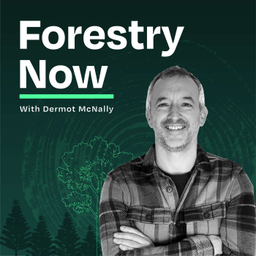
This podcast explores the forces impacting the profitable and sustainable management of commercial forests and natural woodlands. I speak with forest owners, forestry professionals and industry stakeholders on the biggest operational, environmental and economic challenges affecting the sector. I interview people involved in the harvesting and processing side of the forestry business as well as those who are trying to maximise carbon sequestration and general ecosystem services. I also investigate political and legislative changes that are coming down the track as well as highlight new technologies and big opportunities that are around the corner. Subscribe to Forestry Now with me Dermot McNally, to hear more.
- Publisher
- Dermot McNally
- Category
- business · technology
- Language
- en
- Explicit
- No
- First episode
- 24 Nov 2025
- Latest episode
- 13 Oct 2026
Latest episodes
25 episodes in the feed.
13 Oct 2026
Deer Management in Ireland with Seppi Höna
Today I speak with Regional Forest Inspector Seppi Höna about national efforts to address spiraling deer numbers in Ireland. We discuss the problems deer create in forestry and also what the scale of the problem is. Seppi explains how a national strategy group is providing direction for DMU's deer management units, which are now operational across the Republic of Ireland. We chat about whether we need more incentives to cull deer, about ethical and operational considerations relating to culled deer being left on the hill, as opposed to being recovered for venison. Finally, there are supports for deer protection in new forests, so we discuss these and other strategies forest owners can take to protect their trees. Seppi Höna is a Regional Forest Inspector and Forest Service Inspector at the Department of Agriculture, Food and the Marine in Ireland. He has chaired key committees for the Irish Deer Management Strategy Group (IDMSG) and presented on the impact of deer in Irish forestry. This podcast is part of the Deep Dives series which is supported by the Irish Department of Agriculture Food and the Marine. If you're thinking of planting a new forest or if you want information on financial and technical supports to manage your existing forest then go to http://gov.ie/forestryforyou (http://gov.ie/forestryforyou) Key Points: Deer damage is on the rise, as evidenced by the National Forest Inventory. In 2022, 36% of sample plots exhibited some level of deer damage, a notable increase from previous years. Deer impact on Irish forestry and native woodlands Development and implementation of Ireland's deer management units Public perception and stakeholder engagement in deer culling The role of incentives and policies in deer population control Research and scientific advice guiding deer management strategies The importance of habitat assessment and landscape-level management Challenges of invasive deer species and non-native populations The potential for local venison markets and food sustainability Ethical considerations in deer culling and carcass management Future policy directions and stakeholder collaboration in Ireland Quotes: "Deer can damage all types of trees if at high levels." Levels of Deer Damage? "We know there's a negative trajectory there, even from our national inventory." Opposition to Culling? "Most responsible stakeholders want deer to be at sustainable levels... It's essential to cull deer to keep them at a healthy balance." Culling and leaving deer carcasses on the hill: "I can see absolutely a place for this. If you're in an a very remote area... that's completely acceptable. But I do have an issue if it's the case that deer are being shot close to access tracks from an ethical point of view and they're being left there because the deer can easily be brought to a cold store and brought into there to the the food chain". Developing a local market for venison: "We might move to a place where a local hunter could sell venison directly himself... at the minute the hunter can't" Click here for the ForestryNow podcast newsletter signup (https://forestry-now.kit.com/5b61c41771) Follow the Guest on: Linkedin: https://www.linkedin.com/in/seppi-h%C3%B6na-033b2075/ (https://www.linkedin.com/in/seppi-h%C3%B6na-033b2075/) Seppi's Deer Impact Assessment Report as presented at the Society of Irish Foresters Field day: https://www.societyofirishforesters.ie/wp-content/uploads/2025/10/Deer-impact-assessment-SIF-fieldday.pdf (https://www.societyofirishforesters.ie/wp-content/uploads/2025/10/Deer-impact-assessment-SIF-fieldday.pdf) Other Links of Note: Farm Relief Services Deer Management Programme: https://frscoop.ie/deer-management-programme-ireland/ (https://frscoop.ie/deer-management-programme-ireland/) Local DMU Case Study in Achill, Co Mayo: https://frscoop.ie/deer-management-achill-case-study/ (https://frscoop.ie/deer-management-achill-case-study/) Report of the Deer Management Strategy Group: https://www.gov.ie/en/department-of-agriculture-food-and-the-marine/publications/report-of-the-deer-management-strategy-group/ (https://www.gov.ie/en/department-of-agriculture-food-and-the-marine/publications/report-of-the-deer-management-strategy-group/) Follow the Forestry Now Podcast on: Website: https://forestrynow.eu/ (https://forestrynow.eu/) Linkedin https://www.linkedin.com/company/the-forestry-now-podcast/ (https://www.linkedin.com/company/the-forestry-now-podcast/) YouTube: https://www.youtube.com/@ForestryNow (https://www.youtube.com/@ForestryNow) Instagram: https://www.instagram.com/forestry_now_podcast/ (https://www.instagram.com/forestry_now_podcast/) Facebook: https://www.facebook.com/ForestryNowPodcast/ (https://www.facebook.com/ForestryNowPodcast/) Contact Dermot: forestrynowpodcast@gmail.com Or at Linkedin: https://www.linkedin.com/in/dermot-mcnally-90b06421/ (https://www.linkedin.com/in/dermot-mcnally-90b06421/) Chapters: 00:00 Introduction and overview of deer impact in Ireland 02:14 Seppi Hona's background and role in forestry and wildlife management 04:14 Findings from the National Forest Inventory on deer damage 06:06 Deer impact on different types of trees and forests 07:49 Stakeholder perspectives on deer population levels 09:51 Assessing deer health and population estimates 12:58 Irish Deer Management Strategy Group and its objectives 15:58 Deer management measures and public engagement 17:51 Deer management units and coordination efforts 19:59 Role of Farm Relief Services and deer culling infrastructure 21:58 Legal tools: open season and out-of-season licenses 23:49 Practical management: protecting new plantations from deer 26:02 Incentives for hunters and deer culling targets 27:52 Challenges and ethical considerations in deer culling 29:56 Market potential for venison and promoting local consumption 32:01 Invasive deer species and eradication challenges 34:05 European hunting culture and Ireland's unique position 35:57 Getting started with deer hunting in Ireland 38:01 Controversies: deer culling practices and ethics 40:14 Research and future studies on deer ecology 44:08 Summary and final thoughts on deer management in Ireland
6 Oct 2026
Enhancing Native and Broadleaf Forests with Paddy Purser
Today I speak with forester Paddy Purser - Paddy was an early Irish advocate for continuous cover forestry (CCF) and a key figure in the establishment of Pro Silva Ireland who promote CCF's adoption. We speak about the enhancement of native and broadleaf forestry through timely and appropriate interventions and how this can lead to a wide range of commercial, silvicultural and biodiversity benefits. The Woodland Improvement Scheme grant assists owners of native and broadleaf forests to manage their forests and so we talk about how the scheme works and how it supports both a clearfell and a continuous cover management approach. And finally we briefly discuss a longer term vision Paddy has - to see Ireland once again covered in oak trees that are managed both for timber and ecological benefit. We don't specifically address grant payment rates as these can change intermittently but links to find out more can be found below. This podcast is supported by the Irish Department of Agriculture Food and the Marine. If you're thinking of planting a new forest or if you want information on financial and technical supports to manage your existing forest then go to http://gov.ie/forestryforyou (http://gov.ie/forestryforyou) Key Points: Paddy discusses the various types of broadleaf forests in Ireland, including ancient woodlands, old estate woodlands, and newly planted broadleaf forests. Each type has its unique management needs and ecological significance: Ancient Woodlands: These are continuous woodlands that have existed for centuries, often rich in biodiversity. Old Estate Woodlands: Typically mixed woodlands that were historically maintained for estate boundaries, some timber production and/or game rearing. Newly Planted Broadleaf Forests: These are often part of the Government supported afforestation programs, with a growing emphasis on integrating broadleaf species into monoculture conifer plantations. Paddy identifies three primary motivations for landowners to engage in broadleaf management: Commercial Viability: Exploring the potential for timber production. Silvicultural Reasons: Improving stand development and forest health. Biodiversity: Enhancing ecological diversity within forest ecosystems. Paddy then explains how interventions to enhance standing timber from a commercial point of view must be taken at appropriate stages of development. Beyond formative shaping, Paddy explains how thinning racks are a prerequisite for almost everything that comes afterwards and he gives some examples of what that looks like. Quotes: "There has been a significant cultural shift in how forest owners perceive their broadleaves, moving towards a more management-oriented approach rather than seeing them as unproductive areas." "If you talk or run any poll on what kind of woodlands people want, they want native Irish forests." "Continuous cover forestry is defined by what it isn't rather than what it is. It's about creating a sustainable management approach that benefits both the forest and its biodiversity." "You can't retrofit quality at a late stage into broadleaves, it has to be instilled at the very beginning." "For thousands of years, oak was our main commercial species. in the last hundred years it hasn't been. But I would say there i it is highly likely that it will become our main commercial species again." Click here for the ForestryNow podcast newsletter signup (https://forestry-now.kit.com/5b61c41771) Follow the Guest on: Linkedin at: https://www.linkedin.com/in/paddy-purser-69996914/ (https://www.linkedin.com/in/paddy-purser-69996914/) Other Links of Note: Pro Silva Ireland on Linkedin: https://www.linkedin.com/company/pro-silva-ireland/posts/?feedView=all (https://www.linkedin.com/company/pro-silva-ireland/posts/?feedView=all) Pro Silva Ireland on Facebook: https://www.facebook.com/ProSilvaIreland (https://www.facebook.com/ProSilvaIreland) The Woodland Improvement Scheme: https://teagasc.ie/crops/forestry/grants/woodland-improvement-scheme-2023-2027/ (https://teagasc.ie/crops/forestry/grants/woodland-improvement-scheme-2023-2027/) Follow the Forestry Now Podcast on: Website: https://forestrynow.eu/ (https://forestrynow.eu/) Linkedin https://www.linkedin.com/company/the-forestry-now-podcast/ (https://www.linkedin.com/company/the-forestry-now-podcast/) YouTube: https://www.youtube.com/@ForestryNow (https://www.youtube.com/@ForestryNow) Instagram: https://www.instagram.com/forestry_now_podcast/ (https://www.instagram.com/forestry_now_podcast/) Facebook: https://www.facebook.com/ForestryNowPodcast/ (https://www.facebook.com/ForestryNowPodcast/) Contact Dermot: forestrynowpodcast@gmail.com Or at Linkedin: https://www.linkedin.com/in/dermot-mcnally-90b06421/ (https://www.linkedin.com/in/dermot-mcnally-90b06421/) Chapters: 00:00 Show introduction 01:04 Paddy Purser speaks about his career and interest in continuous cover forestry 04:25 The different types of broadleaf woodland in Ireland 08:51 Why broadleaf woodlands need active management 11:46 Thinning for commercial, silvicultural and biodiversity benefits 16:53 Growing high-value timber from the best trees 22:22 Developing quality, stability and resilience through thinning 28:10 Ground flora, water management and biodiversity 30:38 The importance of deadwood for woodland biodiversity 36:22 Formative shaping, inspection paths and coppicing 44:49 The Woodland Improvement Scheme and broadleaf thinning grants 49:15 Continuous cover forestry and managing woodland over the long term 57:58 Enrichment planting and developing diverse woodlands 01:02:01 The future of Irish oak and the next generation of broadleaf forests
29 Sept 2026
Native Woodlands in Transition with Kate Harrington
Native Woodlands in Transition with Kate Harrington In this podcast I speak with experienced ecologist Dr Kate Harrington about her recently published research into native woodlands primarily planted in the last twenty years. We know that native woodlands benefit nature but today Kate and I discuss exactly what that looks like in these forests. Kate carried out extensive field research which revealed subtle but critical changes to specific pollinator species and other indicators as the woodlands aged - given the vast range of other variables on every site this proved hugely significant as a gauge of woodland development. We speak a little about the where and why these forests were planted, about how they interact with the farming landscapes they often exist in, about the edge effect, and we also touch on a few simple measures a forest owner can take to maximise personal enjoyment and nature enhancement. This podcast is part of the Deep Dives series which is kindly supported by the Irish Department of Agriculture Food and the Marine. If you're thinking of planting a new forest or if you want information on financial and technical supports to manage your existing forest then go to http://gov.ie/forestryforyou (http://gov.ie/forestryforyou) Key Points: Native woodland species and their ecological roles Biodiversity monitoring methods in young forests Pollinator communities and their response to woodland age Landowner motivations and land management practices Natural colonization and forest regeneration strategies Landscape-level conservation planning and incentives Quotes: "Monitoring bees gives a quick grasp of woodland development." "It became abundantly obvious as soon as I walked into these sites there are so many variables... trying to capture all of that was quite difficult." "You do get a bit depressed as an ecologist with all the bad news but I think this is a good news story." Click here for the ForestryNow podcast newsletter signup (https://forestry-now.kit.com/5b61c41771) Follow the Guest on: https://www.linkedin.com/in/harringtonkm/ (https://www.linkedin.com/in/harringtonkm/) New Study Reveals How Ireland’s Young Woodlands Are Quietly Shaping the Future for Pollinators https://www.tcd.ie/e3/news/new-study-reveals-how-irelands-young-woodlands-are-quietly-shaping-the-future-for-pollinators/ (https://www.tcd.ie/e3/news/new-study-reveals-how-irelands-young-woodlands-are-quietly-shaping-the-future-for-pollinators/) Are New Woodlands Good for Nature? https://pollinators.ie/are-new-woodlands-good-for-nature/ (https://pollinators.ie/are-new-woodlands-good-for-nature/) Farmers are Key to Restoring Nature: https://theconversation.com/farmers-are-key-to-restoring-native-woodlands-heres-whats-holding-them-back-279498 (https://theconversation.com/farmers-are-key-to-restoring-native-woodlands-heres-whats-holding-them-back-279498) Kates work and research was heavily influenced by Professor Jane Stout. https://www.linkedin.com/in/jane-stout-8269401b/ (https://www.linkedin.com/in/jane-stout-8269401b/) Follow the Forestry Now Podcast on: Website: https://forestrynow.eu/ (https://forestrynow.eu/) Linkedin https://www.linkedin.com/company/the-forestry-now-podcast/ (https://www.linkedin.com/company/the-forestry-now-podcast/) YouTube: https://www.youtube.com/@ForestryNow (https://www.youtube.com/@ForestryNow) Instagram: https://www.instagram.com/forestry_now_podcast/ (https://www.instagram.com/forestry_now_podcast/) Facebook: https://www.facebook.com/ForestryNowPodcast/ (https://www.facebook.com/ForestryNowPodcast/) Contact Dermot: forestrynowpodcast@gmail.com Or at Linkedin: https://www.linkedin.com/in/dermot-mcnally-90b06421/ (https://www.linkedin.com/in/dermot-mcnally-90b06421/) Chapters: 00:00 Introduction to native woodlands research in Ireland 01:00 Research focus and motivation for the PhD 02:58 Methodology: Site selection and data collection 06:48 Types of forests studied and age ranges 17:04 Biodiversity measurement and pollinator focus 21:46 Pollinator community changes with forest age 26:03 Indicators: Bees versus hoverflies 33:01 Natural colonization and ground flora changes 41:58 Landowner motivations and management practices 49:05 Personal experiences and observations in the field 51:47 Implications for policy and future research
Reach and audience
Public platform figures. Ratings count people who left a rating, not total listeners.
- Spotify
- 5.0 / 5
- 11 ratings
Contact Forestry Now
- Guest appearances
- Books guests
Based on episode analysis; this does not confirm that the show is currently accepting guests.
Host of Forestry Now?
Claim your podcast to manage its listing and keep your show details accurate.
Pod Engine is an independent podcast discovery and analytics service and is not affiliated with or endorsed by this podcast. Artwork and show content belong to their owners. Full legal notice.
Explore this show
Podcast research with Pod Engine