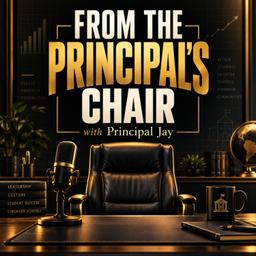
From the Principal's Chair with Principal Jay
Jonathan Snead
5.0from 3 ratings
- 8
- Episodes
- 3
- Ratings
- Weekly
- Cadence
- 2026
- First episode
About From the Principal's Chair with Principal Jay
Practical leadership conversations about the work behind the work — people, systems, decisions, AI, culture, and what it really takes to lead a school.
- Publisher
- Jonathan Snead
- Category
- education
- Language
- en
- Explicit
- No
- First episode
- 1 Oct 2026
- Latest episode
- 6 Nov 2026
Latest episodes
8 episodes in the feed.
6 Nov 2026
The Weight of the Chair
Principal Jay, Jonathan Snead, reflects on the unseen burden of school leadership and argues that a leader’s impact is measured not by how much they personally carry, but by the people, systems, and trust they build. He also introduces his book, The Weight of the Chair, and shares how he is expanding the Principal Jay community. -- Jonathan Snead distinguishes the visible authority of a principal’s title from the unseen pressure and responsibility of the role. He traces his path in education from teaching to academy coach, assistant principal, and principal, describing how final accountability changes the work. Leadership decisions continue to affect students, teachers, families, staff, and communities after the decision is made; follow-through and sustainable systems matter. Taking on every problem can create dependency and make an organization vulnerable when its leader is unavailable. A leader’s responsibility includes developing people and systems so the organization can function effectively without them in the room. Leadership changes the leader: it calls for humility, evolving communication and decision-making, admitting mistakes, and remaining willing to learn. Snead frames leadership as both weight and privilege, with opportunities to grow teachers, support student success, and build trusting teams. He introduces his first book, *The Weight of the Chair*, and describes it as a reflection on real leadership challenges and growth, not a claim to have mastered leadership. Snead outlines the Principal J community, including its podcast, newsletter, leadership reflections, and website. Takeaways The title principal is visible. The weight is not. You can love what you do and still acknowledge that it's hard. Being responsible for everything doesn't mean you have to personally do everything. The goal should be to build something that continues functioning even when we're not in the room. Activity is not the same thing as progress. The chair doesn't make us immune to mistakes. It makes us responsible for how we respond when we make them. We have to hold these two realities together: the weight and the privilege. Measure it by what you're building. The greatest accomplishment of a leader isn't simply reaching the position, but it's what becomes possible because you were there. Leadership is not about proving how much pressure you can withstand. Chapters 00:00 Leadership’s greatest accomplishment: what becomes possible 00:50 The visible title and the unseen weight of the principal’s chair 02:48 From teacher to principal: when final responsibility becomes yours 05:39 The decisions and follow-through that affect whole communities 08:42 Why strong leaders must stop carrying everything alone 11:27 How leadership changes the leader 13:32 Building with intention: activity is not progress 16:15 The Weight of the Chair: the realities leadership programs may miss 18:07 Holding leadership’s burden and privilege together 19:18 Principal J, the book preorder, and the newsletter 21:27 Measure leadership by what you build, not what you carry 22:59 A challenge: decide what to carry, share, or approach differently
30 Oct 2026
The Conversations You’re Avoiding - Why They Matter More Than You Think
Principal Jay (Jonathan Snead) reflects on the difficult conversations school leaders postpone, and how avoidance can harm students, staff trust, and the people who need clear feedback. He offers a practical approach for addressing concerns directly, respectfully, and with meaningful follow-through. In this episode, Principal Jay distinguishes thoughtful timing from avoiding a conversation because it feels uncomfortable. General reminders in staff meetings or emails can’t replace addressing a specific concern with the person involved. He shares how feedback that he was afraid of confrontation pushed him to examine his own leadership. Unaddressed concerns can affect students’ learning, frustrate colleagues who meet expectations, and leave the person at the center of the concern without a fair chance to improve. Leaders can be both supportive and accountable: describe the evidence, clarify what needs to change, listen to the other person’s perspective, and agree on next steps. A difficult conversation is only the beginning. Coaching, a second meeting, reviewing student work, or other follow-up can help turn expectations into improvement. Principal Jay challenges leaders to examine whether they communicate clearly, follow through consistently, and avoid conversations to protect relationships or avoid discomfort. He closes with three questions to help listeners prepare for one conversation they’ve been putting off. What specifically needs to be addressed? What am I hoping will happen if I keep waiting? What would a respectful, clear, and productive conversation look like? Timestamps 00:23 - Why leaders put off difficult conversations 02:24 - When “being patient” becomes avoidance 05:16 - The feedback that made Principal Jay reflect on confrontation 08:04 - Who pays the price when concerns go unaddressed 10:48 - Holding people accountable without disrespect 13:55 - A four-step process: clarify, understand, communicate, follow through 17:11 - The difficult conversation leaders need to have with themselves 19:37 - Three questions to prepare for a conversation this week 21:16 - Closing thoughts on the courage to address what matters
25 Oct 2026
Block Out the Noise
Everybody gets a voice. Not everybody gets a vote. In this special episode of From the Principal’s Chair with Principal Jay, I talk about learning how to separate useful feedback from unnecessary noise. There was a time when one Facebook post, one comment thread, or one person’s opinion could overshadow an entire day of meaningful work. I had to learn that just because something reached my ears did not mean it deserved access to my mind. We talk about criticism, accountability, social media, difficult decisions, and the importance of protecting your thinking without becoming defensive or closed off to growth. The goal is not to ignore everything people say. The goal is to know what deserves to stay. Eat the meat. Spit out the bones. Take the truth. Learn from what makes you better. Correct what needs correcting. Then block out the rest. This conversation goes beyond school leadership. If you have ever had to make a difficult decision, carry responsibility, deal with criticism, or keep moving while other people discussed your choices from the sidelines, this episode is for you. 🎙️ From the Principal’s Chair with Principal Jay 📖 The Weight of the Chair: Leadership Lessons on Culture, Capacity, and Building What Lasts Jonathan J. Snead, Sr.
23 Oct 2026
Are We Leading Instruction... or Just Looking Like We Are?
Principal Jonathan Snead, known as Principal Jay, examines the difference between completing instructional leadership tasks and improving what happens for students. He shares practical ways to turn walkthroughs, PLCs, and data meetings into better instructional decisions, and explains how to build a culture that keeps improving even when the principal isn’t in the room.In this episode: Why activity and documentation can look like progress without changing instruction. How walkthrough feedback can move beyond identifying a concern to coaching, support, and follow-up. What makes a PLC a professional learning community: teachers study student work, identify misconceptions, choose a response, and return to check whether it worked. How a seventh-grade reading team can use student work to pinpoint where students struggle to connect textual details to a larger idea. Why data should lead to specific instructional decisions, not simply another report or a default reteach. The difference between an efficient system and an effective one, and why faster paperwork isn’t the goal. How shared expectations, trust, and teacher leadership can make improvement less dependent on the principal. Three questions for school leaders: Does this activity improve teaching and learning? What changes after we identify a problem? Would the process continue without my personal management? Timestamps: 00:03 - The question: Are we leading instruction or just looking like it? 02:28 - Managing leadership activities versus improving instruction 05:21 - Why a completed form or meeting isn’t the improvement 05:50 - Turning classroom walkthroughs into meaningful follow-through 10:14 - Having a PLC versus functioning as a professional learning community 12:12 - Using student work to choose and test an instructional response 15:35 - Moving from data review to better instructional decisions 18:06 - Why “reteach it” isn’t enough without understanding the problem 20:33 - Examining whether leadership systems produce intended results 22:09 - Efficiency and effectiveness are not the same 24:04 - Building instructional practices that work beyond the principal’s presence 28:26 - Three questions to assess the purpose, response, and sustainability of the work 31:50 - Measuring instructional leadership by what continues when the principal leaves 33:18 - A one-activity challenge for school leaders Action item: Choose one instructional leadership activity that takes significant time and ask what has actually changed because of it. If the answer isn’t clear, rethink its purpose, strengthen follow-through, or reconnect it to student learning.
16 Oct 2026
What Did Your Staff Learn About You This Week?
What does your staff learn about you just by watching how you lead? In this episode of Real Talk From the Principal’s Chair, Principal Jay reflects on the messages leaders send through their consistency, priorities, reactions, and follow-through—even when they never say a word. Your leadership is always teaching something. The question is: is it teaching what you intended?
9 Oct 2026
The Week Was Hard. That Doesn’t Mean It Was Bad.
Principal Jay, Jonathan Snead, reflects on why a difficult week isn’t automatically a bad one. This short leadership episode offers a practical way to distinguish growth and meaningful work from mistakes, overload, and systems that need attention. In this episode: Separate a hard week from a bad week. A difficult conversation, an unexpected change, or a decision others disagree with may be evidence that you led, not that you failed. Snead shares examples of challenging but necessary leadership: giving honest feedback, holding someone accountable, protecting standards, and building others’ capacity instead of rescuing them. Hard weeks can also point to problems worth addressing, such as weak systems, too much work, or responsibilities that should be delegated, changed, or stopped. Replace self-criticism with reflection: What did the week require from you - courage, patience, clarity, humility, or a boundary? Notice small signs of growth, like pausing before sending an irritated email, asking instead of assuming, or admitting you don’t have the answer yet. Before the weekend, name what was hard, identify what it required from you, and consider what you handled well and what you can learn from. Timestamps: 00:00 - Was it a bad week, or was it just hard?02:28 - When difficulty is evidence that something important happened03:44 - Telling growth apart from exhaustion and broken systems05:12 - Spotting the quiet moments of leadership growth06:10 - A three-step reflection for closing out the week07:46 - Give yourself credit without ignoring what you can learn
3 Oct 2026
Welcome to From the Principal’s Chair
Welcome to From the Principal’s Chair with Principal Jay — a podcast about the real work of school leadership. Each week, Principal Jay shares practical lessons, honest reflections, and real-world strategies around leadership, culture, systems, data, difficult conversations, and the decisions that come with sitting in the chair. If you lead people, influence culture, or are growing into your next level of leadership, pull up a chair.
1 Oct 2026
What Are You Carrying That Isn’t Yours?
In this first episode of Real Talk From the Principal’s Chair, Principal Jay reflects on the weight school leaders often carry — staff frustration, difficult decisions, unresolved problems, and responsibilities that may not truly belong to them. This episode is a reminder to own what’s yours, support what you can, and release what isn’t. Eat the meat. Spit out the bones. Take what serves you. Leave what doesn’t.
Reach and audience
Public platform figures. Ratings count people who left a rating, not total listeners.
- Apple Podcasts (US)
- 5.0 / 5
- 3 ratings
Contact From the Principal's Chair with Principal Jay
- Guest appearances
- Does not typically book guests
Based on episode analysis; this does not confirm that the show is currently accepting guests.
Host of From the Principal's Chair with Principal Jay?
Claim your podcast to manage its listing and keep your show details accurate.
Pod Engine is an independent podcast discovery and analytics service and is not affiliated with or endorsed by this podcast. Artwork and show content belong to their owners. Full legal notice.
Explore this show
Podcast research with Pod Engine