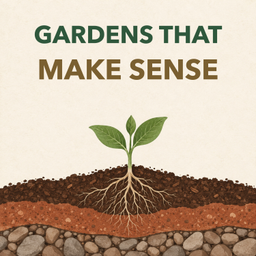
Gardens That Make Sense explains the soil, water, light, temperature, and structures that shape a growing space. These researched episodes focus on adaptable principles and tradeoffs, helping listeners understand what changes in a garden without pretending one method fits every place.
Some seeds remain dormant until a period of cool, moist conditions helps shift their internal chemistry. Explore cold stratification as an adaptation, with clear limits because species and climates differ.
Inside this episode:
- Alive but not growing
- Cold is a seasonal clock
- Why moisture matters
- What happens when warmth returns
- Not every seed in the same species
Sources include University of Florida IFAS, Seed Dormancy and Stratification and University of Florida IFAS, Stratification.
This episode is a researched narrative summary. Historical records may be incomplete, translated differently, or interpreted differently by scholars. We distinguish documented facts, estimates, disputed interpretations, and later stories where material. Corrections are logged and incorporated into future editions.
Follow Gardens That Make Sense for more researched stories about the principles behind practical gardens.
21 Sept 2026
How Pruning Changes New Growth
Pruning changes which buds remain and how a plant distributes resources into new growth. Timing, species and the location of each cut matter, so the episode explains principles rather than universal instructions.
Inside this episode:
- A plant is a network of growing points
- Heading and thinning
- Stored energy does not disappear
- The cut location shapes direction
- Light enters the canopy
Sources include Virginia Cooperative Extension, Pruning Basics and University of Georgia Extension, Basic Principles of Pruning.
This episode is a researched narrative summary. Historical records may be incomplete, translated differently, or interpreted differently by scholars. We distinguish documented facts, estimates, disputed interpretations, and later stories where material. Corrections are logged and incorporated into future editions.
Follow Gardens That Make Sense for more researched stories about the principles behind practical gardens.
21 Sept 2026
How Flowers Signal to Pollinators
Flowers advertise with color, shape, scent, temperature and rewards that different pollinators perceive in different ways. Explore how those signals guide visits without assuming every flower follows one strategy.
Inside this episode:
- A signal needs a receiver
- Color beyond human vision
- Scent arrives first
- Shape and access
- Texture, heat, and electric fields
Sources include New Phytologist review of floral signals, Optical flower signals, and Ultraviolet floral guides.
This episode is a researched narrative summary. Historical records may be incomplete, translated differently, or interpreted differently by scholars. We distinguish documented facts, estimates, disputed interpretations, and later stories where material. Corrections are logged and incorporated into future editions.
Follow Gardens That Make Sense for more researched stories about the principles behind practical gardens.
20 Sept 2026
Why Morning and Afternoon Sun Affect Gardens Differently
This episode explores Light, temperature and exposure explained without making location-specific planting promises. The story keeps the mechanisms clear and the research grounded for a casual listener.
Inside this episode:
- The sun's angle
- The warmest air comes later
- Water loss through leaves
- Dew and leaf drying
- Leaf temperature is not air temperature
Sources include NOAA Global Monitoring Laboratory, solar radiation, University of Minnesota Extension, gardens in heat, and University of Missouri Extension, light and plants.
This episode is a researched narrative summary. Historical records may be incomplete, translated differently, or interpreted differently by scholars. We distinguish documented facts, estimates, disputed interpretations, and later stories where material. Corrections are logged and incorporated into future editions.
Follow Gardens That Make Sense for more researched stories about the principles behind practical gardens.
20 Sept 2026
How Mulch Changes Evaporation
This episode explores the physical ways surface coverings affect moisture, temperature and weeds without prescribing one universal method. The story keeps the mechanisms clear and the research grounded for a casual listener.
Inside this episode:
- How bare soil loses water
- Shade and still air
- Material changes the energy balance
- Rain has to pass the layer
- Weeds change the water budget
Sources include Oregon State University Extension, mulching woody ornamentals, Oregon State University Extension, and USDA Natural Resources Conservation Service, mulching practice standard.
This episode is a researched narrative summary. Historical records may be incomplete, translated differently, or interpreted differently by scholars. We distinguish documented facts, estimates, disputed interpretations, and later stories where material. Corrections are logged and incorporated into future editions.
Follow Gardens That Make Sense for more researched stories about the principles behind practical gardens.
20 Sept 2026
What a Raised Bed Changes
This episode explores Drainage, soil depth, warming, access and the tradeoffs created by lifting a growing area. The story keeps the mechanisms clear and the research grounded for a casual listener.
Inside this episode:
- Defining the bed
- Drainage gains a gradient
- More surface means faster change
- Control over the root zone
- Access without compaction
Sources include Penn State Extension, Raised Bed Garden, University of Maryland Extension, raised beds, and Oregon State University Extension, raised bed gardening.
This episode is a researched narrative summary. Historical records may be incomplete, translated differently, or interpreted differently by scholars. We distinguish documented facts, estimates, disputed interpretations, and later stories where material. Corrections are logged and incorporated into future editions.
Follow Gardens That Make Sense for more researched stories about the principles behind practical gardens.
20 Sept 2026
Why Soil Texture Affects Drainage
This episode explores how sand, silt, clay and pore spaces influence the movement and storage of water. The story keeps the mechanisms clear and the research grounded for a casual listener.
Inside this episode:
- Texture is a particle mix
- Large pores move water quickly
- Small pores hold water
- Silt and the middle range
- Structure can change the outcome
Sources include USDA Natural Resources Conservation Service, soil texture calculator, University of Minnesota Extension, agricultural drainage, and USDA NRCS Soil Health.
This episode is a researched narrative summary. Historical records may be incomplete, translated differently, or interpreted differently by scholars. We distinguish documented facts, estimates, disputed interpretations, and later stories where material. Corrections are logged and incorporated into future editions.
Follow Gardens That Make Sense for more researched stories about the principles behind practical gardens.
Contact Gardens That Make Sense
Guest appearances
Does not typically book guests
Based on episode analysis; this does not confirm that the show is currently accepting guests.
Host of Gardens That Make Sense?
Claim your podcast to manage its listing and keep your show details accurate.
Pod Engine is an independent podcast discovery and analytics service and is not affiliated with or endorsed by this podcast. Artwork and show content belong to their owners. Full legal notice.
Explore this show Podcast research with Pod Engine