
Geronimo’s Story of His Life is the oral life history of a legendary Apache warrior. Composed in 1905, while Geronimo was being held as a U.S. prisoner of war at Fort Sill, Oklahoma, Geronimo’s story found audience and publication through the efforts of S. M. Barrett--Lawton, Oklahoma, Superintendent of Education, who wrote in his preface that “the initial idea of the compilation of this work was . . . to extend to Geronimo as a prisoner of war the courtesy due any captive, i.e. the right to state the causes which impelled him in his opposition to our civilization and laws.” Barrett, with the assistance of Asa Deklugie, son of Nedni chief Whoa as Apache translator, wrote down the story as Geronimo told it --beginning with an Apache creation myth. Geronimo recounted bloody battles with Mexican troopers, against whom he had vowed vengeance in 1858 after they murdered his mother, his wife, and his three small children. He told of treaties made between Apaches and the U.S. Army--and treaties broken. There were periods of confinement on the reservations, and escapes. And there were his final days on the run, when the U.S. Army put 5000 men in the field against his small band of 39 Apache.<br /><br />Geronimo had been a prisoner of war for 19 years when he told his story. Born in 1829, he was by then an old man, no longer a warrior, and he had come to an accommodation with many things “white,” including an appreciation of money. U.S. Bureau of Indian Affairs personnel took him to the St. Louis World’s Fair in 1904, where he roped cows in the “wild west show” and signed his name for “ten, fifteen, or twenty five cents.” By then he was perhaps the United States’ most “famous” Indian. In 1905 he was even invited to ride horseback in President Theodore Roosevelt’s inaugural parade (though still a prisoner of war!).<br /><br />Geronimo dedicated his book to Roosevelt with the plea that he and his people be allowed to return to their ancestral land in Arizona. “It is my land, my home, my father’s land, to which I now ask to be allowed to return. I want to spend my last days there, and be buried among those mountains. If this could be I might die in peace.” Geronimo died at Fort Sill, Oklahoma, in 1909, still a prisoner of war. (Introduction by Sue Anderson)
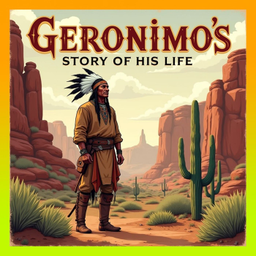
Geronimo’s Story of His Life
Claim This Podcastby Geronimo
Podcast Overview
Geronimo’s Story of His Life is the oral life history of a legendary Apache warrior. Composed in 1905, while Geronimo was being held as a U.S. prisoner of war at Fort Sill, Oklahoma, Geronimo’s story found audience and publication through the efforts of S. M. Barrett--Lawton, Oklahoma, Superintendent of Education, who wrote in his preface that “the initial idea of the compilation of this work was . . . to extend to Geronimo as a prisoner of war the courtesy due any captive, i.e. the right to state the causes which impelled him in his opposition to our civilization and laws.” Barrett, with the assistance of Asa Deklugie, son of Nedni chief Whoa as Apache translator, wrote down the story as Geronimo told it --beginning with an Apache creation myth. Geronimo recounted bloody battles with Mexican troopers, against whom he had vowed vengeance in 1858 after they murdered his mother, his wife, and his three small children. He told of treaties made between Apaches and the U.S. Army--and treaties broken. There were periods of confinement on the reservations, and escapes. And there were his final days on the run, when the U.S. Army put 5000 men in the field against his small band of 39 Apache.<br /><br />Geronimo had been a prisoner of war for 19 years when he told his story. Born in 1829, he was by then an old man, no longer a warrior, and he had come to an accommodation with many things “white,” including an appreciation of money. U.S. Bureau of Indian Affairs personnel took him to the St. Louis World’s Fair in 1904, where he roped cows in the “wild west show” and signed his name for “ten, fifteen, or twenty five cents.” By then he was perhaps the United States’ most “famous” Indian. In 1905 he was even invited to ride horseback in President Theodore Roosevelt’s inaugural parade (though still a prisoner of war!).<br /><br />Geronimo dedicated his book to Roosevelt with the plea that he and his people be allowed to return to their ancestral land in Arizona. “It is my land, my home, my father’s land, to which I now ask to be allowed to return. I want to spend my last days there, and be buried among those mountains. If this could be I might die in peace.” Geronimo died at Fort Sill, Oklahoma, in 1909, still a prisoner of war. (Introduction by Sue Anderson)
Language
🇺🇲
Publishing Since
9/8/2024
1 verified contact email on file for Geronimo’s Story of His Life
Pitch yourself as a guest, propose sponsorships, or reach out directly to the host.
Recent Episodes
September 8, 2024
Geronimo’s Story of His Life - The Old and the New, Part 2
September 8, 2024
Geronimo’s Story of His Life - The White Men, Part 4; The Old and the New, Part 1
September 8, 2024
Geronimo’s Story of His Life - The White Men, Part 3
10 total episodes available
Deep-dive analytics for Geronimo’s Story of His Life
Frequently asked questions
Have a different question and can't find the answer you're looking for? Reach out to our support team by sending us an email and we'll get back to you as soon as we can.
- What is Geronimo’s Story of His Life?
- How often does this podcast release new episodes?
This podcast updates daily.
- Where can I listen to this podcast?
This podcast is available on 4 platforms including Apple Podcasts, Spotify, and more. You can also use the RSS feed directly.
- Does this podcast accept guests?
No, this podcast does not typically feature guests.
Legal Disclaimer
Pod Engine is not affiliated with, endorsed by, or officially connected with any of the podcasts displayed on this platform. We operate independently as a podcast discovery and analytics service.
All podcast artwork, thumbnails, and content displayed on this page are the property of their respective owners and are protected by applicable copyright laws. This includes, but is not limited to, podcast cover art, episode artwork, show descriptions, episode titles, transcripts, audio snippets, and any other content originating from the podcast creators or their licensors.
We display this content under fair use principles and/or implied license for the purpose of podcast discovery, information, and commentary. We make no claim of ownership over any podcast content, artwork, or related materials shown on this platform. All trademarks, service marks, and trade names are the property of their respective owners.
While we strive to ensure all content usage is properly authorized, if you are a rights holder and believe your content is being used inappropriately or without proper authorization, please contact us immediately at hey@podengine.ai for prompt review and appropriate action, which may include content removal or proper attribution.
By accessing and using this platform, you acknowledge and agree to respect all applicable copyright laws and intellectual property rights of content owners. Any unauthorized reproduction, distribution, or commercial use of the content displayed on this platform is strictly prohibited.