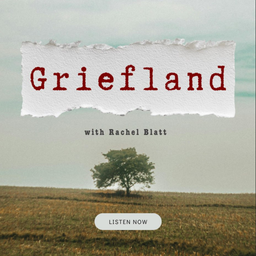
Podcast thumbnail for Griefland With Rachel Blatt

Griefland With Rachel Blatt

Claim This Podcast

by Rachel Blatt

5 episodes
Updated Daily
Accepts GuestsHas SponsorsLocation πŸ‡ΊπŸ‡Έ

Podcast Overview

Griefland is a podcast about what grief actually does to us, not how to get over it. Hosted by Rachel Blatt, a widowed mother of two boys, Griefland was born after she lost her husband Dave to cancer in 2022. Left as a solo parent, she found herself asking questions she couldn't stop turning over: Will they be okay? Am I enough? What will they miss that I can't give them? This podcast explores how early loss shapes the people we become. Not through clinical frameworks or tidy stages, but through honest, human conversation. Rachel brings her own story alongside the stories of others living in grief, and looks at how loss echoes across a lifetime. From childhood into adulthood, across generations, and into the art and music we leave behind. Griefland is for three kinds of people: those who lost a parent early, those raising children through loss, and those who love someone carrying grief. If any of that is you, you belong here.

Language

πŸ‡ΊπŸ‡²

Publishing Since

5/13/2026

1 verified contact email on file for Griefland With Rachel Blatt

Pitch yourself as a guest, propose sponsorships, or reach out directly to the host.

Recent Episodes

Episode thumbnail for Rachel Blatt EP. 5 - Debbie Weiss: She Lost Her Mom at Nine, Her Husband at 49

June 10, 2026

Rachel Blatt EP. 5 - Debbie Weiss: She Lost Her Mom at Nine, Her Husband at 49

<p dir="ltr">Debbie Weiss lost her mother four days before her tenth birthday. Four decades later, she lost her husband. And somewhere between those two losses, she discovered something: the grief she never processed as a child had been quietly running her life the whole time.</p> <p dir="ltr">In this episode of Griefland, host Rachel Blatt sits down with Debbie, author, widow, and creator of The Hungover Widow Substack, to talk about the loss most people don't know shaped her. Not her husband's death, which she wrote about in her acclaimed memoir Available As Is, but her mother's. The conversation covers grief brain in children, the rule of impending disaster, and the ghost of the woman Debbie might have become had Valia lived.</p> <p dir="ltr">Β </p> <h4 dir="ltr">🎧 Episode Breakdown</h4> <ul> <li dir="ltr" aria-level="1"> <p dir="ltr" role="presentation">Rachel introduces Debbie Weiss: author of Available As Is, widow, and Rachel's fellow traveler in grief</p> </li> <li dir="ltr" aria-level="1"> <p dir="ltr" role="presentation">Debbie reads from her Substack: the ghost of who she would have been, and "the rule of impending disaster"</p> </li> <li dir="ltr" aria-level="1"> <p dir="ltr" role="presentation">The night her father drove her mother to the hospital; her mother waved from a gurney and Debbie never saw her again.</p> </li> <li dir="ltr" aria-level="1"> <p dir="ltr" role="presentation">1973: no 911, no paramedics, no grief counseling; the standard of care was to leave children alone if they seemed to be functioning</p> </li> <li dir="ltr" aria-level="1"> <p dir="ltr" role="presentation">Life after: expected to keep up with chores, homework, and school with no acknowledgment that her brain was in grief</p> </li> <li dir="ltr" aria-level="1"> <p dir="ltr" role="presentation">Her dad, a scientist, became a single parent overnight; impatient, overwhelmed, unused to primary caregiving</p> </li> <li dir="ltr" aria-level="1"> <p dir="ltr" role="presentation">As the years passed, he grew into it; meditation, Buddhism, and a desire to understand his daughter more</p> </li> <li dir="ltr" aria-level="1"> <p dir="ltr" role="presentation">The loss showing up in adolescence: social awkwardness, missing crucial "girl knowledge," navigating tampons from a pamphlet</p> </li> <li dir="ltr" aria-level="1"> <p dir="ltr" role="presentation">The grandmother Miriam who helped raise her: warm, smart, into mythology but "pink polyester" wasn't quite what Debbie needed</p> </li> <li dir="ltr" aria-level="1"> <p dir="ltr" role="presentation">The rule of impending disaster: always waiting for the next bad thing, afraid to let her dad travel, unable to move far from home</p> </li> <li dir="ltr" aria-level="1"> <p dir="ltr" role="presentation">The 70/30 split: how much of who she became was personality, and how much was the loss</p> </li> <li dir="ltr" aria-level="1"> <p dir="ltr" role="presentation">Debbie reads from her book: the ghost of who she would have been, secure, bold, living on the water in Seattle, going after what she wanted</p> </li> <li dir="ltr" aria-level="1"> <p dir="ltr" role="presentation">How losing her husband at 49 forced her back to the unprocessed ten-year-old grief</p> </li> <li dir="ltr" aria-level="1"> <p dir="ltr" role="presentation">Writing Available As Is: from therapeutic exercise to MFA at 56, from bad early drafts to published memoir</p> </li> <li dir="ltr" aria-level="1"> <p dir="ltr" role="presentation">The insight from David Kessler and Elisabeth KΓΌbler-Ross: ages 7–11 may be the hardest time to lose a parent, aware enough to feel everything, too young to process it</p> </li> <li dir="ltr" aria-level="1"> <p dir="ltr" role="presentation">What Debbie wishes for grieving children: grace. No math homework. Someone to say "you won't be at your best, and that's okay."</p> </li> <li dir="ltr" aria-level="1"> <p dir="ltr" role="presentation">On therapy for kids: it depends on the child, the therapist, and whether the child is willing, a forced session is not a solution</p> </li> <li dir="ltr" aria-level="1"> <p dir="ltr" role="presentation">Control as a grief response: Debbie became a lawyer; Rachel sees it in her son right now</p> </li> <li dir="ltr" aria-level="1"> <p dir="ltr" role="presentation">Comparing losses and what not to say: why "at least you have this" lands wrong, every time</p> </li> <li dir="ltr" aria-level="1"> <p dir="ltr" role="presentation">Her father, now 96, still living independently; their relationship fully repaired and close</p> </li> </ul> <p>Β </p> <h4 dir="ltr">πŸ’‘ Key Takeaways</h4> <ol> <li dir="ltr" aria-level="1"> <p dir="ltr" role="presentation">"The rule of impending disaster" is a real consequence of childhood loss. When the worst thing that can happen actually does happen at nine years old, your nervous system never quite trusts good news again. Debbie named it, and in naming it, made it visible for every listener who has felt it but never had the words.</p> </li> <li dir="ltr" aria-level="1"> <p dir="ltr" role="presentation">Grief brain is real in children, and almost nobody gave them grace for it. Debbie couldn't concentrate, lost her key, fell behind on homework and nobody connected that to her mother's death. The standard of care in 1973 was: if they seem fine, they're fine. They weren't fine.</p> </li> <li dir="ltr" aria-level="1"> <p dir="ltr" role="presentation">The grief you don't process as a child will wait for you. Debbie built a careful, contracted life around her high school sweetheart and when he died, she had to finally go back and grieve the ten-year-old girl too. Both losses had to be reckoned with at once.</p> </li> <li dir="ltr" aria-level="1"> <p dir="ltr" role="presentation">Not having a mother means missing things no book or pamphlet can replace. It's not just blusher and tampons. It's the absorbed knowledge of how a woman moves through the world, handles emotion, navigates relationships. That invisible curriculum vanishes with her.</p> </li> <li dir="ltr" aria-level="1"> <p dir="ltr" role="presentation">The ghost of who you would have been is its own kind of grief. Debbie's concept: the more confident, less anxious, more fully realized version of herself that might have existed had her mother lived is one of the most original framings of childhood loss this podcast has offered.</p> </li> <li dir="ltr" aria-level="1"> <p dir="ltr" role="presentation">Forced therapy is not therapy. Both Debbie and Rachel land here: whether it's a nine-year-old who won't talk to a male therapist, or a teenager dragged away from basketball practice, the willingness has to be there. Grace and presence may matter more than a clinical intervention.</p> </li> </ol> <p>Β </p> <h4 dir="ltr">πŸ“š References & Resources</h4> <ul> <li dir="ltr" aria-level="1"> <p dir="ltr" role="presentation">Debbie Weiss β€” author, attorney, and widow; lost her mother at nine, her husband in her late forties</p> </li> <li dir="ltr" aria-level="1"> <p dir="ltr" role="presentation">Available As Is β€” Debbie's memoir about dating and rebuilding life as a midlife widow; available on Amazon</p> </li> <li dir="ltr" aria-level="1"> <p dir="ltr" role="presentation">The Hungover Widow β€” Debbie's Substack newsletter</p> </li> <li dir="ltr" aria-level="1"> <p dir="ltr" role="presentation">Miriam β€” Debbie's paternal grandmother, who helped raise her after her mother's death</p> </li> <li dir="ltr" aria-level="1"> <p dir="ltr" role="presentation">Valia β€” Debbie's mother; died at 42 from cardiac complications; her name is the muse of comedy in Greek mythology</p> </li> </ul> <p>Β </p> <h4 dir="ltr">πŸ‘€ About Rachel Blatt</h4> <p class="p1">Rachel Blatt is the host of Griefland and a widowed mother of two sons. After losing her husband Dave to cancer in 2022, she began exploring how early loss shapes the people we become, not through clinical frameworks, but through honest conversation. She brings both a personal lens and a parent's vigilance to every episode.</p> <p>πŸ“© Have a story to share? Follow and message me on <strong><a href= "https://www.instagram.com/widowtales/">Instagram</a>!</strong></p> <p>Β </p> <h4 dir="ltr">πŸ‘€ About Debbie Weiss</h4> <p dir="ltr">Debbie Weiss is an author, former attorney, and widow based in the San Francisco Bay Area. She lost her mother Valia four days before her tenth birthday and her husband decades later. After burning out from law at 40, she began writing β€” eventually earning an MFA at 56 and publishing her debut memoir Available As Is, about dating and rebuilding as a midlife widow. She writes the Substack newsletter The Hungover Widow and is one of the more clear-eyed, wry, and deeply honest voices on grief writing today.</p> <p dir="ltr">Her father, who lost his wife at a young age and now has a close relationship with Debbie, is 96 and still living independently. They see each other almost every week.</p> <p dir="ltr">If Debbie's story stayed with you, especially the idea of who you might have been, share this episode with someone who needs to hear that their grief was real, their brain was impacted, and they deserved more grace than they got.</p> <ul> <li dir="ltr" aria-level="1"> <p dir="ltr" role="presentation">πŸ“– Read Available As Is on Amazon: https://a.co/d/0eia21kb</p> </li> <li dir="ltr" aria-level="1"> <p dir="ltr" role="presentation">✍️ Subscribe to The Hungover Widow on Substack: https://debbieweiss.substack.com/</p> </li> <li dir="ltr" aria-level="1"> <p dir="ltr" role="presentation">πŸ“² Follow Debbie: <a href= "https://www.instagram.com/debbie_weiss_author/">@debbie_weiss_author</a> on Instagram</p> </li> </ul>

Episode thumbnail for Rachel Blatt EP. 4 - Joanne Levy-Prewitt: How Childhood Grief Hides Until It Can't

June 3, 2026

Rachel Blatt EP. 4 - Joanne Levy-Prewitt: How Childhood Grief Hides Until It Can't

<p dir="ltr">When Joanne Levy-Prewitt <span style= "font-family: -apple-system, BlinkMacSystemFont, 'Segoe UI', Roboto, Oxygen, Ubuntu, Cantarell, 'Open Sans', 'Helvetica Neue', sans-serif;"> was nine years old, her father waved at her from a stretcher β€” a weak wave, his gold wedding ring catching the light and said "bye, baby." He died that night. What followed wasn't just grief. It was decades of learning how to feel it.</span></p> <p dir="ltr">In this episode of Griefland, host Rachel Blatt talks with her dear friend Joanne about what happens when a child is told to be brave, hold it together, and protect her grieving mother and how eleven years of repression finally cracked open at 20 through an unlikely doorway: a bad boyfriend. What Joanne discovered in therapy changed everything. And what she did with that knowledge, teaching fourth grade for ten years, becoming the mother she wished she'd had is quietly extraordinary.<br /> <br /></p> <h4 dir="ltr">🎧 Episode Breakdown</h4> <ul> <li dir="ltr" aria-level="1"> <p dir="ltr" role="presentation">0:00 β€” Rachel introduces Joanne, who lost her father Marty at age nine to a fatal heart attack</p> </li> <li dir="ltr" aria-level="1"> <p dir="ltr" role="presentation">0:35 β€” Joanne describes the day her father died: an ambulance at the door, a stretcher in the hallway, and a wave goodbye she never forgot</p> </li> <li dir="ltr" aria-level="1"> <p dir="ltr" role="presentation">2:25 β€” Waking up to her grandmother wailing outside her bedroom door and knowing before anyone told her</p> </li> <li dir="ltr" aria-level="1"> <p dir="ltr" role="presentation">3:11 β€” Hundreds of people filling the house for weeks; her parents were childhood sweethearts rooted in a deep, close-knit community</p> </li> <li dir="ltr" aria-level="1"> <p dir="ltr" role="presentation">4:00 β€” What a nine-year-old understands about death and what she didn't know how to do with the feeling</p> </li> <li dir="ltr" aria-level="1"> <p dir="ltr" role="presentation">4:36 β€” The message she received from aunts, family friends, and community: "Be brave. Don't cry. You'll make your mother sad."</p> </li> <li dir="ltr" aria-level="1"> <p dir="ltr" role="presentation">5:53 β€” Returning to school after two weeks; her teacher had told the class; Joanne just wanted to disappear back into normal</p> </li> <li dir="ltr" aria-level="1"> <p dir="ltr" role="presentation">7:04 β€” Finding her first peer in grief in middle school, her friend Shannon, who lost her father at 11</p> </li> <li dir="ltr" aria-level="1"> <p dir="ltr" role="presentation">7:41 β€” The adult language she and a close friend's husband developed: highly competent, highly controlled, always trying not to be caught unawares again</p> </li> <li dir="ltr" aria-level="1"> <p dir="ltr" role="presentation">8:06 β€” Her mother tried therapy; Joanne refused to talk to the male therapist and eventually won the battle to stop going</p> </li> <li dir="ltr" aria-level="1"> <p dir="ltr" role="presentation">9:12 β€” At 20, a bad boyfriend's departure triggered a complete meltdown and a therapist who quickly said: "This isn't about him. You've never grieved your father."</p> </li> <li dir="ltr" aria-level="1"> <p dir="ltr" role="presentation">10:03 β€” The theme of grief returning at 30, and again when her mother died five years ago β€” and how her father's loss surfaced through it all</p> </li> <li dir="ltr" aria-level="1"> <p dir="ltr" role="presentation">10:17 β€” Why she almost became a therapist and why she didn't: she couldn't hold everyone else's sadness on top of her own</p> </li> <li dir="ltr" aria-level="1"> <p dir="ltr" role="presentation">11:15 β€” Becoming a fourth-grade teacher: placed in fourth grade by chance, she spent ten years redoing the year her life changed</p> </li> <li dir="ltr" aria-level="1"> <p dir="ltr" role="presentation">11:52 β€” One of her students lost her mother suddenly; Joanne agonized over getting it right for her</p> </li> <li dir="ltr" aria-level="1"> <p dir="ltr" role="presentation">13:07 β€” How losing her father meant losing her whole family, her mother in her grief, her siblings who left, the community that showed up for her mother but not for her</p> </li> <li dir="ltr" aria-level="1"> <p dir="ltr" role="presentation">14:11 β€” Her mother's friends losing patience for grief: "Why are you still sad? Why aren't you dating?"</p> </li> <li dir="ltr" aria-level="1"> <p dir="ltr" role="presentation">15:15 β€” What Joanne wishes had existed: group therapy for grieving children, just knowing you're not alone</p> </li> <li dir="ltr" aria-level="1"> <p dir="ltr" role="presentation">17:04 β€” How losing her father made her hyper-competent and fiercely capable; cooking at ten, fixing roofs and plumbing, becoming someone who doesn't need to be rescued</p> </li> <li dir="ltr" aria-level="1"> <p dir="ltr" role="presentation">19:12 β€” How that loss shaped how she parented her son: staying up until 1am to listen, owning feelings, never shutting the conversation down</p> </li> <li dir="ltr" aria-level="1"> <p dir="ltr" role="presentation">20:12 β€” "My mother never would have done that for me. That's why I wanted to do it for him."<br /> <br /></p> </li> </ul> <h4 dir="ltr">πŸ“š References & Resources</h4> <ul> <li dir="ltr" aria-level="1"> <p dir="ltr" role="presentation">Joanne Levy-Prewitt β€” Rachel's close friend; lost her father Marty at age nine to a fatal heart attack; former fourth-grade teacher; currently runs an education consulting business helping students get into college.</p> </li> </ul> <h4 dir="ltr"><br /> πŸ’‘ Key Takeaways</h4> <ol> <li dir="ltr" aria-level="1"> <p dir="ltr" role="presentation">Telling a grieving child to "be brave" for the surviving parent is its own kind of harm. Joanne was nine years old when adults told her not to cry so she wouldn't make her mother sad. That message didn't protect her, it taught her to bury the loss for over a decade.</p> </li> <li dir="ltr" aria-level="1"> <p dir="ltr" role="presentation">Repressed grief doesn't disappear. It finds a crack. Joanne's breakdown at 20 had nothing to do with a bad boyfriend and everything to do with a father she'd never properly mourned. Grief will wait as long as it has to.</p> </li> <li dir="ltr" aria-level="1"> <p dir="ltr" role="presentation">Children who grieve alone often become hyper-competent adults. The need to control, to be capable, to never be caught unawares again. Joanne and her friend Mike share this exact pattern. It's a coping mechanism that looks like strength from the outside.</p> </li> <li dir="ltr" aria-level="1"> <p dir="ltr" role="presentation">Grief comes back at unexpected moments. Her mother's death five years ago at 89, after a long life, brought Joanne's father rushing back. Early loss doesn't stay in the past; it resurfaces through new losses.</p> </li> <li dir="ltr" aria-level="1"> <p dir="ltr" role="presentation">The most powerful thing you can do for a grieving child may simply be to witness them. Joanne didn't need perfect therapy or the right words. She needed someone to acknowledge that she had lost something too, not just her mother.</p> </li> <li dir="ltr" aria-level="1"> <p dir="ltr" role="presentation">We parent in response to what we didn't have. Joanne sat up until 1am with her teenage son because her own mother never would have. Her wound became her greatest strength as a parent.<br /> <br /></p> </li> </ol> <h4 dir="ltr">πŸ‘€ About Rachel Blatt</h4> <p dir="ltr">Rachel Blatt is the host of Griefland and a widowed mother of two sons. After losing her husband Dave to cancer in 2022, she began exploring how early loss shapes the people we become, not through clinical frameworks, but through honest conversation. She brings both a personal lens and a parent's vigilance to every episode.</p> <p dir="ltr">πŸ“© Have a story to share? Follow and message me on <strong><a href="https://www.instagram.com/widowtales/" target= "_blank" rel="noopener">Instagram</a></strong>!</p> <p><strong>Β </strong></p> <h4 dir="ltr">πŸ‘€ About Joanne Levy-Prewitt</h4> <p class="p1">Joanne Levy-PrewittΒ is a longtime educator and education consultant who helps students navigate the college admissions process. She lost her father Marty to a fatal heart attack when she was nine years old. After nearly a decade as a fourth-grade teacher, the grade she was in when her father died, she now brings the same attentiveness and emotional intelligence she found in grief to her work with families and students.</p>

Episode thumbnail for Rachel Blatt EP. 3 - Matt Bradley: Solo Dad, Solo Kid - When You've Lived Both Sides of Childhood Loss

May 27, 2026

Rachel Blatt EP. 3 - Matt Bradley: Solo Dad, Solo Kid - When You've Lived Both Sides of Childhood Loss

<p dir="ltr">Matt Bradley lost his dad at 11. Thirty years later, he lost his wife and became a solo dad to a toddler. In this episode, he does something rare: he talks about grief from both sides of the equation, as the kid who lived it and the parent now navigating it.</p> <p dir="ltr">Rachel Blatt sits down with Matt, founder of the Solo Dad podcast, in a conversation that runs from childhood memory to co-parenting to what it means to raise a daughter without her mother. It's funny, honest, and accidently recorded on the 39th anniversary of his father's death which nobody planned.<br /> <br /></p> <h4 dir="ltr">🎧 Episode Breakdown</h4> <ul> <li dir="ltr" aria-level="1"> <p dir="ltr" role="presentation">0:00 β€” Rachel introduces Matt Bradley of the Solo Dad podcast; Matt reflects on how people react when they first hear his story</p> </li> <li dir="ltr" aria-level="1"> <p dir="ltr" role="presentation">1:45 β€” Matt's dad died of a sudden heart attack on a business trip when Matt was 11; his younger brother had just turned 6</p> </li> <li dir="ltr" aria-level="1"> <p dir="ltr" role="presentation">3:21 β€” The moment their mom called them to the formal living room and the letter Matt left in his father's casket</p> </li> <li dir="ltr" aria-level="1"> <p dir="ltr" role="presentation">4:13 β€” Why so many men died of heart attacks in the late 80s: the generation that never went to doctors</p> </li> <li dir="ltr" aria-level="1"> <p dir="ltr" role="presentation">5:10 β€” A classmate who also lost his dad shortly after, the quiet recognition of the "sad club"</p> </li> <li dir="ltr" aria-level="1"> <p dir="ltr" role="presentation">6:26 β€” The family moved from Southern California to Northern California after his dad died; a friend of 39 years didn't know until recently</p> </li> <li dir="ltr" aria-level="1"> <p dir="ltr" role="presentation">7:44 β€” A golf course at 16 or 17: meeting an older man who also lost his dad young and thinking, "He made it. He's normal."</p> </li> <li dir="ltr" aria-level="1"> <p dir="ltr" role="presentation">10:29 β€” Matt's defense mechanism: naming the loss before anyone else can use it against him ("Hi, I'm Matt. My dad died.")</p> </li> <li dir="ltr" aria-level="1"> <p dir="ltr" role="presentation">13:21 β€” After his dad died, his grandfather stepped up unexpectedly and they formed a real bond built around parallel grief</p> </li> <li dir="ltr" aria-level="1"> <p dir="ltr" role="presentation">19:34 β€” What Matt's dad was like: an IBM engineer, Oklahoma roots, the man who hung a belt on the wall but also put a PC in the house in 1982</p> </li> <li dir="ltr" aria-level="1"> <p dir="ltr" role="presentation">23:21 β€” Five children, five different versions of the same father and why every sibling carries a different loss</p> </li> <li dir="ltr" aria-level="1"> <p dir="ltr" role="presentation">24:50 β€” There's no good time for a parent to die: Matt's daughter was 13 months old when her mom passed</p> </li> <li dir="ltr" aria-level="1"> <p dir="ltr" role="presentation">31:15 β€” Self-deprecation as a grief response and the deeper root Matt traces back to never hearing a man say "you did good, son"</p> </li> <li dir="ltr" aria-level="1"> <p dir="ltr" role="presentation">36:28 β€” Moving across the country at 27 to be near his first daughter after a non-marital relationship and older men affirming the decision</p> </li> <li dir="ltr" aria-level="1"> <p dir="ltr" role="presentation">38:55 β€” Men who showed up "for a season" but couldn't be called today: the absence of a permanent male North Star</p> </li> <li dir="ltr" aria-level="1"> <p dir="ltr" role="presentation">41:05 β€” The founder of another solo dad podcast sharing a story about softening his hand at bedtime because his daughter doesn't know a dad's touch</p> </li> <li dir="ltr" aria-level="1"> <p dir="ltr" role="presentation">46:52 β€” How Matt parents his daughter Blair: intentional daily physical compliments, not quieting her voice, leaning into discomfort</p> </li> <li dir="ltr" aria-level="1"> <p dir="ltr" role="presentation">53:28 β€” Matt's mom, now his closest grief companion and her line: "There's no one to share the memories with"</p> </li> <li dir="ltr" aria-level="1"> <p dir="ltr" role="presentation">57:50 β€” "Grief makes you a tired that sleep won't fix"</p> </li> <li dir="ltr" aria-level="1"> <p dir="ltr" role="presentation">1:00:52 β€” The silver linings question reframed: the friends, the golf, the life that grew from the move he hated</p> </li> <li dir="ltr" aria-level="1"> <p dir="ltr" role="presentation">1:03:18 β€” His older brother's story: how their dad's death completely redirected every major life choice he made</p> </li> <li dir="ltr" aria-level="1"> <p dir="ltr" role="presentation">1:07:43 β€” Matt's closing message to Rachel's sons: "I'm alive. I met girls. I got married. Most of my Yelp reviews are in the positive."<br /> <br /></p> </li> </ul> <h4 dir="ltr">πŸ“š References & Resources</h4> <ul> <li dir="ltr" aria-level="1"> <p dir="ltr" role="presentation">Matt Bradley β€” founder and host of the Solo Dad podcast; lost his father at age 11, his wife Marcy to cancer when his daughter Blair was 13 months old</p> </li> <li dir="ltr" aria-level="1"> <p dir="ltr" role="presentation"><a href= "https://thesolodadpodcast.buzzsprout.com/" target="_blank" rel= "noopener">Solo Dad Podcast</a> β€” Matt's podcast for widowed and solo fathers</p> </li> </ul> <h4 dir="ltr"><br /> πŸ’‘ Key Takeaways</h4> <ol> <li dir="ltr" aria-level="1"> <p dir="ltr" role="presentation">"Grief makes you a tired that sleep won't fix." Matt's mother said this to him months after his wife died. It's the most precise description of grief fatigue in the episode and likely the whole series so far.</p> </li> <li dir="ltr" aria-level="1"> <p dir="ltr" role="presentation">Boys who lose their dads need a consistent North Star, not just seasonal mentors. Matt had men show up "for a season", a church member, a summer boss but no one he could still call today. The absence of a long-term male presence quietly shaped him for decades.</p> </li> <li dir="ltr" aria-level="1"> <p dir="ltr" role="presentation">Never having heard "you did good, son" is its own kind of grief. Matt traces his lifelong self-deprecation directly to this absence. Validation from a male voice hit differently when it finally came in his late 20s, from near-strangers affirming a brave decision.</p> </li> <li dir="ltr" aria-level="1"> <p dir="ltr" role="presentation">Solo parenting a child of the opposite sex requires intentional outsourcing. Matt can't teach his daughter everything, so he tells the drop-off mom who compliments Blair's outfits that it matters, learns to braid hair, and thinks hard about what his late wife admired most and how to instill it.</p> </li> <li dir="ltr" aria-level="1"> <p dir="ltr" role="presentation">There are no silver linings in grief but there are redirected lives. The move Matt hated led to friendships he still has nearly 40 years later. His older brother's entire life: wife, kids, career would have been different if their dad had lived. Loss changes the path; it doesn't ruin it.</p> </li> <li dir="ltr" aria-level="1"> <p dir="ltr" role="presentation">You may be feeling lonely, but you're not alone. This phrase, Matt's community tagline from the Solo Dad podcast, is perhaps the best possible summary of what Grief Land is trying to do.<br /> <br /></p> </li> </ol> <h4 dir="ltr">πŸ‘€ About Rachel Blatt</h4> <p dir="ltr">Rachel Blatt is the host of Griefland, a widowed mother of two sons and a certified grief educator. After losing her husband Dave to cancer in 2022, she began exploring how early loss shapes the people we become, not through clinical frameworks, but through honest conversation. She brings both a personal lens and a parent's vigilance to every episode.</p> <p dir="ltr">πŸ“© Have a story to share? Follow and message me onΒ <strong><a href="https://www.instagram.com/widowtales/" target="_blank" rel="noopener">Instagram</a></strong>!</p> <h4 dir="ltr">Β </h4> <h4 dir="ltr">πŸ‘€ About Matt Bradley</h4> <p dir="ltr">Matt Bradley is the founder of the <strong><a href= "https://thesolodadpodcast.buzzsprout.com/" target="_blank" rel= "noopener">Solo Dad podcast</a></strong>, a community and resource for widowed and solo fathers. He lost his father to a sudden heart attack when he was 11 years old and lost his wife Marcy to cancer when his daughter Blair was just 13 months old. He is raising Blair as a solo dad and brings hard-won perspective from both sides of childhood loss. He is based in Denver.</p> <p dir="ltr">You can follow the solo dad podcast on:<br /> <strong><a href="https://www.instagram.com/solodadlifepodcast/" target="_blank" rel="noopener">Instagram</a> | <a href= "https://www.facebook.com/groups/solodadpodcast" target="_blank" rel="noopener">Facebook</a> | <a href= "https://x.com/SoloDadPodcast" target="_blank" rel= "noopener">X</a></strong></p>

5 total episodes available

Deep-dive analytics for Griefland With Rachel Blatt

Frequently asked questions

Have a different question and can't find the answer you're looking for? Reach out to our support team by sending us an email and we'll get back to you as soon as we can.

What is Griefland With Rachel Blatt?

Griefland is a podcast about what grief actually does to us, not how to get over it.

Hosted by Rachel Blatt, a widowed mother of two boys, Griefland was born after she lost her husband Dave to cancer in 2022. Left as a solo parent, she found herself asking questions she couldn't stop turning over: Will they be okay? Am I enough? What will they miss that I can't give them?

This podcast explores how early loss shapes the people we become. Not through clinical frameworks or tidy stages, but through honest, human conversation. Rachel brings her own story alongside the stories of others living in grief, and looks at how loss echoes across a lifetime. From childhood into adulthood, across generations, and into the art and music we leave behind.

Griefland is for three kinds of people: those who lost a parent early, those raising children through loss, and those who love someone carrying grief. If any of that is you, you belong here.

How often does this podcast release new episodes?

This podcast updates daily.

Where can I listen to this podcast?

This podcast is available on 4 platforms including Apple Podcasts, Spotify, and more. You can also use the RSS feed directly.

Does this podcast accept guests?

Yes, this podcast regularly features guests.

Legal Disclaimer

Pod Engine is not affiliated with, endorsed by, or officially connected with any of the podcasts displayed on this platform. We operate independently as a podcast discovery and analytics service.

All podcast artwork, thumbnails, and content displayed on this page are the property of their respective owners and are protected by applicable copyright laws. This includes, but is not limited to, podcast cover art, episode artwork, show descriptions, episode titles, transcripts, audio snippets, and any other content originating from the podcast creators or their licensors.

We display this content under fair use principles and/or implied license for the purpose of podcast discovery, information, and commentary. We make no claim of ownership over any podcast content, artwork, or related materials shown on this platform. All trademarks, service marks, and trade names are the property of their respective owners.

While we strive to ensure all content usage is properly authorized, if you are a rights holder and believe your content is being used inappropriately or without proper authorization, please contact us immediately at hey@podengine.ai for prompt review and appropriate action, which may include content removal or proper attribution.

By accessing and using this platform, you acknowledge and agree to respect all applicable copyright laws and intellectual property rights of content owners. Any unauthorized reproduction, distribution, or commercial use of the content displayed on this platform is strictly prohibited.