- 5
- Episodes
- 1
- Ratings
- Monthly
- Cadence
- 2026
- First episode
About Hard Work Doesn't Win Grants
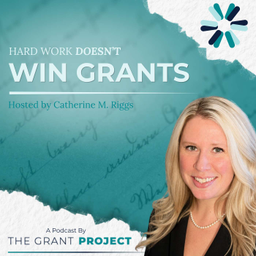
Hard Work Doesn't Win Grants is a podcast by The Grant Project, hosted by Catherine M Riggs. Each episode cuts through the noise on federal funding, grant readiness, and compliance so local governments and nonprofits can build the systems that actually get grants funded. No fluff, no inspiration — just what works.
- Publisher
- Catherine M. Riggs
- Category
- business · government
- Language
- en
- Explicit
- No
- First episode
- 22 Jul 2026
- Latest episode
- 2 Sept 2026
Latest episodes
5 episodes in the feed.
2 Sept 2026
Cash vs Accrual: Know Your Accounting Basis Before Your Next Grant
Most grant managers were never told which accounting basis their organization uses, and most do not know to ask. That one answer shapes every grant budget you build and every grant report you file. Cash basis records money when it moves. Accrual basis records activity when it happens. Federal awards run on accrual logic, which means a cost counts when it is incurred, not when the check clears the bank. When an organization keeps cash books and manages accrual-based awards, the same dollar gets measured two different ways, and the reconciliation tends to arrive under a federal reporting deadline. This episode gives grant managers at local governments and nonprofits the vocabulary, the context, and the one question that closes that gap. No accounting degree required. What you will hear in this episode: How cash basis and accrual basis each record a cost, and why that timing difference matters for federal awards Why cash basis accounting is legitimate, widely used, and in nine states prescribed by the state itself What GAAP and GASB actually govern, and why hybrid setups are common and fine Why knowing your basis does not mean converting your organization to accrual The one question to ask whoever keeps your books this week Resources mentioned: Free grant readiness resources and financial worksheets: https://thegrantproject.com/grant-readiness-resource-hub-page (https://thegrantproject.com/grant-readiness-resource-hub-page) Federal Budget Categories guide: thegrantproject.com/federal-budget-categories (https://thegrantproject.com/federal-budget-categories) The Grant Project Newsletter: https://services.thegrantproject.com/widget/form/jjIhk7emLBYyLFP7uQa8 (https://services.thegrantproject.com/widget/form/jjIhk7emLBYyLFP7uQa8) (00:00) - Introduction (01:53) - Cash Basis (04:31) - Accrual Basis (05:12) - The Mismatch (07:48) - GAAP & GASB (10:27) - The One Question (11:53) - Outro & CTA
26 Aug 2026
Grant Readiness Assessment: Score Your Organization in 10 Minutes
A grant readiness assessment takes about ten minutes, and it is the highest-return ten minutes available to any organization preparing to pursue funding. Most teams skip it and go straight to building: adopt a policy, clean up the books, handle the registration that has been on the list since spring. The work is real, but without a baseline there is no way to know whether it is the work that matters. Why a Grant Readiness Assessment Comes Before the Work Readiness needs a roadmap, a pathway that lets your team take small, actionable steps toward meaningful results. Every organization has strengths and gaps, and they are never evenly distributed. One has a deep bank of success stories and no reliable budget process. Another has structured systems and a leadership team that has never agreed on which grants to pursue. A third has strong partnerships and no data to show its programming produces results. Put all three on the same generic readiness checklist for a quarter and at least two of them spend that quarter in the wrong place. An honest score fixes this, because it converts readiness from a feeling into a diagnosis. Before you score, readiness is a low-grade worry, heavy and not actionable. After you score, readiness is a specific map. You can see which areas are strong, which are thin, and which ones are quietly costing your organization grant funding. Reviewers assess the organization behind the application, not only the narrative, which is the argument in The Grant Readiness Gap (https://thegrantproject.com/post/grant-readiness-gap). Scoring yourself is how you see what a reviewer sees. Scoring also changes how your team learns from that point forward. Guidance about your strong areas becomes fine-tuning, useful but not urgent. Guidance about your weak areas reads as though it was written for you. Ten minutes of honest scoring can save three months of effort aimed at the wrong area. The 10 Application Readiness Areas on the Scorecard The Grant Readiness Scorecard covers ten areas of application readiness, each mapped to an interactive worksheet. They group into four kinds of work. Direction. Mission alignment and strategic fit determine whether your organization is pursuing the right grants and whether those grants suit who you actually are. Proof. Capacity, data and evidence building, and your success story bank determine whether you can demonstrate what you can handle, show results with real data, and tell the story of the people you serve. What carries an application. Partnership building and documentation, budgets that are accurate and true to cost, and sustainability of programming during and after the performance period. The machinery behind it. A grant systems self-check on what is working and what is missing, and leadership alignment, because leadership has to stand behind every commitment an application makes. Foundation, Building, Ready: What the Three Ratings Mean Each area gets one of three ratings rather than a number on a scale. A number invites you to split the difference. A rating makes you decide. Foundation means significant work is needed, and that area should be addressed before pursuing major funding. This is a diagnosis, not a scolding. Foundation areas deliver the highest return on your team's time. Building means real capacity is in place with identified gaps. The word identified matters. You know precisely what is missing, so you build the roadmap to close the gap and manage it yourself rather than letting a reviewer discover it. Ready means this area is a strength to lead with. Document it and reference it in the organizational capacity section of your applications. Ready areas are assets, not finished business, and they should be reviewed and updated on a regular cycle. How to Score Honestly Using the Provable-Today Standard The value of the assessment depends on honesty rather than analytical skill. The instinct to rate your organization generously is strong and completely understandable. You care about the work and you know how hard your people work, so marking an area Foundation can feel disloyal. Reframe what the rating is. It is a diagnostic, not a grade, with no permanent record and no one to disappoint. Its only job is to point at the work with the highest return, and it can only do that if it is accurate. An honest Foundation rating is more valuable than a flattering Ready rating, because the honest one points precisely at what needs attention. Score where you are today, not where you are heading. Planning to build the success story bank this year does not make it a Building. If the stories are not collected, documented, and sitting in your grant readiness files today, the rating today is Foundation regardless of the goal. Here is the test. For each area, ask whether you could prove it right now to someone outside your organization: the outcome data, the partnership agreement or MOU, the budget with defensible cost estimates and your indirect cost rate or cost allocation plan, the sustainability plan, the written procedures behind your grant systems. If you could hand it over today, rate it Ready. If you could hand over most of it and know exactly what is missing, rate it Building. If producing it would mean a scramble or a promise to send it next week, rate it Foundation. Provable today is the standard, and it keeps optimism out of the number. What to Do With Your Grant Readiness Scores Start with your Foundation areas. You do not have to fix ten at once. Find the weakest and give it your attention first, because that is where a unit of effort buys the most improvement. Closing a Foundation area usually means building a system rather than working harder inside the one you have, which is the case made in Grant Readiness Systems (https://thegrantproject.com/post/grant-readiness-systems). Those areas also need attention before you commit to applications. A proposal built on a Foundation-rated budget process asks your staff to produce under deadline what the organization has not built yet, and that is the most costly way to develop an application. Building areas get different treatment. Use the worksheets to name the gaps precisely, then write the gap closure plan into your application strategy. Reviewers are not looking for organizations without gaps. They are looking for organizations that know their own capacity and have a credible, documented plan. Ready areas get used. Pull them directly into the organizational capacity section of your next application. Most organizations gloss over this part, because it feels matter-of-fact internally. If your partnerships are real and your outcome data is solid, say so in specific terms rather than claiming generally to be well positioned. The Pre-Award Document Drawer (https://thegrantproject.com/pre-award-document-drawer) pairs well here, since it lays out the file structure those documents should already live in. Then repeat it. Readiness is buildable, which means it is measurable, which means the scorecard is meant to be used again. Score today to set your benchmark, do the work on your Foundation areas, and score again in a few months to watch areas move from Foundation to Building to Ready. Repeated scoring also stops your team measuring against an impossible ideal, or against larger organizations that appear to have everything together, and starts you measuring against your own last result. Assess, build, reassess. That loop is what turns grant readiness from a worry your team carries into a system you can watch getting stronger. You are not chasing perfect. Y...
30 Jul 2026
Hard Work Isn't the Lever
Hard work is the one thing the organizations we work with are never short on. The city clerk who stays late, the executive director writing at the kitchen table after dinner. The effort is real, and it still comes up short often enough that capable people start to wonder what they are doing wrong. Here is the answer, and it is a relief: they are not doing anything wrong. They are pulling on the wrong lever. In this episode of Hard Work Doesn't Win Grants, Catherine Riggs takes on the most expensive misunderstanding in grant work, the belief that the fix for weak results is to try harder. A readiness gap is structural. It cannot be manufactured by effort at the deadline. The lever that actually closes it is a system. What you will hear: Why you cannot outwork a missing chart of accounts at eleven o'clock the night before submission What a "system" really is, and why it does not mean new software or a bigger team Two organizations, one registration renewal, and why reliability comes from structure, not diligence Why a readiness gap is a systems opportunity, not a people problem One recurring task you can turn into a system this week Resources: Subscribe to The Grant Project Newsletter: https://services.thegrantproject.com/widget/form/jjIhk7emLBYyLFP7uQa8 (https://thegrantproject.com/) The Grant Project: https://thegrantproject.com (https://thegrantproject.com/)
30 Jul 2026
The Readiness Gap
Most people believe a grant is won on the page: the right narrative, the clean budget, the persuasive case. But before a reviewer scores a single word of your project description, they have already started asking a quieter set of questions about the organization behind it. Can these people track the money? Can they deliver the work? Will they stand up to an audit? That space between a strong idea and the systems that make it fundable is the readiness gap, and it is where capable organizations doing excellent work quietly lose funding they should be winning. In this first episode of Hard Work Doesn't Win Grants, Catherine Riggs gives you one idea and one action. You will hear what the readiness gap actually is, why it is so hard to see from inside your own organization, and what separates a team that scrambles when an opportunity appears from one that responds from a position of strength. What you will hear: Why reviewers evaluate your organization as closely as your narrative The real reason readiness work gets crowded out by application deadlines Two organizations chasing the same grant, and the gap made visible One action you can take this week that costs nothing but honesty Resources: The Grant Project: https://thegrantproject.com (https://thegrantproject.com/)
22 Jul 2026
The Indirect Cost Rates in the News Are Probably Not About Your Organization
When a headline warns that federal indirect cost rates are being cut, it almost never says whose rates. That missing word changes everything. Every few months a story circulates claiming overhead is being capped and indirect rates are dropping. For most local governments, nonprofits, school districts, and tribes that receive federal funding, the alarming version describes a corner of the grant world that looks nothing like theirs. This episode breaks down what an indirect cost rate actually is, what determines yours, and how to read these headlines calmly instead of bracing for a cut that was never aimed at you. What you will hear in this episode: What an indirect cost rate is and why it is not padding The three forces that set your rate: the regulation, your own cost structure, and your funding stream Why the recent lower indirect rate story traces back to NIH research funding at universities, not to service organizations Which 2 CFR 200 protections still stand, including the 15 percent de minimis rate and pass-through protections The one question to ask before you apply any grant headline to your organization Resources mentioned: Indirect Costs and NICRA Decoded: https://thegrantproject.com/nicra-decoded (https://thegrantproject.com/nicra-decoded) Work with The Grant Project: https://thegrantproject.com/contact (https://thegrantproject.com/contact)
Reach and audience
Public platform figures. Ratings count people who left a rating, not total listeners.
- Apple Podcasts (US)
- 5.0 / 5
- 1 ratings
Contact Hard Work Doesn't Win Grants
- Guest appearances
- Does not typically book guests
Based on episode analysis; this does not confirm that the show is currently accepting guests.
Host of Hard Work Doesn't Win Grants?
Claim your podcast to manage its listing and keep your show details accurate.
Pod Engine is an independent podcast discovery and analytics service and is not affiliated with or endorsed by this podcast. Artwork and show content belong to their owners. Full legal notice.
Explore this show
Podcast research with Pod Engine