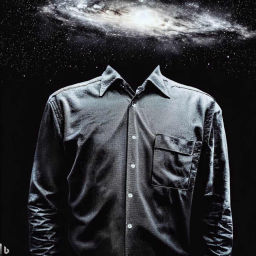
Exploring the intersection of the Headless Way with the worlds of Philosophy, Science, and Religion. I like to use Artificial Intelligence to reflect back to us what humanity looks like from another point of view. This podcast is a feed of the Deep Dive podcast generated by Google's Notebook LM customized with handpicked content just for the Headless Deep dive audience.
headlessdeepdive.substack.com (https://headlessdeepdive.substack.com?utm_medium=podcast)
In Leonardo da Vinci’s notebooks (https://archive.org/details/leonardodavincis007918mbp) (translated by Edward McCurdy) we discover a way of seeing the world that was one of the influences on Douglas Harding’s Hierarchy of Heaven and Earth (https://www.headless.org/hierarchy-intro.htm). Harding’s concept of projection and reflection can be seen in da Vinci’s description of how objects project their images all around them:
Just as a stone flung into the water becomes the centre and cause of various circles, and a sound produced in the air spreads itself out in circles, so each body situated in the luminous air is spread out circle-wise and fills the surrounding parts with infinite images of itself and is present all in the whole and all in every part. (pg. 56)
Harding uses “the centre” to represent who we really really are and then further builds upon the idea of the “infinite images” when he describes that what we look like depends on the range of the observer. At a certain range we project the image of a person, farther away, a planet, closer up and thru a microscope, we appear as cells.
I find this loosens my self-consciousness since there is no one way of really seeing “me” so why judge one of the infinite images when all are just as valid?
Leonardo da Vinci was also mesmerized how we, as observers, receive these infinite images all together here at centre thru the tiniest of peep holes:
Who would believe that so small a space could contain the images of all the universe ? …. Here the figures, here the colours, here all the images of every part of the universe are contracted to a point. O what point is so marvellous ! (pg. 117)
While da Vinci was referring to the pupil as that “so small a space”, Harding brings our attention back to the centre, back to the empty spot where the image is free to appear unobstructed. Harding, the author of On Having No Head (https://headless.org/book-extracts/on-having-no-head), would often joke “I am not looking out of two tiny peepholes in a meat ball” which was his way of saying the third person description of how vision works is not our first person experience. We are somewhere inside the head looking out.
Either way, I find it amazing: the whole universe contracted to a point, appearing here at centre, here coincident with the spot I call “me”.
This is a public episode. If you would like to discuss this with other subscribers or get access to bonus episodes, visit headlessdeepdive.substack.com (https://headlessdeepdive.substack.com?utm_medium=podcast&utm_campaign=CTA_1)
12 Aug 2026
Rovelli: There is No Hard Problem of Consciousness
Today we look at Carlo Rovelli’s article, There Is No Hard Problem of Consciousness (https://www.noemamag.com/there-is-no-hard-problem-of-consciousness/). Rovelli says that David Chalmer’s “hard problem of consciousness”, is rooted in our resistance to letting go of our ingrained notion of a separate soul and the attempt to describe a first person experience in a third person objective manner.
This is very much in line with Douglas Harding’s refutation of the so called “hard problem”. Harding also recognized that the third person experience is appearing in the first person experience. Harding described how other people appear to us in our first person experience and we appear in their first person experience, saying “your mind is my body, and my mind is your body”.
Both Rovelli and Harding view the hard problem as a misguided attempt to combine two incommensurate perspectives of the same world. I like the simplicity of that. It means there is no “problem” to solve, there is just different perspectives to enjoy.
This is a public episode. If you would like to discuss this with other subscribers or get access to bonus episodes, visit headlessdeepdive.substack.com (https://headlessdeepdive.substack.com?utm_medium=podcast&utm_campaign=CTA_1)
4 May 2026
Arnold Zuboff - Finding Myself
Arnold Zuboff (https://philpeople.org/profiles/arnold-zuboff) is a philosopher and the creator of Universalism, which is the idea that there is only one “I”, only one subject and that subject is the “I” in every conscious experience. Zuboff writes about this at length in his book entitled Finding Myself - Beyond the False Boundaries of Personal Identity (https://www.pdcnet.org/wp/wp-content/uploads/2025/12/Zuboff_MSP-Supplement_2025.pdf).
In the same way that there is only one novel called “Moby Dick” yet there are multiple books which contain that novel as a physical instantiation of the tale by Herman Melville, Zuboff argues that although there are many beings which can instantiate the contents of a conscious experience, there is only one subject of experience only one I. He appeals to the immediacy of experience. There is only one “here”, there is only one “now”, even though we can look back on many “there”s and “then”s.
Douglas Harding had a similar point of view saying that the “I am” is “first person, singular, present tense”. One of the experiments of the Headless Way is called the “No-head Circle (https://www.headless.org/experiments/no-head-circle.htm)”. A group of friends gathers in a circle with arms around each other, facing inwards towards the center of the circle. Looking down, one sees all the separate feet, and legs. Following them up we see separate torsos. Follow them up even further though while still looking down, we see that the many separate bodies fade out and merge into the one singular first-person experience of looking down. The many bodies appear in the one consciousness.
This is a public episode. If you would like to discuss this with other subscribers or get access to bonus episodes, visit headlessdeepdive.substack.com (https://headlessdeepdive.substack.com?utm_medium=podcast&utm_campaign=CTA_1)
Reach and audience
Public platform figures. Ratings count people who left a rating, not total listeners.
Spotify
2.0 / 5
4 ratings
Podcast Authority Score: 20 / 100
A composite of feed quality, social presence, YouTube performance and engagement. Read the methodology.
Quality
41
Social presence
0
YouTube
0
Engagement
0
Contact Headless Deep Dive Podcast
Guest appearances
Does not typically book guests
Based on episode analysis; this does not confirm that the show is currently accepting guests.
Host of Headless Deep Dive Podcast?
Claim your podcast to manage its listing and keep your show details accurate.
Pod Engine is an independent podcast discovery and analytics service and is not affiliated with or endorsed by this podcast. Artwork and show content belong to their owners. Full legal notice.
Explore this show Podcast research with Pod Engine