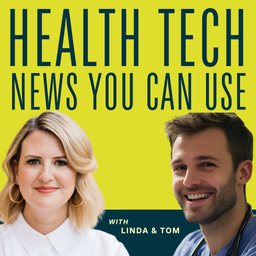
Want to keep up with the digital revolution in healthcare? Tune into Health Tech News You Can Use. Every episode unpacks the latest tech hurdles and human elements that define successful health tech. Though our focus is on the UK, the lessons resonate globally. Don’t miss out—subscribe now to get the tools and insights you need to stay up-to-date in the world of digital health!”
A report by IBM Healthcare, outlines how Artificial Intelligence (AI) can immediately boost NHS productivity, focusing primarily on administrative and operational areas rather than complex clinical applications due to lower regulatory hurdles. It argues that implementing AI assistants in patient and corporate services, such as for waiting list validation and clinical coding, offers the most rapid and quantifiable efficiency gains, referencing successful pilots across multiple NHS Trusts. The document emphasises that for AI adoption to scale successfully, a national framework is needed, along with staff involvement, education, and a commitment to ethical, transparent, and data-driven deployment. The report concludes that while clinical AI innovation continues, focusing on automating repetitive tasks in the back office offers the quickest path to improving NHS efficiency and staff experience.
AI for NHS Productivity: A Briefing on Operational Transformation
25 May 2025
UHCW EPR Implementation Blueprint
University Hospitals Coventry and Warwickshire NHS Trust leaders implement a fully integrated Electronic Patient Record system, which improves patient safety, streamlines workflows, and establishes a data-driven culture within the NHS.
17 Dec 2024
Delay - Deny - Defend: The Hidden Crisis of US Healthcare and Potential UK Implications
Healthcare industry experts examine the hidden crisis of US healthcare, potential implications for the UK, and the role of AI in exacerbating healthcare inequalities.
4 Dec 2024
Assisted Dying and Suicide: The UK House of Commons Health and Social Care Committee Report
The UK House of Commons Health and Social Care Committee explores the complexities of assisted dying and suicide in a report that analyzes international experiences, palliative care access, and potential negative impacts on vulnerable groups.
26 Nov 2024
AI in Elderly Care: A Technological Solution or Ethical Minefield?
UK care homes are increasingly using AI and smart technology to improve resident safety and care, particularly for those with dementia. Systems monitor movement, detect falls and pain, and even adjust environmental factors like air quality and lighting. While proponents highlight improved care and reduced staff workload, concerns exist about ethical implications, potential staff cuts, and over-reliance on technology in a vulnerable population. The high cost of such technology also raises questions of accessibility and equity in care provision. Finally, the article notes the need for robust regulation and oversight to prevent misuse and maintain a human-centered approach to care.
Briefing Doc: AI in UK Care Homes - A Technological Solution or Ethical Minefield?
AI in Care Homes: FAQ
19 Nov 2024
Ai Defeats Doctors at Diagnosing Illness
A recent study, published in the journal JAMA Network Open, revealed that the AI chatbot ChatGPT outperformed a group of doctors in diagnosing medical conditions based on case histories. The doctors, who had access to both conventional medical resources and ChatGPT, performed only slightly better than those who did not use the chatbot. The study highlighted two key findings: first, doctors often remained convinced of their initial diagnosis even when ChatGPT suggested a different and potentially more accurate diagnosis. Second, the doctors struggled to fully utilise ChatGPT's capabilities, failing to take advantage of its ability to process complex medical information and provide comprehensive diagnostic analyses. This suggests that while AI chatbots hold significant potential as tools for diagnosis, further research is necessary to understand how to effectively integrate them into medical practice and overcome the challenges of doctor-AI collaboration.
Briefing Doc: A.I. Chatbots vs. Doctors in Diagnosing Illness
AI Chatbots in Medicine: An FAQ
MY Times
Original Study
12 Nov 2024
Revolutionising Breast Cancer Screening with AI
This episode highlights the use of artificial intelligence in breast cancer screening, focusing on the software developed by Volpara Health. Volpara's AI technology improves mammogram image quality, assesses breast density, and assists radiologists in detecting abnormalities. The software also provides patients a clearer understanding of their results through visual representations and educational resources. The episode emphasizes the importance of integrating AI ethically into healthcare to improve patient outcomes and enhance the patient experience.
Volpara Health Website
Briefing Doc: AI-Powered Breast Cancer Screening with Volpara
FAQ: Revolutionising Breast Cancer Screening with AI
5 Nov 2024
Four critical considerations for Medtech companies in Europe
This episode explores the changing healthcare landscape in the UK and Europe, highlighting the challenges hospitals and medical technology (medtech) companies face. The paper identifies four critical considerations for MedTech companies operating in Europe: the need to deliver value innovation beyond clinical features, to partner with customers beyond the product, to solve prevalent problems with scalable solutions, and to use technology to support models more patient-centric. The paper argues that by embracing these considerations, MedTech companies can position themselves as strategic partners to European healthcare providers and address the region's most pressing challenges.
The episode is based on the ZS whitepaper Transforming Global Healthcare Together: Medtech’s Role in empowering providers in Europe
Briefing Document PDF
Episode FAQ Document PDF
29 Oct 2024
AI-Powered Healthcare Abundance
This edition explores the potential for artificial intelligence (AI) to revolutionise healthcare, particularly in addressing the global doctor shortage and the overwhelming amount of data healthcare professionals face. The authors argue that equipping doctors with AI tools will be crucial but not sufficient to address the challenges of healthcare access and cost. They advocate for three key shifts: offering free AI-based primary care to increase access, integrating AI training into medical education to create a generation of AI-enabled doctors, and establishing robust frameworks for the safe and trustworthy development of healthcare AI. They highlight the need for collaboration and innovation across stakeholders to create a future of healthcare abundance, where everyone has access to high-quality care.
Article
AI-Powered Healthcare Abundance: A Review of Key Themes and Ideas
AI in Healthcare: An FAQ
24 Oct 2024
NHS's operational planning guidance for the 2024 -25
The episode outlines the organisation's priorities and objectives for the year, which aim to improve patient outcomes and experience, including recovering core services from the impact of the COVID-19 pandemic. It also highlights key actions for systems and NHS providers to support these priorities, such as increasing capacity, improving flow, reducing waiting times, expanding access to primary care, and supporting the workforce. The document further emphasises the importance of digital transformation, data-driven decision-making, and integrating care closer to home.
Briefing Document-PDF
NHS 2024/25 Priorities and Operational Planning Guidance: FAQ - PDF
22 Oct 2024
Lord Darzi Report: The NHS is currently in a critical condition.
The report, written by Lord Darzi and addressed to the Secretary of State for Health and Social Care, examines the current state of the NHS. It concludes that the NHS is in a dire state, facing significant challenges in terms of waiting times, staff shortages, and inadequate funding. The report highlights factors contributing to this situation, including austerity measures, the impact of the Covid-19 pandemic, and a lack of patient and staff engagement. The report proposes steps for improvement, focusing on increasing productivity, investing in technology, and simplifying care delivery. Ultimately, the report emphasizes the importance of a shared effort to improve the NHS and ensure its future viability.
This episode is a summary of the report. Please review the attached Brief Document and FAQ below
Briefing Document PDF
FAQ: The State of the NHS
Lord Darzi Summary Report - PDF
21 Oct 2024
Digital Health Maturity: A Global Snapshot
The State of Digital Health 2023 report (very much relevant) offers a definitive view into the evolving digital health landscape across 67 countries, shining a light on the digital transformation of healthcare worldwide. It evaluates the progress and maturity of digital health systems through seven essential components, from leadership and governance to workforce development. Since 2019, significant strides have been made, with COVID-19 acting as a catalyst for the rapid adoption of digital services and applications.
Yet, challenges persist. The report uncovers critical issues like insufficient funding and a shortage of skilled professionals, highlighting the need for more targeted investment and strategic planning. To drive the digital health revolution forward, the report calls on global leaders to focus on equity, workforce development, standards and interoperability, infrastructure, and strategic investments. The goal? To accelerate digital health and work toward universal health coverage for all.
Visit the website to view a snapshot of your country's Digital Health Landscape.
Review the Report
Visit Global Health Monitor
Briefing Document
Global Health Monitor FAQ
15 Oct 2024
How Ai is Changing the Face of Healthcare for Doctors
In this episode, we dive into the rising influence of artificial intelligence (AI) in the medical field, spotlighting ChatGPT—a tool that’s quickly gaining traction among healthcare professionals. Recent findings reveal that 20% of doctors are now integrating ChatGPT into their practice, so we explore how this AI assistant is reshaping healthcare. The potential benefits are compelling, from boosting efficiency and improving patient interactions to alleviating burnout. But there are also concerns about data privacy, accuracy, and the risk of job displacement.
We take a close look at how the National Health Service (NHS) in the UK is navigating these waters, balancing a cautious but optimistic stance on AI integration. Studies on AI use by NHS doctors offer a glimpse into the practical realities and future possibilities of AI in healthcare. We also explore what lies ahead—envisioning a future where AI plays a central role in clinical decision-making, medical training, and electronic health record integration.
Finally, we tackle the transformative potential of AI in democratizing healthcare. Could tools like ChatGPT be the key to bringing quality healthcare to underserved regions? Join us as we unravel the promises and challenges of AI in the world of medicine.
Briefing Doc: AI in Healthcare - A UK Perspective
AI in Healthcare: An FAQ
8 Oct 2024
Oracle Health’s Ai Tools
An overview of Oracle Health’s AI tools, which are designed to modernise and connect the healthcare experience. These products include Oracle Clinical Digital Assistant, a voice-first mobile assistant that uses AI to accelerate physicians’ workflows, Oracle Health EHR, a patient registration and scheduling solution that uses optical character recognition to automate data extraction, and Oracle Health Care Management, a solution that uses generative AI to create personalised outreach messages, enhancing patient engagement and adherence to care plans.
Briefing Document
Oracle Health FAQ
1 Oct 2024
A Mobile Healthcare Solution.
This episode discusses the early steps of integrating a mobile solution into a workflow. The source is a transcript of a presentation explaining Medanets mobile solution. The session, guides the audience through the various workflows and features of the app, highlighting its integration with the hospital's new electronic patient record system (Cerner). The presentation covers how nurses and midwives can use Medanets to record vital signs, complete assessments, and submit requests to other teams, such as the hospital at-night team or the AKI team. The discussion also explores doctors' potential use of Medanets and the ongoing development of its functionalities. Finally, the presenters acknowledge the tight timeframe and ongoing changes to the project, emphasising the importance of collaboration and communication for successful implementation.
Documents for Delegates/Training
Briefing Document
Medanets Web site
26 Sept 2024
Digital Transformation
There are many moving parts in Digital Transformation. Linda & Tom discuss the challenges and opportunities associated with digital transformation in the National Health Service (NHS) in the UK. The first source highlights a "decade of missed opportunity" in embracing digital technologies, outlining issues like fragmented digital initiatives, outdated infrastructure, insufficient staff training, and cybersecurity vulnerabilities. The second source focuses on the barriers to Electronic Patient Record (EPR) implementation, including technical integration, financial constraints, staff resistance, data security, and organisational culture. Both sources emphasise the importance of addressing these challenges through comprehensive planning, stakeholder engagement, phased implementation,
Briefing Document
Transformation: FAQ
25 Sept 2024
The Challenges & Risks of an EPR Rollout
Linda and Tom, industry experts, discuss the challenges and risks of EPR rollouts in the NHS, highlighting patient harm and calling for more robust safety measures.
Podcast Authority Score: 7 / 100
A composite of feed quality, social presence, YouTube performance and engagement. Read the methodology.
Quality
14
Social presence
0
YouTube
0
Engagement
0
Contact Health Tech News You Can Use
Guest appearances
Does not typically book guests
Based on episode analysis; this does not confirm that the show is currently accepting guests.
Host of Health Tech News You Can Use?
Claim your podcast to manage its listing and keep your show details accurate.
Pod Engine is an independent podcast discovery and analytics service and is not affiliated with or endorsed by this podcast. Artwork and show content belong to their owners. Full legal notice.
Explore this show Podcast research with Pod Engine