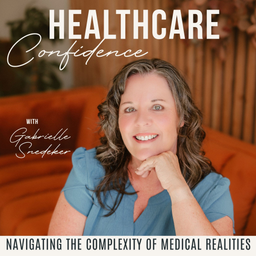
Healthcare Confidence | Patient Advocacy, Caregiver, Terminal Illness, Quality of Life, Diagnosis
Gabrielle Snedeker- Coach, Consultant, Advocate, Registered Nurse
5.0from 8 ratings
- 12
- Episodes
- 8
- Ratings
- Daily
- Cadence
- 2026
- First episode
About Healthcare Confidence | Patient Advocacy, Caregiver, Terminal Illness, Quality of Life, Diagnosis
Are you in the middle of an emotionally complex, high-stakes healthcare crisis? Do you find yourself suddenly responsible for making decisions for someone you love or even yourself? Are you exhausted, overwhelmed, and have more questions than answers? Perhaps you're faced with a new diagnosis and no one has explained what to expect, or maybe you’re hearing the words but struggling to process them through fear and uncertainty? You’re terrified of making the wrong decision for yourself or for your loved one? I’m so glad you’re here? This podcast will help you process the medical realities that you are faced with, ask better questions, and navigate difficult decisions with greater clarity and confidence. Most importantly, I want to help you align healthcare decisions with the values and goals that matter most to you so you can breathe a little easier knowing that you and or your loved one remained at the center of every choice you made. Hi, I'm Gabrielle, a registered nurse who has specialized in caring for medically complex patients and their families for over 25 years; including those in intensive care, oncology, emergency medicine and many places in between. I'm also a Christian, a mom, a granny, an animal lover and I am fueled by sunshine! Over the years, I’ve witnessed the emotional turmoil, confusion, and uncertainty individuals and families face when making decisions for themselves or for the people they love; whether it’s navigating a serious illness, choosing treatment options, considering hospice care, or facing end-of-life decisions. These moments carry enormous weight. My goal is to help you feel informed, supported and less alone during one of the hardest and most pivotal times of your life. I believe in having the hard conversations that no one wants to have because clarity creates confidence, and making informed decisions creates peace. I truly believe that I’ve been called to do this work and it is an absolute honor to walk alongside you. So grab some water, take a deep breath, and sit with me… You do not have to navigate this alone. --- SAVE MY SEAT NOW: https://gabriellesnedeker.com (https://gabriellesnedeker.com) Join the Healthcare Confidence Community on Facebook: www.facebook.com/groups/healthcareconfidencecommunity/ (http://www.facebook.com/groups/healthcareconfidencecommunity/) — Gabrielle Snedeker Coaching & Consulting, LLC Website: https://www.gabriellesnedeker.com (http://www.gabriellesnedeker.com) Email: support@gabriellesnedeker.com (mailto:support@gabriellesnedeker.com) .
- Publisher
- Gabrielle Snedeker- Coach, Consultant, Advocate, Registered Nurse
- Category
- education · health & fitness
- Language
- en
- Explicit
- No
- First episode
- 9 Aug 2026
- Latest episode
- 28 Sept 2026
Latest episodes
12 episodes in the feed.
28 Sept 2026
11 \\ Is Your Family Aligned on Quality of Life Decisions—or Just Avoiding the Conversation?
Does your family know what quality of life actually means to you? If you couldn't speak for yourself tomorrow, would your spouse or children know what you would want? Are you and your family truly aligned—or have you simply never had the conversation? Episode Highlights In this episode, we’re talking about quality of life—what it means, why it looks different for everyone, and how it can change throughout our lives. We’ll explore the difference between choosing quality of life and “giving up,” and why saying “I care more about quality of life than simply extending my life” doesn't necessarily mean someone has lost hope or doesn't want to live. Sometimes it means they want the time they have to actually feel like living. We’ll also talk about why loving someone doesn't automatically mean you’re aligned with them, and why having these conversations before a medical crisis matters. What makes life worth living for you? What are you most afraid of? What would you never want? And if your health changed dramatically, what would matter most? You don't have to have one giant, terrifying conversation. Start small. Talk. Listen. Revisit it. Because the goal isn't necessarily for everyone to agree. The goal is for the people who love you to know you well enough that, when the hard decisions come, they aren't guessing. Key Takeaway Quality of life is personal. It can mean independence, being with family, enjoying favorite foods, practicing your faith, spending time in the garden, sitting on the patio, or simply being mentally present and able to engage with the people you love. Your definition may not be the same as your spouse's. It may not be the same as your children's. And it may not even be the same definition you had 20 years ago. That's okay. The important thing is that they know what it means to you. Because avoiding the conversation doesn't make it go away. And when the hard decisions come, your people shouldn't have to guess. Work with me- Option #1 One on One Coaching Are looking for support navigating your medical reality such as a new diagnosis, a critical illness, your are looking to align your values & wishes with your medical plan or perhaps you just need some clarity around how to advocate differently for yourself or someone you love, I’d be honored to help. Click on the link above to complete the One on One Coaching Application Form. Option #2 Healthcare Confidence™ Program This is a 6 week group coaching program that will cover everything from Advocacy Foundations, Medical Plan Alignment such as goals of care, code status and advanced directives to chronic condition management, ED & Hospital care transitions, and so much more! This program addresses the questions, concerns and problems that you encounter when navigating your own care or the care of someone you care about. Not only do you get on demand education but you also get group coaching with me to support you throughout the program. Click on the link above to register. Let’s Connect- Email: support@gabriellesnedeker.com Facebook Community: www.facebook.com/groups/healthcareconfidencecommunity/ Website: https://www.gabriellesnedeker.com Medical Disclaimer: Gabrielle Snedeker is a Registered Nurse. However, nothing in this podcast constitutes medical advice, diagnosis, treatment, or the practice of nursing in a clinical capacity. Gabrielle Snedeker is not acting as the listeners nurse, doctor, nurse practitioner, physician's assistant, social worker, or any other licensed healthcare provider. All content is educational and informational in nature only. Client is encouraged to consult their own qualified healthcare providers regarding any medical decisions, diagnoses, or conditions.
21 Sept 2026
10 \\ The Truth About Caregiver Burnout and How It’s Affecting Your Quality of Life
The Truth About Caregiver Burnout and How It’s Affecting Your Quality of Life Have you spent so much time taking care of everyone else that you've completely forgotten about yourself? Are you carrying responsibilities, expectations, and tasks that may not actually be yours to carry? Has caregiving slowly taken over your life to the point where you're wondering, “Is this just what caregiving is?” In this episode, I’m having a direct conversation about caregiver burnout and how it can begin affecting your quality of life. Caregiver burnout isn't just about being tired. It can affect your sleep, relationships, patience, health, identity, and your ability to enjoy your own life. I’ll talk about how caregiving can become all-consuming, how expectations and unclear roles can cause you to take on more than you need to, and why allowing other people to help can be such a difficult part of caregiving. We’ll also talk about practical ways to begin creating a more sustainable caregiving situation, including clarifying your role, accepting help, finding people who understand, considering respite care, and giving yourself permission to actually rest. You may not be able to change the fact that you're a caregiver or change everything about your circumstances. But there may be parts of your caregiving experience that are changeable. And taking care of yourself isn't taking away from the person you're caring for. It is part of creating a caregiving situation that you can actually live with. Resources and Links Mentioned Healthcare Confidence™ ProgramSupport for navigating complex medical realities, healthcare decisions, patient advocacy, caregiving, and the challenges that come with navigating healthcare in real life. Last chance to join the Healthcare Confidence™ Workshop FREE Online LIVE Workshop on Sept. 22nd, 23rd and 24th at 10am PT / 11am MT / 12pm CT / 1pm ET Learn more about the Healthcare Confidence™ Program and how it can support you as you navigate your own healthcare journey or care for someone else: https://bit.ly/healthcareconfidenceworskhop Related Episode: How to Become a Confident Advocate When a Diagnosis sChanges Everything Overnight Let’s Connect- Podcast - > https://podcasts.apple.com/us/podcast/Healthcare-Confidence/id6799768563Connect - > www.facebook.com/groups/healthcareconfidencecommunity/ Contact - > support@gabriellesnedeker.com Next Steps- Step 1: Clarify your role. Take an honest look at what you're responsible for, what your loved one can still do independently, what other people can help with, and what you're doing simply because you've gotten used to doing it. Step 2: Allow someone else to help. Get specific about what you actually need. Could someone bring dinner, take your loved one to an appointment, help with errands, sit with them for an hour, or simply give you a break? You don't have to hand over control of everything to allow someone else to carry part of the load. Step 3: Give yourself permission to rest. Not every available minute has to be productive. Sometimes the dishes can wait. Sometimes the laundry can wait. Sometimes the email can wait. Your body and your mind need recovery, too. Remember: Caregiving may be part of your life, but it doesn't have to consume your entire life. Ask yourself: “What am I carrying right now that may not actually be mine to carry?” And then ask: “Where could I allow someone else to help—even if they don't do it exactly the way I would?” You don't have to change everything overnight. Start noticing.Ask for help.Let someone else carry something.Take the break.Give yourself permission to rest. Because taking care of yourself isn't selfish. It is part of creating a caregiving situation that you can actually live with.
14 Sept 2026
09 \\ How to Become a Confident Advocate When a Diagnosis Changes Everything Overnight
Title- How to Become a Confident Advocate When a Diagnosis Changes Everything Overnight If you or someone you love received a life-changing diagnosis tomorrow, would you know what to do next? Are you confident enough to ask questions, slow things down when you can, and make sure you understand your options—even when everything feels overwhelming? When a diagnosis changes everything overnight, do you know how to advocate for the person at the center of the decision—not just the disease? In this episode, I’m talking about how to become a confident advocate when a diagnosis changes everything overnight. A devastating diagnosis can leave you feeling like you're standing in a tunnel with everything moving too fast—the diagnosis, the questions, the fear, the finances, the insurance, the family, and the decisions that suddenly need to be made. But confidence doesn't mean knowing exactly what to do or knowing how everything is going to turn out. Confidence is knowing how to find the answers and gaining clarity. I’ll walk you through practical ways to become a more confident advocate, including creating a plan, being present, asking questions, getting informed, seeking another opinion when appropriate, understanding your loved one's values and wishes, and knowing when you can slow down and take a breath. We’ll also talk about the hard conversations around quality of life, end-of-life wishes, advance directives, and what matters most to the person at the center of the decision. You don't have to know everything. You don't have to become a medical expert. You simply need to be willing to show up, speak up, stay curious, and keep the person at the center. Healthcare Confidence™ Program ** Launch is 9/22/2026 ** Support for navigating complex medical realities, healthcare decisions, advocacy, and the questions and conversations that matter when everything feels overwhelming. Healthcare Confidence™ FREE Online LIVE Workshop | Sept. 22nd, 23rd & 24th at 10am PT // 11am MT / 12pm CT / 1pm ETSave your seat for the upcoming Healthcare Confidence™ Workshop:https://bit.ly/HealthcareConfidenceWorkshop → Related Episode: Quality vs. Quantity of Life→ Related Episode: How to Understand a Diagnosis When No One Is Explaining It in Plain English→ Related Episode: You Have a Right to Be Heard in Your Healthcare Decisions Connecting with You and Next Steps Contact - > support@gabriellesnedeker.com Podcast - > https://podcasts.apple.com/us/podcast/Healthcare-Confidence/id6799768563Connect - > www.facebook.com/groups/healthcareconfidencecommunity/ Next Steps: Step 1: Get educated. Start with the basics. What is the diagnosis? What does it mean? What are the options, risks, benefits, and next steps? Write your questions down and take them with you. Step 2: Become an active participant. Be present when you can. Listen. Take notes. Ask questions. Speak up when you don't understand something. You don't have to know medical terminology to be an effective advocate. Step 3: Keep the person at the center. Ask what matters to them, what quality of life means to them, what they are willing to go through, and what they are not willing to go through. Advocacy isn't always about fighting for more. Sometimes it's about fighting for what matters most. Remember: You do not have to walk into a diagnosis knowing what to do. You don't have to have all the answers.You don't have to be fearless.You don't have to know how this story ends. You can say: “I don't know yet. But I'm going to learn.” Ask the question.Make the call.Write it down.Bring someone with you.Seek another opinion.Have the hard conversation. And take the next step. Because confidence isn't having all the answers. Confidence is trusting yourself enough to keep asking the questions. Sometimes, that's where advocacy begins.
7 Sept 2026
08 \\ Are You Actually Advocating for Your Loved One — or Just Complying With the System?
Title- Are You Actually Advocating for Your Loved One—or Just Complying With the System? Have you ever found yourself saying, “I wasn't given a choice. I was told”? Have you ever assumed that if the doctor, nurse, or facility said it, then you simply had to go along with it? Are you actually advocating for your loved one—or have you become so accustomed to the healthcare system making decisions that you've stopped asking questions? Highlights of Episode In this episode, I’m challenging you to take a closer look at the difference between advocating for your loved one and simply complying with the healthcare system. I’ll talk about why professional expertise does not mean you have to give away your voice, and why asking questions, understanding your options, and making sure your loved one's values and wishes remain at the center of care are essential parts of advocacy. I’ll also share a real-world story that highlights what can happen when a family knows what their loved one would have wanted but continues to go through the motions simply because “that's what the system does.” You don't have to fight the healthcare system or assume the professionals are wrong. But you do need to participate in the conversation. Your input matters. Your loved one's voice matters. And sometimes advocacy means slowing things down enough to ask, “Before we do that, can you help me understand our choices?” Resources and Links Mentioned Healthcare Confidence™ ProgramSupport for navigating complex medical realities, healthcare decisions, advocacy, and the questions and concerns that come with caring for someone you love. The program provides education and group coaching to help you feel more supported, guided, and confident as you navigate your healthcare journey. Healthcare Confidence™ FREE Online LIVE WorkshopSave your seat for the upcoming Healthcare Confidence™ Workshop: https://bit.ly/HealthcareConfidenceWorkshop Healthcare Confidence™ Program launches Sept. 22, 2026. You don’t have to go to the workshop to join! IF you know you want it then get on the waitlist now! https://bit.ly/healthcareconfidenceprogram — Related Episode: How to Understand a Diagnosis When No One Is Explaining It in Plain English Related Episode: You Have a Right to Be Heard in Your Healthcare Decisions Related Episode: Is Your Loved One's Medicine Cabinet a Ticking Time Bomb? Patient Advocacy Starts Here. Let’s Connect: Website: https://www.gabriellesnedeker.com Contact- support@gabriellesnedeker.com Podcast- https://podcasts.apple.com/us/podcast/Healthcare-Confidence/id6799768563 Connect- www.facebook.com/groups/healthcareconfidencecommunity/ Next Steps: Step 1: Make some noise. If something doesn't make sense or doesn't feel right, don't automatically stay quiet. Ask curious questions and make sure you understand why something is being recommended. Step 2: Participate in the conversation. Ask why, ask about alternatives, ask what happens next, and ask what your options are. You can respect someone's expertise and still ask questions. Step 3: Keep your loved one's wishes at the center. Come back to the questions that matter most: What does my loved one want? What matters to them? What are they comfortable with? What choices can they make? Remember: Advocacy doesn't mean fighting the system. It doesn't mean assuming the professionals are wrong. It doesn't mean saying no to everything. It means participating. Ask questions. Talk. Clarify. Collaborate. And don't let your loved one disappear inside the system. Sometimes the most powerful thing you can say is simply: “Before we do that, can you help me understand our choices?”
3 Sept 2026
07\\ Is Your Loved One's Medicine Cabinet a Ticking Time Bomb? Patient Advocacy Starts Here.
Title- Is Your Loved One's Medicine Cabinet a Ticking Time Bomb? Patient Advocacy Starts Here. Questions for you… Could the medications your loved one is taking actually be causing some of the symptoms you’re trying to get answers for? Do you know everything your loved one is taking—including prescriptions, over-the-counter medications, vitamins, herbs, and supplements? If your loved one suddenly became confused, dizzy, nauseated, or unusually fatigued, would you know whether it could be a medication side effect—or would everyone immediately start looking for a new diagnosis? Highlights of Episode In this episode, I’m talking about polypharmacy and why knowing exactly what medications and supplements you or your loved one are taking is an important part of patient advocacy. I’ll share a real-world example of how medication side effects can mimic other medical conditions, potentially leading to additional testing and confusion when the underlying issue may be hiding in the medicine cabinet. We’ll talk about keeping an accurate medication list, regularly reviewing medications with your healthcare provider or pharmacist, using one pharmacy when possible, recognizing a potential prescribing cascade, and simplifying medication routines when appropriate. Because medication safety isn't just about taking your medications as prescribed—it’s also about understanding what you’re taking, why you’re taking it, and how those medications may be affecting you. Resources and Links Mentioned https://www.fda.gov/consumers/consumer-updates/create-and-keep-medication-list-your-health Create a Comprehensive Medication List Your medication list should include: Prescription medications Over-the-counter medications Vitamins Herbal supplements Inhalers, patches, creams, liquids, and other medications Medication strengths and doses How and when each medication is taken The reason each medication is being taken Medication start dates and dose-change dates Allergies and previous negative medication reactions Emergency contacts Prescribing provider information Pharmacy information Healthcare Confidence™ ProgramSupport for navigating complex medical realities, asking better questions, advocating for yourself or someone you love, and engaging more confidently with your healthcare team. Get on the waitlist: https://bit.ly/healthcareconfidenceprogram Healthcare Confidence™ FREE Online LIVE WorkshopLearn more about Healthcare Confidence™ and how it can help you navigate your healthcare journey. Save your seat: https://bit.ly/HealthcareConfidenceWorkshop Related Episode: How to Understand a Diagnosis When No One Is Explaining It in Plain English Related Episode: You Have a Right to Be Heard in Your Healthcare Decisions Connecting with You and Next Steps Contact - > support@gabriellesnedeker.com Podcast - > https://podcasts.apple.com/us/podcast/Healthcare-Confidence/id6799768563 Connect - > www.facebook.com/groups/healthcareconfidencecommunity/ Next Steps: Step 1: Create a current, comprehensive medication list for yourself and/or your loved one. Include every prescription, over-the-counter medication, vitamin, herb, and supplement being taken. Step 2: Bring that medication list to every doctor's appointment, emergency department visit, and hospital admission. Ask your healthcare provider or pharmacist to regularly review the list with you. Step 3: Become an active participant in medication safety. Ask questions about why each medication is being prescribed, what side effects to watch for, whether medications may be interacting with one another, and whether there are opportunities to simplify the medication routine. Remember: Your medicine cabinet tells a story about your health. Make sure you—and the people caring for you—know what that story says. Patient advocacy starts with knowing what you're taking. Ask questions. Speak up. And don't assume every new symptom means there's a new diagnosis. Sometimes, the answer may be hiding in the
31 Aug 2026
06 \\ Not Having This Conversation Is Selfish: Your Next of Kin Shouldn't Have to Guess
Not Having This Conversation Is Selfish: Your Next of Kin Shouldn't Have to Guess Questions from Episode Content If you suddenly couldn’t speak for yourself, would the person you love know what you would want? Have you had the hard conversations about illness, medical treatment, end-of-life care, and what matters most to you? Are you leaving the people you love to guess what you would want when they may already be overwhelmed by fear, grief, and a medical crisis? Highlights of Episode In this episode, I’m having a direct conversation about why avoiding conversations about illness, medical crises, end-of-life care, and your healthcare wishes can leave an enormous burden on the people you love. I’ll walk you through what can happen when a loved one suddenly finds themselves at your bedside, facing life-and-death decisions without knowing what you would have wanted. Having these conversations won’t prevent the pain, grief, or uncertainty of a medical crisis—but it can give your people clarity, confidence, comfort, and peace when they need it most. This conversation may be uncomfortable, but it is one of the most selfless things you can do for the people you love. Resources and Links Mentioned Healthcare Confidence™ ProgramSupport for navigating complex medical realities, healthcare decisions, advocacy, and conversations about your healthcare wishes. Healthcare Confidence™ FREE Online LIVE WorkshopSave your seat for the upcoming Healthcare Confidence™ Workshop:https://www.gabriellesnedeker.com Related Episode: Quality vs. Quantity of Life Related Episode: How to Understand a Diagnosis When No One Is Explaining It in Plain English Connecting with You and Next Steps Contact - > support@gabriellesnedeker.com Podcast - > https://podcasts.apple.com/us/podcast/Healthcare-Confidence/id6799768563 Connect - > www.facebook.com/groups/healthcareconfidencecommunity/ Next Steps: Step 1: Have the hard conversation with the people you love. Talk about what matters to you, what you would want, and what you would not want if you were unable to speak for yourself. Step 2: Make sure your people know your healthcare wishes, values, and goals. Don't assume they'll know what you want just because they know you well. Step 3: Get more personalized support through the Healthcare Confidence™ Program to help you and your loved ones navigate complex medical realities, healthcare decisions, and the conversations that matter most. Remember: Having the hard conversation won't take away the pain if a medical crisis happens. But it can keep the people you love from having to carry the additional burden of guessing what you would have wanted. Have the conversation today. Make it easier for your people. It is the least you can do.
27 Aug 2026
05 \\ Is Your Doctor Actually Explaining Options That Align With Your Wishes for Quality-of-Life?
Is Your Doctor Actually Explaining Options That Align With Your Wishes for Quality-of-Life? Questions from Episode Content- Have you ever felt like your healthcare plan was moving forward without anyone asking what you actually wanted? Are tests, treatments, or procedures being scheduled for you—and you’re not sure why they’re happening or whether you even want them? Have you made a decision about your healthcare but felt unsure about how or when to tell your doctor? Highlights of Episode- In this episode, I’m talking about the importance of patient voice, informed decision-making, and having open conversations with your healthcare team so you can make healthcare decisions that actually align with your wishes. We’ll look at two very different scenarios—one in the hospital and one in an outpatient specialist’s office—and explore the responsibilities of both the healthcare team and the patient. We’ll talk about your right to ask questions, seek clarification, refuse care, understand what you are refusing, and communicate what matters most to you. Because this is your life, and your healthcare decisions deserve to be informed, intentional, and aligned with what you want. Resources and Links Mentioned- Healthcare Confidence™ Workshop —>> FREE Online LIVE on September 22nd, 23rd, 24th at 10am PT / 11am MT / 12pm CT / 1pm ET.SAVE YOUR SEAT and learn how to navigate your healthcare journey with greater confidence:https://bit.ly/HealthcareConfidenceWorkshop Healthcare Confidence™ ProgramLearn how the Healthcare Confidence™ Program can help you navigate complex medical realities, ask better questions, communicate your wishes, and engage more confidently with your healthcare team. JOIN THE WAITLIST and be the first to access the amazing program! https://bit.ly/healthcareconfidenceprogram Related topic: Advanced Care Planning & Goals of Care Related topic: Quality vs. Quantity of Life Connecting with You and Next Steps- Contact - > support@gabriellesnedeker.com Podcast - > https://podcasts.apple.com/us/podcast/Healthcare-Confidence/id6799768563 Healthcare Confidence Community on Facebook - > www.facebook.com/groups/healthcareconfidencecommunity/ Next Steps- Step 1: Start speaking up in your healthcare conversations. Ask questions, seek clarification, and make sure you understand what is being recommended before making decisions. Step 2: Be prepared to communicate your wishes, values, and what you do and don’t want when it comes to your healthcare. Step 3: Get more personalized support through the Healthcare Confidence™ Program to help you navigate complex medical realities, communicate with your healthcare team, and make informed decisions that align with your wishes. Remember: This is your life. Don’t be shy or passive when it comes to your healthcare. You deserve to have the information you need to make informed decisions—and your healthcare team needs to know what matters to you.
20 Aug 2026
04 \\ How to Understand a Diagnosis When No One Is Explaining It in Plain English
Have you ever walked away from a doctor's appointment feeling like you heard a lot of medical words—but still don't really understand what is happening? Have you or someone you love ever received a new diagnosis and felt overwhelmed, confused, or unsure about what questions to ask next? What do you do when a healthcare provider gives you a diagnosis but doesn't explain what it actually means, what happens next, or what you need to do? In this episode, I’m sharing how to better understand a new diagnosis when no one is explaining it in plain English, so you can gain clarity, ask better questions, and feel more confident navigating your healthcare journey. We’ll talk about what to consider when receiving a diagnosis in different healthcare settings, how to communicate with your healthcare team, why repeating back what you heard can be so important, and when bringing a support person or requesting a care conference may help. We’ll also explore the difficult conversations that can come with life-altering or terminal diagnoses—including questions about prognosis, treatment, quality of life, and quantity of life. Healthcare Confidence™ FREE Online LIVE WorkshopSave your seat for the September 22, 23, and 24 workshop:https://bit.ly/HealthcareConfidenceWorkshop Healthcare Confidence™ ProgramLearn how the Healthcare Confidence™ Program can help you navigate complex medical realities, gain clarity, ask better questions, and engage differently in your healthcare. Related episode: Quality vs. Quantity of Life — coming Monday Contact - > support@gabriellesnedeker.com Podcast - > https://podcasts.apple.com/us/podcast/Healthcare-Confidence/id6799768563 Healthcare Confidence Community on Facebook - > www.facebook.com/groups/healthcareconfidencecommunity/ Connect - > Next Steps: Step 1: Save your seat for the FREE Healthcare Confidence™ LIVE Workshop on September 22, 23, and 24 at https://bit.ly/HealthcareConfidenceWorkshop Step 2: Listen to and share this episode with someone who may need support navigating a complex medical reality for themselves or someone they love. Step 3: Get more personalized support through the Healthcare Confidence™ Program and learn how to gain clarity, ask better questions, and navigate your healthcare journey with greater confidence.
17 Aug 2026
03 \\ Stop Waiting for the Doctor to Explain It — How to Advocate with Confidence in the Healthcare System
Engage in this patient's care: Some examples of this would be: Be present for the interdisciplinary rounds each day Meeting with the case manager so that you are a participant in the discharge planning process and Connect with the primary nurse every day to get updates on how your person is doing And be sure that the healthcare team has your contact information or support. Be observant: Be present so that you can see how your person is engaging in their own care and or how the care team is engaging with your person. This can be very enlightening and really add a ton of value to you as the patients advocate. What this looks like is perhaps be present for physical therapy sessions or specific nursing cares such as dressing changes or medication passes. Engage in the discharge planning process. As I mentioned before, connecting with the case management team is crucial and the sooner that you can engage with them the better because I promise you they have been planning your person's discharge since the moment they arrived at the emergency department or that they were admitted into the hospital. Be honest about your concerns and limitations. If you have concerns that you may not be able to handle care needs then speak up! It is okay and remember, the healthcare team can’t help or plan appropriately if they don’t know. Communication is key! Ask curious questions. Ask and ask again if needed. Ask the nurse today and the case manager later. Ask the doctor tomorrow and so on… Ask questions, collecting all the answers or information will do nothing other than help you ask even better questions going forward. Remember there are a lot of healthcare professionals involved in caring for your person and they all bring something different to the table or different perspectives and that is okay! Some answers may vary or even contradict each other BUT again, this just leads to a place of asking better questions or different questions going forward. Seek clarification and guidance when needed. Kinda like I already said, asking curious questions, clarifying various responses that you have gotten from different people or disciplines could lead to a place of confusion but rather than sit in that confusion use it to ask for clarification and guidance. Be open. This one can be tough. You’re worried, tired, perhaps overwhelmed and feel like you are drinking from a fire hose. Perhaps you don’t understand, no one is explaining it to you in a way that you can make any sense of it…. This is exactly why I have created my group coaching program! And I hope you will join me for Healthcare Confidence™ Workshop on September 22nd to 24th. I will walk you through my program and how it can help you navigate these very situations so that you can navigate the complex medical realities with more clarity and confidence! Be part of the solution, not the barrier to one. There is a difference between advocating and being a barrier to the solution. DO NOT EVER STOP ADVOCATING! And while you are doing that remember that in the end you must come together with the healthcare team at some point so that you can best serve and support the patient as the patient is literally at the center of everything you are advocating for and who the healthcare team is trying to help. Perhaps offer potential solutions and be proactive vs reactive. Take initiative, be proactive and don’t hesitate to offer your own solutions and ideas. Offer information that may help lead to further discussions and potential solutions. Again, you are an extension of the healthcare team as discussed in episode two. So if you missed it, head back and take a listen. Reactivity leads to stress, worry and rushed decision making that does no one any good in the long run so I challenge you to be proactive vs reactive. Keep the patient at the center of every decision made. I don’t know that this one needs further commentary. The patient is the heart of us all
16 Aug 2026
02 \\ What Nobody in the Healthcare System Will Say to You as a Caregiver
What Nobody in the Healthcare System Will Say to You as a Caregiver 1) You are an extension of the healthcare team. For example: When your person discharges from the Emergency Department, hospital, or even a skilled nursing facility, you may still have needs. And while these needs no longer require 24/7 nursing care in a hospital, as an example, these needs to be met in the home environment. Some examples of this may be that the patient still needs to be toileted or taken to the bathroom. The person may need wound care or dressing changes, or perhaps be given medications subcutaneously such as a blood thinner or insulin. These tasks may sound impossible or daunting for all kinds of reasons to you as their caregiver. This does not change the fact that the patient is discharging with needs that will require your help as the caregiver. Thus, you are an extension of the healthcare team. Possible Solutions: Ask if there are support services available to the patient or you as the caregiver. Such as Home Health or similar services are appropriate to bring into the home, i.e., Registered Nursing care or Physical Therapy. Consider hiring help such as an In-Home Care Agency for help with personal care needs, light cooking, cleaning and basic shopping needs. Perhaps outpatient services may be appropriate for a particular need; wound care or intravenous medications. 2) The expectation is for you to step up! Take responsibility, support and help your person (the patient). This one is really tough! Sometimes there are some really valid and real reasons why someone cannot step up to help, take responsibility, and support their person as the caregiver. Perhaps you are too sick, weak, and tired yourself? Or you have your own caregiving needs that are not being met, let alone taking on caregiving for someone else. Regardless of your circumstances, this patient may have needs that do not require 24/7 nursing care meaning they no longer need to be in the hospital as an example. Therefore, when the patient is medically ready for discharge to home with caregiver support, a plan needs to be in place for the patient and this may require YOU as the caregiver to take on a role that you may not be prepared for. This is where your engagement really matters. Taking a step back, not engaging, or even avoiding the situation does not stop the care or stop decisions from being made or even the discharge plan from moving forward. Your input is very important, and perhaps the healthcare team can help solve some of the concerns that you have and support you differently if given the opportunity? Potential Solutions: Solutions can look very different depending on the circumstances, and I am always happy to talk through your individual situation with you in my group coaching program called Healthcare Confidence™ Program. This program is designed to help you navigate your complex medical realities with education and support. You will have direct access to me in an online group coaching space where you will be able to ask questions and engage in a way that I believe will help you navigate your individual healthcare situation with more clarity and confidence. Again, I am offering a workshop this September so that you can learn more about this program so save your seat! Recognizing that stepping up, taking responsibility, and supporting your person does not mean that you have to do it alone! Ask the healthcare team for help and collaborate with the healthcare team Be straightforward and honest about your thoughts, concerts and questions so that they can better serve you and ultimately the patient. Lean on others such as the patient's family, friends, church family, neighbors, etc. Ask if agency assistance is a good option to consider, such as home health, hospice, or palliative care. Perhaps other services like food delivery, i.e., Meals on Wheels or Mom's Meals, for post-discharge meal coverage may be an option to consider.
16 Aug 2026
01 \\ More About Me — My "Quality of Life" Decision That Led Me Here
Hi, I'm Gabrielle, your host of Healthcare Confidence. If you haven't listened to the trailer yet, I'd recommend jumping back to that real quick so you can get up to speed on what the podcast is about. Today, I wanted to go a little deeper into myself and how I got here, but first, I want to say thank you for being here with me. I am so appreciative of each and every person who stops by to spend some time with me here, and I pray that I provide value and support you in some way along your own health journey, or the journey of someone you care about. In addition to a podcast I have developed a coaching program called Healthcare Confidence™ Program. I am super proud of this program and have a FREE online LIVE workshop coming up on September 22 to 24 where you can learn all about it and ask all the burning questions you have, so stay tuned until the end to find out how to save your seat! Before we move on I wanted to share what Anne and Marjie had to say about the program real quick: "After just spending just one hour with you, I feel so much better and you answered so many of my questions that I didn't even know that I had." - Anne "I enjoyed your enthusiasm and passion around all aspects of healthcare, the sharing of your knowledge, and the open discussion on multiple topics." - Marjie Okay… now, let's get into the "more about me" part of this show. Where It All Started As a young girl, I knew two things; I wanted to be a nurse and I wanted to work in emergency medicine. I think I wanted to work in emergency medicine because it sounded exciting and I wanted to be around all the "blood and guts." I started out as a first responder by night and a medical assistant by day. What I didn't know is that oncology would ultimately steal my heart! I found oncology fascinating; the science, the constant change and growth in oncology research was so stimulating and remarkable. But more than anything, I fell in love with the patients! The relationships you build with your patients, their families, and your team are like no other. And over the years I learned so many valuable lessons from all of them; patients, families, and the people I had the privilege to work with. Needless to say, my career started off with a big bang! I was absolutely in love with what I was doing, and I knew I was on the right path to becoming a nurse. The Shift Fast forward many years later, one thing leading to another, my career shifted away from emergency medicine and oncology. This isn't a bad thing, it was just the evolution of a long career. But these shifts ultimately became the beginning of a career that I no longer recognized, and dare I say, wanted. Somewhere in 2023, I really started to feel some internal shifts. I had been on-call 24/7 for years at that point as a healthcare leader. I was worn out and tired of being connected to my phone at all times. I wasn't sleeping. I wasn't really "living" life. I was getting up at 2:30 in the morning to get as much work as humanly possible done before going in for a full day at the hospital and I struggled with never being able to turn it off. As you know, healthcare is a 24/7 business. Patients need help at all hours of the day and night, 365 days a year, and as a healthcare leader, that meant I was always on. I started to realize that this work was slowly starting to kill me. My health and wellbeing were taking a hit, and I felt like my quality of life had slowly slipped away from me. Sounds dramatic, I know, but it wasn't. It was actually very real. By December 2023, I was feeling completely out of alignment. Something was off. I couldn't articulate it at the time, but I was feeling like my quality of life was being compromised, and that did not sit well with me at all. I was questioning my career: what I wanted to do, and whether I even wanted to be a nurse anymore. I prayed on this so many times and got no clarity, just more confusion. Fast forward to May 2024. I went on vacation for the first time
9 Aug 2026
Intro to Healthcare Confidence | Navigating the Complexity of Medical Realities
Are you in the middle of an emotionally complex, high-stakes healthcare crisis? Do you find yourself suddenly responsible for making decisions for someone you love or even yourself? Are you exhausted, overwhelmed, and have more questions than answers? Perhaps you're faced with a new diagnosis and no one has explained what to expect, or maybe you’re hearing the words but struggling to process them through fear and uncertainty? You’re terrified of making the wrong decision for yourself or for your loved one? I’m so glad you’re here and welcome to the Healthcare Confidence podcast. This podcast will help you process the medical realities that you are faced with, ask better questions, and navigate difficult decisions with greater clarity and confidence. Most importantly, I want to help you align healthcare decisions with the values and goals that matter most to you so you can breathe a little easier knowing that you and or your loved one remained at the center of every choice you made. Hi, I'm Gabrielle, a registered nurse who has specialized in caring for medically complex patients and their families for over 25 years; including those in intensive care, oncology, emergency medicine and many places in between. I'm also a Christian, a mom, a granny, an animal lover and I am fueled by sunshine! Over the years, I’ve witnessed the emotional turmoil, confusion, and uncertainty individuals and families face when making decisions for themselves or for the people they love; whether it’s navigating a serious illness, choosing treatment options, considering hospice care, or facing end-of-life decisions. These moments carry enormous weight. My goal is to help you feel informed, supported and less alone during one of the hardest and most pivotal times of your life. I believe in having the hard conversations that no one wants to have because clarity creates confidence, and making informed decisions creates peace. I truly believe that I’ve been called to do this work and it is an absolute honor to walk alongside you. So grab some water, take a deep breath, and sit with me… You do not have to navigate this alone. --- Join me for the FREE LIVE 3-Day Healthcare Confidence ™ Workshop When: Sept. 22-24, 2026 at 10a PT / 11a MT / 12p CT / 1p ET Length: 1 hour each day Where: Zoom for 1 hour each day. What: This is a FREE LIVE introduction to the Healthcare Confidence ™ Program. If you've ever felt overwhelmed by the healthcare system or unsure how to advocate for yourself or someone you love, this workshop helps you discover how greater knowledge leads to greater confidence. Practical tips for navigating your own or a loved one's healthcare journey. Learn a clear framework for navigating today's healthcare system. Gain tools to make informed healthcare decisions. --- Save My Seat Now: https://gabriellesnedeker.myflodesk.com/healthcareconfidenceworkshop Join the Healthcare Confidence Community on Facebook: www.facebook.com/groups/healthcareconfidencecommunity/ --- Gabrielle Snedeker Coaching & Consulting, LLC Website: www.gabriellesnedeker.com (coming soon) Email: support@gabriellesnedeker.com
Reach and audience
Public platform figures. Ratings count people who left a rating, not total listeners.
- Apple Podcasts (US)
- 5.0 / 5
- 6 ratings
- Spotify
- 5.0 / 5
- 2 ratings
Contact Healthcare Confidence | Patient Advocacy, Caregiver, Terminal Illness, Quality of Life, Diagnosis
- Guest appearances
- Does not typically book guests
Based on episode analysis; this does not confirm that the show is currently accepting guests.
Host of Healthcare Confidence | Patient Advocacy, Caregiver, Terminal Illness, Quality of Life, Diagnosis?
Claim your podcast to manage its listing and keep your show details accurate.
Pod Engine is an independent podcast discovery and analytics service and is not affiliated with or endorsed by this podcast. Artwork and show content belong to their owners. Full legal notice.
Explore this show
Podcast research with Pod Engine