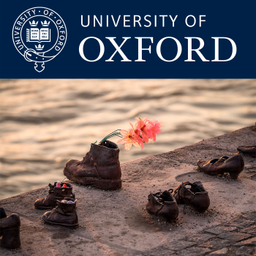
Podcast thumbnail for Hegemonic Narratives

Hegemonic Narratives

Claim This Podcast

by Oxford University

5 episodes
Updated Daily
Accepts GuestsHas SponsorsLocation 🇬🇧

Podcast Overview

Memory politics worldwide is often shaped by the dynamics of relations and tensions between hegemonic narratives, counter-memories and silent communities at the global, national and local levels. Transnational advocacy movements, international agents and organisations influence the application of terminologies and frameworks in which global hegemonic narratives operate. State actors influence and shape hegemonic narratives, silence others or deny their existence in order to legitimise their incumbency and state/nation-building efforts. Local actors – from civil society groups to individuals – often counter top-down efforts of hegemonic narratives by the creation of their own narratives, memories or by silence. In post-conflict and conflict societies the relations between different groups and actors advocating hegemonic narratives becomes all the more acute and tense as the social and political fabric is eroded and in flux by the conflict-generated transformative changes. ​ How do we understand hegemonic narratives in post-war societies? What do we know about them? How can we conceptualise hegemonic narratives in research inquiry? What constitutes such narratives in societies emerging from conflicts or in the midst of conflict? What is their role in relation to other mnemonic practices such as silencing, forgetting, neglecting, amnesia, or denial? And if they are, in what way do they differ? This symposium seeks to discuss these and other questions using a large number of case studies that can speak to some aspects of memory politics and hegemonic narratives. The key aims of this day-long symposium are to: ​ Discuss the dynamics of hegemonic narratives at local, national and global level with a special reference to post-conflict situations; Examine the various roles of actors, agents and institutions in shaping, organising, influencing, challenging and transforming memories and key narratives in (post-)conflict societies; Facilitate an interdisciplinarity discussion in memory and a cross-disciplinary debates about the roles of memory in post-war societies; Theorise and conceptualise different types, approaches to studies of memory, silence, forgetting and remembering; Discuss the various roles of victims, perpetrators and new conflict-engendered communities.

Language

🇺🇲

Publishing Since

6/5/2020

1 verified contact email on file for Hegemonic Narratives

Pitch yourself as a guest, propose sponsorships, or reach out directly to the host.

Recent Episodes

Episode thumbnail for Second Keynote and Concluding Remarks; The Hegemonic Rememberance in Post Communist Eastern Europe

June 5, 2020

Second Keynote and Concluding Remarks; The Hegemonic Rememberance in Post Communist Eastern Europe

Jelena Subotic gives the second and final keynote of the conference, chaired by Jessie Barton-Hronesova. Followed by concluding remarks and next step plans by Jessie Barton-Hronesova and Johana Wyss. KEYNOTE II: THE HEGEMONIC NARRATIVES OF HOLOCAUST REMEMBRANCE IN POST-COMMUNIST EASTERN EUROPE Jelena Subotic (Georgia State U); chaired by Jessie Barton-Hronesova (University of Oxford). Concluding Remarks Jessie Barton-Hronesova (University of Oxford) and Johana Wyss (IE, Czech Academy of Sciences and Max Planck): summary and next steps

Episode thumbnail for Panel 3: How do Local Memories and Grassroots Mnemonic Actors Challenge National Grand Narratives?

June 5, 2020

Panel 3: How do Local Memories and Grassroots Mnemonic Actors Challenge National Grand Narratives?

Andreza de Souza Santos, Graham Dawson and Jocelyn Alexander give presentations the third panel. Chaired by Kathrin Bachleitner. Andreza de Souza Santos (University of Oxford), 'Inconvenient Narratives: Slavery recounted in Brazil’s former gold mines' Graham Dawson (University of Brighton), 'Grassroots oral history and the politics of ‘hegemonic memory’ on West Belfast interfaces after the Northern Ireland war' Jocelyn Alexander (University of Oxford), 'Gukurahundi and the question of recognition in Zimbabwe' chaired by Kathrin Bachleitner (University of Oxford).

Episode thumbnail for Panel 2: What is the Relationship between Hegemonic Memories, Silence and Nationalism?

June 5, 2020

Panel 2: What is the Relationship between Hegemonic Memories, Silence and Nationalism?

Barbara Törnquist-Plewa and Craig Larkin give presentstions in the second panel of the conference. Chaired by Johana Wyss. Barbara Törnquist-Plewa (Lundt University); 'Changing narratives about the past of Wroclaw. Struggles over mnemonic hegemony in a city' Craig Larkin (King’s College) 'Postmemory in (Post)conflict Societies: reflections from Lebanon' chaired by Johana Wyss (IE, Czech Academy of Sciences and Max Planck).

5 total episodes available

Deep-dive analytics for Hegemonic Narratives

Frequently asked questions

Have a different question and can't find the answer you're looking for? Reach out to our support team by sending us an email and we'll get back to you as soon as we can.

What is Hegemonic Narratives?

Memory politics worldwide is often shaped by the dynamics of relations and tensions between hegemonic narratives, counter-memories and silent communities at the global, national and local levels. Transnational advocacy movements, international agents and organisations influence the application of terminologies and frameworks in which global hegemonic narratives operate. State actors influence and shape hegemonic narratives, silence others or deny their existence in order to legitimise their incumbency and state/nation-building efforts. Local actors – from civil society groups to individuals – often counter top-down efforts of hegemonic narratives by the creation of their own narratives, memories or by silence. In post-conflict and conflict societies the relations between different groups and actors advocating hegemonic narratives becomes all the more acute and tense as the social and political fabric is eroded and in flux by the conflict-generated transformative changes.

How do we understand hegemonic narratives in post-war societies? What do we know about them? How can we conceptualise hegemonic narratives in research inquiry? What constitutes such narratives in societies emerging from conflicts or in the midst of conflict? What is their role in relation to other mnemonic practices such as silencing, forgetting, neglecting, amnesia, or denial? And if they are, in what way do they differ? This symposium seeks to discuss these and other questions using a large number of case studies that can speak to some aspects of memory politics and hegemonic narratives.

The key aims of this day-long symposium are to:

Discuss the dynamics of hegemonic narratives at local, national and global level with a special reference to post-conflict situations;

Examine the various roles of actors, agents and institutions in shaping, organising, influencing, challenging and transforming memories and key narratives in (post-)conflict societies;

Facilitate an interdisciplinarity discussion in memory and a cross-disciplinary debates about the roles of memory in post-war societies;

Theorise and conceptualise different types, approaches to studies of memory, silence, forgetting and remembering;

Discuss the various roles of victims, perpetrators and new conflict-engendered communities.

How often does this podcast release new episodes?

This podcast updates daily.

Where can I listen to this podcast?

This podcast is available on 4 platforms including Apple Podcasts, Spotify, and more. You can also use the RSS feed directly.

Does this podcast accept guests?

Yes, this podcast regularly features guests.

Legal Disclaimer

Pod Engine is not affiliated with, endorsed by, or officially connected with any of the podcasts displayed on this platform. We operate independently as a podcast discovery and analytics service.

All podcast artwork, thumbnails, and content displayed on this page are the property of their respective owners and are protected by applicable copyright laws. This includes, but is not limited to, podcast cover art, episode artwork, show descriptions, episode titles, transcripts, audio snippets, and any other content originating from the podcast creators or their licensors.

We display this content under fair use principles and/or implied license for the purpose of podcast discovery, information, and commentary. We make no claim of ownership over any podcast content, artwork, or related materials shown on this platform. All trademarks, service marks, and trade names are the property of their respective owners.

While we strive to ensure all content usage is properly authorized, if you are a rights holder and believe your content is being used inappropriately or without proper authorization, please contact us immediately at hey@podengine.ai for prompt review and appropriate action, which may include content removal or proper attribution.

By accessing and using this platform, you acknowledge and agree to respect all applicable copyright laws and intellectual property rights of content owners. Any unauthorized reproduction, distribution, or commercial use of the content displayed on this platform is strictly prohibited.