- 19
- Episodes
- 2016
- First episode
About History for the Future
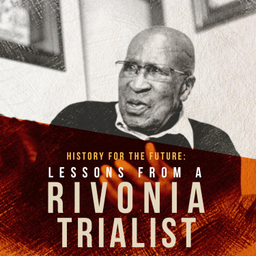
This podcast series presented by Pippa Green explores the state of reconciliation in South Africa from the perspectives of 13 TRC Commissioners, and in a new release, shares crucial life lessons from one of only two surviving Rivonia trialists, Andrew Mlangeni. Produced by Jeanne Michel.
- Publisher
- History for the Future
- Category
- society & culture
- Language
- en
- Explicit
- No
- First episode
- 31 May 2016
- Latest episode
- 16 Mar 2020
Latest episodes
19 episodes in the feed.
16 Mar 2020
From the apartheid struggle to the corruption struggle (Ep6)
See omnystudio.com/listener (https://omnystudio.com/listener) for privacy information. See omnystudio.com/listener (https://omnystudio.com/listener) for privacy information.
9 Mar 2020
The 'Backroom Boy' finally goes home (Ep5)
See omnystudio.com/listener (https://omnystudio.com/listener) for privacy information. See omnystudio.com/listener (https://omnystudio.com/listener) for privacy information.
2 Mar 2020
Negotiating the release that would set South Africa free (Ep4)
To commemorate 30 years since Andrew Mlangeni's release as a political prisoner, Life Podcasts presents History for the Future: Lessons from a Rivonia Trialist. In episode four of this captivating six-part podcast series, Andrew Mlangeni recounts his memories of his time in prison until his release in October 1989. See omnystudio.com/listener (https://omnystudio.com/listener) for privacy information. See omnystudio.com/listener (https://omnystudio.com/listener) for privacy information.
25 Feb 2020
"The trial that changed South Africa” (Ep3)
To commemorate the 30th anniversary of Nelson Mandela’s release from prison, Life Podcasts presents History for the Future: Lessons from a Rivonia Trialist. In this captivating podcast, Pippa Green sits down with one of the last remaining Rivonia trialists, Andrew Mlangeni. He reflects on his life, his role in the liberation struggle and, the quarter century of democracy he has witnessed. Produced by Jeanne Michel. See omnystudio.com/listener (https://omnystudio.com/listener) for privacy information. See omnystudio.com/listener (https://omnystudio.com/listener) for privacy information.
17 Feb 2020
Andrew Mlangeni – a cadre in the centre of a revolution (Ep2)
The birth of the African National Congress’ armed wing, uMkhonto weSizwe ("Spear of the Nation") was a contested one. With large numbers of freedom fighters and, very little arms – Nelson Mandela’s comrades believed that the liberation movement, which sought to free South Africans from the damning grip of the Apartheid government, was a suicide mission. Only after much persuading, on the 16th December 1961, Nelson Mandela and his comrades formed “MK” and made the decision to take up arms in the fight for the dejected people of the country – a turning point in South African history. See omnystudio.com/listener (https://omnystudio.com/listener) for privacy information. See omnystudio.com/listener (https://omnystudio.com/listener) for privacy information.
10 Feb 2020
More than just a prestigious backroom boy (Ep1)
To commemorate the 30th anniversary of Nelson Mandela’s release from prison, Life Podcasts presents History for the Future: Lessons from a Rivonia Trialist. In this captivating podcast, Pippa Green sits down with one of the last remaining Rivonia trialists, Andrew Mlangeni. He reflects on his life, his role in the liberation struggle and, the quarter century of democracy he has witnessed. Produced by Jeanne Michel. See omnystudio.com/listener (https://omnystudio.com/listener) for privacy information. See omnystudio.com/listener (https://omnystudio.com/listener) for privacy information.
12 Jul 2016
Richard Lyster
It is 20 years since the South African Truth and Reconciliation held its first hearing into the gross violation of human rights under apartheid. The TRC was brought into being by an Act of Parliament in 1995, and was an essential component in the transition to democracy. It positioned itself between two extremes: the prosecutorial path of retributive justice evidenced in the Nuremberg trials of Nazi leaders on the one hand; and the blanket amnesties handed out in the wake of the Chilean dictatorship of Augusto Pinochet on the other. There, victims of gross human rights violations testified in secret. In South Africa, on the other hand, all the hearings, both for victims of apartheid and of perpetrators, were in public. The names of victims of apartheid are recorded in one volume of the TRC report. It is a list that goes on for 50 pages in small print. More than 21,000 people gave statements to the TRC. Nearly 7,000 applied for amnesty but few met the strict conditions laid down by the law: full disclosure, proportionality, and proof that the offence was politically motivated among them. In the end, fewer than 900 were granted amnesty. For the first time, some of the grim stories of the suffering under apartheid were not only told but widely publicized. For this series Journalist Pippa Green spoke to 13 of the former commissioners to find out how far we are as a country along the road of reconciliation today 20 years after the first hearing. Jeanne Michel edited and produced this series. Find the entire series of interviews online at http://www.702.co.za/features/139/trc See omnystudio.com/listener (https://omnystudio.com/listener) for privacy information. See omnystudio.com/listener (https://omnystudio.com/listener) for privacy information.
5 Jul 2016
Wynand Malan
It is 20 years since the South African Truth and Reconciliation held its first hearing into the gross violation of human rights under apartheid. The TRC was brought into being by an Act of Parliament in 1995, and was an essential component in the transition to democracy. It positioned itself between two extremes: the prosecutorial path of retributive justice evidenced in the Nuremberg trials of Nazi leaders on the one hand; and the blanket amnesties handed out in the wake of the Chilean dictatorship of Augusto Pinochet on the other. There, victims of gross human rights violations testified in secret. In South Africa, on the other hand, all the hearings, both for victims of apartheid and of perpetrators, were in public. The names of victims of apartheid are recorded in one volume of the TRC report. It is a list that goes on for 50 pages in small print. More than 21,000 people gave statements to the TRC. Nearly 7,000 applied for amnesty but few met the strict conditions laid down by the law: full disclosure, proportionality, and proof that the offence was politically motivated among them. In the end, fewer than 900 were granted amnesty. For the first time, some of the grim stories of the suffering under apartheid were not only told but widely publicized. For this series Journalist Pippa Green spoke to 13 of the former commissioners to find out how far we are as a country along the road of reconciliation today 20 years after the first hearing. Jeanne Michel edited and produced this series. Find the entire series of interviews online at http://www.702.co.za/features/139/trc See omnystudio.com/listener (https://omnystudio.com/listener) for privacy information. See omnystudio.com/listener (https://omnystudio.com/listener) for privacy information.
5 Jul 2016
Hlengiwe Mkhize
It is 20 years since the South African Truth and Reconciliation held its first hearing into the gross violation of human rights under apartheid. The TRC was brought into being by an Act of Parliament in 1995, and was an essential component in the transition to democracy. It positioned itself between two extremes: the prosecutorial path of retributive justice evidenced in the Nuremberg trials of Nazi leaders on the one hand; and the blanket amnesties handed out in the wake of the Chilean dictatorship of Augusto Pinochet on the other. There, victims of gross human rights violations testified in secret. In South Africa, on the other hand, all the hearings, both for victims of apartheid and of perpetrators, were in public. The names of victims of apartheid are recorded in one volume of the TRC report. It is a list that goes on for 50 pages in small print. More than 21,000 people gave statements to the TRC. Nearly 7,000 applied for amnesty but few met the strict conditions laid down by the law: full disclosure, proportionality, and proof that the offence was politically motivated among them. In the end, fewer than 900 were granted amnesty. For the first time, some of the grim stories of the suffering under apartheid were not only told but widely publicized. For this series Journalist Pippa Green spoke to 13 of the former commissioners to find out how far we are as a country along the road of reconciliation today 20 years after the first hearing. Jeanne Michel edited and produced this series. Find the entire series of interviews online at http://www.702.co.za/features/139/trc See omnystudio.com/listener (https://omnystudio.com/listener) for privacy information. See omnystudio.com/listener (https://omnystudio.com/listener) for privacy information.
28 Jun 2016
Judge Sisi Khampepe
It is 20 years since the South African Truth and Reconciliation held its first hearing into the gross violation of human rights under apartheid. The TRC was brought into being by an Act of Parliament in 1995, and was an essential component in the transition to democracy. It positioned itself between two extremes: the prosecutorial path of retributive justice evidenced in the Nuremberg trials of Nazi leaders on the one hand; and the blanket amnesties handed out in the wake of the Chilean dictatorship of Augusto Pinochet on the other. There, victims of gross human rights violations testified in secret. In South Africa, on the other hand, all the hearings, both for victims of apartheid and of perpetrators, were in public. The names of victims of apartheid are recorded in one volume of the TRC report. It is a list that goes on for 50 pages in small print. More than 21,000 people gave statements to the TRC. Nearly 7,000 applied for amnesty but few met the strict conditions laid down by the law: full disclosure, proportionality, and proof that the offence was politically motivated among them. In the end, fewer than 900 were granted amnesty. For the first time, some of the grim stories of the suffering under apartheid were not only told but widely publicized. For this series Journalist Pippa Green spoke to 13 of the former commissioners to find out how far we are as a country along the road of reconciliation today 20 years after the first hearing. Jeanne Michel edited and produced this series. Find the entire series of interviews online at http://www.702.co.za/features/139/trc See omnystudio.com/listener (https://omnystudio.com/listener) for privacy information. See omnystudio.com/listener (https://omnystudio.com/listener) for privacy information.
28 Jun 2016
Mary Burton
It is 20 years since the South African Truth and Reconciliation held its first hearing into the gross violation of human rights under apartheid. The TRC was brought into being by an Act of Parliament in 1995, and was an essential component in the transition to democracy. It positioned itself between two extremes: the prosecutorial path of retributive justice evidenced in the Nuremberg trials of Nazi leaders on the one hand; and the blanket amnesties handed out in the wake of the Chilean dictatorship of Augusto Pinochet on the other. There, victims of gross human rights violations testified in secret. In South Africa, on the other hand, all the hearings, both for victims of apartheid and of perpetrators, were in public. The names of victims of apartheid are recorded in one volume of the TRC report. It is a list that goes on for 50 pages in small print. More than 21,000 people gave statements to the TRC. Nearly 7,000 applied for amnesty but few met the strict conditions laid down by the law: full disclosure, proportionality, and proof that the offence was politically motivated among them. In the end, fewer than 900 were granted amnesty. For the first time, some of the grim stories of the suffering under apartheid were not only told but widely publicized. For this series Journalist Pippa Green spoke to 13 of the former commissioners to find out how far we are as a country along the road of reconciliation today 20 years after the first hearing. Jeanne Michel edited and produced this series. Find the entire series of interviews online at http://www.702.co.za/features/139/trc See omnystudio.com/listener (https://omnystudio.com/listener) for privacy information. See omnystudio.com/listener (https://omnystudio.com/listener) for privacy information.
17 Jun 2016
Glenda Wildschurt
It is 20 years since the South African Truth and Reconciliation held its first hearing into the gross violation of human rights under apartheid. The TRC was brought into being by an Act of Parliament in 1995, and was an essential component in the transition to democracy. It positioned itself between two extremes: the prosecutorial path of retributive justice evidenced in the Nuremberg trials of Nazi leaders on the one hand; and the blanket amnesties handed out in the wake of the Chilean dictatorship of Augusto Pinochet on the other. There, victims of gross human rights violations testified in secret. In South Africa, on the other hand, all the hearings, both for victims of apartheid and of perpetrators, were in public. The names of victims of apartheid are recorded in one volume of the TRC report. It is a list that goes on for 50 pages in small print. More than 21,000 people gave statements to the TRC. Nearly 7,000 applied for amnesty but few met the strict conditions laid down by the law: full disclosure, proportionality, and proof that the offence was politically motivated among them. In the end, fewer than 900 were granted amnesty. For the first time, some of the grim stories of the suffering under apartheid were not only told but widely publicized. For this series Journalist Pippa Green spoke to 13 of the former commissioners to find out how far we are as a country along the road of reconciliation today 20 years after the first hearing. Jeanne Michel edited and produced this series. Find the entire series of interviews online at http://www.702.co.za/features/139/trc See omnystudio.com/listener (https://omnystudio.com/listener) for privacy information. See omnystudio.com/listener (https://omnystudio.com/listener) for privacy information.
17 Jun 2016
Rev Bongani Finca
It is 20 years since the South African Truth and Reconciliation held its first hearing into the gross violation of human rights under apartheid. The TRC was brought into being by an Act of Parliament in 1995, and was an essential component in the transition to democracy. It positioned itself between two extremes: the prosecutorial path of retributive justice evidenced in the Nuremberg trials of Nazi leaders on the one hand; and the blanket amnesties handed out in the wake of the Chilean dictatorship of Augusto Pinochet on the other. There, victims of gross human rights violations testified in secret. In South Africa, on the other hand, all the hearings, both for victims of apartheid and of perpetrators, were in public. The names of victims of apartheid are recorded in one volume of the TRC report. It is a list that goes on for 50 pages in small print. More than 21,000 people gave statements to the TRC. Nearly 7,000 applied for amnesty but few met the strict conditions laid down by the law: full disclosure, proportionality, and proof that the offence was politically motivated among them. In the end, fewer than 900 were granted amnesty. For the first time, some of the grim stories of the suffering under apartheid were not only told but widely publicized. For this series Journalist Pippa Green spoke to 13 of the former commissioners to find out how far we are as a country along the road of reconciliation today 20 years after the first hearing. Jeanne Michel edited and produced this series. Find the entire series of interviews online at http://www.702.co.za/features/139/trc See omnystudio.com/listener (https://omnystudio.com/listener) for privacy information. See omnystudio.com/listener (https://omnystudio.com/listener) for privacy information.
14 Jun 2016
Advocate Dumisa Ntsebeza
It is 20 years since the South African Truth and Reconciliation held its first hearing into the gross violation of human rights under apartheid. The TRC was brought into being by an Act of Parliament in 1995, and was an essential component in the transition to democracy. It positioned itself between two extremes: the prosecutorial path of retributive justice evidenced in the Nuremberg trials of Nazi leaders on the one hand; and the blanket amnesties handed out in the wake of the Chilean dictatorship of Augusto Pinochet on the other. There, victims of gross human rights violations testified in secret. In South Africa, on the other hand, all the hearings, both for victims of apartheid and of perpetrators, were in public. The names of victims of apartheid are recorded in one volume of the TRC report. It is a list that goes on for 50 pages in small print. More than 21,000 people gave statements to the TRC. Nearly 7,000 applied for amnesty but few met the strict conditions laid down by the law: full disclosure, proportionality, and proof that the offence was politically motivated among them. In the end, fewer than 900 were granted amnesty. For the first time, some of the grim stories of the suffering under apartheid were not only told but widely publicized. For this series Journalist Pippa Green spoke to 13 of the former commissioners to find out how far we are as a country along the road of reconciliation today 20 years after the first hearing. Jeanne Michel edited and produced this series. Find the entire series of interviews online at http://www.702.co.za/features/139/trc See omnystudio.com/listener (https://omnystudio.com/listener) for privacy information. See omnystudio.com/listener (https://omnystudio.com/listener) for privacy information.
14 Jun 2016
Dr Fazel Randera
It is 20 years since the South African Truth and Reconciliation held its first hearing into the gross violation of human rights under apartheid. The TRC was brought into being by an Act of Parliament in 1995, and was an essential component in the transition to democracy. It positioned itself between two extremes: the prosecutorial path of retributive justice evidenced in the Nuremberg trials of Nazi leaders on the one hand; and the blanket amnesties handed out in the wake of the Chilean dictatorship of Augusto Pinochet on the other. There, victims of gross human rights violations testified in secret. In South Africa, on the other hand, all the hearings, both for victims of apartheid and of perpetrators, were in public. The names of victims of apartheid are recorded in one volume of the TRC report. It is a list that goes on for 50 pages in small print. More than 21,000 people gave statements to the TRC. Nearly 7,000 applied for amnesty but few met the strict conditions laid down by the law: full disclosure, proportionality, and proof that the offence was politically motivated among them. In the end, fewer than 900 were granted amnesty. For the first time, some of the grim stories of the suffering under apartheid were not only told but widely publicized. For this series Journalist Pippa Green spoke to 13 of the former commissioners to find out how far we are as a country along the road of reconciliation today 20 years after the first hearing. Jeanne Michel edited and produced this series. Find the entire series of interviews online at http://www.702.co.za/features/139/trc See omnystudio.com/listener (https://omnystudio.com/listener) for privacy information. See omnystudio.com/listener (https://omnystudio.com/listener) for privacy information.
8 Jun 2016
Yasmin Sooka
It is 20 years since the South African Truth and Reconciliation held its first hearing into the gross violation of human rights under apartheid. The TRC was brought into being by an Act of Parliament in 1995, and was an essential component in the transition to democracy. It positioned itself between two extremes: the prosecutorial path of retributive justice evidenced in the Nuremberg trials of Nazi leaders on the one hand; and the blanket amnesties handed out in the wake of the Chilean dictatorship of Augusto Pinochet on the other. There, victims of gross human rights violations testified in secret. In South Africa, on the other hand, all the hearings, both for victims of apartheid and of perpetrators, were in public. The names of victims of apartheid are recorded in one volume of the TRC report. It is a list that goes on for 50 pages in small print. More than 21,000 people gave statements to the TRC. Nearly 7,000 applied for amnesty but few met the strict conditions laid down by the law: full disclosure, proportionality, and proof that the offence was politically motivated among them. In the end, fewer than 900 were granted amnesty. For the first time, some of the grim stories of the suffering under apartheid were not only told but widely publicized. For this series Journalist Pippa Green spoke to 13 of the former commissioners to find out how far we are as a country along the road of reconciliation today 20 years after the first hearing. Jeanne Michel edited and produced this series. Find the entire series of interviews online at http://www.702.co.za/features/139/trc See omnystudio.com/listener (https://omnystudio.com/listener) for privacy information. See omnystudio.com/listener (https://omnystudio.com/listener) for privacy information.
8 Jun 2016
Wendy Orr, Deputy Chairperson of the TRC's Reparations and Rehabilitation Committee
It is 20 years since the South African Truth and Reconciliation held its first hearing into the gross violation of human rights under apartheid. The TRC was brought into being by an Act of Parliament in 1995, and was an essential component in the transition to democracy. It positioned itself between two extremes: the prosecutorial path of retributive justice evidenced in the Nuremberg trials of Nazi leaders on the one hand; and the blanket amnesties handed out in the wake of the Chilean dictatorship of Augusto Pinochet on the other. There, victims of gross human rights violations testified in secret. In South Africa, on the other hand, all the hearings, both for victims of apartheid and of perpetrators, were in public. The names of victims of apartheid are recorded in one volume of the TRC report. It is a list that goes on for 50 pages in small print. More than 21,000 people gave statements to the TRC. Nearly 7,000 applied for amnesty but few met the strict conditions laid down by the law: full disclosure, proportionality, and proof that the offence was politically motivated among them. In the end, fewer than 900 were granted amnesty. For the first time, some of the grim stories of the suffering under apartheid were not only told but widely publicized. For this series Journalist Pippa Green spoke to 13 of the former commissioners to find out how far we are as a country along the road of reconciliation today 20 years after the first hearing. Jeanne Michel edited and produced this series. Find the entire series of interviews online at http://www.702.co.za/features/139/trc See omnystudio.com/listener (https://omnystudio.com/listener) for privacy information. See omnystudio.com/listener (https://omnystudio.com/listener) for privacy information.
31 May 2016
Alex Boraine, TRC Vice-Chairman
It is 20 years since the South African Truth and Reconciliation held its first hearing into the gross violation of human rights under apartheid. The TRC was brought into being by an Act of Parliament in 1995, and was an essential component in the transition to democracy. It positioned itself between two extremes: the prosecutorial path of retributive justice evidenced in the Nuremberg trials of Nazi leaders on the one hand; and the blanket amnesties handed out in the wake of the Chilean dictatorship of Augusto Pinochet on the other. There, victims of gross human rights violations testified in secret. In South Africa, on the other hand, all the hearings, both for victims of apartheid and of perpetrators, were in public. The names of victims of apartheid are recorded in one volume of the TRC report. It is a list that goes on for 50 pages in small print. More than 21,000 people gave statements to the TRC. Nearly 7,000 applied for amnesty but few met the strict conditions laid down by the law: full disclosure, proportionality, and proof that the offence was politically motivated among them. In the end, fewer than 900 were granted amnesty. For the first time, some of the grim stories of the suffering under apartheid were not only told but widely publicized. For this series Journalist Pippa Green spoke to 13 of the former commissioners to find out how far we are as a country along the road of reconciliation today 20 years after the first hearing. Jeanne Michel edited and produced this series. Find the entire series of interviews online at http://www.702.co.za/features/139/trc See omnystudio.com/listener (https://omnystudio.com/listener) for privacy information. See omnystudio.com/listener (https://omnystudio.com/listener) for privacy information.
31 May 2016
Archbishop Desmond Tutu, TRC Chairman
It is 20 years since the South African Truth and Reconciliation held its first hearing into the gross violation of human rights under apartheid. The TRC was brought into being by an Act of Parliament in 1995, and was an essential component in the transition to democracy. It positioned itself between two extremes: the prosecutorial path of retributive justice evidenced in the Nuremberg trials of Nazi leaders on the one hand; and the blanket amnesties handed out in the wake of the Chilean dictatorship of Augusto Pinochet on the other. There, victims of gross human rights violations testified in secret. In South Africa, on the other hand, all the hearings, both for victims of apartheid and of perpetrators, were in public. The names of victims of apartheid are recorded in one volume of the TRC report. It is a list that goes on for 50 pages in small print. More than 21,000 people gave statements to the TRC. Nearly 7,000 applied for amnesty but few met the strict conditions laid down by the law: full disclosure, proportionality, and proof that the offence was politically motivated among them. In the end, fewer than 900 were granted amnesty. For the first time, some of the grim stories of the suffering under apartheid were not only told but widely publicized. For this series Journalist Pippa Green spoke to 13 of the former commissioners to find out how far we are as a country along the road of reconciliation today 20 years after the first hearing. Jeanne Michel edited and produced this series. Find the entire series of interviews online at http://www.702.co.za/features/139/trc See omnystudio.com/listener (https://omnystudio.com/listener) for privacy information. See omnystudio.com/listener (https://omnystudio.com/listener) for privacy information.
Contact History for the Future
- Guest appearances
- Books guests
Based on episode analysis; this does not confirm that the show is currently accepting guests.
Host of History for the Future?
Claim your podcast to manage its listing and keep your show details accurate.
Pod Engine is an independent podcast discovery and analytics service and is not affiliated with or endorsed by this podcast. Artwork and show content belong to their owners. Full legal notice.
Explore this show
Podcast research with Pod Engine