How To STOP Human Trafficking!
Claim This Podcastby How To STOP Human Trafficking!
Podcast Overview
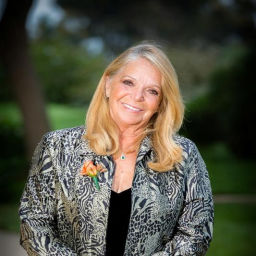
<p>Tune in every Sunday at 2 pm for "How to Stop Human Trafficking!" hosted by Marisa B Ugarte Founder and Executive Director at <a href="https://www.facebook.com/BSCC.org">Bilateral Safety Corridor Coalition (BSCC)</a>. Join us in our mission to safeguard the dignity and welfare of trafficked individuals through proactive measures, timely interventions, and empowering education. Together, we strive to make a difference in the lives of exploited men, women, and children. For more details, visit bsccoalition.org. Don't miss this crucial conversation here on K-Praise.</p> <p>The traffickers and pimps were predators and they were victimizing the vulnerable in order to commodity their bodies and turn a profit. Unlike, drugs that were only good for one hit, labor, or sex with a victim, could be sold and re-sold an infinite number of times to maximize the profit margin. In 1997 a case manager named Marisa Ugarte was working at a program for runaway teens when she came across a young girl who had been prostituted. Soon Marisa, realized through her work that the young girl, like many of the women and children who walked the streets selling their bodies, were not voluntarily “on the job,” but were victims of traffickers and pimps. The women, children, and men were being commercially exploited.<br>As Marisa explored the seedy under world of trafficking she linked up with grass-roots organizations in San Diego and Tijuana, Mexico where she learned that trafficking was not a problem limited to specific boundaries or the perimeter of one country but was as all about the movement of persons from one place to another. Persons where being transported like cattle and against their will. Much like the trafficking and movement of drugs, human trafficking is controlled by international cartels and is a form of organized crime. Similarly, as Americans have high per capita earnings and access to extensive resources and disposable income, the United States is a destination country for many victims. Sadly, trafficking is often seen a problem of the “other” and the demand for illicit sex and cheap labor in the United States is overlooked. So as Marisa continues investigating, she came across rape camps in among the reeds and canyons of San Diego, forced labor in the pruned and pristine agricultural fields, and children turned out in Tijuana’s infamous Zona Norte. She knew something had to be done and began to envision a “safety corridor.” Then through a UNICEF conference on human trafficking Marisa was introduced to coalition building and the advantages of strategically pulling resources to create a continuum of services for victims. Thus 1997 was a landmark year. This was the year that the coalition was founded and constituted as a 501(c)3 and began to coordinate services and advocate on behalf of victims. Today the coalition encompasses over 150 government and non-governmental agencies in the United States and Latin America who are dedicated to combating trafficking and empowering victims so that they may return to families, friends, and daily life. As for Marisa, she is now executive director of BSCC and continues to be at the forefront of the fight against trafficking by helping other organizations and coalitions grow and build programs to help victims in both the United States and Latin America.</p>
Language
🇺🇲
Publishing Since
6/24/2024
4 verified contact emails on file for How To STOP Human Trafficking!
Pitch yourself as a guest, propose sponsorships, or reach out directly to the host.
Recent Episodes

December 23, 2024
How to Stop Human Trafficking | 12.23.24
<p><a href="https://www.instagram.com/bilateralsafetycorridor" rel="payment">Instagram: https://www.instagram.com/bilateralsafetycorridor</a></p><p>See <a href="https://omnystudio.com/listener">omnystudio.com/listener</a> for privacy information.</p>

December 9, 2024
How to Stop Human Trafficking | 12.08.24
Human trafficking experts, including those from the Bilateral Safety Corridor, share actionable strategies to prevent and stop human trafficking, empowering listeners to make a tangible impact.

November 25, 2024
How to Stop Human Trafficking | 11.24.24
Human trafficking experts, Dr. Kathryn C. Seifert & Rachel Schroeder, share actionable strategies to prevent and combat human trafficking, empowering listeners to make a meaningful impact.
24 total episodes available
Deep-dive analytics for How To STOP Human Trafficking!
Frequently asked questions
Have a different question and can't find the answer you're looking for? Reach out to our support team by sending us an email and we'll get back to you as soon as we can.
- What is How To STOP Human Trafficking!?
<p>Tune in every Sunday at 2 pm for "How to Stop Human Trafficking!" hosted by Marisa B Ugarte Founder and Executive Director at <a href="https://www.facebook.com/BSCC.org">Bilateral Safety Corridor Coalition (BSCC)</a>. Join us in our mission to safeguard the dignity and welfare of trafficked individuals through proactive measures, timely interventions, and empowering education. Together, we strive to make a difference in the lives of exploited men, women, and children. For more details, visit bsccoalition.org. Don't miss this crucial conversation here on K-Praise.</p> <p>The traffickers and pimps were predators and they were victimizing the vulnerable in order to commodity their bodies and turn a profit. Unlike, drugs that were only good for one hit, labor, or sex with a victim, could be sold and re-sold an infinite number of times to maximize the profit margin. In 1997 a case manager named Marisa Ugarte was working at a program for runaway teens when she came across a young girl who had been prostituted. Soon Marisa, realized through her work that the young girl, like many of the women and children who walked the streets selling their bodies, were not voluntarily “on the job,” but were victims of traffickers and pimps. The women, children, and men were being commercially exploited.<br>As Marisa explored the seedy under world of trafficking she linked up with grass-roots organizations in San Diego and Tijuana, Mexico where she learned that trafficking was not a problem limited to specific boundaries or the perimeter of one country but was as all about the movement of persons from one place to another. Persons where being transported like cattle and against their will. Much like the trafficking and movement of drugs, human trafficking is controlled by international cartels and is a form of organized crime. Similarly, as Americans have high per capita earnings and access to extensive resources and disposable income, the United States is a destination country for many victims. Sadly, trafficking is often seen a problem of the “other” and the demand for illicit sex and cheap labor in the United States is overlooked. So as Marisa continues investigating, she came across rape camps in among the reeds and canyons of San Diego, forced labor in the pruned and pristine agricultural fields, and children turned out in Tijuana’s infamous Zona Norte. She knew something had to be done and began to envision a “safety corridor.” Then through a UNICEF conference on human trafficking Marisa was introduced to coalition building and the advantages of strategically pulling resources to create a continuum of services for victims. Thus 1997 was a landmark year. This was the year that the coalition was founded and constituted as a 501(c)3 and began to coordinate services and advocate on behalf of victims. Today the coalition encompasses over 150 government and non-governmental agencies in the United States and Latin America who are dedicated to combating trafficking and empowering victims so that they may return to families, friends, and daily life. As for Marisa, she is now executive director of BSCC and continues to be at the forefront of the fight against trafficking by helping other organizations and coalitions grow and build programs to help victims in both the United States and Latin America.</p> - How often does this podcast release new episodes?
This podcast updates weekly.
- Where can I listen to this podcast?
This podcast is available on 7 platforms including Apple Podcasts, Spotify, and more. You can also use the RSS feed directly.
- Does this podcast accept guests?
No, this podcast does not typically feature guests.
Legal Disclaimer
Pod Engine is not affiliated with, endorsed by, or officially connected with any of the podcasts displayed on this platform. We operate independently as a podcast discovery and analytics service.
All podcast artwork, thumbnails, and content displayed on this page are the property of their respective owners and are protected by applicable copyright laws. This includes, but is not limited to, podcast cover art, episode artwork, show descriptions, episode titles, transcripts, audio snippets, and any other content originating from the podcast creators or their licensors.
We display this content under fair use principles and/or implied license for the purpose of podcast discovery, information, and commentary. We make no claim of ownership over any podcast content, artwork, or related materials shown on this platform. All trademarks, service marks, and trade names are the property of their respective owners.
While we strive to ensure all content usage is properly authorized, if you are a rights holder and believe your content is being used inappropriately or without proper authorization, please contact us immediately at hey@podengine.ai for prompt review and appropriate action, which may include content removal or proper attribution.
By accessing and using this platform, you acknowledge and agree to respect all applicable copyright laws and intellectual property rights of content owners. Any unauthorized reproduction, distribution, or commercial use of the content displayed on this platform is strictly prohibited.
