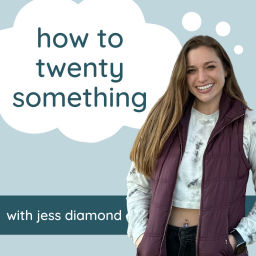
how to twenty-something
Hosted by Jess Diamond · Jess Diamond
5.0from 40 ratings
- 176
- Episodes
- 40
- Ratings
- Weekly
- Cadence
- 2023
- First episode
- 497
- YouTube views
About how to twenty-something
How To Twenty Something teaches young professionals how to “adult” across various aspects of their lives from career, to relationships, to overall health and wellness, so they can gain the confidence to take risks and try new things, helping them to reach their full potential.
- Publisher
- Jess Diamond
- Category
- education · education · health & fitness
- Language
- en
- Explicit
- Yes
- First episode
- 5 Jun 2023
- Latest episode
- 19 Oct 2026
Latest episodes
176 episodes in the feed.
19 Oct 2026
Ep. 175 Quality Over Quantity
Episode Summary You've probably been told that everything is a numbers game: apply to more jobs, go on more dates, attend more networking events, meet more people. But what if doing more isn't actually getting you anywhere? In this episode, I'm talking about why quality matters more than quantity when it comes to dating, making friends, and building your career. I share how I'm changing my own approach to networking, and how you can apply that same mentality to your dating life, friendships, and job search. We'll talk about how to be more intentional with the people you meet, why dating apps can trick you into thinking there's always someone better around the corner, and how spending five hours on one well-researched job application might get you further than sending out 100 applications. Because putting yourself out there is important, but you can't keep looking for more opportunities when you haven't done anything with the ones you already have. Who This Episode Is For This episode is for you if... You're constantly applying to jobs but aren't seeing results. You're on dating apps, going on dates, and still feel like you're getting nowhere. You attend networking events but struggle to turn acquaintances into meaningful connections. You know a lot of people but don't feel like you have many close friendships. You feel pressure to do more because everyone keeps telling you it's a numbers game. You spend more time meeting new people than following up with the people you've already met. You want to build better relationships but aren't sure how to move beyond small talk. You're measuring your progress by how many applications you send, events you attend, or dates you go on. You're ready to stop checking boxes and start being more intentional with your time and effort. Key Takeaways Quantity can get you opportunities, but quality is what helps you make something meaningful out of them. You don't always need to meet more people. Sometimes you need to get to know the people you've already met. In networking, a meaningful conversation and a follow-up coffee can be more valuable than collecting 30 business cards. Focusing on fewer matches and asking better questions can lead to more meaningful dating experiences. Building friendships requires more than attending events and making small talk Stop measuring progress exclusively by numbers. Consider the time, effort, and thought you're putting into the process. Before attending another networking event, reaching out to more people, or applying to more jobs, ask yourself whether you've followed up on the opportunities you already have. Being genuinely interested in someone makes a difference in the relationship you're building. You can have a packed calendar, tons of acquaintances, and hundreds of LinkedIn connections without having meaningful relationships or getting closer to your goals. The goal isn't to stop putting yourself out there. It's to be more intentional when you do. Frequently Asked Questions Is job searching really a numbers game? There is a quantity component to job searching, but sending more applications isn't always the best use of your time. Researching companies, tailoring your resume, connecting with people in your industry, and following up can make your applications more intentional and help you build valuable relationships. How can I make networking events more productive? Instead of trying to meet everyone in the room, focus on having meaningful conversations with one or two people. Ask thoughtful questions, remember details about their lives, and follow up afterward. The goal is to build a relationship, not collect business cards. How can I stop treating dating like a numbers game? Try investing more time in fewer matches instead of having the same surface-level conversation with 15 people at once. Ask better questions, genuinely try to get to know someone, and give the connection an opportunity to develop before immediately moving on to the next option. Should I focus on quality instead of quantity when applying for jobs? Rather than sending as many applications as possible, spend time researching companies you're genuinely interested in, tailoring your resume, finding relevant connections, and following up. A smaller number of thoughtful applications can be a better use of your time than sending out applications without much consideration. How do I know when I need to do more versus do better? Before adding another task, event, application, or date to your calendar, look at what you've already done. Have you followed up with the people you met? Have you strengthened existing connections? Have you improved your approach? Sometimes the next step isn't doing more. It's getting more intentional about what you're already doing. Helpful Resources: NEW COURSE: How to Make Adulting Suck Less: (https://jessdiamondcoaching.com/suck-less/)https://jessdiamondcoaching.com/suck-less/ (https://jessdiamondcoaching.com/suck-less/) Watch my TEDx Talk: (https://www.youtube.com/watch?v=RE_7I6vDKrI)https://www.youtube.com/watch?v=RE_7I6vDKrI (https://www.youtube.com/watch?v=RE_7I6vDKrI) 3 Ways to Walk Into Any Room With Confidence: (https://jessdiamondcoaching.com/confidence)https://jessdiamondcoaching.com/confidence (https://jessdiamondcoaching.com/confidence) Let's chat: (https://calendly.com/coach_jessdiamond/success)https://calendly.com/coach_jessdiamond/success (https://calendly.com/coach_jessdiamond/success) Email Me: coach.jessdiamond@gmail.com Contribute to an episode: (https://forms.gle/QwvBrZFbZXRdCjQv9)https://forms.gle/QwvBrZFbZXRdCjQv9 (https://forms.gle/QwvBrZFbZXRdCjQv9) Be a Guest: (https://forms.gle/oiLVCbrydjzaK5pq5)https://forms.gle/oiLVCbrydjzaK5pq5 (https://forms.gle/oiLVCbrydjzaK5pq5) Music: Hide and Seek by Free Music (https://soundcloud.com/fm_freemusic)https://soundcloud.com/fm_freemusic (https://soundcloud.com/fm_freemusic) Music Promoted by: (https://www.free-stock-music.com/)https://www.free-stock-music.com (https://www.free-stock-music.com/) Creative Commons/Attribution 3.0 Unported License (CC BY 3.0): (https://creativecommons.org/licenses/by/3.0/deed.en_US)https://creativecommons.org/licenses/by/3.0/deed.en_US (https://creativecommons.org/licenses/by/3.0/deed.en_US)
12 Oct 2026
Ep. 174 Why is it so hard to ask for help
Show Notes NEW COURSE: How to Make Adulting Suck Less: https://jessdiamondcoaching.com/suck-less/ (https://jessdiamondcoaching.com/suck-less/) Watch my TEDx Talk: https://www.youtube.com/watch?v=RE_7I6vDKrI (https://www.youtube.com/watch?v=RE_7I6vDKrI) Episode Summary We are usually more than happy to help someone else when they need us, yet the second we're the ones who need support, we suddenly convince ourselves that we should be able to figure it out on our own. In this episode, I'm breaking down why asking for help can feel so uncomfortable, especially in your twenties. We talk about the pressure to appear competent, self-sufficient, and like you have your shit together, even when you're navigating something you've never experienced before. I also talk about vulnerability, the fear of being a burden, pride, and why asking for help doesn't mean you're weak or incapable. And because knowing you should ask for help and actually doing it are two very different things, I walk you through how to ask for help without immediately talking yourself out of it. From figuring out what kind of help you actually need, identifying the right person to ask, starting with smaller asks, getting specific about what you're struggling with, and learning how to handle a "no," there are practical ways to make asking for help a little less uncomfortable. Because you can white-knuckle your way through everything yourself, or you can find the people who are a few steps ahead of you and let them help you get there faster. Who This Episode Is For You hate asking people for help, even when you know you need it. You feel like you're supposed to have everything figured out because you're an adult. You'd rather struggle on your own than admit you don't know what you're doing. You're afraid of being a burden to your friends, family, coworkers, or boss. You're the "strong friend" who is always helping everyone else. You're navigating something for the first time and don't know where to start. You struggle with vulnerability or opening up about what's actually going on. You need help but keep convincing yourself you should be able to figure it out alone. Key Takeaways We all need help with something; it's just a matter of how willing we are to ask for it. Asking for help doesn't mean you're weak, incapable, or don't have your shit together. When you're experiencing something for the first time, there's no reason you should already know how to navigate it. Asking someone who is a few steps ahead of you can help you get where you're going faster and easier. Vulnerability is a muscle, and you build it through practice. Get clear on the kind of help you need before asking someone for it. Make sure you're asking the person who is actually equipped to help you. Don't assume someone doesn't have the capacity to help you. Let them decide that for themselves. You don't have to navigate your twenties alone. Frequently Asked Questions Why is it so hard to ask for help? Asking for help can feel uncomfortable because we've been taught to associate self-sufficiency with competence. You may worry that needing help means you're weak, incapable, annoying, or a burden, even though you wouldn't think those things about someone else who came to you for support. How do I ask for help without feeling like a burden? Start by remembering that the other person gets to decide whether they have the capacity to help you. Instead of deciding for them that you're asking too much, simply ask if they have the capacity to help and give them the opportunity to say yes or no. What if someone says no when I ask for help? A no doesn't mean you're unworthy of help or that you shouldn't have asked. People have their own lives, responsibilities, and limitations. If someone can't help you right now, reset and find someone else who can. How can I get better at asking for help? Start small. Ask a friend for a recommendation, ask a coworker to review something, or ask someone in your network for a small favor. Vulnerability is a muscle, so the more you practice asking for help, the easier bigger asks can become. How do I know who to ask for help? Think about what you're actually struggling with and find someone who has experience in that area. Your boss may be the right person for a work question, while a friend might be better suited for emotional support. The more specific you are, the easier it becomes to find the right person. What if I don't know what kind of help I need? That's often part of why asking feels so difficult. Before reaching out, get as specific as you can about whether you're looking for advice, emotional support, a favor, accountability, or simply someone to listen. Can a coach help me if I don't know how to ask for help? Absolutely. Coaching can provide a space where you don't have to pretend you have everything figured out. A coach can help you identify what you're struggling with, determine what kind of support you need, and create a plan to move forward. Helpful Resources: Let’s chat: https://calendly.com/coach_jessdiamond/success (https://calendly.com/coach_jessdiamond/success) 3 ways to stop spiraling: https://jessdiamondcoaching.com/spiral/ (https://jessdiamondcoaching.com/spiral/) Email Me: coach.jessdiamond@gmail.com (mailto:coach.jessdiamond@gmail.com) Contribute to an episode: https://forms.gle/QwvBrZFbZXRdCjQv9 (https://forms.gle/QwvBrZFbZXRdCjQv9) Be a Guest: https://forms.gle/oiLVCbrydjzaK5pq5 (https://forms.gle/oiLVCbrydjzaK5pq5) Music: Hide and Seek by Free Music https://soundcloud.com/fm_freemusic (https://soundcloud.com/fm_freemusic) Music Promoted by https://www.free-stock-music.com (https://www.free-stock-music.com) Creative Commons/Attribution 3.0 Unported License (CC BY 3.0) https://creativecommons.org/licenses/by/3.0/deed.en_US (https://creativecommons.org/licenses/by/3.0/deed.en_US)
5 Oct 2026
Ep. 173 Stop waiting for permission in your career with Austin Lutz
NEW COURSE: How to Make Adulting Suck Less: (https://jessdiamondcoaching.com/suck-less/)https://jessdiamondcoaching.com/suck-less/ (https://jessdiamondcoaching.com/suck-less/) Watch my TEDx Talk: (https://www.youtube.com/watch?v=RE_7I6vDKrI)https://www.youtube.com/watch?v=RE_7I6vDKrI (https://www.youtube.com/watch?v=RE_7I6vDKrI) Episode Summary What if you stopped waiting for someone to give you permission to build the career you actually want? In this episode, I’m joined by Austin Lutz, a technology consultant, entrepreneur, product builder, and host of Lut's Talk, to talk about what it actually looks like to take career risks before you feel completely ready. We talk about Austin leaving a stable job for a startup just months before getting married and buying a house, why your twenties can be the best time to take calculated risks, and how to know the difference between a bad idea and an idea that just needs to be reframed. We also get into the reality of being a multi-passionate person, balancing a full-time job with side projects and family, and why you probably have more time than you think you do. Austin shares how building businesses outside of his full-time career has actually made him better at his day job, while I break down the skills your full-time job can help you develop for the career or business you want to build later. And perhaps most importantly, we talk about why you shouldn't wait for a promotion, title, degree, or someone else's approval to start doing the work you want to be known for. Your career doesn't have to follow one perfectly planned path—and you don't have to have everything figured out before you start creating opportunities for yourself. Key Takeaways You don't have to wait for someone else to give you permission to pursue the career you want. A calculated risk isn't about throwing your life into chaos—it's about understanding the potential risks, rewards, and outcomes before making a decision. Being busy doesn't necessarily mean you don't have time. You have to intentionally decide where your time goes. You don't have to abandon an idea just because the first version isn't working. Sometimes you need to reframe it. Your friends and family can be your cheerleaders, but you also need people who are willing to challenge your ideas and tell you the truth. The people you meet throughout your career can become future mentors, collaborators, employers, or opportunities. What you do outside of your full-time job can teach you skills that make you better at your full-time job. Your full-time job can also help you develop the skills you need to eventually pursue entrepreneurship or another career path. You don't need to work more hours to prove yourself. Focus on improving the quality of your work and building skills. Don't tie your self-worth to your job title, salary, or promotion. Doing nothing is still a decision, and it won't move you any closer to the career or life you want. Frequently Asked Questions How do I know if I'm ready to take a career risk? You probably won't ever feel completely ready. The goal isn't to eliminate the risk or fear, but to understand the potential outcomes, think through your options, and decide whether the risk is worth taking. Should I quit my job to start a business? Not necessarily. The episode emphasizes that there are multiple ways to build toward something new. You can keep your full-time job while developing skills, networking, testing an idea, and building something on the side before making a bigger transition. What if my idea isn't working? Don't immediately assume the entire idea is bad. Look at what isn't working, talk to people outside your immediate circle, gather feedback, and consider whether you need to change the audience, messaging, product, or approach. But also be willing to admit when something genuinely isn't working and move on. How can I make time for a side project? You can't manufacture more hours in the day. Instead, you have to decide which projects deserve your limited time and temporarily table things that aren't a priority. Being intentional about your calendar can create more space than you realize. Why is networking so important in your twenties? The people you meet can expose you to opportunities, perspectives, and knowledge you wouldn't have access to otherwise. Finding mentors and intentionally building relationships can help you grow faster and connect you to opportunities later in your career. Do I need to be qualified before I start doing the job I want? Not always. The episode explores the idea of starting to do the work you want before someone officially gives you permission. You can build skills, take on responsibilities, create projects, and demonstrate your ability before you have the title that says you can. What if I don't have the right degree or credentials? Credentials can be valuable, but they aren't the only indicators of whether you're capable of doing something. Skills, curiosity, willingness to learn, follow-through, and the ability to solve problems can matter just as much in many careers. How do I deal with imposter syndrome? Recognize that feeling unqualified doesn't necessarily mean you are unqualified. Sometimes you're simply doing something you've never done before. Taking action, building experience, and allowing yourself to learn along the way can help you develop confidence. Is it okay if my career doesn't follow one path? Absolutely. Your career can change throughout your twenties, thirties, and beyond. You don't have to choose one permanent identity or have your entire career figured out right now. Helpful Resources: Let’s chat: https://calendly.com/coach_jessdiamond/success (https://calendly.com/coach_jessdiamond/success) 3 ways to stop spiraling: https://jessdiamondcoaching.com/spiral/ (https://jessdiamondcoaching.com/spiral/) Email Me: coach.jessdiamond@gmail.com (mailto:coach.jessdiamond@gmail.com) Contribute to an episode: https://forms.gle/QwvBrZFbZXRdCjQv9 (https://forms.gle/QwvBrZFbZXRdCjQv9) Be a Guest: https://forms.gle/oiLVCbrydjzaK5pq5 (https://forms.gle/oiLVCbrydjzaK5pq5) Connect with Austin Lutz Website: lutztalk.com (http://lutztalk.com) Music: Hide and Seek by Free Music https://soundcloud.com/fm_freemusic (https://soundcloud.com/fm_freemusic) Music Promoted by https://www.free-stock-music.com (https://www.free-stock-music.com) Creative Commons/Attribution 3.0 Unported License (CC BY 3.0) https://creativecommons.org/licenses/by/3.0/deed.en_US (https://creativecommons.org/licenses/by/3.0/deed.en_US)
Who has been a guest on how to twenty-something
Names identified in recent episode analyses. Showing up to five guests.
- Julia Cancro
- Lou Smith
- Karishma Wadhwani
Reach and audience
Public platform figures. Ratings count people who left a rating, not total listeners.
- YouTube views
- 497
- Score snapshot 15 Sept 2025
- Apple Podcasts (US)
- 4.9 / 5
- 13 ratings
- Spotify
- 5.0 / 5
- 27 ratings
Podcast Authority Score: 71 / 100
A composite of feed quality, social presence, YouTube performance and engagement. Read the methodology.
- Quality
- 87
- Social presence
- 0
- YouTube
- 66
- Engagement
- 71
Contact how to twenty-something
- Guest appearances
- Books guests
Based on episode analysis; this does not confirm that the show is currently accepting guests.
Questions about how to twenty-something
Who hosts how to twenty-something?
Jess Diamond host the show. Published by Jess Diamond.
How often do new episodes come out?
The show publishes weekly, based on its RSS feed.
Does how to twenty-something take guests?
Yes. Guests have been identified in episode analyses.
Host of how to twenty-something?
Claim your podcast to manage its listing and keep your show details accurate.
Pod Engine is an independent podcast discovery and analytics service and is not affiliated with or endorsed by this podcast. Artwork and show content belong to their owners. Full legal notice.
Explore this show
Podcast research with Pod Engine