
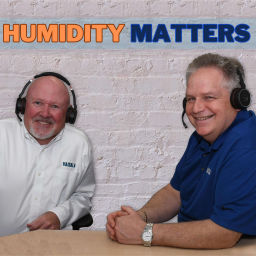
Humidity Matters
Claim This Podcastby Bruce McDuffee, Steve Santoro
Podcast Overview
<p>Humidity is a difficult measurement, and it is a critical measurement for many industrial processes. This podcast is dedicated to helping companies make a better measurement of humidity or water vapor, meaning more reliable and accurate. When you make a better measurement, your process is more efficient and you enjoy a higher quality output. Learn about how to measure humidity, what affects the measurement, pros and cons of myriad measurement technology, and much more. Because humidity measurement really does matter!</p>
Language
🇺🇲
Publishing Since
3/13/2023
Reach the team behind Humidity Matters
Verified contact details for this show aren't on file yet — sign up to get notified when they land.
Recent Episodes
March 21, 2024
Reduce Compressed Air Electricity Usage with Dewpoint Demand Switching
<p>In Episode 20 of Humidity Matters, we discuss how you can see significant energy savings in compressed air plants using a process called dew point demand switching for heatless desiccant dryers. We'll discuss the significance of compressed air in industrial settings, often referred to as the "fourth utility" due to its widespread use and energy-intensive nature. Compressing air is a highly energy-intensive process, requiring up to 7-8 times more electricity than an electric motor to achieve the same amount of horsepower.<br/><br/>The core of the discussion revolves around the heatless desiccant dryers and the potential energy savings achievable through dew point demand switching. Unlike refrigerated dryers that condense water vapor by cooling the air, heatless desiccant dryers use chemicals like silica gel or activated alumina to adsorb water vapor. These dryers operate with two towers: while one dries the air, the other regenerates using a portion of the dried compressed air. Typically, these dryers function on a timed cycle, which can be inefficient during periods of low demand. Dew point demand switching, however, allows these cycles to be controlled based on the actual dewpoint in the air as it exits the drying chamber, leading to significant energy savings. For instance, in a hypothetical scenario, implementing dew point demand switching in a two-shift plant operating seven days a week could save up to 20% in energy costs.<br/><br/>Key points:<br/>- Compressed air is an essential yet energy-intensive utility in manufacturing.<br/>- Heatless desiccant dryers offer the potential for significant energy savings.<br/>- Dew point demand switching optimizes dryer operation by measuring real-time dewpoint temperature.<br/>- The technology is particularly effective during periods of low demand, preventing unnecessary energy use.<br/>- Implementing dew point demand switching can lead to substantial energy cost savings, up to 20% in some cases.<br/><br/><a href='https://www.vaisala.com/sites/default/files/documents/VN172_Increasing_compressed_air_plant_efficiency.pdf'>Download the news article</a> and read more about reducing energy usage with dewpoint demand switching.</p><p>A podcast by Bruce McDuffee and Steven Santoro of Vaisala</p>
February 26, 2024
Measuring Dewpoint in Compressed Air Systems
<p>In episode 19 of "Humidity Matters," Steve and Bruce discuss measuring and managing dewpoint in compressed air systems. We discuss five common questions:</p><ol><li>What is dewpoint?</li><li>How does pressure affect dewpoint measurement?</li><li>What do pressure and atmospheric dewpoint mean, and why are those terms important?</li><li>How does dewpoint measurement indicate compressed air quality?</li><li>What are some important aspects of choosing a dewpoint instrument for a compressed air system?</li></ol><p>Key points covered include:</p><ul><li>Dew point temperature is crucial for indicating moisture levels in the air and is significantly affected by pressure variations.</li><li>In a compressed air system, as pressure increases, the dew point temperature also rises, potentially leading to water presence in the system.</li><li>Different applications require varying air quality levels, and the podcast explores the importance of choosing the right dew point measurement instrument based on specific process requirements.</li></ul><p>A podcast by Bruce McDuffee and Steven Santoro of Vaisala</p>
December 27, 2023
Calibration Part 3 - Accredited or Non-Accredited Calibration; That is the Question
<p>In Episode 18 of the "Humidity Matters" podcast, the third part of the calibration series, Bruce and Steve discuss the differences between accredited and non-accredited calibrations in humidity instruments. The episode delves into the definitions, standards, and processes of accredited calibrations, including independent third-party audits and adherence to specific global and national standards. We also addresses when accredited calibrations are necessary and the value they add, alongside providing insights into various calibration practices, uncertainty, accuracy, and traceability in measurements. The episode concludes by summarizing key takeaways from the entire calibration series.</p><p>A podcast by Bruce McDuffee and Steven Santoro of Vaisala</p>
20 total episodes available
Deep-dive analytics for Humidity Matters
Frequently asked questions
Have a different question and can't find the answer you're looking for? Reach out to our support team by sending us an email and we'll get back to you as soon as we can.
- What is Humidity Matters?
<p>Humidity is a difficult measurement, and it is a critical measurement for many industrial processes. This podcast is dedicated to helping companies make a better measurement of humidity or water vapor, meaning more reliable and accurate. When you make a better measurement, your process is more efficient and you enjoy a higher quality output. Learn about how to measure humidity, what affects the measurement, pros and cons of myriad measurement technology, and much more. Because humidity measurement really does matter!</p> - How often does this podcast release new episodes?
This podcast updates inactive.
- Where can I listen to this podcast?
This podcast is available on 8 platforms including Apple Podcasts, Spotify, and more. You can also use the RSS feed directly.
- Does this podcast accept guests?
Yes, this podcast regularly features guests.
Legal Disclaimer
Pod Engine is not affiliated with, endorsed by, or officially connected with any of the podcasts displayed on this platform. We operate independently as a podcast discovery and analytics service.
All podcast artwork, thumbnails, and content displayed on this page are the property of their respective owners and are protected by applicable copyright laws. This includes, but is not limited to, podcast cover art, episode artwork, show descriptions, episode titles, transcripts, audio snippets, and any other content originating from the podcast creators or their licensors.
We display this content under fair use principles and/or implied license for the purpose of podcast discovery, information, and commentary. We make no claim of ownership over any podcast content, artwork, or related materials shown on this platform. All trademarks, service marks, and trade names are the property of their respective owners.
While we strive to ensure all content usage is properly authorized, if you are a rights holder and believe your content is being used inappropriately or without proper authorization, please contact us immediately at hey@podengine.ai for prompt review and appropriate action, which may include content removal or proper attribution.
By accessing and using this platform, you acknowledge and agree to respect all applicable copyright laws and intellectual property rights of content owners. Any unauthorized reproduction, distribution, or commercial use of the content displayed on this platform is strictly prohibited.