
Gleaning Parenting Tips from the Weekly Parsha <br/><br/><a href="https://parentingintheparsha.substack.com?utm_medium=podcast">parentingintheparsha.substack.com</a>
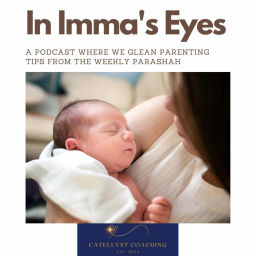
In Imma's Eyes Podcast
Claim This Podcastby Gleaning Parenting Tips from the Weekly Parsha
22 episodes
Updated Weekly
Accepts GuestsHas SponsorsLocation 🇺🇸
Podcast Overview
Gleaning Parenting Tips from the Weekly Parsha <br/><br/><a href="https://parentingintheparsha.substack.com?utm_medium=podcast">parentingintheparsha.substack.com</a>
Language
🇺🇲
Publishing Since
10/20/2022
1 verified contact email on file for In Imma's Eyes Podcast
Pitch yourself as a guest, propose sponsorships, or reach out directly to the host.
Recent Episodes
April 15, 2024
Metzorah (Lev 14:1-15:33)
<p>When I was a new young mom, my Aunt Lala would always remind me, “When they are crabby, put them in WATER!” Such wise parenting advise. A nice hot bubble bath can cure sibling controversy, a common cold, and a grumpy overstimulated child.</p><p>Why? Well, I think it is the experience of being in water that reminds us of the weightlessness of our own inner being. But, there may be multiple explanations. As I ponder this week’s Torah portion I couldn’t help but notice the target audience is a group of desert nomads. How ironic!</p><p>Join me as we discuss what the Torah has to teach us about the power of a mikveh.</p><p></p><p>* The Torah reading begins with a description of the purification procedure for a person who contracted <em>tzara'at</em>. After the priest determines that the <em>tzara'at</em> has been healed, a ceremony involving two birds, a cedar plank, a scarlet thread and water from a live stream, is used for the initial stage of the purification. The individual also shaves his entire body. After a seven-day wait, the person shaves again, and brings three animals and an oil offering to the Temple.</p><p>* The priest processes the offerings in the manner prescribed in this section. With this the purification process is completed.</p><p>* If the individual suffering from <em>tzara'at</em> cannot afford the above sacrifices, two birds can be substituted for two of the animals. This section describes the slightly different purification process reserved for the impoverished person.</p><p>* Homes, too, can be afflicted with <em>tzara'at</em>. If stones on a home become discolored — acquiring a strong red or green pigment — a priest is summoned. If indeed the discoloration seems to be <em>tzara'at</em>, the priest quarantines the home for up to three weeks. Depending on the spread of the discoloration, the home is either declared to be pure, or the specific stones are removed from the house, or, in the most extreme situations, the house is demolished. The Torah then describes the purification process for such a home — which is very similar to the initial stage of the purification of the human afflicted with <em>tzara'at</em>.</p><p>* After concluding the subject of <em>tzara'at</em>, the Torah discusses the ritual impurity of a man who issues a sickly and unnatural seminal discharge, as well as the method by which this person attains purity when the condition passes.</p><p></p><p>* This section discusses the ritual impurity contracted by a man who issues a (normal) seminal discharge, the ritual impurity of a menstruating woman, and of a man who cohabits with her. All such people must immerse in a <em>mikvah</em> (ritual pool) to be purified.</p><p></p><p>* Under certain circumstances, a menstruating woman was required to bring to the Temple two bird offerings to attain purity. These sacrifices are described in this section.</p> <br/><br/>This is a public episode. If you would like to discuss this with other subscribers or get access to bonus episodes, visit <a href="https://parentingintheparsha.substack.com?utm_medium=podcast&utm_campaign=CTA_1">parentingintheparsha.substack.com</a>
April 8, 2024
Tazria (Leviticus 12:1 - 13:59)
<p>This week we are studying Parashat Tazria (Leviticus 12:1 - 13:59). We learn a few things about rest and recovery from childbirth or illness in this week’s parsha. Let’s have a look!</p><p><strong>Tazria Aliyot Summary </strong></p><p>* The Torah teaches us about a timeframe, during which a woman is considered impure, after childbirth, and the obligation of circumcision. The Torah also instructs us about the laws of <em>tzara'at - white skin discolorations.</em> </p><p>* The Torah teaches us about the process of being declared clean or unclean by the Kohen after a period of quarantine. Was this for the safety of the rest of the camp, or an ancient “medical system?”</p><p>* We learn the laws of <em>tzara'at</em> which appears following an inflammation on the skin.</p><p>* We learn the laws of <em>tzara'at</em> which appears following a burn to the skin.</p><p>* We learn that areas of the body covered in hair can also be affected by <em>tzara'at</em>.</p><p>* We learn that <em>tzara'at</em> can appear on bald spots as well as clothing! The Torah then teaches us about a clothing <em>tzara'at</em> - which made me wonder if this was a form of mold or something that can grow on the fibers of fabric.</p><p>* After the quarantine period, depending on the circumstances the garment is either declared pure, or completely burnt, or only the part which was discolored is torn out and burnt. This decision is made by the Kohen.</p><p><strong>Parenting Touchpoint: </strong></p><p>* I feel like the judgment we assign to the period of “quarantine” after childbirth has a lot to do with how we experience that time. If we tell moms that she is impure and cannot be near us, we are inflicting a feeling of isolation and shame on her. But, if we reframe it as a period of rest, and a beautiful time to turn away from her other responsibilities (like work, cooking, caring for other children, or even attending to the needs of her husband) and turn her attention to rest, and bonding with her new baby, then it feels very different. I sense the harsh language was used because the target audience was the men in the culture, hopefully hinting to them to leave her alone and let her rest and recover! LOL</p><p>* Ancient Near Eastern cultures conflated morality with health. While I do believe we are three-dimensional beings, and need to tend to the spiritual, physical, and emotional needs of ourselves and our children, I don’t think we get “punished” by G-d with sickness for our moral ineptitude. On the other hand, if we ARE gossipping, we may likely be anxious as well, and that feeling could be causing inflammation in our tissues. </p><p>* My main takeaway from this is to consistently cultivate a relationship pattern with my children that makes open, honest communication safe and welcomed. This can be very difficult, especially when we hear bad news, or we are alarmed at some of the things our children want to tell us…but if they WANT to tell us, that is a really good sign our relationship is secure.</p><p>Feel free to share your thoughts in the comments below!</p><p>May the G-d of Abraham, Isaac, and Jacob bless you with rest when you need it! Parenting is a lifelong marathon. Take good care of yourselves! Until next time, Shalom!</p><p>This work is provided by the generous support of listeners. If you are enjoying this podcast, please help us out by sharing it with another parent!</p><p>If wish to support this podcast financially, you can <a target="_blank" href="https://www.paypal.com/paypalme/SashyaClark">donate here</a>:</p><p>During this podcast, listeners were invited to learn more about their child’s Human Design at <a target="_blank" href="http://www.sashyaclark.com">www.sashyaclark.com</a></p><p>Also, check out my newest Substack: <a target="_blank" href="https://613alongtheway.substack.com/">AlongtheWay613</a>, a 5-15 minute study session that curates Primary Jewish Sources, a brief D’var Torah, and Discussion Prompts empowering Jewish parents to discuss the Torah “Along the Way” (during the morning carpool, over breakfast, or while you are cooking dinner together).</p><p></p> <br/><br/>This is a public episode. If you would like to discuss this with other subscribers or get access to bonus episodes, visit <a href="https://parentingintheparsha.substack.com?utm_medium=podcast&utm_campaign=CTA_1">parentingintheparsha.substack.com</a>
April 1, 2024
Parshat Shemini (Leviticus 9:1-11:47)
<p>In this week’s podcast we discuss Parshat Shemini. There were several directions I could have gone with Parshat Shemini: the mourning rituals (or lack there of!), the 8th day, the beginning of a new era of the Priesthood, and even an in depth discussion of wine (since it is mentioned). But, I decided in the end, to leave the worn path of commentary, and follow my line of questioning, my own heart, and I hope you find some meaning in what I share.</p><p></p><p>Aliyot Summary:</p><p>* Moses gathers the Nation to see the Divine revelation, and marks the first day of the priestly service with sacrifices.</p><p>* We hear the priestly blessing.<a target="_blank" href="https://youtu.be/TmZGRJlnZ6E?si=MOBuux4jhL-P4SuN"> Here is a guided practice for kids using the birkat kohanim</a>. And a nice (Sephardic, I think?)<a target="_blank" href="https://open.spotify.com/track/504ZQrQg9qgTixr7X8BB4D?si=b9d326dc7ee0437f"> version I found on Spotify.</a></p><p>* Don’t bring strange incense! Don’t drink before serving in the Temple.</p><p>* Moses gives instructions about eating the sacrifices, despite their mourning.</p><p>* Moses becomes aware that one of the offerings was burnt instead of consumed. Aaron explains himself, and Moses accepts his answer.</p><p>* G-d gives the commandments about eating Kosher.</p><p>* We learn about the possibility of utensils contracting impurity.</p><p></p><p>Did you hear I started a new substack called “Along the Way 613”? You bet! It is a 5-15 min read, with discussion prompts. Listen, shema, I love to study Torah and primary Jewish Sources, but I don’t always have time to site down to a lengthy discussion with my kiddos, despite knowing the commandment to teach to our children. So I came up with a way to study primary sources, and have a meaningful discussion, when you “lie down,” “get up” or “walk along the way” as the Va’ahavta commands us. Instead of giving you a complete “D’var Torah” or coming to some conclusion with the material, I have decided, instead, to empower you with thoughtful questions that are sure to help you start a conversation while you shlep the kiddos off to school. If you’re Jewish, and a parent, and you want to incorporate more Torah learning in your day,<a target="_blank" href="https://613alongtheway.substack.com/"> I hope you will check it out!</a></p> <br/><br/>This is a public episode. If you would like to discuss this with other subscribers or get access to bonus episodes, visit <a href="https://parentingintheparsha.substack.com?utm_medium=podcast&utm_campaign=CTA_1">parentingintheparsha.substack.com</a>
22 total episodes available
Deep-dive analytics for In Imma's Eyes Podcast
Frequently asked questions
Have a different question and can't find the answer you're looking for? Reach out to our support team by sending us an email and we'll get back to you as soon as we can.
- What is In Imma's Eyes Podcast?
- How often does this podcast release new episodes?
This podcast updates weekly.
- Where can I listen to this podcast?
This podcast is available on 6 platforms including Apple Podcasts, Spotify, and more. You can also use the RSS feed directly.
- Does this podcast accept guests?
Yes, this podcast regularly features guests.
Legal Disclaimer
Pod Engine is not affiliated with, endorsed by, or officially connected with any of the podcasts displayed on this platform. We operate independently as a podcast discovery and analytics service.
All podcast artwork, thumbnails, and content displayed on this page are the property of their respective owners and are protected by applicable copyright laws. This includes, but is not limited to, podcast cover art, episode artwork, show descriptions, episode titles, transcripts, audio snippets, and any other content originating from the podcast creators or their licensors.
We display this content under fair use principles and/or implied license for the purpose of podcast discovery, information, and commentary. We make no claim of ownership over any podcast content, artwork, or related materials shown on this platform. All trademarks, service marks, and trade names are the property of their respective owners.
While we strive to ensure all content usage is properly authorized, if you are a rights holder and believe your content is being used inappropriately or without proper authorization, please contact us immediately at hey@podengine.ai for prompt review and appropriate action, which may include content removal or proper attribution.
By accessing and using this platform, you acknowledge and agree to respect all applicable copyright laws and intellectual property rights of content owners. Any unauthorized reproduction, distribution, or commercial use of the content displayed on this platform is strictly prohibited.