
Indaba is a global podcast that brings together scholars, practitioners, and activists as we re-imagine and reconstruct how we relate to and live in the world.<br /><br />Rooted in a Critical Community psychology, an interdisciplinary social science driven by social justice and decolonial values, we explore methodological, theoretical, and practical knowledge that informs our social change practice. Indaba is a South African Indigenous term for a meeting and through this show we foster a coming together to share and engage with ideas with a collective of voices from around the world.<br /><br />Curated into five pairs of episodes exploring our everyday praxis, each beginning with a contextually grounded storytelling episode followed by a critical reflection dialogue with members of our global collective including South Africa, Indonesia, Chile, Australia, Palestine, and Canada.<br /><br />The show is created by a global network of supporters including faculty partners Natalie Kivell, Christopher Sonn, Marianne Daher Gray, Monica Madyaningrum, Garth Stevens, and Manuel Riemer and a Grad student collective including Ramy Barhouche, Rejane Williams, Marika Handfield, Rama Agung-Igusti, Roshani Jayawardana, Antonia Rosati, María José Campero, Elizabeth Brunet, and Sam Keast with audio production by Andre Goulet and Rob Rousseau with consultation from Nashwa Khan and graphic art by melisse Watson.<br /><br />In-kind and financial support for Indaba comes courtesy of the Pontificia Universidad Católica de Chile, the Psychological Society of South Africa, Victoria University of Melbourne Australia, The Centre for Community Research, Learning, and Action and Office of Research Services at Wilfrid Laurier University, in Ontario and the Society for Community Research and Action.
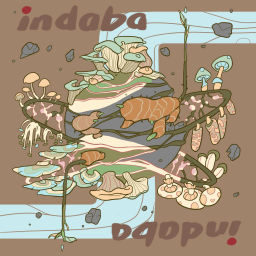
Indaba - A Critical Community Psychology Global Podcast
Claim This PodcastPodcast Overview
Indaba is a global podcast that brings together scholars, practitioners, and activists as we re-imagine and reconstruct how we relate to and live in the world.<br /><br />Rooted in a Critical Community psychology, an interdisciplinary social science driven by social justice and decolonial values, we explore methodological, theoretical, and practical knowledge that informs our social change practice. Indaba is a South African Indigenous term for a meeting and through this show we foster a coming together to share and engage with ideas with a collective of voices from around the world.<br /><br />Curated into five pairs of episodes exploring our everyday praxis, each beginning with a contextually grounded storytelling episode followed by a critical reflection dialogue with members of our global collective including South Africa, Indonesia, Chile, Australia, Palestine, and Canada.<br /><br />The show is created by a global network of supporters including faculty partners Natalie Kivell, Christopher Sonn, Marianne Daher Gray, Monica Madyaningrum, Garth Stevens, and Manuel Riemer and a Grad student collective including Ramy Barhouche, Rejane Williams, Marika Handfield, Rama Agung-Igusti, Roshani Jayawardana, Antonia Rosati, María José Campero, Elizabeth Brunet, and Sam Keast with audio production by Andre Goulet and Rob Rousseau with consultation from Nashwa Khan and graphic art by melisse Watson.<br /><br />In-kind and financial support for Indaba comes courtesy of the Pontificia Universidad Católica de Chile, the Psychological Society of South Africa, Victoria University of Melbourne Australia, The Centre for Community Research, Learning, and Action and Office of Research Services at Wilfrid Laurier University, in Ontario and the Society for Community Research and Action.
Language
🇺🇲
Publishing Since
11/26/2023
1 verified contact email on file for Indaba - A Critical Community Psychology Global Podcast
Pitch yourself as a guest, propose sponsorships, or reach out directly to the host.
Recent Episodes
July 28, 2024
Finale: Summarizing the Indaba Journey w/ The International Grad Student Collective
Welcome to the fnal episode of Indaba. This podcast has been a project of collective global love<br />built with our global network of scholars, activists, community practitioners, and friends rooted<br />in a Critical Community Psychology, and a shared goal of furthering our capacity to engage in<br />critical, decolonial and action-oriented research and practice in our everyday work and life.<br /><br />On the season finale members of the show's graduate student collective from Chile, Australia and Canada including Ramy Barhouche, Roshani Jayawardana, Marika Hanfield, Maria-Josee Campero and Antonio Rosati share their impressions, experiences of study and research and practice in which they're engaged in the field of critical community psychology and social science.<br /><br />**Stay Engaged with Indaba!** Join us on this journey of exploration and discovery by subscribing to Indaba for future thought-provoking episodes. Don't miss out on the latest insights and discussions that shape our understanding of community psychology practice and be sure to tune in to the response episode for deeper insights into the conversations shared here.<br /><br />Visit <a href="https://internationalcommunitypsychology.com/indaba/" target="_blank" rel="noreferrer noopener">https://internationalcommunitypsychology.com/indaba/</a> to access additional resources, transcripts, translations in French and Spanish, and further information related to the topics covered in this episode.<br /><br />Thank you for being a part of the Indaba community. Your support fuels our commitment to meaningful change and collective learning.
July 18, 2024
Australia: Stories of Belonging - Amplifying Voices, Challenging Narratives (Critical Response pt2)
The critical response episode of the “Australia relationality” episode centered around the themes of relationality and storytelling with hosts <i>Natalie, Chris</i>, and <i>Rama</i> in conversation with guests <i>Angela, Antonia, Roshani, Elizabeth, Juan-Camilo</i>, and <i>Sam</i>, all researchers in the discipline of community psychology.<br /><br />The episode delves into the significance of building and maintaining authentic relationships within communities, going beyond superficial connections, exploreing the power of storytelling as a means of connection and resistance and emphasizing how it can catalyze transformative action. Challenges related to power dynamics in community work are discussed, as well as the role of the storyteller and the complexities of community engagement with philanthropic foundations and organizations.<br /><br />The concept of resistance and debonding within community relationships is also highlighted, underscoring the importance of understanding and respecting community decisions on participation and engagement. The participants stress the continuity of relationships beyond specific projects and the significance of building genuine friendships and connections within communities.The discussion further focuses on grounding research in one's own community and the value of lived experience in knowledge creation, even as navigating the researcher-community relationship and maintaining authenticity and vulnerability during research are key challenges.<br /><br />Acknowledging the complexities of working within academic institutions, the participants emphasize the need for supportive spaces for relational research and the role of those in power in creating such environments, and the episode concluded with reflections on forming alliances and finding allies both within and outside academic institutions. The panelists highlight the importance of decentering oneself as a researcher and recognizing the interconnectedness between different worlds and subjectivities. Ethical and accountable research practices that prioritize community well-being were called for, underlining the demonstration of solidarity and care in relational work.<br /><br />**Stay Engaged with Indaba!** Join us on this journey of exploration and discovery by subscribing to Indaba for future thought-provoking episodes. Don't miss out on the latest insights and discussions that shape our understanding of community psychology practice and be sure to tune in to the response episode for deeper insights into the conversations shared here.<br /><br />Visit <a href="https://internationalcommunitypsychology.com/indaba/" target="_blank" rel="noreferrer noopener">https://internationalcommunitypsychology.com/indaba/</a> to access additional resources, transcripts, translations in French and Spanish, and further information related to the topics covered in this episode.<br /><br />Thank you for being a part of the Indaba community. Your support fuels our commitment to meaningful change and collective learning.<br />
July 11, 2024
Australia: Stories of Belonging - Amplifying Voices, Challenging Narratives (Storytelling pt1)
In the "Stories of Belonging: Amplifying Voices, Challenging Narratives" episode hosts <i>Natalie Kivell, Christopher Sonn,</i> and <i>Rama Agung Igusti</i> engage in a rich conversation with four guests from Australia <i>Geskeva Komba, Sam Keast, Ruth Nyaruot Ruach</i>, and <i>Roshani Jayawardana.</i><br /><br />The episode explores the power of storytelling to connect communities, preserve culture, and challenge dominant narratives. "Next in Color" collaborates with the African community through literary, visual work, and workshops, aiming to create spaces for storytelling and community engagement while challenging prevailing representations.The episode highlights the importance of representing Black joy and stories beyond trauma and emphasizes the need for communities to narrate their own stories and reclaim their identity. Projects like "Blavk Gold," a short film set in Flemington public housing estates, demonstrate the transformative power of storytelling. <br /><br />The discussion also underscores the significance of ancestral knowledge, sharing experiences, and fostering understanding among diverse communities. The guests advocate for community-centered knowledge production, going beyond extractive approaches, and embracing multiple perspectives for self-determination and agency. The transformative nature of storytelling is celebrated, promoting personal growth, understanding, and liberation. <br /><br />Overall, throughout the conversation, the importance of building and maintaining relationships is emphasized, valuing ancestral knowledge alongside academic knowledge. The episode encourages empowering communities as knowers to challenge dominant narratives, fostering respectful engagement with lived experiences. The messy, complex, and relational nature of everyday practices in community engagement is acknowledged as a crucial aspect of the process.<br /><br />**Stay Engaged with Indaba!** Join us on this journey of exploration and discovery by subscribing to Indaba for future thought-provoking episodes. Don't miss out on the latest insights and discussions that shape our understanding of community psychology practice and be sure to tune in to the response episode for deeper insights into the conversations shared here.<br /><br />Visit <a href="https://internationalcommunitypsychology.com/indaba/" target="_blank" rel="noreferrer noopener">https://internationalcommunitypsychology.com/indaba/</a> to access additional resources, transcripts, translations in French and Spanish, and further information related to the topics covered in this episode.<br /><br />Thank you for being a part of the Indaba community. Your support fuels our commitment to meaningful change and collective learning.
12 total episodes available
Deep-dive analytics for Indaba - A Critical Community Psychology Global Podcast
Frequently asked questions
Have a different question and can't find the answer you're looking for? Reach out to our support team by sending us an email and we'll get back to you as soon as we can.
- What is Indaba - A Critical Community Psychology Global Podcast?
- How often does this podcast release new episodes?
This podcast updates weekly.
- Where can I listen to this podcast?
This podcast is available on 8 platforms including Apple Podcasts, Spotify, and more. You can also use the RSS feed directly.
- Does this podcast accept guests?
Yes, this podcast regularly features guests.
Legal Disclaimer
Pod Engine is not affiliated with, endorsed by, or officially connected with any of the podcasts displayed on this platform. We operate independently as a podcast discovery and analytics service.
All podcast artwork, thumbnails, and content displayed on this page are the property of their respective owners and are protected by applicable copyright laws. This includes, but is not limited to, podcast cover art, episode artwork, show descriptions, episode titles, transcripts, audio snippets, and any other content originating from the podcast creators or their licensors.
We display this content under fair use principles and/or implied license for the purpose of podcast discovery, information, and commentary. We make no claim of ownership over any podcast content, artwork, or related materials shown on this platform. All trademarks, service marks, and trade names are the property of their respective owners.
While we strive to ensure all content usage is properly authorized, if you are a rights holder and believe your content is being used inappropriately or without proper authorization, please contact us immediately at hey@podengine.ai for prompt review and appropriate action, which may include content removal or proper attribution.
By accessing and using this platform, you acknowledge and agree to respect all applicable copyright laws and intellectual property rights of content owners. Any unauthorized reproduction, distribution, or commercial use of the content displayed on this platform is strictly prohibited.