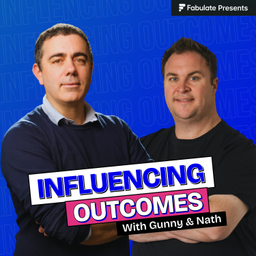
Welcome to Influencing Outcomes, the podcast that gets real about what drives success in influencer marketing. Each episode, we break down the latest headlines, share smart takes, and chat with the people shaping the creator economy. From brand marketers and agency leads to creators and talent managers, we explore what’s working, what’s changing, and how influence is turning into measurable results. If you care about the mix of creativity, strategy, and performance, this is your place to learn, laugh, and stay ahead of the curve.
Hosted by Nathan Powell and Ben Gunn, Co-Founders of Fabulate, this duo knows the influencer world inside out. Nathan brings a strategic mind that connects creativity with data, while Ben’s experience in business development and digital media fuels his passion for building partnerships and driving growth. Together, they bring smart conversations, fresh insights, and genuine curiosity to every episode of Influencing Outcomes.
New episodes Thursdays.
Do the Rules of Marketing Change When You’re Working With Creators?
In this episode of Influencing Outcomes, Nathan Powell and Ben Gunn are joined by Valerie Madon, Director of Creative Strategy SEA/KR/JP at Fabulate, and Nina Drakalovic, Client Strategy Lead ANZ at Fabulate, to ask a deceptively simple question: do the rules of marketing actually change when you’re working with creators?
Creator marketing may no longer be new, but for many marketers it can still feel like a “mystical black hole”. Valerie and Nina explore why the category is still developing its own principles, why many brands remain focused on followers and reach, and how briefs are evolving from straightforward creator execution into much bigger marketing problems. As investment grows, the conversation also looks at the shift from measuring buzz and engagement towards proving harder business outcomes.
The discussion then turns to the relationship between brands and creators. How much creative freedom should creators actually have? When should they be brought into the strategic process? And are brands sometimes briefing out the very thing that made them choose a creator in the first place? The team argues that the fundamentals of good marketing haven’t disappeared: clear objectives, strong briefs and creative effectiveness still matter. The challenge is creating enough structure to protect the brand without removing the creator’s voice.
Finally, the team looks at what better creator strategy actually involves, from starting with the business problem rather than the creator or platform, to choosing talent based on what they can achieve rather than simply the size of their following. With creators ranging from highly polished storytellers to hyper-local voices capable of reaching communities traditional media cannot, the opportunity is much broader than buying influence. The real question is whether marketers are prepared to start treating creators as creators, rather than another media space to fill with a message.
Timecodes:
● (03:01) Why does creator marketing still feel like a “mystical black hole”?
● (05:10) What are brands actually asking for from creator strategy?
● (06:42) Are marketers becoming more sophisticated in how they approach creators?
● (12:58) Do the rules of marketing change when you’re working with creators?
● (16:34) When should creators be brought into the creative process?
● (23:05) Where should a creator strategy actually start?
● (27:49) What is the one thing marketers should change about their approach to creators?
Follow, Subscribe and Stay Connected.
Enjoyed the episode? Follow Influencing Outcomes on your favourite podcast platform so you never miss an update.
For more insights, industry trends and behind the scenes content:
Follow Fabulate on socials: LinkedIn | Instagram| TikTok | Youtube
Visit our website: www.fabulate.co
30 Sept 2026
Is It Time for Creator Marketing to Grow Up? With Gai Le Roy, CEO of IAB Australia
In this episode of Influencing Outcomes, Nathan Powell and Ben Gunn are joined by Gai Le Roy, CEO of IAB Australia, to ask whether creator marketing is entering its own coming-of-age moment, and what the industry can learn from the evolution of digital advertising.
Drawing on IAB Australia’s latest creator research, the conversation looks at how creators are influencing the way Australians discover, research and buy products, and why creator marketing increasingly needs to be considered alongside the rest of the media mix rather than treated as a standalone channel. They explore the relationship between creators, brands and consumer trust, including the finding that 44% of Australians say they are less likely to act on a creator recommendation once they know the creator has been paid or compensated.
The discussion then turns to one of the category’s biggest challenges: measurement. As investment continues to grow, brands increasingly need to understand not only reach and engagement, but how creator activity contributes to broader marketing and business outcomes. Gai discusses the role of MMM, creative effectiveness and better integration of creator data into existing measurement frameworks, as well as why proving value does not simply mean proving an immediate sale.
Finally, the conversation looks at what a genuinely mature creator marketing industry could look like. From global audiences and increasingly complex regulation to transparency, standards and the role of agencies, platforms and brands, the team considers how the industry can professionalise without professionalising the magic out of creator content. And as creators increasingly operate as media businesses in their own right, what will we look back on in three to five years and wonder why we were still getting wrong in 2026?
Timecodes:
● (02:08) Is creator marketing having its coming-of-age moment?
● (05:49) What does the latest research tell us about creator marketing?
● (08:14) Where do creators influence the customer journey?
● (10:11) Why creator marketing cannot be measured in isolation
● (15:11) What happens to trust when consumers know a creator has been paid?
● (21:02) How do we professionalise creator marketing without losing its magic?
● (23:56) What does a mature creator marketing industry actually look like?
Learn more and download the latest Creator Connect Report 2026 from IAB Australia:https://www.iabaustralia.com.au/resource/creator-connect-report-2026/
Follow, Subscribe and Stay Connected.
Enjoyed the episode? Follow Influencing Outcomes on your favourite podcast platform so you never miss an update.
For more insights, industry trends and behind the scenes content:
Follow Fabulate on socials: LinkedIn | Instagram| TikTok | Youtube
Visit our website: www.fabulate.co
24 Sept 2026
How Much Is a Creator Actually Worth?
In this episode of Influencing Outcomes, Nathan Powell is joined by Terri Owens and Ben Gunn to tackle one of creator marketing’s most persistent questions: how much is a creator actually worth?
Starting with Forbes’ 2026 Top Creators List, the team looks at how the world’s biggest creators are turning attention into increasingly valuable businesses, and why audience size alone tells us surprisingly little about earning potential. From MrBeast’s estimated US$300 million annual earnings to creators with much smaller followings generating significantly more revenue than larger peers, they explore what separates having an audience from knowing how to monetise it.
The conversation then turns to what brands actually pay for creator content and why creator pricing has proven so difficult to standardise. The team breaks down what can sit inside a creator fee, including production, distribution, audience access, usage rights, exclusivity and revisions. They also examine the role of talent managers, creator agencies and other intermediaries, and why transparency matters when additional fees and margins can influence how a creator’s performance and ROI are ultimately judged.
Finally, the team asks what creators are worth to the platforms themselves. With creators building businesses across multiple platforms and revenue streams, YouTube, Netflix and other entertainment platforms are increasingly competing for the audiences they command. From YouTube reportedly offering multimillion-dollar deals to keep top creators away from Netflix to Ninja’s move from Twitch to Mixer, the discussion explores the difference between followers and fans, and how much value sits in an audience willing to follow a creator somewhere new.
The conclusion is that there is no universal formula for what a creator is worth. Price and value are different things. A creator can have a different value to every brand and platform they work with, and potentially be worth far more to themselves when they turn their audience into a business.
Timecodes:
● (01:06) How much are the world’s biggest creators earning?
● (08:24) Why is creator pricing so difficult to standardise?
● (13:36) Are brands overpaying for creator content?
● (16:37) Where does a creator campaign budget actually go?
● (21:23) Why transparency matters in creator pricing
● (23:45) What are creators worth to the platforms?
● (29:17) Why platforms are competing for top creators
● (34:17) Followers vs fans: who really owns the audience?
● (40:00) So, how much is a creator actually worth?
Follow, Subscribe and Stay Connected.
Enjoyed the episode? Follow Influencing Outcomes on your favourite podcast platform so you never miss an update.
For more insights, industry trends and behind the scenes content:
Follow Fabulate on socials: LinkedIn | Instagram| TikTok | Youtube
Visit our website: www.fabulate.co
Reach and audience
Public platform figures. Ratings count people who left a rating, not total listeners.
Spotify
5.0 / 5
8 ratings
Contact Influencing Outcomes
Guest appearances
Books guests
Based on episode analysis; this does not confirm that the show is currently accepting guests.
Host of Influencing Outcomes?
Claim your podcast to manage its listing and keep your show details accurate.
Pod Engine is an independent podcast discovery and analytics service and is not affiliated with or endorsed by this podcast. Artwork and show content belong to their owners. Full legal notice.
Explore this show Podcast research with Pod Engine