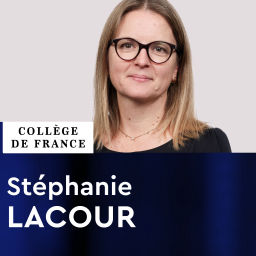
Innovation technologique Liliane Bettencourt (2023-2024) - Stéphanie Lacour
Claim This Podcastby Collège de France
Podcast Overview
<p>Présentation de la chaire</p><p></p><p>La chaire annuelle Innovation technologique Liliane Bettencourt, créée en 2006, marque la volonté commune du Collège de France et de la Fondation Bettencourt Schueller de mettre en valeur l'importance des travaux qui doivent être consacrés à l'innovation technologique.</p><p></p><p>La neurotechnologie : science, ingénierie et thérapies</p><p></p><p>Stéphanie Lacour dirige le Laboratoire des interfaces bioélectroniques souples au Campus Biotech, à Genève, où son équipe conduit des travaux à l'interface de l'ingénierie, des neurosciences et de la recherche translationnelle. Son cours s'intéressera à la neurotechnologie, domaine interdisciplinaire qui intègre diverses méthodes et approches pour explorer les mécanismes du système nerveux, diagnostiquer, traiter et atténuer les troubles neurologiques et envisager des interfaces cerveau-machine. Ces innovations offrent un avenir fascinant pour la recherche et les applications cliniques.</p><p></p><p>Biographie</p><p></p><p>Stéphanie P. Lacour est professeure à l'École polytechnique fédérale de Lausanne et directrice de l'institut interdisciplinaire Neuro-X de l'EPFL. Ses travaux portent sur le design, la fabrication et l'implémentation de dispositifs électroniques souples visant à communiquer avec le système nerveux. Elle a bénéficié d'une ERC Starting Grant portant sur les peaux électroniques et une ERC Consolidator Grant (suisse) sur la bioélectronique implantable. Elle a reçu le TR35 du MIT Technology Review en 2006, une University Fellowship de la Royal Society en 2007 puis la Chaire Bertarelli en Neurotechnologie, EPFL en 2012.</p><p></p><p>Stéphanie Lacour est invitée à occuper la chaire annuelle Innovation technologique Liliane Bettencourt du Collège de France pour l'année 2023-2024.</p>
Language
🇫🇷
Publishing Since
2/29/2024
1 verified contact email on file for Innovation technologique Liliane Bettencourt (2023-2024) - Stéphanie Lacour
Pitch yourself as a guest, propose sponsorships, or reach out directly to the host.
Recent Episodes

June 14, 2024
Colloque - La neurotechnologie : Panel Discussion
<p>Stéphanie Lacour</p><p>Collège de France</p><p>Innovation technologique Liliane Bettencourt (2023-2024)</p><p>Année 2023-2024</p><p></p><p>Colloque - La neurotechnologie : The OECD's Work on Responsible Innovation in Neurotechnology</p><p></p><p>Innovating Responsibly: Neurotechnology Standards and Societal Ethics</p><p></p><p>Colloque coorganisé par Stéphanie Lacour, chaire Innovation technologique Liliane Bettencourt et Mme Karen Rommelfanger.</p><p></p><p>Intervenant(s)</p><p></p><p>Stéphanie Lacour, chaire Innovation technologique Liliane Bettencourt</p>

June 14, 2024
Colloque - La neurotechnologie : The OECD's Work on Responsible Innovation in Neurotechnology
<p>Stéphanie Lacour</p><p>Collège de France</p><p>Innovation technologique Liliane Bettencourt (2023-2024)</p><p>Année 2023-2024</p><p></p><p>Colloque - La neurotechnologie : The OECD's Work on Responsible Innovation in Neurotechnology</p><p></p><p>Innovating Responsibly: Neurotechnology Standards and Societal Ethics</p><p></p><p>Colloque coorganisé par Stéphanie Lacour, chaire Innovation technologique Liliane Bettencourt et Mme Karen Rommelfanger.</p><p></p><p>Intervenant(s)</p><p></p><p>Laura Kreiling, Policy Analyst, OCDE</p><p></p><p>The presentation consists of three parts, the first focuses on the OECD Recommendation on Responsible Innovation in Neurotechnology [OECD/LEGAL/0457] and presents its development and context, as well as implementation efforts. The second part highlights recent OECD work on the governance emerging technologies that the OECD Neurotechnology Recommendation informed, notably the recently published Framework for Anticipatory Governance of Emerging Technologies. The presentation concludes with a live demonstration of the recently released OECD Neurotechnology Toolkit, a central implementation resource of the OECD Neurotechnology Recommendation.</p><p></p><p>Laura Kreiling is a management scientist with a PhD from University Paris-Saclay, France. She is passionate about the intersection of academia and industry and worked in the private sector as project manager in the automotive industry and in strategic healthcare management before her academic research on managerial practices and context of innovation intermediary organisations in Europe. At OECD, Laura Kreiling is Policy Analyst and works on topics related to the governance of emerging technologies, including the implementation of the OECD Recommendation on Responsible Innovation in Neurotechnology.</p>

June 14, 2024
Colloque - La neurotechnologie : Ethics: A Global Compass for Responsible Research and Human Rights – Insights from OECD and UNESCO Perspectives
<p>Stéphanie Lacour</p><p>Collège de France</p><p>Innovation technologique Liliane Bettencourt (2023-2024)</p><p>Année 2023-2024</p><p></p><p>Colloque - La neurotechnologie : Ethics: A Global Compass for Responsible Research and Human Rights – Insights from OECD and UNESCO Perspectives</p><p></p><p>Innovating Responsibly: Neurotechnology Standards and Societal Ethics</p><p></p><p>Colloque coorganisé par Stéphanie Lacour, chaire Innovation technologique Liliane Bettencourt et Mme Karen Rommelfanger.</p><p></p><p>Intervenant(s)</p><p></p><p>Hervé Chneiweiss, Research Director au CNRS, Neuro-Oncologist à l'Hôpital Universitaire Pitié-Salpêtrière, Président du comité d'éthique de l'Inserm</p><p></p><p>Since 2015, the OECD has convened a panel of experts to develop a framework for responsible research and innovation in the field of neurotechnologies. This effort culminated in Recommendation 457 in 2019. In France, this recommendation has been implemented through the development of a Charter, which is poised to become European-wide. Additionally, an interactive toolkit has been recently introduced. Concurrently, the UNESCO International Bioethics Committee released a report in 2021 on the ethical implications of neurotechnologies. These findings serve as the foundation for ongoing efforts to adopt a recommendation in 2025, which will serve as legislative groundwork for member states. We will compare and contrast the approaches of both organizations, in which we have actively participated.</p><p></p><p>Hervé Chneiweiss (MD-PhD) is a neurologist and neuroscientist, senior scientist at CNRS, he has been involved in neurogenetic research on diseases such as cerebellar ataxias and then the molecular mechanisms involved in astrocyte phenotype and plasticity, and the development of brain tumors, their epigenetic and metabolic drivers. Technical approaches include proteomics, metabolism, epigenetics, cell cultures, animal models, single cell. He has published over 170 original scientific papers (h=55, i10 112). He is currently director of the Neuroscience Paris Seine-IBPS research center (CNRS/Inserm/Sorbonne University). Hervé Chneiweiss is also involved in bioethics, adviser for life sciences and bioethics to the Minister of Research and Technology (2000-02), member of the Scientific Council of the French Parliamentary Office for Scientific and Techniques assesment (2003-16), member of the French National Ethics Committee (2013-17), member and chairman of the UNESCO International Bioethics Committee (2014-21), member of the WHO committee on Human genome governance (2019-21), expert for OECD on neurotechnology (since 2015), and currently as chairman of the Inserm Ethics Committee, EMBL Ethics Board, EBRAINS EESC and co-chair AHEG UNESCO for recommendation on neurotechnologies. Former editor in chief of Medicine/Sciences (2006-16). He has published several books for the general public (latest: Notre cerveau, L'Iconoclaste, 2019).</p>
20 total episodes available
Deep-dive analytics for Innovation technologique Liliane Bettencourt (2023-2024) - Stéphanie Lacour
Frequently asked questions
Have a different question and can't find the answer you're looking for? Reach out to our support team by sending us an email and we'll get back to you as soon as we can.
- What is Innovation technologique Liliane Bettencourt (2023-2024) - Stéphanie Lacour?
<p>Présentation de la chaire</p><p></p><p>La chaire annuelle Innovation technologique Liliane Bettencourt, créée en 2006, marque la volonté commune du Collège de France et de la Fondation Bettencourt Schueller de mettre en valeur l'importance des travaux qui doivent être consacrés à l'innovation technologique.</p><p></p><p>La neurotechnologie : science, ingénierie et thérapies</p><p></p><p>Stéphanie Lacour dirige le Laboratoire des interfaces bioélectroniques souples au Campus Biotech, à Genève, où son équipe conduit des travaux à l'interface de l'ingénierie, des neurosciences et de la recherche translationnelle. Son cours s'intéressera à la neurotechnologie, domaine interdisciplinaire qui intègre diverses méthodes et approches pour explorer les mécanismes du système nerveux, diagnostiquer, traiter et atténuer les troubles neurologiques et envisager des interfaces cerveau-machine. Ces innovations offrent un avenir fascinant pour la recherche et les applications cliniques.</p><p></p><p>Biographie</p><p></p><p>Stéphanie P. Lacour est professeure à l'École polytechnique fédérale de Lausanne et directrice de l'institut interdisciplinaire Neuro-X de l'EPFL. Ses travaux portent sur le design, la fabrication et l'implémentation de dispositifs électroniques souples visant à communiquer avec le système nerveux. Elle a bénéficié d'une ERC Starting Grant portant sur les peaux électroniques et une ERC Consolidator Grant (suisse) sur la bioélectronique implantable. Elle a reçu le TR35 du MIT Technology Review en 2006, une University Fellowship de la Royal Society en 2007 puis la Chaire Bertarelli en Neurotechnologie, EPFL en 2012.</p><p></p><p>Stéphanie Lacour est invitée à occuper la chaire annuelle Innovation technologique Liliane Bettencourt du Collège de France pour l'année 2023-2024.</p> - How often does this podcast release new episodes?
This podcast updates weekly.
- Where can I listen to this podcast?
This podcast is available on 6 platforms including Apple Podcasts, Spotify, and more. You can also use the RSS feed directly.
- Does this podcast accept guests?
Yes, this podcast regularly features guests.
Legal Disclaimer
Pod Engine is not affiliated with, endorsed by, or officially connected with any of the podcasts displayed on this platform. We operate independently as a podcast discovery and analytics service.
All podcast artwork, thumbnails, and content displayed on this page are the property of their respective owners and are protected by applicable copyright laws. This includes, but is not limited to, podcast cover art, episode artwork, show descriptions, episode titles, transcripts, audio snippets, and any other content originating from the podcast creators or their licensors.
We display this content under fair use principles and/or implied license for the purpose of podcast discovery, information, and commentary. We make no claim of ownership over any podcast content, artwork, or related materials shown on this platform. All trademarks, service marks, and trade names are the property of their respective owners.
While we strive to ensure all content usage is properly authorized, if you are a rights holder and believe your content is being used inappropriately or without proper authorization, please contact us immediately at hey@podengine.ai for prompt review and appropriate action, which may include content removal or proper attribution.
By accessing and using this platform, you acknowledge and agree to respect all applicable copyright laws and intellectual property rights of content owners. Any unauthorized reproduction, distribution, or commercial use of the content displayed on this platform is strictly prohibited.
