- 545
- Episodes
- 2
- Ratings
- Daily
- Cadence
- 2022
- First episode
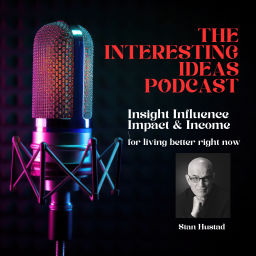
About Interesting ideas with Stan Hustad
Do You want to be great? Do you want to master the arts, strategies, skills ,and ways of thinking and performing to be a true world-class Creator Enterpriser? Are you ready to seek the true Spirit Force vital to being a successful life and business innovator, enterprise builder, and entrepreneur? Here is how to be one, here is how to sell like the master creator, how to build a world-class company, and how to be strong, even in your broken places and spaces. And one of the better ways to do that is to continually seek out expose yourself to and create powerful interesting ideas. And that's what this program is all about. Because great ideas lead to greater influence, impact, and true income and in addition they help you become more interested and interesting. Stan Hustad, teacher, storyteller, broadcaster, and business performance coach is your host, guide, and sometimes healer on our road to being fully alive and building a life and business that matters and makes a difference. Your contribution and participation is welcome.
- Publisher
- Stan Hustad
- Category
- business · religion & spirituality
- Language
- en
- Explicit
- No
- First episode
- 20 Jul 2022
- Latest episode
- 14 Oct 2026
Latest episodes
545 episodes in the feed.
14 Oct 2026
DON'T FRET! When Worry Becomes the Enemy of Your Calling....Fretting is Fatal
A two-word command can change the way a person leads, works, and lives: "Don't fret." In this edition of the Jesus Entrepreneur podcast, broadcaster and performance coach Stan Hustad explores an old-fashioned word with urgent meaning for a worried world. His challenge is simple: anxiety may feel like responsible thinking, but unchecked fretting can slowly rob people of their courage, energy, dreams, and willingness to act. Drawing on Psalm 37, which repeatedly urges readers not to fret, Hustad asks listeners to consider the heavy invisible load they may be carrying: worry, stress, fear, doubt, endless "what ifs," and overthinking. These burdens can bend a person under their weight long before any real crisis arrives. He makes the message personal. His own mother, shaped by the hardships of the Great Depression, worried deeply about those she loved. Hustad admits that he inherited some of that tendency. Like his preacher father, who said his sermons were first messages he himself needed to hear, Hustad presents this episode as a reminder for himself as much as for his audience. The lesson comes alive in a story from Hustad's coaching career. After he reported a troubling staff issue to a successful business leader, the executive closed his notebook, ended the meeting, and immediately gathered his team. He addressed the problem graciously, clearly, and firmly. He did not allow the issue to linger beneath layers of hesitation. He made a decision and acted. That example exposes a familiar trap: people sometimes call their delay "due diligence" when fear is really keeping them from deciding. Careful judgment matters, but there comes a point when more deliberation becomes avoidance. Strong leaders recognize that moment and move forward with conviction. Hustad recalls broadcaster Earl Nightingale's insight that people often need reminding more than educating. Most already know that worry cannot build a business, repair a relationship, or fulfill a calling. Yet they still need to hear the truth again: do not let fear take command of the future. For the Jesus Entrepreneur Collective, the message reaches beyond business success. The goal is to help men and women in the marketplace live with purpose, serve their families and communities, and become people whose work reflects their faith. The call is not to abandon responsibility or ignore real concerns. It is to face them without surrendering to paralysis. THINGS TO REMEMBER "Don't fret" is a biblical invitation to trust and act, not a command to pretend that problems do not exist. Overthinking can disguise fear as preparation. Discern the difference between wise care and endless delay. Fretting can be fatal to initiative, confidence, relationships, and dreams—even when it is not a literal threat to life. THINGS TO SHARE Ask a colleague or friend: "What important decision have you postponed because of worry?" Share the example of a leader who handled a difficult situation promptly, firmly, and graciously. Pass along the memorable challenge: "Do it. Do it right. Do it now." THINGS TO NOTICE AND ACT UPON Notice the recurring "what if" that is draining your attention. Name it honestly. Identify one decision that has enough information behind it. Take the next responsible step today. Read Psalm 37, pray for wisdom, and choose a concrete act of courage and service. THE CLOSING CHALLENGE A life of faith and meaningful enterprise cannot be built entirely in the waiting room of worry. The invitation of this episode is to exchange fretting for trust, indecision for thoughtful action, and fear for purposeful service. The future will always hold uncertainty. The next faithful step can begin now. The Jesus Entrepreneur Collective, presented by WIT Radio, helps people live better, do better business, and make a stronger difference in their communities. For speaking, coaching, or collaboration, contact Stan Hustad at stan@witradio.net.
25 Sept 2026
The Storm Is Coming How to build the clarity courage and transformational strength the new year will demand
The storm is coming. In this timely edition of Inconvenient Ideas, veteran broadcaster and business performance coach Stan Hustad uses an approaching coastal storm as a living metaphor for the forces already gathering around individuals, leaders, businesses, and institutions. His message is neither an invitation to panic nor a promise of easy escape. It is a call to prepare: to become spiritually grounded, emotionally resilient, technologically capable, and creatively ready for a world in which yesterday's methods may no longer be enough. The episode moves from the Jewish holy days to the shoreline, from world affairs to artificial intelligence, and from the power of naming to the future of streaming digital media. At every turn, Hustad returns to one central conviction: storms reveal what people have built inside themselves. Those who learn to face the waves with wisdom, insight, truth, humility, and courage can do more than survive. They can create the kind of transformation the coming year will require. A Pause for Reflection and Gratitude Hustad opens after several days away from the camera and microphone. The pause came during a meaningful season in the Jewish calendar. He reflects on Yom Kippur, the Day of Atonement, and looks toward Sukkot, the harvest festival associated with gratitude, hospitality, shared provision, and the temporary shelters that remind worshippers of human dependence on God. For Hustad, the sequence matters. Reflection and repentance are followed by thanksgiving and shared celebration. Before confronting the world's turbulence, he pauses to remember simple gifts: food, harvest, friendship, hospitality, and the ordinary goodness of life. That posture is not sentimental. Gratitude steadies the heart. It reminds people what is worth protecting, what is worth sharing, and why courage matters when public life grows loud and confused. The episode also responds to the recent United Nations address by Israeli Prime Minister Benjamin Netanyahu and to the walkout by some delegates. Hustad strongly objects to what he sees as moral inconsistency in public institutions and shallow interpretation in contemporary media. Whether listeners agree with every political conclusion or not, his deeper challenge is unmistakable: do not outsource moral judgment. Listen carefully, examine competing claims, understand the larger story, and refuse to let headlines do all the thinking. One line becomes a hinge for the entire program: "We will win because we have to." Hustad turns the statement toward the listener. What must be faced because failure is not an acceptable destination? What calling, responsibility, relationship, or mission now requires a new level of resolve? Lessons from the Water After the holiday pause, Hustad traveled with friends to the Carolina coast. He has long loved the ocean. Walking the shoreline restores him spiritually and physically, while swimming and boarding in moving water test both skill and humility. The sea teaches quickly. A person can learn the waves, read the currents, and grow stronger, yet one poorly judged moment can still end with a hard collision against the sand. Hustad tells that part of the story with broadcaster's humor. After being knocked face-first by a wave, he jokes that a "face made for radio" can survive the experience. Beneath the laughter is a serious lesson: confidence without humility is dangerous. The goal is not to conquer the ocean. It is to respect its power, develop the right capacities, recover from mistakes, and keep learning. The group left the coast early because rough weather was approaching. That literal storm gives Hustad the central picture for the program. Human beings do not control when every storm forms, how strong it becomes, or where it finally lands. They can, however, pay attention, prepare, make wise decisions, and refuse to confuse denial with courage. The Storm Beyond the Forecast The most consequential storms ahead may not appear on a weather map. International conflict could intensify. Political systems may become more volatile. Economic assumptions may change quickly. Artificial intelligence will continue to alter how knowledge work, communication, employment, creativity, and competition are organized. At the same time, audiences are moving toward streaming digital media as a primary place to discover ideas, evaluate leaders, form trust, and decide whom to follow. These forces do not arrive one at a time. They compound. A business may face new technology, changing customer expectations, economic pressure, and a communications challenge in the same season. An individual may be expected to learn unfamiliar tools while also making difficult decisions about purpose, work, faith, and identity. The storm is not simply one event. It is the collision of many changes that arrive faster than established habits can absorb them. That is why Hustad warns against relying on yesterday's formula. What worked in the past may not work well in the immediate future, and the immediate future has already begun. Preparation must reach deeper than purchasing a new device or opening another social-media account. It requires the ability to interpret change, choose wisely, communicate with humanity, and create something genuinely different in kind, not merely a slightly improved version of the familiar. Name It Claim It and Perform Up to It One of the episode's most practical insights concerns the power of naming. Hustad observes that the person who names an idea often gains influence over how others understand it. Names create frames. They signal purpose, shape expectation, and make a project easier to remember. This is true for a book, podcast, course, business, campaign, or movement. His advice is concise: name it, claim it, and perform up to it. A strong name is not decoration. It is a promise. Once a leader gives a project a memorable identity, the work must justify the language. The title should call the creator and the team toward a higher standard of clarity, consistency, usefulness, and courage. For business owners and communicators, this is an immediate assignment. What is the work called? What change does the name promise? Can the audience repeat it? Does every episode, product, meeting, and customer experience honor the claim? In a crowded digital marketplace, vagueness disappears. A clear identity earns the chance to be noticed; trustworthy performance earns the right to be remembered. The Communication Storm Is Already Here Hustad's central business warning is direct: it will no longer be enough merely to write a book, possess expertise, or hold a good idea. Leaders must learn to perform and communicate the ideas inside their work. Streaming digital media is becoming a premier channel for public trust, education, influence, and business development. People want to hear the voice, see the conviction, experience the personality, and understand the practical value behind the message. This does not mean every expert must become a celebrity. It means every serious leader is now in the communication business. A credible presence may include video, audio, live conversation, short teaching segments, interviews, visual storytelling, and a body of work that audiences can discover over time. The task is not simply to publish more. It is to communicate so people can follow, trust, and remember. The people who prepare now will enter the new year with an advantage. They will have practiced speaking clearly. They will understand how to turn one important idea into a program, article, audio episode, video, and useful conversation. They will build repeatable production habits rather than waiting for inspiration. Most important, they will learn how to make technology serve a human message instead of allowing technology to flatten the message into noise. Artificial Intelligence and the Need for Wisdom Artificial intelligence intensifies the challenge. Hustad acknowledges that AI has already been helpful to his own work, while also admitting that its speed and power can be unsettling. That combination of usefulness and unease is honest. The technology can expand research, writing, design, production, analysis, and personalization. It can also disrupt established roles, magnify error, imitate authority, and accelerate decisions before wisdom has caught up. No single person, company, or nation can determine how every actor in a global marketplace will use powerful technology. Rules will matter, safeguards will matter, and ethical leadership will matter, but none of them will remove the need for personal discernment. Leaders must learn what the tools can do, where they fail, what should remain human, and how to maintain responsibility for the final work. The answer is neither blind enthusiasm nor fearful retreat. It is informed engagement: learning the tools, testing their output, protecting truth, developing judgment, and strengthening the qualities machines cannot supply on a leader's behalf - moral courage, accountability, relationship, lived experience, spiritual depth, and wise purpose. Learning to Walk on Stormy Water Hustad describes the necessary response as learning, spiritually and emotionally, to walk on water. The image is deliberately larger than technique. In a stormy world, resilience cannot be reduced to toughness alone. People will need knowledge, but also wisdom. They will need speed, but also discernment. They will need creative power, but also a moral center strong enough to direct that power toward worthy ends. Spiritual fortitude gives people a place to stand when circumstances refuse to stand still. It creates the capacity to live with confidence without pretending to possess certainty, to act decisively without losing humility, and to remain generous when fear encourages self-protection. When people connect with the right truths and the right companions, Hustad argues, clarity and creative confidence can grow even while the storm continues. This is the entrance to what he calls the Transformational Zone. Transformation is not rearranging familiar pieces or improving by a few percentage points. It is the creation of change that is different in kind: a new way of seeing, communicating, serving, leading, organizing, or building. Such work is rarely comfortable. It often challenges assumptions, demands risk, and asks people to release methods that once served them well. Things to Remember The storm is a call to prepare, not a command to panic. Gratitude and hospitality are sources of strength, especially when public life becomes fearful or divided. Skill must travel with humility. Even experienced people can be knocked down by a wave they misread. A memorable name frames an idea, but trustworthy performance must fulfill the promise. Streaming digital media is now central to how audiences discover, evaluate, trust, and remember leaders. Artificial intelligence requires informed engagement, ethical judgment, and continuing human responsibility. The future will reward people who combine resilience, wisdom, creativity, communication, and spiritual depth. Things to Share "The storm is coming, but preparation can begin today." "Name it, claim it, and perform up to it." "Every serious leader is now in the communication business." "Do not let technology become more powerful than the purpose directing it." "Transformation is not merely more of the same. It is change that becomes different in kind." "The people who endure the storm will be those who develop both courage and wisdom." Things to Take Action On Identify the storm. Write down the three changes most likely to affect your life, work, or organization during the new year. Name the mission. Give your next important project a clear, memorable name that expresses the transformation it promises. Build the communication habit. Record one concise teaching, story, or conversation each week and learn from the response. Audit your digital readiness. Review your audio, video, website, email, and publishing workflow before urgency forces the issue. Study artificial intelligence. Choose one useful application, test it carefully, and define the human judgment that must remain in charge. Strengthen the inner life. Establish regular practices of prayer, reflection, learning, gratitude, rest, and honest conversation. Choose the crew. Identify the people whose wisdom, technical skill, courage, and integrity will help you navigate the coming year. The Challenge Before the New Year The storm is coming, and in some areas of life it has already arrived. The question is not whether change will touch individuals, businesses, churches, schools, media, and organizations. The question is whether people will meet that change with fear and borrowed assumptions or with prepared minds, strengthened spirits, creative courage, and trustworthy companions. Stan Hustad's challenge is to begin now. Tell the truth about the conditions around you. Give the important work a name. Learn the communication tools the new marketplace requires. Engage artificial intelligence with wisdom rather than surrender. Build the spiritual and emotional resilience to stand when circumstances become rough. Then create something transformational - something that does not merely shift the furniture, but changes what is possible. Stan Hustad and his team are ready to help individuals, professionals, entrepreneurs, and organizations enter the Transformational Zone and prepare for life and business in the storm ahead. Their work brings together streaming media, artificial intelligence, communication strategy, personal coaching, business insight, and the spiritual fortitude required for bold and meaningful action. Reach out to Stan Hustad and the What It Takes Radio team Email stan@witradio.net Website www.witradio.net Wisdom Insight and Truth with the power of the spoken word and the challenging conversation
15 Sept 2026
Will Artificial Intelligence Transform You or Will You Transform What It Can Do...Stan Hustad on AI Human Performance Transforming Wisdom and Creating Work That Outlives Us
Artificial intelligence may be changing the world, but Stan Hustad believes the most important question is far more personal: What will it change in you, and what will you choose to do with it? In this timely edition from the What It Takes Radio Company, Stan the Radio Man steps into the controversy surrounding artificial intelligence with curiosity, humor, faith, and a broadcaster's instinct for asking the question beneath the headlines. Will AI improve human performance or diminish human purpose? Will it expand creativity or encourage intellectual laziness? Will it help people serve their audiences more effectively, or merely fill the world with more noise? For Stan, the answer will not be determined by the technology alone. It will be determined by the wisdom, character, imagination, and intentions of the people using it. Between Fear and Fascination The program was recorded during the Jewish tradition's Days of Awe, the reflective season between Rosh Hashanah and Yom Kippur. It is a time associated with examination, repentance, forgiveness, and the determination to live differently in the coming year. That spiritual setting provides an appropriate background for a conversation about AI. Artificial intelligence is already provoking its own kind of awe: sometimes wonder, sometimes fear, and frequently confusion. Some predict that AI will solve extraordinary human problems. Others warn that it will threaten employment, distort truth, consume enormous resources, and possibly become dangerously difficult to control. Stan does not dismiss legitimate concerns, but he resists the temptation to surrender to panic. History reminds us that almost every significant technological change has produced both exaggerated promises and exaggerated fears. The automobile, radio, television, the internet, and social media were all expected either to save society or ruin it. None fulfilled every promise. None produced every predicted disaster. Each became a tool whose consequences depended substantially upon the people, purposes, and systems directing it. AI may become extraordinarily powerful, but power is not the same thing as wisdom. From Artificial Intelligence to Human Performance Stan proposes a constructive shift in the conversation: move from merely discussing artificial intelligence to considering human performance. The best question may not be, "What can AI do?" It may be: What can AI help human beings do better? Used wisely, AI can help people research, organize, compare, question, revise, illustrate, and communicate. It can assist entrepreneurs in developing ideas, teachers in preparing lessons, broadcasters in extending programs, and authors in transforming spoken insights into published work. But AI cannot decide what a human life should be about. It cannot determine whom a person is called to serve. It cannot substitute information for integrity, automation for imagination, or production for purpose. Stan's challenge is to use artificial intelligence in the service of human flourishing. Technology should help people become more thoughtful, creative, capable, generous, and fully alive, not merely faster. Everyone Has an Audience One of the program's central ideas is Stan's enduring conviction that everyone has an audience, or at least a potential audience. That audience should not be treated simply as prospects, customers, clients, or statistical targets. An audience is a community of people who might be informed, encouraged, helped, challenged, or transformed by what someone has learned and is willing to share. Finding that audience begins with two questions: Who are you called to serve? How can you help them become better, happier, wiser, braver, more capable, or more fully alive? AI can assist in reaching those people, but it cannot answer the calling question on a person's behalf. That requires reflection, self-knowledge, spiritual discernment, and a willingness to listen. Success begins not with attracting the largest possible audience, but with becoming genuinely useful to the right one. Become Someone People Trust Remember and Follow Technology may create visibility, but visibility does not automatically produce credibility. Stan draws upon ideas he has studied throughout his career, including the enduring principles associated with Dale Carnegie, to describe the kind of communicator worth becoming: a person whom others can trust, remember, and follow. Trust is earned through truthfulness and consistency. People remember those who communicate with clarity, personality, and genuine concern. They follow those who have demonstrated that their ideas can lead somewhere worthwhile. AI may polish a sentence or improve a presentation, but it cannot manufacture a trustworthy life. The communicator must still do the inner work. Anyone hoping to transform a business, organization, audience, or community must first be willing to experience some transformation personally. That may involve the discomfort, even the trauma, of questioning familiar assumptions, abandoning ineffective habits, confronting personal limitations, and beginning again. The Seen the Unseen and the Limits of Knowledge The program also moves beyond technological questions into something deeper: the mystery of how little human beings truly know about themselves and their world. Stan reflects on the difference between what is seen and what remains unseen. People naturally place great confidence in what can be measured, displayed, calculated, or explained. Yet some of life's most powerful realities, including faith, love, courage, memory, imagination, motive, and spiritual influence, cannot always be placed neatly on a screen. Human beings also understand only a portion of what is taking place within themselves. Talents may remain undiscovered. Fears can operate below conscious awareness. Unexamined desires can influence decisions. Shadows, selfishness, and destructive tendencies can coexist with remarkable generosity and courage. Artificial intelligence can reveal patterns in enormous collections of information. It may even help people notice patterns within their own work. But it does not eliminate the need for humility. The beginning of wisdom may be the admission that neither the machine nor its maker knows everything. A Touch of Immortality Stan then introduces one of the program's most provocative and engaging ideas: the possibility of achieving a touch of immortality. He is not suggesting that human beings can avoid death. His meaning is both simpler and more demanding. A person gains a touch of immortality when something they create continues serving others after they are gone. During a long life in broadcasting, teaching, coaching, and entrepreneurship, Stan has produced thousands of radio programs, videos, articles, interviews, and presentations. Many remain online. Some may be discovered years from now by people he has never met. The same opportunity is increasingly available to others. A book, recording, course, podcast, letter, lesson, or story can preserve hard-earned wisdom and carry it beyond the limits of one lifetime. The goal is not simply to leave behind more digital material. The internet already contains more material than anyone could consume. The challenge is to create something true and useful, something capable of helping another person live, work, believe, or serve more faithfully. As Stan reminds his audience, it may not be what a person completes or achieves that finally matters most. It may be what that person starts. From Books to Broadcasting and Back Again Stan sees a powerful relationship between publishing and broadcasting. Someone who wants to write a book may begin by speaking it. Teaching, recording, interviewing, and telling stories can uncover the natural voice and central ideas that eventually become chapters. A microphone can also help an author introduce and distribute a completed book. The book supplies depth and permanence; broadcasting creates presence, personality, and connection. The process works in both directions. A book can become a broadcast, podcast, course, or video series. A collection of broadcasts can become a book. A spoken story can become an article. A lifetime of experience can become a body of teaching that continues serving others. AI can assist with transcription, organization, editing, summarization, and adaptation. But the lived experience, conviction, wisdom, and human voice must come from the person. The machine can help shape the material. It should not replace the soul of it. Entering the Transformation Zone Stan places this conversation within his larger understanding of the stages, or zones, of a meaningful life. People begin in the Curiosity Zone, where they explore, question, discover, and learn. They move into the Impact Zone, where they must create value, earn a living, serve others, and produce meaningful results. Experience can then lead into the Wisdom Zone, where lessons are examined, tested, and better understood. From wisdom comes the possibility of entering the Transformation Zone: the place where a person becomes capable of creating changes that are profound, lasting, and genuinely important. Transformation is more than improvement. It is not merely doing the same thing a little faster or decorating an old idea with new technology. Transformation changes what a person, organization, or community is capable of becoming. AI may participate in that process, but it cannot lead it alone. Transformation still requires people who possess moral imagination, spiritual depth, practical wisdom, and a genuine desire to be the cause of good things. Things to Remember Artificial intelligence is a powerful tool, but it is not a source of ultimate wisdom, purpose, or calling. The essential question is not only what AI can do, but what it can help human beings do better. Everyone has a potential audience: people they may be called and equipped to serve. Lasting influence grows from becoming someone others can trust, remember, and follow. We understand only a portion of ourselves and our world; humility remains essential. A book, broadcast, lesson, or story can continue serving people long after its creator is gone. Technology should strengthen human performance and flourishing, not diminish human responsibility. Things to Share Share this program with: Someone who is fearful or confused about artificial intelligence. An entrepreneur wondering how AI might strengthen a business without compromising its humanity. A teacher, pastor, coach, or broadcaster with wisdom that deserves a larger audience. A friend who has always wanted to write a book but does not know how to begin. A person entering a new season of life who may be ready to turn experience into service. And share this question: What good thing could you begin today that might continue helping people long after you are gone? Things to Take Action On Identify your audience. Write down the people you feel called to help and the transformation you hope they will experience. Choose one piece of enduring wisdom. Record a five-minute explanation of something life has taught you. Use AI as an assistant. Ask it to help transcribe, organize, or refine your words, but carefully review the result so the final work remains truthful and recognizably yours. Turn one form of communication into another. Convert a talk into an article, a podcast into a chapter, or a book chapter into a short video. Examine your own transformation. Ask what must change in you before you can credibly help transform someone else. Be the cause of good stuff. Do one practical thing today that makes another person's life better, wiser, richer, braver, or more hopeful. The Final Challenge Artificial intelligence will undoubtedly transform many occupations, industries, institutions, and methods of communication. But Stan Hustad leaves his audience with a more personal and consequential challenge. Do not merely ask whether AI will transform the world. Ask whether you will use it to become more fully alive, to serve your audience more faithfully, and to create something that matters. Speak well. Seek truth. Create good. Help others. Begin something worth continuing. That may be how artificial intelligence contributes to human transformation, and how an ordinary human life acquires a genuine touch of immortality. Connect with Stan Hustad For coaching, mentoring, broadcasting guidance, and help turning ideas into enduring books, programs, and transformational messages, contact Stan Hustad at stan@witradio.net or visit www.witradio.net. Best and blessings, and be a blessing to someone else today.
Reach and audience
Public platform figures. Ratings count people who left a rating, not total listeners.
- Apple Podcasts (US)
- 5.0 / 5
- 2 ratings
Contact Interesting ideas with Stan Hustad
- Guest appearances
- Does not typically book guests
Based on episode analysis; this does not confirm that the show is currently accepting guests.
Host of Interesting ideas with Stan Hustad?
Claim your podcast to manage its listing and keep your show details accurate.
Pod Engine is an independent podcast discovery and analytics service and is not affiliated with or endorsed by this podcast. Artwork and show content belong to their owners. Full legal notice.
Explore this show
Podcast research with Pod Engine