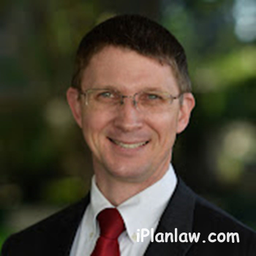
Daniel Van Slyke is an estate planning attorney licensed to practice law in California, Texas, and Missouri. On this channel, he discusses estate and tax planning, special needs planning, business planning, and related topics. Nothing on this channel is legal advice. I cannot give you legal advice without learning about you and your estate and analyzing your goals and concerns. This channel does not create an attorney-client relationship. No attorney-client relationship exists between us unless we both have signed an attorney-client engagement agreement.
Mission. The mission of Daniel Van Slyke, Attorney at Law is threefold: (1) to give you and your family peace about your estate; (2) to help keep your estate, business, and family out of court; (3) and to protect your legacy from creditors, predators, and indiscretion. Daniel will take the time to learn about you and your estate, to discuss your goals and concerns, and to carefully craft a plan to help you meet your goals. Daniel also will explain clearly all you need to know so you will understand your plan and how to manage it.
Remote Services. The Firm conducts business remotely. Daniel is an attorney licensed to practice law in California, Texas, and Missouri. Wherever you are in California, Texas, or Missouri, Daniel can prepare or update your estate or business plan from the comfort of your own home, without the need for in-person visits or travel.
Identity thieves are adept at "ghosting" your deceased love ones by stealing their personal information and using it to perpetrate fraud. Identity thieves use this information, for example, to open new accounts, commit health care fraud, obtain tax refunds. This short briefly explains how to prevent ghosting of your loved one after a death.
18 Feb 2024
Private Foundation: Build a Family Legacy of Charitable Giving
What is a Private Foundation or Private Family Foundation, and why do so many families seem to have them? This video explores those questions by considering the advantages of Private Foundations, along with some of their downsides as well as the basics to establishing a Private Foundation. Private Foundations are a type of 501(c)(3) non-profit organization funded by an individual, family, or business. Family Foundation is a term used to indicate a Private Foundation established by a family as a potentially perpetual charitable legacy. Together, Private Foundations hold over $800 billion in U.S. assets and distribute billions to charities throughout the world every year. Private Foundations offer significant IRS-approved tax benefits. Contributions to Private Foundations are tax deductible, although the deductions are limited to a percentage of the donors' Adjusted Gross Income or AGI. Donors can give appreciated assets, thereby avoiding capital gains taxes. Assets within Private Foundations grow income-tax free, although they are subject to an excise tax. Donors can structure Private Foundations so they maintain considerable control over the Foundation's investments, direction, and charitable distributions. Donors can also provide that their family members will serve on the board of directors for Private Foundations. Donors and their family members can also work for their Private Foundations, as long as their salaries are reasonable and their services are reasonable and necessary to the Foundation. Private Foundations have some downsides. Despite their name, Private Foundations are not private. For those concerned mainly with tax deductions, higher deductions are available by giving to Public Charities or Donor Advised Funds. Finally, the administrative costs for establishing and maintaining a Private Foundation can be considerable. Nonetheless, the investment is worthwhile for those who have the means and the desire to establish a lasting legacy of charitable giving.
18 Feb 2024
The Complex Trust Is Pure Scam
Watch out for those who promote an irrevocable trust that allegedly avoids federal income tax. Its promoters have called this, among other things, a Complex Trust, a Pure Trust, and a Non-Grantor Irrevocable Complex Discretionary Spendthrift Trust. Be careful! This type of tax-avoidance scheme has landed people in federal prison.
18 Feb 2024
QTIP Trusts for Spouses Explained
Married couples use Qualified Terminable Interest Property Trusts or QTIP Trusts to avoid estate taxes by using the estate tax exemption and the unlimited marital deduction. QTIP Trusts also provide for the survivor after one spouse passes while protecting assets for other beneficiaries after the second spouse passes. This video explains the uses of QTIP Trusts and their implications on income tax and estate tax.
18 Feb 2024
Charitable Remainder Trusts Explained
This video explains the basic concepts behind Charitable Remainder Trusts or CRTs. Donors or grantors with charitable intentions use CRTs to support their favorite charities. At they same time, they gain immense income tax and capital gains tax advantages. Donors also exchange their gifts to the CRT for a stream of income that may last up to 20 years or for the lives of the noncharitable beneficiaries. Larger charities will establish and maintain donors Charitable Remainder Trusts for them. This video addresses what the donors exchange for that convenience.
This video discusses the two types of charitable remainder trusts widely used for planned charitable giving, namely, the Charitable Remainder Annuity Trust or CRAT and the Charitable Remainder Unitrust or CRUT. Each type can help donors support their favorite charities, reap tax benefits, and donations for income streams.
18 Feb 2024
Simplicity of Planned Charitable Giving
Planned giving can involve charitable remainder trusts, charitable lead trusts, family foundations, charitable gift annuities, business entities, income tax, capital gains tax, gift tax, estate tax, and more. But at its core, planned giving serves two purposes: reduction of taxes and trading of gifts for income.
18 Feb 2024
Marital Deduction in a Nutshell
This short explains the unlimited marital deduction, which allows spouses who are U.S. citizens to transfer any amount of assets to one another in life or at death gift tax and estate tax free.
18 Feb 2024
$13,610,000 Tax-Free Giveaway!
The unified tax credit has gone up for 2024 to $13,610,000. This is an incredible opportunity for high-net-worth families to transfer wealth gift tax and estate tax free. Use it or lose it! This unified credit amount will go up again in 2025, but it will be cut in half in 2026.
18 Feb 2024
Crummey Trusts Explained
Crummey Trusts offer an excellent tool for passing on wealth without gift or estate taxes. Grandparents can use Crummey Trusts to pass on wealth with generation skipping transfer taxes (GSTTs). This video discusses the use of Crummey Trusts in Estate Planning, their tax consequences, and their requirements. They’re not crummy, and they’re definitely not crumby!
18 Feb 2024
Credit Shelter Bypass Trusts Explained
The Credit Shelter Trust goes by many names. A Credit Shelter Trust may be called a Bypass Trust or B Trust, a Unified Credit Shelter Bypass Trust, or a Non-Marital Trust. This type of trust typically appears within the estate plan of a married person. When one spouse dies, the Credit Shelter Trust springs into existence. With careful planning, the Credit Shelter Trust can maximize the estate tax exemption of the first spouse to die, prevent disinheritance of the first spouse’s beneficiaries, and protect assets for those beneficiaries and the surviving spouse. On the downside, the assets in the Credit Shelter Trust do not receive a basis adjustment for capital gains tax considerations when the surviving spouse dies. Outdated trusts may have Credit Shelter Trust plans that no longer have the spouse’s intended results now that the estate tax exemption amount is high and portability is available for the surviving spouse. More flexible updated approaches use Disclaimer Trust or Clayton Election provisions.
18 Feb 2024
Why a Trust's Location Matters
Why does a trust’s situs or location matter? The location of a trust can have huge consequences on taxes. States impose different income taxes and estate taxes on trusts. Some states allow trusts to exist longer than other states and so make better choices for establishing Dynasty Trusts. Some states authorize self-settled spendthrift trusts, and so make the only choices for establishing Domestic Asset Protection Trusts. This video explores five topics regarding a trust’s location: state income tax, state estate and inheritance tax, state limits on trust duration, states with asset protection trusts, and other location considerations.
18 Feb 2024
Blind Trusts
What is a blind trust? Blind trusts are not trusts for people who cannot see, and they are not asset protection trusts. Blind trusts are primarily for politicians and government officials.
18 Feb 2024
How the IRS Categorizes Trusts
How does the IRS categorize trusts from a tax perspective? The IRS divides trusts into three basic categories: simple trusts, complex trusts, and grantor trusts. Why does the way the IRS categorizes taxes matter? These distinctions can result in widely different income tax bills because trusts get taxed at a higher rate than most individuals.
18 Feb 2024
Dynasty Trusts
Dynasty trusts save large amounts in taxes, protect your inheritance, and preserve your values for generations. This presentation explains the basics of dynasty trusts, how they work to save death taxes, their advantages, and some of their disadvantages.
18 Feb 2024
The Impending Deadline for the Estate Tax Exemption
This presentation clearly explains the federal estate tax, the estate tax exemption, and the impending deadline of January 1, 2026 for the sunset of high estate tax exemption rates, and what that means for estate planning for high net worth families.
18 Feb 2024
03 Federal Trust Planning Taxes
There are four major types of federal tax to consider when planning your estate: income tax, estate tax, gift tax, and generation skipping transfer tax. This presentation briefly introduces five key concepts and terms related to each tax, namely: Grantor Trust Status, Estate Inclusion, Completed Gift, Basis Adjustment, and Generation Skipping Transfer Tax.
18 Feb 2024
What is a Trust?
From the perspective of estate planning, what is a trust? This video briefly explains the basic concepts of a trust, namely, the trust’s purpose, grantor, funding, beneficiary, beneficial interest, and trustee. This is the foundational video of iPlanLaw’s educational series on estate planning.
18 Feb 2024
Revocable Living Trusts Explained
The revocable living trust often serves as the foundation of an estate plan. But what is it? This video addresses the definition, advantages, and limitations of a revocable living trust. In addition to other advantages, revocable living trusts enable the grantors who establish the trust to keep their estates out of court in the event of incapacity and after their deaths. However, revocable living trusts only control assets that are funded to the trust, and some assets should not be funded to the trust or pass by other means. Therefore the revocable living trust is an essential part of a complete estate plan, but is not sufficient in itself.
Contact iPlan Law - Estate Planning
Guest appearances
Books guests
Based on episode analysis; this does not confirm that the show is currently accepting guests.
Host of iPlan Law - Estate Planning?
Claim your podcast to manage its listing and keep your show details accurate.
Pod Engine is an independent podcast discovery and analytics service and is not affiliated with or endorsed by this podcast. Artwork and show content belong to their owners. Full legal notice.
Explore this show Podcast research with Pod Engine