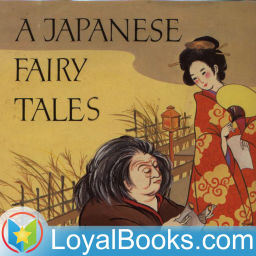

Podcast thumbnail for Japanese Fairy Tales by Yei Theodora Ozaki

Japanese Fairy Tales by Yei Theodora Ozaki

Claim This Podcast

by Loyal Books

4.7(53 reviews)
23 episodes
Updated Inactive
Accepts GuestsHas SponsorsLocation 🇯🇵

Podcast Overview

Many of us are familiar with Grimm's Fairy Tales, or children's stories from France, England, China, India and Germany, but are less aware of similar folk tales and children's stories from Japan. Japanese Fairy Tales by Yei Theodora Ozaki captures the exotic flavor, traditions and customs of this ancient land. Published in 1903 entitled the Japanese Fairy Book, the title was changed in the 1908 edition to Japanese Fairy Tales. Theodora Ozaki was the daughter of a wealthy Japanese aristocrat Baron Ozaki, the first Japanese man to study in the West, and his wife, an American schoolteacher's daughter. The couple separated after a brief marriage and Theodora lived with her father in Japan. She worked as a secretary and spent much of her spare time collecting traditional Japanese stories. She was encouraged to publish the collection by the Scottish writer Andrew Lang, who was himself an accomplished writer of children's literature. The twenty-two stories contained in this volume include one of the best-known Japanese tales, The Tongue-Cut Sparrow, which tells of a vengeful old woman who cruelly cuts off the tongue of her husband's talking sparrow. The charming details in this story are indeed very interesting, as many of the architectural and cultural features of Japanese houses and traditions are provided in it. The Ogre of Rashomon is another macabre tale, while the delightful Adventures of Kintaro the Golden Boy is sure to charm young and old. An interesting feature is that the author often gives the meaning of Japanese words and terms and explains many of the customs for the benefit of non-Japanese readers. In the preface she states that her aim is to bring these beautiful tales to those outside her country so that they may love and enjoy them too. The original edition had some superb illustrations and wood-cuts by Japanese artists.

Language

🇺🇲

Publishing Since

12/11/2023

1 verified contact email on file for Japanese Fairy Tales by Yei Theodora Ozaki

Pitch yourself as a guest, propose sponsorships, or reach out directly to the host.

Recent Episodes

Episode thumbnail for 00 – Preface

January 2, 2024

00 – Preface

More great books at LoyalBooks.com

Episode thumbnail for 01 – My Lord Bag of Rice

January 1, 2024

01 – My Lord Bag of Rice

More great books at LoyalBooks.com

Episode thumbnail for 02 – The Tongue-Cut Sparrow

December 31, 2023

02 – The Tongue-Cut Sparrow

More great books at LoyalBooks.com

23 total episodes available

Similar Podcasts

Discover related shows you might enjoy

Deep-dive analytics for Japanese Fairy Tales by Yei Theodora Ozaki

Frequently asked questions

Have a different question and can't find the answer you're looking for? Reach out to our support team by sending us an email and we'll get back to you as soon as we can.

What is Japanese Fairy Tales by Yei Theodora Ozaki?

Many of us are familiar with Grimm's Fairy Tales, or children's stories from France, England, China, India and Germany, but are less aware of similar folk tales and children's stories from Japan. Japanese Fairy Tales by Yei Theodora Ozaki captures the exotic flavor, traditions and customs of this ancient land.

Published in 1903 entitled the Japanese Fairy Book, the title was changed in the 1908 edition to Japanese Fairy Tales. Theodora Ozaki was the daughter of a wealthy Japanese aristocrat Baron Ozaki, the first Japanese man to study in the West, and his wife, an American schoolteacher's daughter. The couple separated after a brief marriage and Theodora lived with her father in Japan. She worked as a secretary and spent much of her spare time collecting traditional Japanese stories. She was encouraged to publish the collection by the Scottish writer Andrew Lang, who was himself an accomplished writer of children's literature.

The twenty-two stories contained in this volume include one of the best-known Japanese tales, The Tongue-Cut Sparrow, which tells of a vengeful old woman who cruelly cuts off the tongue of her husband's talking sparrow. The charming details in this story are indeed very interesting, as many of the architectural and cultural features of Japanese houses and traditions are provided in it. The Ogre of Rashomon is another macabre tale, while the delightful Adventures of Kintaro the Golden Boy is sure to charm young and old. An interesting feature is that the author often gives the meaning of Japanese words and terms and explains many of the customs for the benefit of non-Japanese readers. In the preface she states that her aim is to bring these beautiful tales to those outside her country so that they may love and enjoy them too.

The original edition had some superb illustrations and wood-cuts by Japanese artists.

How often does this podcast release new episodes?

This podcast updates inactive.

Where can I listen to this podcast?

This podcast is available on 9 platforms including Apple Podcasts, Spotify, and more. You can also use the RSS feed directly.

Does this podcast accept guests?

Yes, this podcast regularly features guests.

Legal Disclaimer

Pod Engine is not affiliated with, endorsed by, or officially connected with any of the podcasts displayed on this platform. We operate independently as a podcast discovery and analytics service.

All podcast artwork, thumbnails, and content displayed on this page are the property of their respective owners and are protected by applicable copyright laws. This includes, but is not limited to, podcast cover art, episode artwork, show descriptions, episode titles, transcripts, audio snippets, and any other content originating from the podcast creators or their licensors.

We display this content under fair use principles and/or implied license for the purpose of podcast discovery, information, and commentary. We make no claim of ownership over any podcast content, artwork, or related materials shown on this platform. All trademarks, service marks, and trade names are the property of their respective owners.

While we strive to ensure all content usage is properly authorized, if you are a rights holder and believe your content is being used inappropriately or without proper authorization, please contact us immediately at hey@podengine.ai for prompt review and appropriate action, which may include content removal or proper attribution.

By accessing and using this platform, you acknowledge and agree to respect all applicable copyright laws and intellectual property rights of content owners. Any unauthorized reproduction, distribution, or commercial use of the content displayed on this platform is strictly prohibited.