- 17
- Episodes
- Weekly
- Cadence
- 2026
- First episode
About Lawyers as Healers
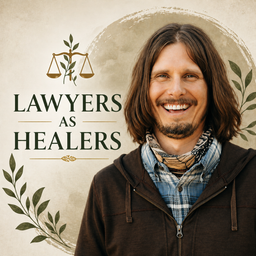
“The obligation of our profession is, or has long been thought to be, to serve as healers of human conflict.” — Warren E. Burger, Chief Justice of the United States Supreme Court, The State of Justice, Address to the American Bar Association (1971). What would the legal system look like if lawyers actually lived up to that idea? Lawyers as Healers explores a quiet (r)evolution happening inside the legal profession where a growing number of lawyers are rethinking how law is practiced and how conflict can be resolved. Host Dave Albrechta, a coach, mediator, and recovering litigator, shares his own journey away from traditional adversarial practice and toward approaches that prioritize healing, understanding, and resolution. Through solo episodes and conversations with lawyers who are pioneering new ways of practicing, this podcast challenges conventional assumptions about law, justice, and conflict. If you're curious about what the legal system could become, and the people working to transform it from within, you're in the right place. www.davealbrechta.com
- Publisher
- Dave Albrechta
- Category
- business
- Language
- en
- Explicit
- No
- First episode
- 2 Apr 2026
- Latest episode
- 30 Sept 2026
Latest episodes
17 episodes in the feed.
30 Sept 2026
Ep. 17 - The Courage to Be Yourself in Law
In this episode of Lawyers as Healers, I’m joined by J. Kim Wright, author, leadership coach, legal innovator, and one of the guiding voices of the global Integrative Law Movement. This conversation is particularly personal for me. Kim coached my wife and me during a significant transition in our legal practice and lives. Her work helped me recognize that there were other ways to practice law—and ultimately helped lay the foundation for this podcast. Rather than revisit Kim’s remarkable career, I wanted to explore what she has learned from decades of helping lawyers rediscover who they are and build practices that reflect their values. We talk about the professional masks lawyers wear, the fear of being different, and how even small acts of authenticity can create meaningful change. Sometimes it starts with something as simple as replacing a conference table with comfortable chairs, changing how we dress, or giving ourselves permission to show up differently. Kim also offers a beautiful explanation of Integrative Law: not simply a collection of alternative legal practices, but an internal shift that begins when we reconnect with our values and allow them to shape how we practice. We explore trauma within the legal system, the importance of community, what lawyers can learn from actually listening to their clients, and why the adversarial system still has an important place in certain circumstances. And because Kim was my own coach, we spend time discussing something close to my heart: navigating that uncomfortable space where you know your old way of practicing no longer fits, but you have no idea what comes next. At its heart, this conversation is about finding the courage to be yourself, remembering why you became a lawyer, and discovering what becomes possible when your professional life reflects the person you actually are. In this episode, we discuss: Why lawyers struggle to step outside traditional professional identities The fear of being different and the vulnerability of authenticity How small changes can transform a legal practice What Integrative Law actually means Why personal transformation must accompany systemic change Trauma, moral injury, and the adversarial system The importance of community in creating lasting change Coaching lawyers through uncertainty and transition Creating a personal touchstone to stay connected to your values What it truly means for lawyers to become healers of human conflict Learn more about Kim's work: J. Kim Wright — Coaching, writing, and other resources: https://jkimwright.com/ (https://jkimwright.com/) The Integrative Law Movement: https://www.integrativelaw.com/ (https://www.integrativelaw.com/) Kim's books include: Lawyers as Peacemakers Lawyers as Changemakers Trauma-Informed Law (co-editor) Guest: J. Kim Wright — Author, coach, legal innovator, and Integrative Law pioneer. Host: Dave Albrechta — Mediator, coach, recovering litigator, and host of Lawyers as Healers. Interested in coaching to transform your own practice? Email dave@tallgrasscollective.org (mailto:dave@tallgrasscollective.org).
24 Aug 2026
Ep. 16 - The Human Toolkit Lawyers Aren't Given
In this episode of Lawyers as Healers, I’m joined by Holly Hedley, a specialist health, employment, privacy, and human rights lawyer from New Zealand. Holly is the founder of Dawn Legal and is completing a Borrin Foundation Women Leaders in Law Fellowship exploring trauma-informed legal practice for Aotearoa New Zealand. Our conversation explores Holly’s move from large-firm practice into her own practice, where she has more freedom to approach legal work in a compassionate, restorative, and human-centered way. We talk about gender expectations in law, parenting, birth trauma, vicarious trauma, and the often invisible weight lawyers carry from the work they do. Holly shares a powerful story about being stopped in her tracks by a memory from a difficult case while walking with her infant son — a moment that led her to ask deeper questions about trauma, legal work, and what lawyers absorb over time. A major theme of this conversation is that lawyers are often expected to be detached, rational, and unemotional. But that does not mean we are unaffected. Holly challenges the idea that good lawyering requires us to ignore our own humanity or the humanity of the people we serve. We also discuss what trauma-informed legal practice can look like in practical terms: understanding boundaries, knowing when to refer clients to other supports, creating space between difficult meetings, using language more carefully, and asking one simple question before sending a letter, submission, or judgment: How does this land? At its heart, this episode is about practicing law with clarity, compassion, and power — without pretending lawyers have to become therapists or stop being lawyers. As Holly puts it, maybe the invitation is simply to find the human way of lawyering that is truly yours. In this episode, we discuss: Holly’s transition from large-firm practice to Dawn Legal trauma-informed legal practice in New Zealand gender expectations, parenting, and law firm culture why trauma may appear in every area of legal practice the myth of the detached lawyer supervision, reflection, and better support for lawyers boundaries between legal work and therapeutic work writing with heart, clarity, and power Learn more about Holly’s work: Dawn Legal: https://www.dawnlegal.co.nz/ (https://www.dawnlegal.co.nz/) Trauma-Informed Legal Practice project: https://www.dawnlegal.co.nz/trauma-informed-legal-practice (https://www.dawnlegal.co.nz/trauma-informed-legal-practice) Borrin Foundation Fellowship: https://www.borrinfoundation.nz/women-leaders-in-law-fellowship-for-holly-hedley/ (https://www.borrinfoundation.nz/women-leaders-in-law-fellowship-for-holly-hedley/) Heart-Centered Judgment: https://www.qlsproctor.com.au/2025/08/nz-judge-writes-letter-to-child-as-judgment/ (https://www.qlsproctor.com.au/2025/08/nz-judge-writes-letter-to-child-as-judgment/) Guest Holly Hedley Founder, Dawn Legal Specialist health, employment, privacy, and human rights lawyer Host Dave Albrechta Mediator, coach, recovering litigator, and host of Lawyers as Healers Interested in coaching to transform your practice? Email dave@tallgrasscollective.org (mailto:dave@tallgrasscollective.org)
17 Aug 2026
Ep. 15 - Healing Lawyers, Healing the Law
In this episode of Lawyers as Healers, I’m joined by Gina Steele, a lawyer-turned-coach who helps attorneys move from overwhelm and exhaustion toward fulfillment, energy, and meaningful impact in their careers. Before becoming a coach, Gina practiced law for nearly two decades, including work in patent litigation and patent prosecution. Her own experience with burnout eventually led to a serious health crisis — and then to a deeper exploration of mindfulness, neuroscience, nervous system regulation, and what it actually takes for lawyers to thrive. This conversation explores the connection between lawyer well-being and the larger role lawyers play in society. Gina makes a powerful point early in the conversation: we need to heal lawyers so lawyers can become better healers. We talk about how law school and legal practice often train lawyers into scarcity, competition, stress, and constant fight-or-flight. When lawyers are dysregulated, exhausted, and overwhelmed, they lose access to empathy, creativity, collaboration, and the fuller perspective needed to help clients make good decisions. Gina also shares practical tools for lawyers, including mindfulness, breathwork, movement, EFT tapping, orienting practices, and the importance of building regular habits that help regulate the nervous system. We also discuss the neuroscience of civility, why professionalism cannot just be a vague instruction to “be nice,” and how lawyers can learn to see conflict not as a fight, but as a call for collaborative problem-solving. At its heart, this episode is about why lawyer well-being is not separate from the future of law. It may be the foundation of it. In this episode, we discuss: Gina’s path from law to coaching law school, scarcity, and competition burnout, stress, and Gina’s health crisis mindfulness and nervous system regulation why exhausted lawyers lose access to empathy the neuroscience of civility fight, flight, freeze, and legal practice how lawyers affect the nervous systems of clients and colleagues tools lawyers can use to regulate themselves why conflict can be reframed as collaborative problem-solving how coaching can help lawyers reconnect with meaning, values, and impact Learn more about Gina’s work: Steele Leadership: https://steeleadership.com/ (https://steeleadership.com/) Email: gsteele@steeleadership.com (mailto:gsteele@steeleadership.com) Guest Gina Steele Lawyer, coach, and founder of Steele Leadership Host Dave Albrechta Mediator, coach, recovering litigator, and host of Lawyers as Healers.
10 Aug 2026
Ep. 14 - From Warrior to Healer: Rethinking Divorce Law
In this episode of Lawyers as Healers, I’m joined by Nanci Smith, an attorney licensed in Vermont and New York and author of Untangling Your Marriage: A Guide to Collaborative Divorce. Nanci’s work focuses on promoting peaceful divorce practices and helping people move through one of the most painful transitions of their lives with more dignity, clarity, and humanity. Our conversation explores Nanci’s path from traditional litigation into collaborative divorce, including the moment she began questioning whether being known as a “barracuda” was really the identity she wanted as a lawyer. We talk about the emotional weight of family law, the limits of the adversarial system, and why divorce is not only a legal process, but also a financial and deeply emotional one. Nanci explains how collaborative divorce works, why it creates a different kind of container for conflict, and how lawyers, mental health professionals, and financial neutrals can work together to support families without immediately escalating to court. We also discuss lawyer identity, trust, ego, fear, apology, and the courage it takes to step away from the warrior model of lawyering. At its heart, this episode asks what might happen if more lawyers saw themselves not only as advocates, but as facilitators, peacemakers, and healers of human conflict. In this episode, we discuss: Nanci’s path into law and family law the moment she began questioning the “barracuda” identity collaborative divorce as an alternative to litigation why divorce involves legal, financial, and emotional realities the role of mental health professionals and financial neutrals lawyer ego, identity, and resistance to change why people in conflict often need to be heard more than they need to fight the power of apology, remorse, and acknowledgment what gives Nanci hope about collaborative practice Learn more about Nanci’s work: Nanci Smith Law: https://nancismithlaw.com/ (https://nancismithlaw.com/) Book: Untangling Your Marriage: A Guide to Collaborative Divorce Guest Nanci Smith Attorney, collaborative divorce practitioner, and author of Untangling Your Marriage Host Dave Albrechta Mediator, coach, recovering litigator, and host of Lawyers as Healers.
27 Jul 2026
Ep. 13 - It's Not Efficient. It's Important.
In this episode of Lawyers as Healers, I’m joined by Hillary Wandler, a lawyer, law professor, and director of the Veterans Advocacy Clinic at the University of Montana’s Alexander Blewett III School of Law. Hillary teaches legal analysis, legal writing, and veterans disability law, and her work sits at a powerful intersection: helping students learn the traditional tools of legal analysis while also asking how lawyers can remain connected to compassion, humanity, and the people they serve. Our conversation begins with Hillary’s path into law, including her early pull toward advocacy, her experience feeling like she had gotten on a professional “train” that was difficult to get off, and the moments that helped her realize traditional litigation was not fully aligned with who she was or why she entered the profession. We also talk about the culture of legal practice, the pressure to always be available, and the way the profession often moralizes efficiency and responsiveness. One of Hillary’s central reflections is that some things may not be efficient — but they are still important. A major part of the conversation explores Hillary’s work with Cognitively-Based Compassion Training, or CBCT®, a compassion training program developed at Emory University, and how that work has influenced her teaching, legal writing, and thinking about the formation of future lawyers. Hillary shares how she has brought more integrative and human-centered approaches into her legal writing classroom, including helping students compare a traditional client advice letter with one that is more compassionate, collaborative, and values-centered. We also discuss generative AI, legal education, and why the rise of AI may force lawyers to ask an essential question: If technology can do more of the technical work, where do human lawyers actually bring value? For Hillary and me, the answer kept coming back to the same place: Our humanity. In this episode, we discuss: Hillary’s path into law and legal education the professional “train” of legal achievement the pressure to always be available why the legal profession moralizes efficiency necessary pain versus unnecessary pain in law compassion in legal writing and client communication Cognitively-Based Compassion Training integrative law in the classroom generative AI and the future value of human lawyers what gives Hillary hope about the next generation of lawyers Learn more about Hillary’s work: University of Montana profile: https://umimpact.umt.edu/en/persons/hillary-wandler/ (https://umimpact.umt.edu/en/persons/hillary-wandler/) University of Montana — Alexander Blewett III School of Law: https://www.umt.edu/law/ (https://www.umt.edu/law/) CBCT® — Cognitively-Based Compassion Training through Emory University: https://compassion.emory.edu/cbct-compassion-training/ (https://compassion.emory.edu/cbct-compassion-training/) Guest Hillary Wandler Professor of Law and Director of the Veterans Advocacy Clinic Alexander Blewett III School of Law, University of Montana Host Dave Albrechta Mediator, coach, recovering litigator, and host of Lawyers as Healers.
20 Jul 2026
Ep. 12 - The Intersection of Intuition and Law
In this episode of Lawyers as Healers, I’m joined by Jason Ciofalo, also known as Jason Zuk, The Social Psychic. Jason is both a licensed attorney and an intuitive psychic medium whose work sits at the intersection of logic, intuition, personal transformation, and consciousness. His website describes him as an attorney licensed in five states, an intuitive psychic medium, and host of The Social Psychic Radio Show. This conversation explores a tension many lawyers and professionals experience in different ways: the tension between the analytical identity we build for the outside world and the deeper intuitive parts of ourselves that often get pushed aside. Jason shares the story of his first major mediumship experience, why he kept his legal and intuitive work separate for years, and what it has been like to navigate both identities publicly. We also talk about fear, ego, caregiving, cancer, burnout, self-care, professionalism, and why lawyers may become better advocates when they are more connected to their own humanity. A central theme in this conversation is that clients are not just files, facts, or legal problems. They are people. And when lawyers are more grounded, calm, intuitive, and compassionate, they may be better able to see the human being in front of them. Whether you approach these ideas through psychology, spirituality, intuition, or simply learning to listen more deeply to yourself, this episode is ultimately about becoming more honest about who we are, how we serve, and how we want to move through the world. In this episode, we discuss: Jason’s path from traditional legal practice to becoming publicly known as The Social Psychic the tension between analytical legal training and intuitive knowing why Jason kept his legal and intuitive work separate for many years fear, ego, and professional identity in the legal field how caregiving and cancer survivorship reshaped Jason’s understanding of purpose and calm why “powering through” is not always the healthiest response to burnout how lawyers can better see clients as human beings rather than files the importance of boundaries with aggressive opposing counsel intuition, compassion, and self-awareness as tools for more human lawyering what it might mean for lawyers to become healers of human conflict Learn more about Jason’s work: The Social Psychic: https://www.thesocialpsychic.com/ (https://www.thesocialpsychic.com/) The Social Psychic Radio Show on Spotify: https://open.spotify.com/show/2BvbfY5CpkPwMOpHogUT28 (https://open.spotify.com/show/2BvbfY5CpkPwMOpHogUT28) LinkedIn: https://www.linkedin.com/in/jason-zuk (https://www.linkedin.com/in/jason-zuk) Instagram: https://www.instagram.com/the_social_psychic/ (https://www.instagram.com/the_social_psychic/) Ciofalo Law Firm: https://www.ciofalolaw.com/ (https://www.ciofalolaw.com/) Guest Jason Ciofalo / Jason Zuk Attorney, intuitive psychic medium, life coach, and host of The Social Psychic Radio Show. Host Dave Albrechta Mediator, coach, recovering litigator, and host of Lawyers as Healers.
6 Jul 2026
Ep. 11 - From Extraction to Stewardship: What Forests Taught Me About the Legal System
In this solo reflection, Dave returns from a 30-day van trip with his family through the American West, the Pacific Northwest, and Vancouver Island. Along the way, time spent among Sequoias, Redwoods, coastal rainforests, clear-cut forests, and recovering ecosystems sparked a deeper reflection on the legal system and the role lawyers play in human conflict. Standing among ancient trees and witnessing the visible consequences of extraction, Dave began seeing parallels between ecological destruction and the way the legal system often handles conflict. When a system is driven primarily by money, speed, efficiency, and winning, it can become very good at extraction—and very bad at stewardship. This episode explores what happens when conflict becomes a commodity, when clients become cases, when opposing parties become obstacles, and when lawyers move from one dispute to the next without fully seeing what is left behind. Just as damaged ecosystems can recover, species can return, and communities can begin repairing what was lost, Dave asks whether the legal profession may also be living in an age of restoration. More lawyers are asking different questions. More are exploring mediation, restorative practices, collaborative law, trauma-informed lawyering, coaching, emotional intelligence, and more human-centered ways of working with conflict. In this episode: Reflections from a 30-day family van trip through the Pacific Northwest and Vancouver Island What old-growth forests, clear-cuts, and ecological restoration reveal about systems The difference between extraction and stewardship How the legal system commodifies conflict Why the consequences of legal conflict are often harder to see than environmental damage What lawyers may leave behind after a case ends Aldo Leopold’s land ethic and what it might teach lawyers The hidden emotional and relational costs of litigation Why lawyers should see themselves as stewards of human communities The possibility of restoration within the legal profession
8 Jun 2026
Ep. 10 - What Clients are Really Looking For
What are people really looking for when they call a lawyer? In this episode, I sit down with my former colleague Jane Lutz, who spent years serving as the first point of contact for clients at our law firm. With a background in human development and psychological services, Jane brought a perspective that was very different from the traditional legal mindset. Together, we explore what clients are actually experiencing when they enter the legal system, why so many people arrive in a state of crisis, and how the emotional realities of conflict are often overlooked in legal practice. Jane shares her observations from listening to hundreds of people tell some of the most painful stories of their lives. We discuss why clients often expect the legal system to provide healing, closure, and validation, why litigation can become emotionally exhausting, and what lawyers miss when they focus only on legal problems instead of the whole person. This conversation also explores lawyer burnout, client burnout, the limits of what litigation can provide, and why truly helping people may require a broader view of conflict and healing. In this episode: What clients expect when they call a lawyer Why people often just want to be heard The emotional toll of litigation Lawyer burnout and client burnout Why money rarely provides complete resolution The difference between solving a legal problem and helping a human being How lawyers can begin seeing clients as whole people What it means to become a healer of human conflict
1 Jun 2026
Ep. 09 - The Soul-Crushing Cost of Adversarial Thinking
In this episode, I sit down with attorney, mediator, facilitator, and peacemaker Andy Kull to explore what becomes possible when lawyers move beyond purely adversarial ways of thinking. Listen to learn more about Andy's journey from commercial litigator to peacemaker, Together, we explore the distinction between adversarial and relational thinking, why so many lawyers experience burnout, and how the legal system teaches us to listen to respond instead of listening to understand. We also discuss the "art of peacemaking" and Andy's powerful principle of being tough on the issue while remaining gentle on the person. Whether you're a lawyer, mediator, leader, or someone navigating conflict in your own life, this conversation offers a thoughtful exploration of how understanding, curiosity, and human connection can transform the way we approach disagreement. In this episode: Why Andy left traditional litigation after 15 years; Adversarial vs. relational thinking; The connection between conflict, stress, and nervous system regulation; The cost of being trained to only listen to respond instead of gaining understanding; Why peacemaking is an art; What it means to be "Tough on the issue, gentle on the person"; Burnout, happiness, and the limits of the thinking mind; and What becomes possible when lawyers see themselves as healers of human conflict.
25 May 2026
Ep. 08 - Understanding Before Resolution
In this episode, I’m joined by mediator and collaborative attorney Catherine Conner, a longtime teacher with the Center for Understanding in Conflict and one of the early practitioners of collaborative law. Catherine has spent more than four decades helping people navigate conflict through curiosity, listening, empathy, and deeper understanding rather than coercion, positional bargaining, or adversarial escalation. We explore: the understanding-based model of mediation; why so many legal processes focus on positions instead of human needs; the risks of “client control”, coercion, and pressure-based mediation; why active listening is far more difficult — and more powerful — than most people realize; and how conflict can become an opportunity for growth and healing rather than simply something to win or survive. One of my favorite parts of this conversation was Catherine’s reflection that lawyers themselves can experience healing when they engage conflict differently — not just the clients. This episode is a thoughtful and hopeful conversation about what becomes possible when understanding comes before resolution. Learn more about the Center for Understanding in Conflict at: understandinginconflict.org (http://understandinginconflict.org)
19 May 2026
Ep. 07 - Lawyers, Trauma, and the Cost of Disconnection
In this episode, I’m joined by lawyer, mediator, educator, and author Myrna McCallum for a deep conversation about trauma, emotional intelligence, and the hidden costs of disconnection inside the legal profession. Myrna shares her personal journey into law, her work developing trauma-informed legal practices, and why many lawyers are rewarded for behaviors that disconnect them from themselves and the people they serve. We explore: what trauma-informed lawyering actually means; how stress and trauma affect memory, communication, and decision-making; why so many lawyers struggle with burnout, anxiety, and emotional suppression; and how emotional intelligence may become one of the most important competencies for the future of the profession. This conversation also explores a larger question at the heart of the podcast: What might become possible if lawyers saw themselves not only as advocates… but as healers of human conflict? Myrna’s work can be found at: myrnamccallum.co (http://myrnamccallum.co) Her podcast, The Trauma Informed Lawyer, is available wherever podcasts are found.
11 May 2026
Ep. 06 - The Future of Law: There must be another way.
Over the last few episodes, I’ve shared my personal journey away from litigation and toward mediation, coaching, and integrative approaches to conflict. But the more people I’ve met along the way, the more I’ve realized this isn’t just my story. There is a quiet evolution happening inside the legal profession. More and more lawyers are beginning to question whether the adversarial system is actually helping heal conflict — or simply escalating it. Others are exploring mediation, restorative practices, trauma-informed lawyering, coaching, collaborative practice, and new ways of thinking about the role of lawyers in society. In this episode, I reflect on: why so many lawyers feel burned out or disconnected from their work; why the profession resists change; and why I’m ultimately hopeful about where things may be headed. This episode is also a transition point for the podcast as I begin bringing on guests who are exploring these same questions from many different perspectives. Maybe the future of law isn’t about becoming less human in order to survive the profession. Maybe it’s about becoming more human again.
4 May 2026
Ep. 05 - If Not Litigation, Then What?
What do you do when you realize you can’t keep practicing law the way you’ve been trained to? In the last episode, I shared the story of why I stepped away from litigation. This episode is about what came next. I didn’t leave with a plan. I just knew I couldn’t keep doing what I was doing. In the process of figuring out what else was possible, I was introduced to a world of approaches most lawyers never learn about—mediation, integrative law, and coaching. Not as abstract ideas, but as real ways of working with people in conflict that felt fundamentally different from litigation. In this episode, I share: • what surprised me about mediation • how I discovered alternative approaches to practicing law • and how coaching changed the way I think about helping people navigate conflict This isn’t a roadmap. It’s an exploration of what becomes possible when you start asking a simple question: What if the way we’ve been trained isn’t the only way?
26 Apr 2026
Ep. 04 - When the Career You Built No Longer Fits Who You Are
What happens when the career you’ve built no longer fits who you’re becoming? In this episode, I share the story behind my transition away from litigation and into a different way of thinking about law, conflict, and my role in the world. After a decade as an employment litigator, everything looked successful on paper. But internally, I was dealing with constant anxiety and a growing sense of misalignment—between how I was living, how I was practicing law, and the values I was teaching my kids at home. That tension eventually reached a point where it could no longer be ignored. This episode is about that moment—and what came after. I talk about: the quiet signals we tend to ignore the difference between managing symptoms and addressing root causes the experience that forced me to confront what wasn’t working and the beginning of a shift toward a more aligned way of living and working This isn’t a story about having everything figured out. It’s about what happens when you start asking questions you can’t un-ask. If something in your life feels off—even if everything looks “fine” from the outside—this conversation is for you.
18 Apr 2026
Ep. 03 - A Blind Spot in Legal Education: Why Aren’t Lawyers Trained in Human Conflict?
In this episode of Lawyers as Healers, I explore a strange reality about the legal profession: lawyers spend their careers working in human conflict, yet most receive little or no training in the basics of conflict itself. Law school teaches doctrine, legal analysis, and how to pass the bar exam. But it rarely teaches the psychology of conflict or the communication tools that help people engage in healthy conflict. Drawing on my own experience as a litigator and my later training in mediation, I reflect on the moment I realized how much of this knowledge was missing from my legal education—and why that absence shapes the way lawyers approach disputes. If lawyers are meant to serve as “healers of human conflict,” we may need to examine what is missing from our training.
11 Apr 2026
Ep. 02 - Why Do We Go To Law School: Intention vs. Practice.
This episode explores the concept of lawyers as healers and the tension between the original intent of becoming a lawyer and the reality of legal practice. It delves into the childhood influence of becoming a lawyer, the motivation for becoming a lawyer, the shift that occurs in law school, and the incoherence of legal practice. Takeaways Lawyers as healers The tension between the original intent of becoming a lawyer and the reality of legal practice Chapters 00:00 Introduction to Lawyers as Healers 07:51 Motivation for Becoming a Lawyer 13:11 The Shift in Legal Education 18:12 The Incoherence of Legal Practice
2 Apr 2026
Ep. 01 - Can Lawyers be healers of human conflict?
In the first episode of Lawyers as Healers, host Dave Albrechta introduces the central idea behind the podcast: that the legal profession may have a deeper calling than simply resolving disputes. Reflecting on a quote from Chief Justice Warren Burger and his own journey from a decade of employment litigation to mediation and coaching, Dave explores why the concept of lawyers as healers of human conflict initially seemed absurd to him—and why he now believes it may be essential to the future of the profession. This episode sets the stage for the series by examining burnout in adversarial practice, the limits of settlement and resolution, and why a more human-centered approach to conflict may be needed now more than ever.
Contact Lawyers as Healers
- Guest appearances
- Books guests
Based on episode analysis; this does not confirm that the show is currently accepting guests.
Host of Lawyers as Healers?
Claim your podcast to manage its listing and keep your show details accurate.
Pod Engine is an independent podcast discovery and analytics service and is not affiliated with or endorsed by this podcast. Artwork and show content belong to their owners. Full legal notice.
Explore this show
Podcast research with Pod Engine