- 10
- Episodes
- 3
- Ratings
- Monthly
- Cadence
- 2024
- First episode
About Lectures on Learning
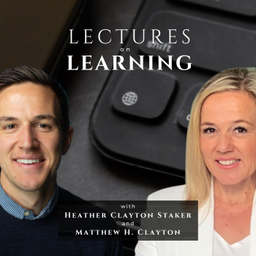
How will K-12 education change in the age of AI? Join host Heather Clayton Staker, CEO of Guide School, as she explore the theories, innovations, and best practices that shape the way we educate our children.
- Publisher
- Heather Clayton Staker
- Category
- education
- Language
- en
- Explicit
- No
- First episode
- 21 Nov 2024
- Latest episode
- 30 Jul 2026
Latest episodes
10 episodes in the feed.
30 Jul 2026
Where do you start? The first 7 things to build in a student-driven classroom
guide.school - The more advanced classroom technology becomes, the more carefully we have to design the human systems around it. Adaptive software can decide what a student should learn next. It cannot create belonging, establish trustworthy boundaries, teach students how to disagree, or notice when a child is struggling because a fly spent the previous evening lodged inside his ear. That may be the central paradox of AI-powered education: technology can personalize instruction, but only people can personalize with the learner. The schools that make student-driven learning look effortless are rarely effortless behind the scenes. They have accumulated dozens—sometimes hundreds—of small systems governing how students set goals, join a community, handle frustration, resolve disagreements, earn privileges, make decisions, and receive individual support. But no school can build all of those systems before its first student arrives. So where should a founder, teacher, or innovation team begin? In this episode, I share the seven human systems I would establish during the first two weeks of any Guide-model classroom. These are drawn from years of studying schools including Acton Academy, Alpha School, Khan Lab School, and other personalized-learning programs—and from the daily reality of helping run Zero School on Gili Meno, Indonesia. Some of the systems are surprisingly simple: a wiffle ball game that helps strangers become teammates, a printed Goal Tracker that removes hundreds of daily questions, a Town Hall agenda that gives students a voice without allowing every suggestion to derail the school day. Others require Guides to make harder choices. How democratic should a student-driven school actually be? Should students set their own academic workload? Can classroom currency strengthen intrinsic motivation rather than weaken it? What should remain firmly in the hands of the adults? Together, these systems begin to create something larger than a collection of routines. They create a culture in which students increasingly know what success looks like—and autonomously do what they need to do to achieve it. In this episode... 🤝 Why group formation should come before academic independence 🎯 The four questions every student should be able to answer without asking a Guide 🧠 Why computers may be better than students at setting the right daily workload 🪑 What Ze Zebra rug taught us about furniture, distraction, and thoughtful discussion 🟨 Why clear consequences can feel safer—and kinder—than flexible boundaries 💵 How Zero Dollars, beef jerky, and a Zen Move became part of our motivation system 🏛️ How Town Hall shifts the Guide from chief decision-maker to community facilitator 👂 Why five minutes of individual attention may be the most human part of an AI-powered school This episode is for school founders, microschool leaders, innovative teachers, homeschool and co-op leaders, and anyone trying to understand what must replace the traditional classroom once whole-group instruction is no longer the organizing center of school. What is one classroom responsibility that students could begin managing for themselves—provided the right system were in place? 🎓 From Teacher to Guide (Arizona State University) — learn the Guide model | https://www.guide.school/asu 🛠️ Core Engine — build the AI-powered academic engine behind the Guide model | https://www.guide.school/engine 🏔️ Foundational Guide Certification — Nashville retreat | https://www.guide.school/foundations 📩 Free weekly field notes from Heather | https://www.guide.school/contact 👂 Available on all major podcast platforms. Search for "Guide Schooling Podcast." Subscribe to Guide Schooling for honest field notes about what is working, what is failing, and what school can become in the age of AI. #GuideSchool #GuideModel #AIinEducation #Microschools #Teaching #EducationInnovation #SchoolInnovation #PersonalizedLearning #MasteryLearning #EducationEntrepreneurship #StudentAgency
17 Jul 2026
Why Teachers Should Become Guides
Artificial intelligence may be about to make teaching a better profession. For more than a century, schools have been organized around one basic assumption: if students needed instruction, they depended on a knowledgeable adult to deliver it. That assumption shaped the classroom, the bell schedule, grade levels, teacher preparation, and even our definition of what a good educator does. That world is changing. Instruction is becoming easier to access, while individualized coaching, encouragement, judgment, and human connection remain extraordinarily scarce. I’ve started describing this shift with a simple phrase: the scarcity has moved. In this episode, I explore why the rise of AI-powered learning tools does not diminish the importance of educators. Instead, it creates an opportunity for teachers to evolve into Guides—adults who spend less time delivering the same lesson to everyone and more time knowing students deeply, developing their confidence, and helping them become increasingly capable of learning for themselves. I also share what this shift has looked like at Zero School in Indonesia, why helping a student learn cross-canceling from a tutorial gave me the “double joy of guiding,” and how the Guide model creates the relational bandwidth for one caring adult to change the course of a child’s life. In this episode: 🧭 Why becoming a Guide may be one of the smartest professional decisions an educator can make 📉 What it means to say “the scarcity has moved” in education 🤖 How adaptive software and AI are changing the source of instruction 🇫🇷 Can my son study French even though his high school does not offer it? ➗ The cross-canceling story that taught me about the double joy of guiding 💬 Why one-on-one coaching may become the most valuable part of an educator’s work 🌱 How Guide-model schools create “relational bandwidth” for students who need someone in their corner 🌍 Why this model can work in elite private schools, public districts, microschools, and resource-constrained communities This episode is for teachers, school leaders, microschool founders, homeschool and co-op leaders, and anyone wondering what the teaching profession becomes when students no longer depend exclusively on live, teacher-delivered instruction. 👇 What part of an educator’s job would you protect and expand if technology reduced the time required for lesson delivery? — 🎓 From Teacher to Guide (Arizona State University) — learn the Guide model | https://www.guide.school/asu (https://www.guide.school/asu) 🛠️ Core Engine — build the AI-powered academic engine behind the Guide model | https://www.guide.school/engine (https://www.guide.school/engine) 🏔️ Foundational Guide Certification — Nashville retreat | https://www.guide.school/foundations (https://www.guide.school/foundations) 📩 Free weekly field notes from Heather | https://www.guide.school/contact (https://www.guide.school/contact) 👂 Available on all major podcast platforms. Search for "Guide Schooling Podcast." Subscribe to @guideschooling so you never miss an episode exploring what school can become in the age of AI. #GuideSchool #GuideModel #AIinEducation #Microschool #Teaching #FutureOfEducation #SchoolInnovation #PersonalizedLearning #MasteryLearning #EducationEntrepreneurship #TeacherDevelopment #StudentAgency
7 Jul 2026
The Biggest Mistake Schools Make with EdTech
Schools spent billions on laptops and software — and if you're a parent, you've probably been quietly disappointed by the results. Here's the one design mistake behind almost all of it. Imagine Henry Ford rolling the first Model T into town, and someone deciding the smartest move is to bolt the engine onto a horse. That's exactly what most schools have done with technology: kept the old classroom intact and strapped edtech on top of it. Same schedule, same age-based batches, same teacher standing at the front — just now with laptops. No wonder people say edtech doesn't work. They're right. But the problem was never the laptop. The problem is the horse. Underneath it all is a belief most of us inherited through 13 years of school and never questioned — what I call the instruction fallacy: the idea that learning only really begins when an adult stands up and explains something. For most of history that was true. Today it isn't. Instruction is no longer scarce — and once you see that, the whole role of the teacher changes. In this episode: 🐴 The Model-T-on-a-horse mistake — why adding AI to the conventional classroom changes almost nothing 🧩 The "instruction fallacy," and how it quietly sabotages even well-designed guide models 📉 Why great teachers keep sneaking mini-lessons back in — and why it breaks the entire model 📊 The mid-year results that stunned me: students at Zero School in Indonesia learning 3.6x faster than projected ✏️ The story of Marcus, a "stuck" second grader — and the three-day fix I almost missed by trusting my instincts ❤️ Why the guide model is more human than the conventional classroom, not less If you're building a guide-model school, microschool, learning co-op, or just rethinking your own classroom, this is the shift that's hardest to unsee. Once instruction stops being scarce, the question stops being "how do I explain this better?" and becomes "where can I stop teaching so I can finally start guiding?" 👇 Tell me in the comments: where in your day are you still bolting the engine onto the horse? — 🎓 From Teacher to Guide (Arizona State University) — learn the model behind 3.6x academic growth | https://www.guide.school/asu 🛠️ Free live training: replace app chaos with one coherent learning system (limited spots, no replay) | https://www.guide.school/engine 🏔️ Foundational Guide Certification retreat — Nashville | https://www.guide.school/foundations 📩 Free weekly field notes from Heather | https://www.guide.school/contact 👂 Available on all major podcast platforms. | Search for the Guide Schooling Podcast. — Subscribe to @guideschooling so you never miss an episode.
26 Jun 2026
Why Students Lose Motivation After Kindergarten
Your most "unmotivated" student probably isn't lazy. They're disoriented — and they literally cannot tell whether they're winning at school. Here's the mindset shift that changes everything. After years building Guide-model schools — Acton Academy, Alpha School, Apogee, Prenda, a microschool in Malawi, and now one in Indonesia — I kept running into the same root question underneath "how do I motivate my students" and "how do I manage behavior." That question is: how can I help my students see how to win at school? Most conventional classrooms ask kids to play a game with no visible score, no clear objective, levels that shift for no reason, and feedback that arrives weeks too late. Of course they stop caring — sometimes by the time they're out of kindergarten. In this episode: 🎯 Why "disoriented" is a more useful word than "unmotivated" — and how it changes how you coach kids 🪙 The real story of a 7-year-old who got hooked on Dreambox math coins and grew up to study civil engineering 🏫 How Alpha School builds a complete motivation system before a single classroom opens 🧠 Why your smartest, most capable students are often the first ones to give up 🌍 What's working with visible-progress systems in Indonesia, Malawi, and the U.S. — and what to avoid ⚠️ The motivation trap: when schools gamify compliance instead of real mastery If you're building a Guide-model school, microschool, learning co-op, or just rethinking your own classroom, this one's for you. 👇 Tell me in the comments: what's one way you make progress visible for your students? — 🎓 From Teacher to Guide (Arizona State University) — learn the model behind 3.6x academic growth | https://www.guide.school/asu 🛠️ Free live training: replace app chaos with one coherent learning system (limited spots, no replay) | https://www.guide.school/engine 🏔️ Foundational Guide Certification retreat — Nashville | https://www.guide.school/foundations 📩 Free weekly field notes from Heather | https://www.guide.school/contact 👂Available on all major podcast platforms. | Search for the Guide Schooling Podcast. — Subscribe to @guideschooling so you never miss an episode. Next time: The biggest mistake schools make with AI — bolting it onto the old model instead of redesigning around it. #GuideSchool #Microschool #StudentMotivation #EdTech #Teaching #Homeschool #ASU #ActonAcademy #AlphaSchool
28 May 2025
How Tablet Learning Helps the Marginalized – Imagine Worldwide
Heather Clayton Staker interviews Vafa Hakimi about Imagine Worldwide's tablet-based learning program in the Dzaleka Refugee Camp, revealing how marginalized students gain literacy and numeracy skills through adaptive software and dedicated facilitators.
24 Feb 2025
Motivating for Mastery: Balancing Intrinsic & Extrinsic Rewards
Description: Have you struggled to motivate students? In this episode of Lectures on Learning, campus director Paige Fultz of Alpha Brownsville reveals her groundbreaking approach that propels students to outpace traditional learners by 2.3x—all through a unique two-hour learning model. Join us as Paige explores how blending intrinsic passion with extrinsic incentives creates an environment where students thrive, adapt, and master new challenges in tomorrow’s schools. KEY TOPICS COVERED: Overview of Alpha Brownsville and its innovative two-hour learning model How intrinsic and extrinsic motivators work together to boost student performance The use of creative tools like raffle tickets, Class Dojo points, and Alpha Bucks Strategies for personalized incentives and real-time student feedback Balancing immediate rewards with long-term, deep engagement The role of school culture in fostering a motivated, resilient learning community FREE RESOURCE Page from Paige's Playbook: Discover the top intrinsic and extrinsic motivators that power success at Alpha Brownsville. Download here: https://www.guide.school/5 (https://www.guide.school/5) LINKS www.guide.school/5 (http://www.guide.school/5) - Paige's Playbook on Motivators YouTube version of Lectures on Learning: www.youtube.com/@guideschooling/playlists (http://www.youtube.com/@guideschooling/playlists) Podcast version of Lectures on Learning: Available on all major podcast platforms.
10 Jan 2025
Your Calling: Teacher, Guide, or None of the Above?
Do you secretly dread your job? Do you resist going to work each day. Do you regret your low salary? Or do you feel you’re not making much of a difference? In this provocative episode of Lectures on Learning, Heather Clayton Staker explores the emerging role of the Guide in AI-powered Flex studios and questions whether you might be happier if you make the jump into this new role, whether because you see the downsides of traditional teaching or you are compelled by the upsides of what’s on the horizon with AI-powered Flex learning. KEY TOPICS COVERED: - The emergence of AI-based adaptive learning software in education - What is a Guide? - Comparison of traditional "Teacher" role vs. new "Guide" role - Benefits of the Flex model in K-12 education - Reasons for current teachers to consider becoming Guides - Opportunities for non-teachers to enter the field as Guides - Quiz to help listeners determine if they're suited for the Teacher or Guide role - Potential ways Guides can transform education globally - Characteristics of individuals who should not pursue teaching or guiding roles FREE RESOURCE Quiz: “Do you have a Teacher or a Guide Mindset?” Download here: https:www.guide.school/4 (http://www.guide.school/4) LINKS www.guide.school/3 (http://www.guide.school/3) - Microschool budget resource www.guide.school/4 (http://www.guide.school/4)- Quiz to determine suitability for Teacher or Guide role https://faculty.washington.edu/kate1/ewExternalFiles/SageOnTheStage.pdf (https://faculty.washington.edu/kate1/ewExternalFiles/SageOnTheStage.pdf) - Alison King's article on "From Sage on the Stage to Guide on the Side" https://www.christenseninstitute.org/wp-content/uploads/2018/08/JTBD.pdf (https://www.christenseninstitute.org/wp-content/uploads/2018/08/JTBD.pdf)- Paper on "jobs to be done" in education YouTube version of Lectures on Learning: www.youtube.com/@guideschooling/playlists (http://www.youtube.com/@guideschooling/playlists) Podcast version of Lectures on Learning: Available on all major podcast platforms.
4 Dec 2024
One-Room Schools, Microschools, and Maui
Rhonda Hermes da Fonseca, a seasoned educator, shares her journey of starting a one-room microschool in Maui, leveraging AI-powered online learning to personalize education and redefine the future of education.
4 Dec 2024
A Curious Way to Do School
Flex blended learning pioneer teachers, including [full names], explore the innovative AI-powered model that combines human elements with adaptive software to create a more efficient, engaging, and personalized classroom experience.
21 Nov 2024
Teaching in the Age of Algorithms
Join co-host Heather Clayton Staker as she explores the revolutionary shift in education brought on by AI and adaptive learning technologies. This episode follows five teachers transitioning from traditional roles to "guides on the side" in an innovative charter school. Key topics covered • The history of the Prussian education model and its lasting impact • The disruptive potential of AI-powered adaptive learning • Two possible paths for the future of education: transformed classrooms vs. microschools • The changing role of teachers in the AI era Witness the journey of five educators as they grapple with this paradigm shift. Gain insights into the challenges and opportunities presented by AI in education, and discover how this transformation might reshape learning for generations to come. Whether you're an educator, political leader, parent, or simply interested in the future of learning, this episode offers valuable perspectives on the evolving landscape of K-12 education in the age of algorithms. #FutureOfEducation #AIInLearning #TeachingInnovation #edtech Free Resource Discussion Guide: “How Will Teaching Change in the Age of Algorithms and How Can We Prepare? Download here: https://www.guide.school/1 Watch the podcast on Youtube: Lectures on Learning, Episode 1: Teaching in the Age of Algorithms (https://www.youtube.com/watch?v=INj4WKQYO60) Links https://www.guide.school/ https://www.slope.school/
Reach and audience
Public platform figures. Ratings count people who left a rating, not total listeners.
- Apple Podcasts (US)
- 5.0 / 5
- 1 ratings
- Spotify
- 5.0 / 5
- 2 ratings
Podcast Authority Score: 4 / 100
A composite of feed quality, social presence, YouTube performance and engagement. Read the methodology.
- Quality
- 8
- Social presence
- 0
- YouTube
- 0
- Engagement
- 0
Contact Lectures on Learning
- Guest appearances
- Does not typically book guests
Based on episode analysis; this does not confirm that the show is currently accepting guests.
Host of Lectures on Learning?
Claim your podcast to manage its listing and keep your show details accurate.
Pod Engine is an independent podcast discovery and analytics service and is not affiliated with or endorsed by this podcast. Artwork and show content belong to their owners. Full legal notice.
Explore this show
Podcast research with Pod Engine