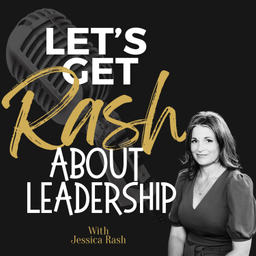
Let’s Get Rash About Leadership is the unapologetic, no-BS podcast that dives deep into everything wrong with leadership today. From broken hiring practices and toxic management to failed communication, disorganized onboarding, and miserable workplaces. We’re calling out the outdated leadership strategies that kill motivation, drive away top talent, and destroy retention. No corporate jargon. No sugarcoating. Just real talk about how leaders fail their teams, how businesses sabotage their own success, and what needs to change if you want people who actually show up, care, and perform.
Let’s Get Rash: Leadership Lessons From History — Labor Day & The Pullman Strike
I’ll be honest: for most of my adult life, Labor Day meant a three-day weekend, avoiding crowded campgrounds, and getting shit done around the house.
I didn’t really know the history behind it.
Then I learned about the Pullman Strike of 1894—and suddenly Labor Day meant something very different to me.
In this episode, I take a look at the Pullman Company, George Pullman, the company town he controlled, and what happened when workers’ wages were cut while their rent and living expenses stayed the same.
But this episode isn’t really about history.
It’s about leadership.
The workers tried to talk. They tried to negotiate. They tried to be heard. And when leadership refused to sit down and have a real conversation, the situation escalated into one of the largest labor conflicts in American history.
I look at what the Pullman Strike can teach us about leadership today—including what happens when employees feel ignored, dismissed, or treated like they don't matter.
I also talk about the “velvet rope” mentality, the problems with the traditional “open-door policy,” why putting layers between leadership and employees can create bigger problems, and the difference between looking like a leader and actually being one.
And I get personal.
I share a story from one of my own jobs that showed me exactly what pretentious leadership looks like—and why I have so little patience for it.
Because at the end of the day, strip away the titles, money, power and status, and we’re all still just people.
And sometimes people don't need you to give them what they want.
They just need to know they matter.
So this Labor Day, I’m asking us to remember who this holiday was actually created to honor: the people who show up, do the work, and keep everything moving.
In this episode, I talk about:
• The history behind Labor Day
• The Pullman Strike of 1894
• George Pullman and the company town
• What happens when employees aren't heard
• The connection between leadership and respect
• The “velvet rope” mentality
• Why an “open-door policy” isn't always what leaders think it is
• Looking like a leader vs. actually being one
• My own experience with pretentious leadership
• Why we need to acknowledge the people who do the work
Because leadership isn't just about making decisions. It's about remembering the people affected by them.
Let's Get Rash.
26 Aug 2026
We Created the Customer Service We All Hate
How We Created the Customer Service We All Hate
Let’s Get Rash! Customer service pretty much sucks today. We’ve all experienced it.
The long waits. The scripted responses. The employee who seems like they couldn’t care less. The company policy that makes absolutely no sense. The feeling that you’re dealing with a system instead of a person.
But here’s the uncomfortable question: how much of this did we create ourselves?
We traded human connection for speed, convenience, and efficiency. Companies replaced judgment with scripts. Employees learned to follow policies instead of solve problems. Customers demanded faster, cheaper, and easier and then wondered why service started feeling cold and robotic.
In this episode, I’m taking a hard look at how we collectively trained the human out of customer service.
We’ll talk about:
Why customer service has become a transaction instead of an interaction
How companies created environments where employees stop caring
How customers contribute to the decline of basic respect
Why scripts, policies, and “the customer is always right” culture can create worse experiences
What happened to professionalism, ownership, and simply treating people like people
This isn’t about blaming one group. Employees, leaders, companies, and customers all played a role.
Because the truth is uncomfortable:
We didn’t just lose great customer service. We helped create the version we complain about today.
#LetsGetRash #Leadership #CustomerService #WorkplaceCulture #Professionalism
12 Aug 2026
Going Above and Beyond: Excellence or Exploitation?
What does “going above and beyond” actually mean?
I’ve been thinking about this one for a while, and the more people I talked to, the more I realized we all have very different ideas about it.
In this episode, I dig into why going above and beyond has become so controversial, what it actually looks like, and whether we’re asking employees to do more than their job or simply expecting them to meet the standard.
I talk about employees who genuinely go above and beyond, the people who make sure the boss notices, and the people doing great work that leadership never sees.
I also look at what happens when companies reward the bare minimum, protect underperformers, and then wonder why their strongest employees stop giving more.
I asked people what going above and beyond means to them, and some of their answers completely changed the way I looked at the topic.
For me, I realized something important:
I don’t go above and beyond for the company.
I do it because someone needs help. Because I can help.
So where does excellence end and exploitation begin?
Let’s talk about it.
It’s time to get Rash.
Reach and audience
Public platform figures. Ratings count people who left a rating, not total listeners.
Apple Podcasts (US)
5.0 / 5
2 ratings
Host of Let's Get Rash About Leadership!?
Claim your podcast to manage its listing and keep your show details accurate.
Pod Engine is an independent podcast discovery and analytics service and is not affiliated with or endorsed by this podcast. Artwork and show content belong to their owners. Full legal notice.
Explore this show Podcast research with Pod Engine