- 18
- Episodes
- 3
- Ratings
- Monthly
- Cadence
- 2026
- First episode
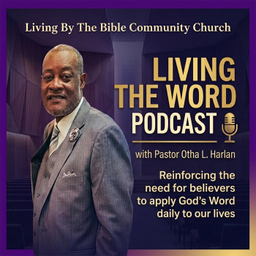
About Living The Word
Helping people grow in Christ by making the Bible practical, relevant, and life-changing. Through inspiring conversations, biblical teaching, and real-life application, we’re here to help you navigate every season of your walk with Jesus.
- Publisher
- Otha Harlan
- Category
- religion & spirituality · religion & spirituality · religion & spirituality
- Language
- en
- Explicit
- No
- First episode
- 4 Jul 2026
- Latest episode
- 25 Oct 2026
Latest episodes
18 episodes in the feed.
25 Oct 2026
I Prepare You: How Scripture Equips Us for Hard Times
The Bible is the only thing that will equip and sustain us to endure to the end. I explain Paul’s charge to Timothy to prepare for hard times and to pass the faith to others. We study 2 Timothy 3:15–17 and show how Scripture is a sword, a lamp, a cleanser, and a guide for life. I teach that the Word furnishes every provision for the storms of life and for faithful service. We call listeners to be trained by the Word, to put on the armor of God, and to pass the baton of discipleship to the next generation. I urge you to read, live, and share the Bible so you remain faithful until the end. I opened with solemn prayer and I called the congregation to attend to the authority and sufficiency of Scripture. I explained Pauls situation in Rome and how Second Timothy is a last testament to a disciple. I insisted that the Bible is the singular instrument by which a believer is furnished for every assignment God gives. I described the Word as a sword, a lamp, a cleansing agent and a GPS. I argued that these metaphors are not metaphorical luxuries but practical functions: the Word defends, it illuminates our path, it purifies conduct, and it guides our decisions. I urged listeners to let Scripture occupy their inner life so that they may be stable when evil days arrive. I traced the apostolic imperative to preparedness. I reminded the audience that earthly resources cannot guarantee endurance; only the Spirit and the written Word can sustain us through persecution and moral collapse. I used Hebraic and Pauline imagery to demonstrate how the Bible equips a person with provisions like a ship prepared for a long voyage. I called for serious engagement with Scripture as the primary means of sanctification and practical wisdom. My closing challenge was to accept the Bibles sufficiency and to allow it to shape courage, speech and conduct. Takeaways: I teach that Scripture equips me fully for life's trials and for righteous living. I warn that the last days will show moral decline and that believers must prepare intentionally now. I describe the Bible as a sword, a lamp, a cleaning agent, and a GPS to guide and defend. We must put on the full armor of God, employing faith, righteousness, peace, and the Word continually. I urge discipleship: I must pass the teachings I received to faithful people who will teach others. I assert that money, education, and social status will not preserve me; only Christ and Scripture will. I present historical examples like Frederick Douglass and Booker T. Washington to illustrate faith, work, and leadership in action. We face a generational gap in church practice and must restore reverence, attendance, and biblical instruction for our youth. Companies mentioned in this episode: The North Star Hampton University Tuskegee University Florida A&M University University of Central Florida (UCF)
18 Oct 2026
We Must Endure: The Bible as Our Instruction and Comfort
Companies mentioned in this episode: Living by the Bible Community Church The Book of Mormon The Church of Jesus Christ of Latter-day Saints Assemblies of God Pentecostal Presbyterian Baptist Methodist Lutheran Church of the Nazarene Dr. Phil Oprah Winfrey
11 Oct 2026
I Endure: How Scripture Strengthens My Faith (Romans 15:4–5)
I contend that Scripture empowers us to endure and to encourage one another, a truth grounded in Romans 15:4–5. I expounded how the twin themes of endurance (hupomoni) and encouragement (paraklesis) shape Christian life and practice. I taught that Scripture instructs us to be strong and courageous, relieves anxiety through prayer, renews strength, and reveals God’s plans for our lives. I urged believers to hold fast to the good found in God’s Word, to memorize and apply it, and to accept the obligation to bear the weak. I gave practical examples of coming alongside others and called us to remain ready to serve. We therefore commit to read, study, and pass on the Word so that we may endure, encourage, and preserve hope for the next generation. I present a sermon grounded in Romans 15:4–5 that exhorts listeners to endure with the aid of Scripture. I unpack the Greek terms paraklesis and hupomoni to define encouragement as coming alongside another and endurance as steadfastness beneath pressure. I then trace five scriptural functions: Scripture teaches courage, relieves anxiety through prayer, renews strength in weakness, instructs mutual encouragement, and reveals Gods plans for life. I urge disciplined Bible engagement. I ask listeners to read, inquire, mark, and memorize the passages that sustain hope. These practices form a practical method to remain rooted when trials come. I close by emphasizing that the biblical record is not antiquated text but practical instruction for present trials. I insist that every written thing in Scripture serves to instruct successors and to foster unity. I call the congregation to cling to what is good, to test and keep that which edifies, and to cultivate readiness to be used by God. My pastoral plea is clear: we must sustain one another, preserve and pass on the Word, and live in humble service so that the church remains a source of endurance and mutual encouragement. Takeaways: I taught that Scripture is written to instruct us so we can endure and have hope. We must come beside others to encourage them, offering comfort, strength, and urgent support. I explained endurance as bearing pressure, remaining steadfast under trials, not quitting or fleeing. We are obligated as the strong to bear the weaknesses of those without strength and build them up. I urged that Scripture teaches us God plans for our lives, giving purpose, hope, and future. We should learn to hold on to the good in Scripture by testing it, keeping, memorizing, and applying it in life.
4 Oct 2026
I Warn: Strong Men Removed, Women and Children in Charge
I state that Isaiah 3 prophesies God's judgment by removing strong men and elevating youth and women, and I believe this is happening now. I explain that God removes security, food, and leaders, creating a power vacuum that youth and women fill. I trace a past fulfillment in 2 Kings and show parallels to our present social unrest. I warn that weak male leadership, unstable young rulers, and prideful women can signal national chastening. I call us to humility, repentance, and prayer so that God may heal the land. We must see the spiritual source of these troubles and respond with sober, biblical action. Takeaways: I explain that Isaiah chapter 3 prophesies God removing security and leadership from nations. I describe how God may use the elevation of women and youth as a form of judgment. I connect the Isaiah prophecy to historical fulfillment in Second Kings and to present societal signs. I warn that the removal of experienced male leaders leads to weak governance, corrupt judges, and instability. I note that youth elevated to unstable leadership and effeminate men correlate with national decline and moral chaos. I urge repentance, humility, and return to Godly wisdom so that the nation may be healed and restored. I trace how the prophecy played out when Nebuchadnezzar deported leaders, leaving only the poor, and I suggest modern parallels in food shortages, weak military, and broken judicial systems.
26 Sept 2026
I Warn: When There Are No Male Leaders
I assert at the outset that Isaiah 3:12 declares that in the absence of godly male leadership young people will oppress my people and women will govern over them. I expound upon this prophetic declaration as a dual fulfillment that occurred in antiquity and that I believe is manifesting again in our contemporary polity. I contend that this is a form of divine chastisement precipitated by collective disobedience and moral decline, and that the cultural phenomena of youth takeovers and certain modalities of female governance are concomitant signs. I exhort our congregation and listeners to eschew facile worldly explanations and to examine these developments through a biblical hermeneutic, consulting Scripture and seeking the Lord’s guidance. I declare that discerning this pattern is foundational to the further sermons I will deliver in the ensuing weeks, wherein I will trace parallels in Isaiah, Nahum, and Jeremiah. I urge us to repent, to instruct our families soberly, and to pray for restoration so that God’s favor may be renewed. I expound upon the prophetic utterance of Isaiah 3:12 with meticulous attention to its philological, historical, and eschatological dimensions, and I contend that the passage constitutes a dual prophecy liable to multiple fulfillments across temporal epochs. I delineate the Hebrew semantics of the verb translated as "oppress" or "overtake," and I argue that Isaiah’s oracle originally addressed concrete geopolitical calamities—assessable in the exile and the Babylonian incursions—yet retains an enduring applicative force that permits its contemporaneous correlation to sociopolitical phenomena observable in our own era. I therefore posit that prophetic speech in Scripture may execute its telos more than once, such that an ancient oracle both fulfilled immediate historical exigencies and forecasts analogous conditions in subsequent generations. I proceed to assert, from the pulpit vantage, that present cultural manifestations—youth uprisings, the ascendancy of female governance in public spheres, and leadership that eschews divine consultation—evince patterns consonant with Isaiah’s declaration. I implore listeners to survey Scripture with exegetical sobriety and to weigh current disorder as potentially punitive rather than purely incidental, thereby urging a hermeneutic that privileges covenantal accountability and communal repentance over mere sociological explanation. Takeaways: I interpret Isaiah chapter three verse twelve as a prophetic admonition that youth and women leading may precipitate societal confusion and public oppression. We assert that leadership divorced from consultation with God results in misguided policies that confuse national direction and weaken families. I contend the prophet Isaiah's message exhibits dual fulfillment, applying historically to exile and contemporarily to present American cultural shifts. We identify the emergence of effeminate or weak male leaders as a primary cause of cultural vulnerability and the erosion of civic strength. I emphasize the speaker's claim that this phenomenon functions as divine chastisement intended to drive repentance and restoration toward biblical obedience. We recommend that congregants adopt a biblical lens, teach their children this interpretive framework, and pray for godly, qualified leadership at every level. I note the speaker's comparison between distinguished historical black leaders and current figures, arguing that modern leadership often lacks comparable moral authority and qualification.
20 Sept 2026
Theology of Women Pastors Part 4
I state at the outset that the principal contention of our discourse is that, in accordance with biblical revelation, spiritual headship and the pastoral office are constituted as masculine prerogatives and that women are not to assume the role of pastor. We substantiate this assertion by an exegetical traversal from Genesis, wherein man is formed first and woman is fashioned as a suitable helper from his side, through Pauline instruction in First Timothy, First Corinthians and Ephesians, which collectively enjoin order, headship, and submission within the ecclesial context. I emphasize that the creation narrative and the apostolic injunctions concerning head coverings, silence in the assembly, and the qualifications for overseers establish an enduring structural paradigm that the church is commanded to respect. We further assert that the man bears primary responsibility before God for the spiritual condition of his household and for safeguarding the ordered life of the church, and that obedience to this divinely instituted order fosters decency, order, and mutual flourishing. I exhort hearers to engage Scripture with sobriety and diligence, to form convictions by careful biblical exegesis rather than cultural inclination, and to address departures from this pattern with candid theological reflection and pastoral correction. We affirm our commitment to proclaim the whole counsel of God and to encourage the church to embody the authority structures delineated in Scripture. I present a sustained exegetical case grounded in the Genesis narrative and Pauline instruction, arguing that the divine ordering of male and female roles established at creation persists as normative for the church. I trace the sequence in Genesis 1–2, noting that God first created ha‑Adam—humanity—and then formed Adam from the dust, breathed life into him, and subsequently fashioned the woman from his rib as a suitable helper. I emphasize the linguistic and theological significance of that sequence: the origination of the woman from the man supplies the rationale for a differentiated but complementary ordering of relationship, authority, and responsibility. From that foundation I bring forward Paul’s appeals in First Corinthians 11 and 14 and in Ephesians 5, demonstrating how apostolic instruction reflects and enforces the creation pattern. I contend that Paul’s directives concerning headship, head coverings, and orderly worship are not ephemeral cultural accommodations but universal commands that draw their warrant from the primal covenantal structure given at Eden.\n\nI then articulate the pastoral consequences of this hermeneutic. I maintain that men are held primarily accountable to God for the spiritual oversight and protection of their households and that women, while equal in essence and endowed with manifold gifts for ministry, are not bidden to assume the office of pastorate as the authoritative head of the church. I caution that when ecclesial practice departs from this structure, congregational order and spiritual accountability are compromised. I exhort listeners to study Scripture carefully, to honour the delineated roles in love and humility, and to measure contemporary innovations against the totality of biblical testimony rather than isolated preferences. Takeaways: I teach that Genesis establishes man's priority in creation, which grounds male headship in church leadership. I argue from First Corinthians and First Timothy that scripture restricts the pastoral office to men under divine order. We emphasize that Eve's addition to God's command illustrates the danger of reinterpreting scripture to fit preferences. I state that Paul's teachings about head coverings and silence in church derive directly from the creation narrative. I acknowledge women's equal value and gifting while maintaining that roles and authority in the church remain distinct by design. We warn that adopting female pastors without clear biblical warrant constitutes a departure from established scripture and risks church disorder. I call listeners to study scripture, submit to Godly authority, and preserve the biblical structure for church order and family life.
13 Sept 2026
Theology of a Woman-Pastor Addressing Women Pastors and the Order of Creation
I assert that the central point is that the pastoral office belongs to men according to Scripture and the created order. I explain how Paul cites Genesis to show Adam was made first and Eve was formed from Adam. I distinguish between prophets and pastors and say women may prophesy but the long-term role of overseer is different. I warn against adding to God’s word and use Eve’s exchange with the serpent as a cautionary example. I appeal to 1 Timothy 3, Titus, Genesis, Romans, and 1 Corinthians to support this reading. I call listeners to study Scripture, submit to God’s order, and resist pride that would reverse the created roles. I assert that the Bible reserves the office of pastor for qualified men, and I contend that the rising trend of women claiming the pastoral role departs from Scripture. We examine the theological foundations and contrast the complementarian view, which reserves spiritual leadership in church and home to qualified men, with the egalitarian view that men and women hold identical roles. I distinguish female prophets and leaders in Scripture from the pastoral office and marshal passages such as First Timothy 3 and Titus 1 to explain why prophecy does not equal pastoring. I critique contemporary teachers who, in my judgment, reinterpret or minimize clear texts to justify female pastors and other doctrinal shifts. We insist that interpretation be governed by the Holy Spirit and by the plain meaning of Scripture, and we urge the church to confront and correct teachings that we believe harm the flock. I set forth a measured critique of the movement that promotes women as pastors. I describe how some voices reshape core texts to fit personal desires, citing examples where public figures reject plain readings of John 14 and reframe Sodom and Gomorrah as merely about hospitality. I assert that such reinterpretation distorts the text and that if the Holy Spirit is removed from interpretation, any view can be forced upon Scripture. I recount the need to ground doctrine in the Spirit and in careful exegesis. I quote Second Peter and insist that prophecy and teaching must not be made to conform to human aims. I warn that when teachers discard sound method, they risk leading people away from Christ and fragmenting the church. I close by affirming that our duty is to preach the whole counsel of God. We must test claims by Scripture and by the Spirit. I call for sober discernment and for leaders who will not alter Gods Word to justify personal preference. Takeaways: I emphasize that Scripture must be interpreted by the Holy Spirit and not by personal preference. We contend that many modern female leaders reinterpret text to justify pastoral roles contrary to traditional readings. I distinguish clearly between prophetic ministry and pastoral shepherding, which I say are distinct callings. We describe the complementarian view as affirming equal worth while reserving church leadership and spiritual headship to qualified men. I cite pastoral qualifications in First Timothy and Titus to argue that elders are described as the husband of one wife. We give biblical examples of female prophets such as Miriam, Deborah, Huldah, and Anna but maintain they were not pastors. I warn that pastors will be held accountable by God for how they shepherd their congregations and teach Scripture. We critique egalitarian interpretations which claim identical roles for men and women, arguing instead that such readings conflate spiritual gifting with the specific functional office of pastoral oversight established in Scripture and church tradition. I examine the scriptural basis for church leadership. I speak from my role as a pastor who defends the Word of God. I explain why I read Genesis 1 and 2 as part of the argument about who may serve as an elder or overseer. I note that Genesis 1:27 affirms that God made male and female. I then point to Genesis 2:7 and 2:21–23 to show the order and the means of creation. Adam is formed first from the dust. Eve is formed later from Adam’s rib. I argue that the sequence matters theologically. I ask whether God’s ordering gives any basis for male headship in the local church and in pastoral office. I address the larger hermeneutical stakes. I invoke Paul’s use of the creation account in the pastoral letters. I cite Romans 9 about the potter and the clay to warn against questioning God’s design. I also reference Genesis 3 to show how deception led to disorder. I call listeners to study the Word carefully. I urge that we align practice with God’s revealed will rather than cultural preference. Takeaways: I argued that endurance is required and that we must evaluate leaders by Scripture. We distinguished prophets from pastors and noted that prophetic gifts differ from pastoral office and role. I used the creation account to argue that Adam was created first and that this informs church headship. We warned against private interpretation of Scripture and urged that only the Holy Spirit may rightly guide understanding. I highlighted Eve's addition to God's command as an example of adding to Scripture and the danger that poses. We called listeners to study the Word like Bereans, to submit to God's design, and to seek humility before God.
6 Sept 2026
Exploring the Theology of Women Pastors: A Deep Dive
The salient point of this episode revolves around the theological discourse on the position of women as pastors within the church. I elucidate the complexities of this matter, emphasizing the necessity for discernment when interpreting scriptural texts that pertain to church leadership and gender roles. We engage in a thoughtful examination of both the complementarian and egalitarian perspectives, delineating their respective theological underpinnings and implications. It is evident that this issue has engendered considerable debate and division within the church, as contemporary interpretations often seek to reconcile modern values with traditional doctrines. Ultimately, we aim to ground our understanding in biblical authority, urging listeners to reflect on the scriptural basis for their beliefs regarding the role of women in pastoral positions. This episode embarks on a profound inquiry into the theological underpinnings of female pastoral leadership within the Christian church. Pastor Harlan present a compelling argument centered on scriptural interpretations that assert the role of pastors is reserved for men, meticulously referencing various biblical texts that articulate the qualifications for church leadership. The dialogue engages with contemporary challenges faced by the church as it navigates the increasing acceptance of women in pastoral roles, raising critical questions about the implications of such shifts on the integrity of Christian doctrine. Throughout the episode, Pastor Harlan share personal anecdotes from their own journeys within church communities, providing a rich context for their theological reflections. They discuss the tension that often arises when scriptural mandates are confronted with modern societal expectations, emphasizing the necessity for believers to adhere steadfastly to biblical truths. This exploration is further enriched by the hosts' analysis of the difference between prophetic roles, which women have historically occupied, and the pastoral office, which they argue should remain male-dominated according to scriptural precedent. As the conversation unfolds, the speakers urge listeners to engage with these theological issues thoughtfully, advocating for a return to scriptural fidelity in the face of evolving cultural norms. The episode culminates in a clarion call for the church to contend earnestly for the faith, emphasizing the importance of understanding and upholding God's design for church leadership as delineated in the scriptures. Takeaways: The theological debate surrounding the role of women as pastors is contentious and multifaceted. I have never preached on the topic of women pastors due to my past denominational constraints. Women are indeed vital to the church, but their roles may differ from that of male pastors. The concept of pastoral leadership is traditionally viewed as reserved for men according to biblical texts. Egalitarian and complementarian views represent opposing theological stances regarding gender roles in the church. We must confront contemporary issues in the church, particularly concerning false teachings and misinterpretations of Scripture.
30 Aug 2026
The Theology of Women Pastors: A Scriptural Examination
The discourse presented in this episode centers on the theological implications surrounding the role of women as pastors within the ecclesiastical framework. I assert that a critical examination of scriptural texts reveals a foundational presumption that church leadership is designated to men, as articulated in passages such as 1 Timothy 3:1-7, which delineate qualifications explicitly referring to male figures. Throughout the discussion, I emphasize the necessity of adhering to biblical doctrine, cautioning against the contemporary trend of conflating cultural shifts with divine mandate. The episode further explores the historical context of leadership roles, illustrating that God’s selection of male leaders is a deliberate framework established in scripture. I endeavor to equip listeners with insights and scriptural references that challenge the prevailing narratives regarding female pastoral authority, urging a return to the tenets of biblical truth. The discourse presented delves into the contentious issue of female pastors within the ecclesiastical framework, articulating a perspective grounded in scriptural interpretation. The speaker commences by acknowledging the theological implications surrounding the ordination of women as pastors, asserting a commitment to addressing the topic with sincerity and respect. Emphasizing the importance of adhering to biblical doctrine, Pastor Harlan references Ephesians 4:11-13, which outlines the roles designated by God for church leaders. A thorough examination of scripture reveals a consistent pattern wherein leadership within the church has been predominantly male, raising questions about the appropriateness of contemporary practices that deviate from traditional interpretations. Pastor Harlan posits that the proliferation of female pastors may lead to doctrinal inconsistencies, as illustrated through various biblical examples, including the qualifications for church leaders as delineated in 1 Timothy 3:1-7. This foundational text, along with others, serves to reinforce the argument that the pastoral role is biblically reserved for men, thereby advocating for a return to scriptural authority in church governance. Takeaways: In the discourse on women pastors, I elucidate the theological implications derived from scriptural texts. I emphasize that the biblical qualifications for pastoral leadership are exclusively male as stated in Timothy. Throughout history, God consistently appointed men to leadership roles in the church, establishing a precedent. I argue that twisting scripture to endorse female pastors undermines the integrity of the church's foundation.
23 Aug 2026
HOW TO ENDURE FALSE PROPHETS
The primary focus of this episode is to elucidate the critical need for vigilance against false prophets, a topic of paramount importance in the current spiritual climate. We find ourselves in a season characterized by the proliferation of such individuals, whose eloquently articulated messages may not necessarily be aligned with the authentic teachings of Scripture. It is imperative to recognize that not all who present themselves as messengers of God are legitimate; many operate under the guise of spirituality while leading others astray. Through a thorough examination of biblical texts, particularly the insights offered by Paul in Acts, we aim to equip ourselves with the discernment necessary to navigate this treacherous landscape. Ultimately, our commitment to adhering to the entirety of God's Word serves as both our shield and guide in confronting the deceitful tactics employed by these false prophets. A profound exploration of the contemporary challenges posed by false prophets was undertaken, shedding light on the urgency of discernment amidst a deluge of misleading messages. Pastor Harlan articulated a pressing concern regarding the proliferation of individuals purporting to deliver divine truths, yet whose teachings diverge significantly from biblical orthodoxy. This discourse underscored the necessity for the faithful to cultivate a robust understanding of scripture, enabling them to navigate the treacherous waters of deception with wisdom and clarity. By referencing biblical passages, particularly from the Apostle Paul's warnings in Acts, Pastor Harlan provided a framework for recognizing and resisting falsehood, emphasizing the imperative of steadfast adherence to the entirety of God's word rather than succumbing to the allure of eloquent but erroneous teachings. Furthermore, the call to vigilance was reinforced, as the speaker urged listeners to scrutinize the fruits of those who claim prophetic insight, discerning whether their messages align with the teachings of Christ and the overarching narrative of scripture. The exhortation to remain grounded in the truth of God's word served as a clarion call to maintain integrity and faithfulness in an era rife with spiritual confusion. Takeaways: In this current season, we face a significant prevalence of false prophets who mislead believers. The messages delivered by false prophets, despite their eloquence, often lack Christ-centered truth and biblical foundation. As believers, we are urged to be vigilant and discerning, testing every teaching against Scripture. The importance of understanding the whole counsel of God cannot be overstated in our spiritual discernment. False prophets often produce bad fruit, leading to selfishness and immorality within the church community. We must be alert and guard against teachings that deviate from the established truths of the Bible.
16 Aug 2026
ENDURE PERSECUTION AND HATE
Our discussion delves into the profound teachings encapsulated in the Beatitudes, as articulated in Jesus' Sermon on the Mount. The essence of this episode lies in understanding how these verses underscore the concept of true blessedness, particularly when individuals face persecution and adversity. We explore the notion that enduring challenges in alignment with Jesus' teachings results in divine rewards and genuine happiness. Throughout our discourse, we emphasize the imperative of adopting a kingdom mindset that transcends earthly trials and tribulations. By embodying the principles of love, forgiveness, and positivity, we demonstrate our readiness to live as kingdom citizens on Earth, thereby reflecting the divine character that Jesus exemplified. The exploration of the Beatitudes, rooted in the Sermon on the Mount, provides a significant discourse on the essence of spiritual blessedness and the transformative power of a kingdom-oriented mindset. The speakers articulate that the Beatitudes present a counter-cultural perspective on happiness, where being 'blessed' encompasses the experience of joy despite facing insults and persecution. They underscore the notion that enduring adversity in alignment with Christ's teachings leads to profound rewards in the heavenly realm, inviting listeners to embrace a lifestyle characterized by resilience and faithfulness. Pastor Harlan elucidate that the original meaning of 'blessed' conveys a sense of deep happiness, thus encouraging individuals to seek fulfillment through divine connection rather than through worldly validation. In their analysis, Pastor Harlan attention to the metaphor of Christians as the 'salt of the earth', emphasizing that believers are called to elevate the moral standards of society. This analogy reinforces the responsibility of Christians to live out their faith in a manner that positively influences the culture around them.Pastor Harlan caution against losing one's spiritual vitality, asserting that neglecting this calling diminishes one's ability to impact the world effectively. They advocate for an active engagement in promoting righteousness, urging their audience to embody the values of the kingdom of God in their interactions and decisions. The discussion further incorporates illustrative biblical narratives, such as those of Joseph and David, who exemplified unwavering faith amidst trials. Their stories serve to inspire contemporary believers, illustrating that the path to blessedness often involves navigating challenges with grace and integrity. Pastor Harlan by reinforcing the idea that a kingdom-minded life is not merely aspirational but a present reality, achievable through faithful adherence to Christ’s teachings. They invite their audience to embark on this transformative journey, which promises both personal joy and a lasting impact on the community. Takeaways: The Sermon on the Mount emphasizes the importance of the Beatitudes, which illustrate the nature of blessedness in the face of adversity. Jesus instructs us to endure persecution while maintaining a positive mindset, as true happiness is derived from divine blessings. Living as a kingdom-minded individual on Earth requires adherence to Jesus' teachings, which promise eternal rewards in heaven. We must strive to embody godly characteristics, such as love and forgiveness, even towards those who oppose or insult us.
9 Aug 2026
Enduring the Unseen: Navigating Cumulative Stress
The discourse delivered in this podcast episode meticulously unpacks the profound sentiments articulated in Second Corinthians, chapter four, particularly focusing on the metaphorical representation of human existence as fragile vessels, akin to clay jars. The speaker emphasizes the dichotomy between our inherent frailty and the extraordinary power bestowed upon us by the Holy Spirit. Through a series of poignant reflections, the speaker elucidates the challenges faced by believers, encapsulated in the phrase 'pressed on every side but not crushed', which serves to underscore the resilience afforded by faith. This thematic exploration further delves into the notion of cumulative stress encountered in life, illustrating how various adversities can compound, yet simultaneously affirming that such trials do not equate to despair or abandonment. The speaker encourages listeners to embrace their struggles with a perspective rooted in hope and divine assurance, thus fostering a sense of endurance in the face of life's tribulations. Takeaways: The extraordinary power within us stems from God, not from our own frail capacities. Despite being pressed, perplexed, or persecuted, we are assured by God that we are not destroyed. Our experiences of cumulative stress can lead to emotional exhaustion and a decline in coping abilities. Job's trials exemplify that even the righteous endure profound suffering without losing faith in God. We must shift our focus from temporary afflictions to the eternal promises of God, as they hold true significance. Endurance in faith during trials serves to strengthen our character and deepen our relationship with the divine.
2 Aug 2026
Enduring Through Adversity: Job's Unwavering Faith in God
The episode delves into the profound narrative of Job, a figure renowned for his unwavering integrity and devoutness in the face of adversity. As we explore the significance of Job's life, we emphasize his remarkable ability to maintain perfect integrity, which serves as a model for enduring faith amidst trials. The discussion elucidates how Job's spiritual practices, particularly his role as a protective father who fervently intercedes for his children, illustrate the critical importance of nurturing a strong spiritual foundation within families. Furthermore, we examine the concept of reverence for God, highlighting how Job’s steadfast worship in times of loss exemplifies true devotion. This episode ultimately invites listeners to reflect on their own spiritual commitments and the legacy they seek to impart to future generations. Takeaways: The land of Uz, where Job resided, is renowned for its fertile ground and abundant resources, making it an ideal location for agriculture and livestock. Job, described as a man of perfect integrity, exemplified unwavering honesty throughout his life, which remains a commendable quality for individuals today. Job's practice of seeking spiritual protection for his children underscores the significance of parental guidance and the necessity of fostering a godly environment. The narrative emphasizes the importance of worship, even amidst adversity, as Job maintained his devotion to God despite experiencing profound loss. Job's unwavering fear of God represents a model for all believers, illustrating the profound respect and reverence one should maintain in their relationship with the divine. Ultimately, Job's life serves as a profound testament to enduring faith and integrity, encouraging us to reflect on our spiritual responsibilities towards our families.
26 Jul 2026
Navigating Spiritual Pressures: Endurance in Faith
The primary focus of this podcast episode is the imperative to endure in the face of contemporary challenges to sound doctrine, as articulated in the prophetic words of Jesus and the apostolic teachings found in Scripture. We delve into the pressing admonition from 2 Timothy 4, wherein the Apostle Paul forecasts a time when individuals will not tolerate sound teaching but will instead gravitate towards messages that align with their own desires, effectively forsaking the truth. This discourse serves as a clarion call for listeners to remain steadfast in their commitment to the foundational truths of Christianity amidst a culture increasingly characterized by moral ambiguity and spiritual decline. We explore the implications of this prophetic insight for our current societal context, underscoring the necessity of adhering to biblical teachings as a means of sustaining one’s faith against the pressures of contemporary life. Ultimately, this episode aims to equip our audience with the knowledge and resolve required to persevere faithfully until the end. The discourse presented in this podcast delves profoundly into the biblical teachings of perseverance, as articulated in Matthew chapter 24, where Jesus imparts the essential truth that those who endure until the end shall be saved. This concept of endurance transcends both physical and spiritual realms, serving as a prophetic word echoing through time, relevant not only to the past but also to our contemporary circumstances. The speakers emphasize the necessity of fortitude amidst the pressures of a world increasingly characterized by challenges and false teachings. They iterate that the essence of endurance lies in understanding the teachings of scripture, particularly as expressed in 2 Timothy 4:3-4. Paul’s admonition warns of a time when sound doctrine will be disregarded, highlighting the pivotal need for spiritual vigilance and adherence to the truths of the faith. As the speakers navigate through the complexities of modern spiritual life, they encourage listeners to remain steadfast in their faith, fortified by sound biblical teachings that resist the allure of misleading doctrines that proliferate in today's culture. Takeaways: The prophetic word emphasizes the importance of endurance, both physically and spiritually, as articulated in Matthew 24. Paul's urgent message in Second Timothy serves as a warning against the rise of false teachings and the rejection of sound doctrine. In today's society, we witness a significant cultural shift away from Christ-centered teachings towards immoral and unbiblical lifestyles. Enduring hardship is essential for fulfilling one's ministry and maintaining a clear focus on truth amidst challenging times. The concept of enduring to the end requires equipping oneself with knowledge and sound biblical teaching to navigate contemporary pressures. The scripture warns that in the last days, many will seek teachers who satisfy their desires rather than those who convey the truth.
19 Jul 2026
The Benefits of Endurance part 4 Perseverance in the Face of Adversity
The central theme of this podcast episode revolves around the exhortation from the Apostle Paul to the believers in the Galatian church, emphasizing the imperative to persevere in doing good amidst adversity. Paul counsels that despite the pressures and challenges faced, including persecution and spiritual deception, one must remain steadfast and not succumb to weariness. The metaphor of sowing and reaping is employed to illustrate the profound principle that our actions yield consequences; sowing to the Spirit results in spiritual rewards, while sowing to the flesh leads to detrimental outcomes. I reflect on the significance of self-evaluation and the necessity of aligning one’s actions with divine principles to avoid the pitfalls of self-deception. Ultimately, we are reminded that the promise of a bountiful harvest awaits those who diligently continue their pursuit of righteousness, reinforcing the notion that divine timing is paramount in the unfolding of God's blessings.
14 Jul 2026
The Divine Purpose of Suffering: Understanding Endurance and Character
This podcast episode elucidates the profound notion that suffering is an inherent aspect of the Christian experience, serving to cultivate endurance and, ultimately, character. We delve into the scriptural affirmation that our transient afflictions yield enduring benefits, as articulated in Second Corinthians 4:16, which asserts that such trials produce a weight of glory that far surpasses them. Furthermore, we explore the principle that proven character engenders hope, thereby establishing a foundational link between enduring hardship and achieving spiritual resilience. In our discourse, we emphasize the necessity of embracing suffering through faith, as it fortifies our moral fabric and manifests the character that reflects divine virtues. Ultimately, this episode aims to inspire listeners to recognize and harness the transformative power of their trials in fostering a steadfast hope in God's promises. The Benefits of Endurance part 3 Transcript https://otter.ai/u/RnlxlpcmjqlI6X2kT4sJr47UnBs?view=summary (https://otter.ai/u/RnlxlpcmjqlI6X2kT4sJr47UnBs?view=summary) The discussion emphasized the importance of endurance in Christian life, rooted in suffering, which produces strength of character and hope. Speaker 1 highlighted that endurance, as described in 2 Corinthians 4:16, transforms light and momentary afflictions into something far greater in eternity. Proven character, tested through endurance, leads to lasting hope. The conversation also referenced historical figures like George Washington Carver and personal anecdotes to illustrate the resilience and hope fostered by enduring through challenges. Practical advice included the SOAP method for Bible study: Scripture, Observation, Application, and Prayer, to reinforce endurance and hope in faith. Action Items [ ] Begin guiding the congregation to adopt the SOAP method of Scripture study when thinking about endurance, emphasizing its use as a tool to gain hope through God’s Word. Outline The Role of Suffering and Endurance in Christian Life Pastor Harlan explains that suffering is part of the Christian experience and is necessary for endurance, which is described as bearing up under pressure. According to 2 Corinthians 4:16, light and momentary afflictions are working for something far greater in eternity. Suffering has benefit properties if embraced by faith, producing strength of character and proven character. Character is essential as it reflects one's moral fabric, especially when no one else is watching. Proven Character Produces Hope Pastor Harlan introduces the concept that proven character, tested through suffering and endurance, produces hope. A tested character is a lasting character, ensuring one does not disappoint others or God. Hope is described as a person's ability to remain steadfast and not succumb to life's challenges. George Washington Carver's story is used to illustrate the importance of hope and perseverance despite setbacks. Confidence in God's Plan and Future Deliverance Pastor Harlan shares personal experiences of unrealized dreams and the importance of maintaining hope and confidence in God's plan. Romans 8:28 is cited, emphasizing that all things work together for good for those who love the Lord. The importance of knowing and trusting God's promises, such as Jeremiah 29:11, is highlighted. Pastor Harlan encourages the congregation to have faith in God's ability to deliver them from suffering and affliction. The Importance of Endurance and Scripture Pastor Harlan discusses the role of endurance in producing hope and the encouragement found in Scripture. Romans 15:4 is cited, stating that the Old Testament was written for our instruction and encouragement. Psalms 30:7 is mentioned, emphasizing that hope is found in the Lord. The positivity of hope is highlighted, rooted in the assurance of God's faithfulness and love. God's Character and Hope Speaker 1 contrasts human character with God's impeccable character, which is unchanging and perfect. The importance of stepping out of self and into Christ is emphasized. God's character is described as higher, deeper, and purer than human character. The need to let the image of Christ reflect in one's life is stressed. Practical Application of Hope and Scripture Pastor Harlan introduces the SOAP Bible study technique: Scripture, Observation, Application, and Prayer. The importance of finding a scripture relevant to one's situation and meditating on it is emphasized. Observing the scripture involves understanding its key words and meanings. Applying the scripture involves finding practical ways to apply its teachings in daily life. The Role of Prayer in Endurance Pastor Harlan highlights the importance of prayer in undergirding everything, as mentioned in Ephesians 6. The armor of God is described, including the shield of faith and the helmet of salvation. Prayer is encouraged to be done with perseverance, endurance, and supplication for all the saints. The need to spend time with God and study His word to show oneself approved is emphasized. The discourse engages with the profound theological premise that suffering is an inherent aspect of the Christian experience, as ordained by God. The speakers delineate how suffering serves as a catalyst for endurance, a virtue that is essential for the development of character. They reference scriptural insights, particularly from the epistle of Second Corinthians, to illustrate the notion that our momentary afflictions, when viewed through the lens of faith, are light and serve a greater purpose. The speakers emphasize the necessity of enduring trials, asserting that such endurance not only strengthens one’s moral fabric but also cultivates a profound hope that transcends earthly tribulations. The discussion culminates in an exhortation to embrace suffering with a mindset rooted in faith, thereby transforming personal afflictions into opportunities for spiritual growth and reliance upon divine providence. Takeaways: Suffering is an essential aspect of the Christian experience, serving to cultivate endurance and strength of character. The concept of endurance is intricately connected to the development of proven character, which ultimately leads to hope. Our light momentary afflictions, as described in scripture, yield far greater rewards in the eternal perspective. It is imperative to understand that suffering can bring about positive outcomes when embraced through faith and perseverance.
4 Jul 2026
Endurance Through Trials: A Journey of Faith
The paramount theme of this podcast episode centers on the critical importance of endurance in the Christian faith, as articulated in Hebrews 10:35-39. We delve into the necessity of maintaining confidence in God, particularly during periods of tribulation and hardship, as Jesus Himself emphasized that those who endure to the end shall be saved. The discourse underscores that the act of enduring is not merely a passive state but an active and vital discipline that demands our unwavering commitment and spiritual fortitude. We reflect on the experiences of biblical figures, particularly the Apostle Paul, who exemplified steadfastness in the face of profound suffering and adversity. Moreover, we explore the notion that true faith is characterized by a resolute perseverance, urging our listeners to cultivate such endurance as they navigate the complexities of their own spiritual journeys. The Benefits of Endurance Part 2 Overview The discussion emphasized the importance of endurance in Christianity, referencing Hebrews 10:35-39 and Matthew 24:13. The speaker highlighted the need for Christians to endure persecution and trials, urging them to maintain faith and not lose confidence. The conversation also addressed the Hyper Grace Movement, stressing the necessity of confession and repentance. Personal anecdotes illustrated enduring hardships, such as a nephew's severe injury and subsequent struggles. The speaker encouraged the congregation to fulfill their ministerial callings, exercise self-control, and endure hardships to receive God's promises, citing Paul's endurance as a model. Action Items Share the BibleGateway.com quote about enduring through suffering with the congregation in a future church service. Outline Enduring Through Faith and Persecution Emphasizes the importance of enduring through faith and persecution, referencing Matthew 24:13 and Hebrews 10:35-39. The message for the year focuses on the attribute of endurance, highlighting its significance in Christian discipline. The audience is encouraged to maintain their faith and not lose confidence, especially during times of persecution. Prays for God's blessings and guidance, emphasizing the importance of worship and exalting Jesus Christ. The Role of Endurance in Christian Life Discusses the value of endurance, urging the audience to see it as a serious and important attribute. The writer of Hebrews addresses a Jewish audience who were losing confidence in their new faith, urging them to persevere. The message is clear: Christians should not turn away from God, as it leads to destruction. Speaker 1 prays for God's fullness to be present in the church and for the mission of making disciples to be fulfilled. The Importance of Confession and Grace Pastor Harlan addresses the Hyper Grace Movement, warning against the belief that grace excuses sin and confession. The importance of confessing sins is emphasized, referencing 1 John 1:9. Pastor Harlan clarifies that endurance is about receiving rewards and promises from God, not losing salvation. The message includes a warning against the dangers of reverting to old habits and relationships that hinder growth in faith. Living by Faith and Enduring Trials Pastor Harlan explains that endurance involves living by faith and persevering through trials and tribulations. The audience is encouraged to focus on eternal realities rather than temporary ones. uses the analogy of living in two realities: the seen and the unseen, emphasizing the importance of spiritual growth. The message includes a call to invest in spiritual growth and not in temporary worldly things. Enduring the Unendurable Speaker 1 introduces the concept of enduring the unendurable, describing situations that seem impossible to bear. Personal stories are shared, including the experience of a nephew who survived a severe injury and later struggled with addiction. The audience is encouraged to build up their spiritual strength to endure difficult situations. Speaker 1 emphasizes that endurance is about continuing to exist in the same manner despite suffering. Paul's Endurance and Suffering Discusses Paul's endurance, referencing 2 Corinthians 11:23-28, highlighting the various sufferings Paul faced. Paul's sufferings included imprisonments, beatings, stonings, shipwrecks, and daily pressures. Despite these sufferings, Paul continued to serve Christ and fulfill his ministry. The message includes a call to endure hardship and fulfill one's ministerial calling. The Call to Fulfill One's Ministry emphasizes that every believer has a ministerial calling and should fulfill it. The audience is encouraged to exercise self-control and endure hardship while doing the work of an evangelist. Personal stories are shared, illustrating the importance of fulfilling one's ministry despite challenges. The message includes a call to step up and serve God in various capacities within the church. The Importance of Finishing the Race Stresses the importance of finishing one's race and fulfilling one's calling. The audience is reminded that endurance is about how one finishes, not how they start. Personal stories are shared, illustrating the pain and endurance required to fulfill one's ministry. The message includes a call to keep serving God and fulfilling one's calling until the end. The Role of Endurance in Spiritual Growth Pastor Harlan explains that endurance is essential for spiritual growth and maturity. The audience is encouraged to endure hardships and trials, knowing that God is with them. Personal stories are shared, illustrating the impact of endurance on spiritual growth. The message includes a call to focus on eternal realities and not be discouraged by temporary setbacks. The Legacy of Endurance Discusses the legacy of endurance, referencing the great cloud of witnesses in Hebrews 12:1-3. The audience is encouraged to follow the example of those who have gone before them and endured. Personal stories are shared, illustrating the impact of endurance on one's life and the lives of others. The message includes a call to endure the unendurable and leave a lasting legacy of faith and perseverance. Takeaways: The significance of endurance is emphasized throughout the Book of Hebrews, particularly in chapter 10, illustrating its necessity for salvation. Christians are reminded that the act of enduring trials and tribulations is crucial for maintaining faith amidst persecution and challenges. The podcast discusses the importance of not losing confidence in one's faith, as confidence is linked to receiving the promised rewards from God. It is asserted that believers must continuously engage in spiritual practices to avoid falling away from their faith and to endure effectively. The speakers highlight that enduring through unendurable situations is a mark of spiritual maturity and reflects one's commitment to God. The narrative encourages listeners to focus on eternal realities rather than temporary circumstances, reinforcing the need for perseverance in their Christian walk.
4 Jul 2026
The Benefits of Endurance Part 1
Episode Title: The Benefits of Endurance (Part 1) Series: The Benefits of Endurance Speaker: Pastor Otha Harlan | Living by the Bible Community Church Episode Summary What if our struggles aren't just obstacles, but the very tools used to build our character? In this opening session of our 2026 series, Pastor Otha Harlan explores the biblical discipline of endurance. Drawing from Matthew 24 and Romans 5, we examine how reframing our perspective on suffering—moving from endurance to rejoicing—leads to proven character and an unshakeable hope in God’s love. Key Takeaways The Promise of Endurance: Examining Matthew 24:13-14 and the call to endure to the end. The Paradox of Joy: Why rejoicing in our sufferings is not just a suggestion, but a command from God. The Anatomy of Growth: How suffering produces endurance, which in turn leads to proven character and hope (Romans 5:3-5). Active Faith: Why suffering is not random, and how to use faith to filter our experiences so God’s good can be accomplished. Spiritual Armor: A look at Ephesians 6—why we must be watchful, prayerful, and girded in truth to endure. Toolbox: Bible Study Methods Pastor Harlan shared three practical ways to dig deeper into the Word this week: Inductive Study: Observation, Interpretation, and Application. H.E.A.R. Method: Highlight, Explain, Apply, Respond. S.O.A.P. Method: Scripture, Observation, Application, Prayer. Action Steps for Your Week Study: Choose a verse that speaks to your current challenge and apply the H.E.A.R. or S.O.A.P. method to it. Journal: Write down one prayer and one practical action step based on your study of the Word. Reflect: In the midst of your "lemons," how can you begin to rejoice, trusting in God's sovereign plan?
Reach and audience
Public platform figures. Ratings count people who left a rating, not total listeners.
- Apple Podcasts (US)
- 5.0 / 5
- 3 ratings
Contact Living The Word
- Guest appearances
- Does not typically book guests
Based on episode analysis; this does not confirm that the show is currently accepting guests.
Host of Living The Word?
Claim your podcast to manage its listing and keep your show details accurate.
Pod Engine is an independent podcast discovery and analytics service and is not affiliated with or endorsed by this podcast. Artwork and show content belong to their owners. Full legal notice.
Explore this show
Podcast research with Pod Engine