- 15
- Episodes
- Daily
- Cadence
- 2024
- First episode
About Mangia Italiano
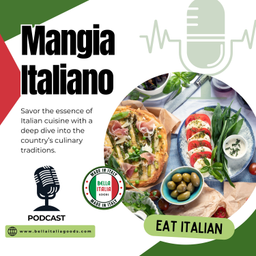
Savor the essence of Italian cuisine with a deep dive into the country’s culinary traditions. From regional specialties and authentic recipes to expert tips on wine pairings and olive oil tastings, Mangia Italiano is your ultimate guide to eating well, Italian style. Explore the stories behind beloved dishes like risotto and pizza, learn cooking techniques passed down through generations, and experience the joy of mangiare bene. Perfect for food lovers and home chefs alike, this category celebrates the flavors that make Italy a global culinary leader.
- Publisher
- Bella Italia Goods
- Category
- society & culture
- Language
- en
- Explicit
- No
- First episode
- 21 Oct 2024
- Latest episode
- 5 Nov 2024
Latest episodes
15 episodes in the feed.
5 Nov 2024
The Art of Aperitivo: Italy's Social and Culinary Tradition
In Italy, aperitivo is more than just a prelude to dinner - it's a cherished daily ritual that combines relaxation, socializing, and light, flavorful food and drink. The beauty of aperitivo is in its simplicity and versatility, welcoming everyone to take part in this unique Italian experience, whether in a bustling city bar or a quiet countryside café. Let's delve into the history, drinks, and foods that make aperitivo so beloved, along with some tips for recreating it at home. The Origins of Aperitivo The aperitivo tradition finds its roots in 18th-century northern Italy, particularly in the city of Turin, where Antonio Benedetto Carpano first created vermouth, a fortified wine infused with herbs and spices. Vermouth quickly became popular as a pre-dinner drink due to its appetite-stimulating qualities, sparking the aperitivo culture. Over time, the ritual spread to other regions, including Milan, which is now regarded as Italy's aperitivo capital. The word "aperitivo" comes from the Latin word aperire, meaning "to open," symbolizing the opening of the appetite in anticipation of a meal. This isn't just about food and drink; it's about preparing the senses for the flavors to come, embracing the moment, and fostering social connection. Today, aperitivo is enjoyed across Italy, from glamorous bars to casual neighborhood spots, where friends, families, and even coworkers meet to unwind and share in this daily treat. The Essential Aperitivo Drinks Aperitivo drinks are crafted to be refreshing, light, and not too strong, keeping your senses sharp for the upcoming meal. They're usually slightly bitter or dry, designed to cleanse the palate rather than overwhelm it. Here are some classic choices: 1. Aperol Spritz The Aperol Spritz, with its vibrant orange hue, is arguably the most iconic aperitivo drink. It combines Aperol, prosecco, and a splash of soda for a bittersweet, effervescent refreshment that's perfect for warm evenings. 2. Negroni For those who like a stronger kick, the Negroni - made with gin, Campari, and sweet vermouth - is a bold choice. This cocktail has a deep, complex flavor profile, with a bitterness that lingers just long enough to keep you wanting more. 3. Campari Soda Simple but effective, Campari and soda is a classic Italian combination. The bitter Campari is softened by sparkling water, making for a refreshing drink that's low in alcohol but high in flavor. 4. Americano Similar to the Negroni but with a lighter twist, the Americano replaces gin with soda water, blending Campari and sweet vermouth. It's refreshing, slightly bitter, and easy to sip on a hot day. 5. Hugo Originating from northern Italy, the Hugo is a light, floral cocktail made with elderflower syrup, prosecco, and mint. Its delicate sweetness and bubbly nature make it a great option for those who prefer milder flavors. Aperitivo Bites: The Perfect Pairings No aperitivo is complete without food! These are not meals but rather small, flavorful bites that complement the drinks without overshadowing them. Italian aperitivo snacks vary from region to region, but a few popular staples can be found almost anywhere: Olives and Nuts These are aperitivo classics, providing the perfect balance of saltiness to accompany the bitterness of aperitivo drinks. Marinated olives with herbs, garlic, or citrus are an easy yet elegant choice, and they're often served with a handful of salted nuts. Cheese and Charcuterie Boards Italy's wide array of cheeses and cured meats makes the cheese and charcuterie board a centerpiece of aperitivo. Think prosciutto, mortadella, or speck paired with chunks of Parmigiano-Reggiano, creamy gorgonzola, and aged pecorino. The flavors are rich yet light enough to nibble on. Bruschetta and Crostini Crispy slices of bread topped with everything from tomatoes and basil to savory spreads like olive tapenade or chicken liver pâté are a must. Bruschetta and crostini are easy to eat with a drink in hand, and they provide the perfect can...
5 Nov 2024
Exploring Italian Wine Pairings for Classic Italian Dishes: A Full Flavor Guide
Pairing wine with Italian food isn't just for sommeliers - it's a joyful way to celebrate Italian cuisine! Italy's regions each bring unique wines that have evolved alongside local ingredients, and there's a perfect match for every Italian classic. Let's embark on a flavor journey across Italy's most beloved dishes and their wine soulmates. Spaghetti alla Carbonara & Frascati Why It Works: Spaghetti alla Carbonara, a Roman dish featuring rich egg, cheese, and pancetta, craves a wine that can brighten its intense flavors. Frascati, a dry, fruity white from Lazio, does just that, bringing a light, crisp acidity that cuts through the creamy richness without overpowering the dish's smoky essence. Flavor Pairing Notes: The citrusy notes of Frascati offer a refreshing contrast to the carbonara's savory elements. The pairing creates a perfect balance, keeping each bite of pasta as lively as the first. Margherita Pizza & Chianti Why It Works: The iconic Margherita pizza, with its simple combination of tomatoes, mozzarella, and basil, is flavorful but delicate. Chianti's bright acidity and ripe cherry undertones make it an ideal match, enhancing the tomato's natural acidity and balancing the creaminess of the mozzarella. Flavor Pairing Notes: Chianti, a red wine from Tuscany, is medium-bodied with a hint of earthiness. This helps it align with the herbaceous basil while adding depth to the pizza's overall flavor profile. Lasagna alla Bolognese & Sangiovese Why It Works: With layers of rich Bolognese sauce, creamy béchamel, and melted cheese, lasagna alla Bolognese is a flavor powerhouse. Sangiovese, particularly from Tuscany, has the body and acidity to handle all these elements, refreshing the palate after each decadent bite. Flavor Pairing Notes: Sangiovese's acidity stands up to the tomato-based sauce, while its tannins work well with the fats in the cheese and beef. The wine's hint of spice also complements the seasoning in the Bolognese sauce, creating a harmonious blend. Osso Buco & Barolo Why It Works: Osso Buco, a braised veal shank dish from Lombardy, is rich, meaty, and tender. Barolo, known as "the king of wines" in Italy, is a full-bodied, structured red from Piedmont that can keep up with the dish's intense flavors. Flavor Pairing Notes: Barolo's earthy notes and high tannins complement the osso buco's savory, melt-in-your-mouth texture. Its aromas of rose, cherry, and truffle enhance the dish's complexity, while its firm structure stands up to the richness of the veal. Risotto alla Milanese & Pinot Grigio Why It Works: Risotto alla Milanese is creamy and buttery, with a delicate saffron flavor that needs a wine to add brightness without overwhelming the dish. Pinot Grigio, especially from northern Italy, is known for its crisp acidity and subtle fruit flavors, which bring a refreshing contrast to the risotto's rich texture. Flavor Pairing Notes: With floral and green apple undertones, Pinot Grigio enhances the earthy saffron while balancing the creaminess. It's light and smooth, making it a fantastic choice for this elegant Milanese specialty. Eggplant Parmesan (Melanzane alla Parmigiana) & Nero d'Avola Why It Works: Eggplant Parmesan combines layers of fried eggplant, rich tomato sauce, and melted cheese, making it hearty and flavorful. A Sicilian red, Nero d'Avola, is perfect for this dish. Its boldness complements the cheese and tomato, while its slightly smoky flavor aligns with the eggplant's natural taste. Flavor Pairing Notes: Nero d'Avola's blackberry and plum flavors play beautifully with the tomato sauce, while its robust tannins balance the dish's fat content, creating a satisfying and balanced pairing. Bistecca alla Fiorentina & Brunello di Montalcino Why It Works: This Tuscan steak, typically seasoned with salt, pepper, and olive oil, is juicy and full of flavor. Brunello di Montalcino, a bold Tuscan red, has the body and complexity to hold its own alongside this hearty meat dish. Flavor Pairing Notes: Bru...
5 Nov 2024
A Guide to Italian Olive Oils: Varieties, Regional Characteristics, and Culinary Uses
Italian olive oil holds a revered place in global cuisine. Known not only for its rich flavor but also its versatility and health benefits, Italian olive oils vary greatly depending on the region where they're produced. Each area's soil, climate, and olive variety influence the oil's character. This guide dives into Italy's regional olive oils, how to choose the best, their health benefits, and some innovative culinary uses. Why Italian Olive Oil? Italy is among the world's top olive oil producers, with thousands of years of expertise and a commitment to high-quality production. Italian extra virgin olive oil (EVOO) is unrefined, cold-pressed, and contains no additives, preserving its health benefits and authentic flavor. The labeling of "DOP" (Denominazione di Origine Protetta, or Protected Designation of Origin) guarantees that the oil is grown, harvested, and produced in a specific region according to local tradition. Regional Varieties of Italian Olive Oil Each Italian region offers a distinct flavor profile. Let's explore some key areas and what makes their oils unique: Tuscany Character: Tuscan olive oil is bold, green, and peppery with notes of artichoke and fresh grass. Culinary Uses: Often a finishing oil, Tuscan oil is perfect for drizzling over grilled meats, vegetable-based soups like ribollita, or hearty dishes. It's also delicious with crusty bread as an appetizer. Interesting Fact: Tuscan olive oil is prized for its high polyphenol content, which gives it that peppery kick and robust health benefits. This high antioxidant content makes it one of the healthiest oils in Italy. Sicily Character: Sicily's oils are fruity with undertones of fresh tomato, almond, and herbs. Culinary Uses: Pair Sicilian olive oil with seafood, pasta with fresh vegetables, and tomato-based dishes, as it highlights natural sweetness and enhances umami flavors. Interesting Fact: Sicily is known for its Nocellara and Biancolilla olives, which contribute to the rich, complex flavor of its oils. Umbria Character: Umbria's oils are known for medium-intensity flavors, often with hints of green apple, herbs, and artichoke. Culinary Uses: Excellent for light pasta dishes, soups, and bruschetta, Umbrian oils add subtlety without overwhelming other ingredients. Interesting Fact: Umbria's high-altitude olive groves produce oil with balanced acidity and a smooth texture, making it ideal for all-around use in the kitchen. Liguria (Riviera Ligure) Character: Ligurian olive oil is light, delicate, and slightly nutty, often with sweet floral undertones. Culinary Uses: Liguria is home to the famous Italian basil pesto, and its light oil is ideal for this iconic sauce. It's also perfect for delicate seafood, fresh salads, and vegetable dishes. Interesting Fact: Ligurian oil is produced from the Taggiasca olive, which has a lower yield but is prized for its smooth, buttery flavor. Puglia Character: Puglian oils are strong, earthy, and robust with flavors of almond, artichoke, and hints of spice. Culinary Uses: Ideal for pairing with robust dishes like rich pasta sauces, roasted meats, and hearty soups. Interesting Fact: Puglia is Italy's leading producer of olive oil, contributing nearly 40% of the country's total output. Its oils are popular for their complexity and adaptability to diverse dishes. How to Choose High-Quality Italian Olive Oil The best olive oils are always labeled "extra virgin," ensuring that they're unrefined and have a lower acidity level. Here are some tips for picking the best oil: 1. Check for DOP Certification: DOP labels indicate the oil's origin and adherence to high-quality standards. 2. Pay Attention to Harvest Dates: Freshness matters! Olive oil can lose its flavor and health benefits over time, so choose oils harvested within the last year. 3. Look for Cold-Pressed Oils: Cold pressing preserves the oil's flavor and nutrients, resulting in a purer, higher-quality product. 4. Sample Oils from Different Regions: Try small bott...
24 Oct 2024
A Complete Guide To Pecorino Cheese
Get To Know What Makes This Italian Ingredient So Special. There are six primary types of pecorino, but for this article, we'll cover the four most popular (and PDO-certified) variants. If you've never heard of pecorino cheese, you're certainly missing out! This Italian staple is produced in areas all over the country. It's been included in recipes for generations, going back hundreds of years. Now, it's time to bring that tradition into your own home. Today, we won't just learn about pecorino - we'll also cover exactly how it's created and the best ways to enjoy it! So, leave your culinary comfort zone and learn about the delicious pecorino cheese. A Brief History of Pecorino Cheese Though it's not quite as well-known as some of its companions, pecorino is still one of the world's oldest cheeses! It's deeply rooted in Italian culture and traditionally produced in areas like Sicily, Lazio, and Tuscany. Each area has its own take on the cheese, which we'll discuss shortly. Pecorino derives from "pecora," the Italian word for sheep. That's because this cheese is made entirely from sheep's milk! Though some other cheeses, like feta and brocciu, are also made from sheep's milk, pecorino is one of the few sheep-based cheeses made in Italy. The Main Types of Pecorino Cheese As we established earlier, every area of Italy that produces pecorino has its own spin on its creation. There are six primary types of pecorino, but for the purposes of this article, we'll cover the four most popular (and PDO-certified) variants. Pecorino Romano Pecorino Romano is one of the oldest and most famous varieties of pecorino, with a history dating back to Roman times. Though that may seem obvious by the name, it's produced in Rome. This hard, salty cheese is made primarily from the milk of sheep grazing on the wild pastures of Lazio and Sardinia. Aged for a minimum of five months, it has a sharp, tangy flavor with a slightly gritty texture. You can find it in many classic Italian recipes! Pecorino Sardo Pecorino Sardo, also known as Fiore Sardo, is produced exclusively in Sardinia. There are two main types: Dolce (sweet), which is aged for a minimum of 20 days, and Maturo (mature), which is aged for at least two months. Pecorino Sardo is less salty than Romano and has a more nuanced flavor profile that ranges from sweet and delicate to rich and intense. Pecorino Toscano Pecorino Toscano is a softer, more buttery cheese than its pecorino counterparts. Made from the milk of Tuscan sheep, it has a more rounded and less salty flavor. Aged for at least 20 days, but often much longer, it develops a nutty, sweet flavor with age. Pecorino Siciliano Few Italian cheeses aren't produced in Sicily, and pecorino is no exception! Pecorino Siciliano has been made in Sicily for over 2000 years. This cheese is known for its strong and spicy flavor, which results from the plant life consumed by the sheep whose milk it is made from. It is aged for at least four months, developing a hard texture and a rich flavor profile. How Is Pecorino Produced? The production of pecorino can be simplified into a six-step process. That process goes a little something like this: 1. Collection and Warming of Sheep's Milk: Pecorino cheese begins with the collection of sheep's milk. This milk is then gently warmed to a specific temperature, setting the stage for coagulation. The warmth initiates changes in the milk, preparing it for the next step. 2. Adding Rennet and Curd Formation: Rennet, a natural enzyme, is added to the warmed milk to induce coagulation. This process separates the milk curds from the liquid whey, which gives the cheese its texture and flavor. 3. Curd Cooking and Texturing: Once the curds have formed, they are cooked until they reach the desired firmness. The cooking temperature and duration vary among Pecorino varieties, with some cheeses undergoing only partial cooking to gain a softer texture. 4. Draining, Molding, and Pressing: After cooking, the curds are draine...
24 Oct 2024
Deciphering Italian Food Certifications
Ah, Italy! A land where food is not just nourishment but an art form, a tradition, and a way of life. As passionate food lovers, we've embarked on a delightful journey to unravel the mysteries of Italian food certifications. Join us as we explore the labyrinth of labels, discover the top categories, and unveil the aspects and typical products for each designation. Denominazione di Origine Protetta (DOP) The "Protected Designation of Origin" is like the VIP lounge of Italian food certifications. Products with the DOP label are the crème de la crème, boasting unique characteristics tied to their geographical area. This certification ensures that products are locally grown and processed within specific areas, adhering to traditional methods. DOP-certified products must follow strict production regulations and are subject to rigorous checks, which guarantee their quality and authenticity. This label is your assurance that you're experiencing a product deeply rooted in local tradition and environment. Top Categories and Products: Cheese: Parmigiano Reggiano, Gorgonzola, Pecorino Romano - each cheese is a reflection of its native soil, climate, and age-old production techniques. Olive Oil: Toscano, Colline Salernitane, Terra di Bari - these oils are pressed from olives grown in illustrious groves, carrying the essence of their landscape. Meat: Prosciutto di Parma, Speck Alto Adige, Capocollo di Calabria - cured using time-honored recipes, these meats are a festival of flavors. Fruits and Vegetables: Pomodoro di Pachino, Carciofo Romanesco, Fagioli di Sarconi - embodying the freshness and diversity of Italian produce. Vinegar: Aceto Balsamico Tradizionale di Modena - aged in wooden barrels, it's a symphony of sweet and acidic notes. Indicazione Geografica Protetta (IGP) The "Protected Geographical Indication" is the badge of honor for foods closely linked to their geographical origin, where at least one production or processing phase occurs. While not as strict as DOP, IGP still ensures that at least one production phase occurs in the designated area. This designation helps to protect the reputation of the regional foods and promotes rural and agricultural development by providing a premium price to the producers. IGP is a testament to a product's reputation, characteristics, and quality that can be traced back to its geographic origin. Top Categories and Products: Meat Products: Mortadella Bologna, Bresaola della Valtellina - savory delights that echo the traditions of their regions. Cheese: Asiago, Taleggio - cheeses that carry the distinct flavors and textures of their native pastures. Fruits and Vegetables: Arancia Rossa di Sicilia, Limone di Sorrento - fruits bursting with the sun-kissed taste of Italy. Bakery and Sweets: Pane di Altamura, Amaretti di Saronno - each bite tells a story of ancient baking traditions. Olive Oil: Olio di Calabria, Veneto Valpolicella - liquid gold, embodying the essence of their terrains. Denominazione di Origine Controllata e Garantita (DOCG) The "Controlled and Guaranteed Designation of Origin" represents the pinnacle of quality for Italian wines, ensuring strict production methods and geographic authenticity. This is the highest quality assurance label for Italian wines, indicating not only the area of production and the grapes used but also the strict adherence to specific winemaking procedures. DOCG wines are evaluated by a government-licensed committee before they can be bottled, ensuring that each bottle meets the highest standard of quality. Top Categories and Products: Red Wines: Barolo, Brunello di Montalcino - wines with robust flavors, aged to perfection. White Wines: Vernaccia di San Gimignano, Franciacorta - offering a range of flavors from crisp to silky. Sparkling Wines: Asti, Conegliano Valdobbiadene Prosecco - effervescent and festive, perfect for celebrations. Dessert Wines: Vin Santo del Chianti, Moscato d'Asti - sweet and luscious, ideal for concluding a meal. Denominazione di...
21 Oct 2024
Parmigiano Reggiano vs. Parmesan Cheese
Why Parmigiano Reggiano Outshines Grocery Store Parmesan Have you ever tasted Parmigiano Reggiano, the real deal from Italy? It's miles apart from those knock-off "parmesans" you find elsewhere. But what makes it stand out? It's meticulously crafted using the same methods since its origin centuries ago, meeting strict standards for the DOP seal of approval. Below, we'll see exactly why Parmigiano Reggiano is considered "The King of Cheeses." Sneak peek: It's the artisanal care and aging process. This cheese is a labor of love, aged to perfection to develop its nutty, complex flavors and crumbly texture, which can't be rushed. Its production, strictly limited to certain Italian regions, ensures a quality and taste profile that supermarket versions just can't match. The Origins of Parmigiano Reggiano The story of Parmigiano Reggiano begins in Italy, with a tradition dating back as far as the Middle Ages. Originating from the regions of Parma, Reggio Emilia, Modena, and parts of Mantua and Bologna, this cheese is a product of its environment, from the local grass-fed cows to the specific microclimate that influences its flavor. Though its location of production is important, the methods used to make this cheese have been refined over centuries. DOP (Denominazione di Origine Protetta) status protects this historical and geographical significance, ensuring that only cheese produced in this traditional way within these regions can be called Parmigiano Reggiano. The DOP puts each barrel of parmigiano reggiano through vigorous tests including sound, smell, and taste to ensure it is made to fit the high-standards of a true Parmigiano Reggiano. How True Parmigiano Reggiano is Made Real Parmigiano cheese begins with milk from local cows, mixed from morning and evening milking. This blend is then combined with calf rennet, enzymes extracted from the animal's stomach, and a natural whey starter, initiating the curdling process. The curds are broken down, cooked, and pressed into wheels. These wheels are soaked in brine to absorb salt for flavor and preservation. The wheels are aged for a minimum of 12 months, often much longer, in specific conditions that enhance their complex flavors and textures. Each cheese is turned and cleaned regularly throughout this period, ensuring a well-rounded and consistent flavoring in each wheel. This traditional method has remained unchanged for centuries. After all, if it's not broken, why fix it? Ensuring Parmigiano Reggiano's Authenticity Parmigiano Reggiano is consistently rated one of the most delicious cheeses on the market. But how can you be sure you're purchasing the best of the best? The DOP seal on Parmigiano Reggiano cheese is like a guarantee stamp, ensuring the cheese comes from its traditional region in Italy and is made following strict guidelines that have been in place for centuries. This includes everything from the specific area it's produced in, to the traditional methods used in its creation, and the natural aging process. The DOP label tells you that what you're getting is the perfect mix of a nutty, rich flavor made in an authentic fashion. Grocery Store Imitation Parmesan Cheese When you grab a container of "Parmesan" off the grocery store shelf, you're purchasing a low-quality imitation of the classic Parmigiano Reggiano. Though easy on the wallet and readily available, these imitations are often made with a blend of milk types, additives to extend shelf life, and processes designed to speed up aging. This not only impacts the cheese's flavor profile but also adds unnatural additives to your diet. The texture can range from overly hard to rubbery, and the flavor, while cheesy, lacks the depth of its Italian counterpart. Such cheeses might work in a pinch for a quick pasta sprinkle. However, you miss out on the rich, complex flavors that come with authentic Parmigiano Reggiano and its natural production process. When you purchase grated parmesan cheese from the grocery store, you...
21 Oct 2024
Getting to Know Real Modena Balsamic Vinegar
The Secret About Italy's Liquid Gold Balsamic vinegar is a kitchen must-have across the globe, but let's be real: they're not all playing the same flavor game. The Traditional Balsamic Vinegar from Modena, which is also known as Aceto Balsamico Tradizionale, is considered the gold standard, leaving those "Italian-sounding" grocery store versions in the dust. Corporations use terms or Italian names and imagery to appeal to consumers, yet they don't adhere to the traditional standards, ingredients, or production methods that genuine Italian products, like Traditional Balsamic Vinegar of Modena, do. But Modena balsamic vinegar will always have superior flavor, quality, and enjoyability. Why? It's all about the aging. Authentic balsamic vinegar from Modena spends over ten years in wooden barrels, developing a rich and complex taste profile. Trust us, it's a game-changer. Once you try true traditional balsamic vinegar, you will never go back. The Roots of Balsamic Vinegar Balsamic vinegar's story kicks off in Modena, Italy, where it's been the star of the show for centuries. Picture this: way back in the Middle Ages, the crème de la crème of balsamic vinegar, Aceto Balsamico Tradizionale di Modena, was the talk of the town in ducal cellars. Why? Not just for its knockout flavor, but people were convinced it could sort out your digestion troubles and even double as a disinfectant. Talk about a multitasker! So what makes it stand out from the aisle of wannabes at the supermarket? It's all in the make. Local grapes get the VIP treatment, cooked down to a must and aged to perfection. This age-old recipe, handed down from generation to generation, shows just how serious Modena is about keeping the balsamic vinegar legacy real and delicious. How True Balsamic Vinegar is Produced Traditional balsamic vinegar typically begins in the Italian regions of Modena and Reggio Emilia, in an acetaie, or a type of cellar or attic. It involves a tightly regulated three-step method: Step One: Grape Selection Let's talk grapes. Specifically, the Lambrusco and Trebbiano superstars are picked for their sweet taste. These grapes get a little check-in with a saccharometer - think of it as a sugar detective - to make sure they're hitting that sweet spot of 15° or higher. Then, they're cooked traditionally in open containers under a direct heat source for at least 30 minutes until they're concentrated. Think about it like making grape syrup gold. What about additives or other vinegars? Forget about them. Keeping it pure is the name of the game, ensuring every drop is as authentic as it gets. Step Two: Natural Fermentation After the grapes have had their time in the cooking pot, the grape must is put into specially ventilated rooms and prepared for fermentation. Over about three weeks, this environment enables the must to slowly transform into a delicious vinegar. This happens first by yeast bacteria changing sugars into ethanol alcohol. Then, more bacteria takes over to turn the ethanol into a type of acid called acetic acid, which gives the vinegar its characteristic sour component. Step Three: Aging After the fermentation step of the vinegar production, now comes the time-consuming part. Aging involves the balsamic vinegar spending its next 12 years being moved into smaller and smaller barrels as it develops. It starts in a large wooden barrel made of local woods like oak, chestnut, and cherry. Each year, some of the concentrate made after evaporating is poured into a successively smaller barrel, and the larger one is topped off with newly fermented vinegar. This setup is known as a "batteria." Bottling Before authentic balsamic vinegar gets the green light to hit the bottle, it has to pass some serious tests to determine its age. But here's the twist: tracking its age isn't as straightforward as checking an ID, because this vinegar has been playing musical barrels every year, getting a fresh dash of youth as it goes. Instead, experts taste and grade th...
21 Oct 2024
Introducing The Incomparable Caciocavallo Italian Cheese
Everything You Need To Know About This Italian Staple Perhaps you've never heard of Caciocavallo cheese, a Southern Italian classic that has existed since ancient philosophers' times. If you haven't, don't fret - this cheese is a well-kept secret that not many have discovered. Everything about Caciocavallo is unique. From its exciting shape to its complicated flavor profile, there isn't an element of this cheese that doesn't exist to impress. Today, we'll discover not only how this cheese is created but also the best ways to enjoy it once you've finally gotten your hands on some. The Roots of Caciocavallo Caciocavallo is one of the most ancient varieties of Pasta Filata cheese, originating from Southern Italy, particularly prevalent in the Apennine Mountains region. The term "Pasta Filata" might ring a bell as it describes the distinctive production process employed in crafting other renowned Italian cheeses characterized by their stretched or pulled curd, such as Mozzarella and Provolone. The name "Caciocavallo" can be literally translated to "horse cheese," although horses have little to do with its creation. The name reflects the ancient practice of maturing the cheese by hanging it in pairs over a wooden beam, which can resemble saddlebags on a horse's back. Although there are substantial regional differences when it comes to Caciocavallo, all Italian manufacturers of the cheese have a deep respect for its original recipe and production process. This is so prevalent that the cheese has maintained a PDO mark since 1996. The entire cheese production process must occur within the specific region to receive the PDO status. This designation helps protect the product's name and ensures that only items genuinely originating in that region are sold under that name. How Quality Caciocavallo Is Created So, what is this famous production process? In truth, its exact origins are unknown. However, some claim that this cheese is one of Italy's oldest and that it was even mentioned by the philosopher Hippocrates. In any case, the journey of the cheese begins by retrieving raw milk from Italian cows. Step One: Heating and Curdling To begin with, the milk is gently heated to the perfect temperature and then introduced to a carefully measured amount of rennet. This addition triggers the milk to coagulate, gradually transforming it into the initial curd form. This early stage lays the foundational texture and character of the cheese. Step Two: Cutting and Stiring the Curd Once the curd has set, it's cut into smaller pieces, a delicate process that encourages the whey to separate and release. Following the cutting, the curds are stirred and reheated to ensure the moisture content remains balanced. This reheating solidifies the curds' structure, preparing them for the next phase. Step Three: Stretching and Forming The drained curds undergo traditional stretching and kneading by the skilled hands of the cheesemaker. This process, akin to a dance, infuses the cheese with its unique elasticity. The curds are then lovingly shaped to reflect the maker's technique. Step Four: Chilling and Brining After the curds have been shaped into the distinctive form of Caciocavallo, they are submerged in cold water, tempering the cheese and halting the stretching process. Emerging, the cheese is then bathed in a brine solution, absorbing saltiness and beginning its maturation journey. The salt enriches the cheese's flavor profile and prepares it for the final act of aging. Step Five: Aging The final chapter in Caciocavallo's creation involves tying the cheese near its top to create a signature "neck." Here, in the quiet of the aging room, the cheese is left to mature, developing its complex flavors over time. This period of rest is when Caciocavallo truly comes into its own as a culinary masterpiece! Caciocavallo's Flavor Profile And Characteristics Caciocavallo is best known for its shape. It is traditionally presented as a large, oval ball with a smaller b...
21 Oct 2024
Provolone Cheese: A Timeless, Tasty Classic
Everything You Should Know About This Popular Cheese The Origin Of Provolone Cheese If there's one thing that provolone cheese is full of, it's character. This cheese has historic roots in both ends of Italy, but it's found itself a permanent home in the northern regions of Val Padana. Of course, thanks to the help of Italian immigrants, provolone has made its way into the hearts and stomachs of international cheese lovers. Part of what has made provolone so enduring and beloved is its versatility in cooking and unique flavor profile. It can be used in a variety of dishes, from sandwiches and pizzas to gratins and salads. Depending on the age of the cheese, the flavor of provolone can vary from mild and creamy to sharp and tangy. Another aspect of provolone's claim to fame is its production process, which we'll detail below. How Authentic Provolone Is Made Now that you know a bit about this cheese, let's delve into the production process. Like most cheeses, this is a process that starts off with high-quality cow's milk. To start the cheesemaking process, this milk is enriched with natural whey and rennet, a critical step in forming the curd. Once the milk has coagulated into curd, it is allowed to rest. This resting phase is essential for developing texture and flavor. The curd is then cut and separated not once but twice, ensuring a fine consistency. Excess whey is then drained away. Workers then take over to perform a task that is similar to juggling. They weave and shape the uncured cheese into tight rondures. This stage is crucial for eliminating air bubbles, ensuring the cheese develops an even, flawless texture. After shaping, the cheese undergoes brining, absorbing saltiness, and beginning its maturation process. It is then cooled to halt the action of the cultures. Hanging in strings, the cheese rests and matures in a controlled environment for a minimum of two months. The age of the cheese, of course, has a high impact on its flavor! Older provolone is much sharper than its sweeter, younger counterparts. Ingredients and Dietary Considerations Like many Italian cheeses, provolone is celebrated for its simplicity. It is typically pasteurized and gluten-free, containing no added fillers or preservatives, which can be appealing for those seeking natural food options. However, traditional recipes use calf rennet, making it unsuitable for vegetarians. Consumers are advised always to check the label, especially if dietary restrictions are a concern! What Are Some Provolone Cheese Substitutes? While provolone's unique taste is irreplaceable, there are a few substitutes that can mimic it in recipes. Mozzarella, also a pasta filata cheese, offers a similar texture with a milder taste. For a cheese with a bit more tang, Gouda or Edam can provide a similar mouthfeel and a slight nuttiness. A mild Cheddar or Emmental might serve well in a pinch if the goal is to match provolone's sharpness, especially if you want to copy the aged variety. Provolone Vs. Provola: What's The Difference? Though similar, provolone and provola differ in a few key ways. Provolone is notably larger in size and exhibits a more potent flavor profile, which ranges from sweet to spicy, compared to provola's sweet, slightly acidic taste. In terms of shape, provolone is available in a variety of forms, while provola typically features a cylindrical or pear shape, often marked by a noose at the top. Provolone has its roots in Northern Italy and is protected by a Protected Designation of Origin (DOP) mark, restricting its production to specific regions, whereas provola, especially the buffalo milk variety, is primarily produced in Southern Italy. Provolone Cheese Recipes And Pairings If there's one thing that's true about provolone, it's that it's versatile! It's a cheese that can be used in many recipes, from an addition to quick appetizers to a central ingredient in dinners. Here are some more details about all of the culinary possibilities that provolone ch...
21 Oct 2024
Discover Lesser-Known Secret Ingredients of Italian Cuisine
Explore the lesser-known ingredients that are the backbone of authentic Italian cuisine. From rare regional herbs to traditional aging processes, learn what really goes into creating those beloved Italian flavors. Italian cuisine is celebrated worldwide for its bold flavors, aromatic dishes, and soul-satisfying recipes. While many are familiar with ingredients like olive oil, pasta, and tomatoes, there are several lesser-known staples that are essential to authentic Italian cooking. This blog post delves into the hidden gems of the Italian pantry, uncovering the secret ingredients that bring Italian dishes to life. Bottarga Bottarga, often referred to as "Mediterranean caviar," is a delicacy of salted, cured fish roe, typically from grey mullet or tuna. Originating from the coastal regions of Italy, bottarga is known for its rich, briny flavor. It is usually grated over pasta, risotto, or salads for an extra layer of umami. The intense flavor of bottarga is not just a treat; it's a journey through Italian maritime history, reflecting centuries-old preservation techniques. Guanciale While pancetta and prosciutto are well-known outside of Italy, guanciale, an Italian cured meat made from pork cheek or jowl, is less common internationally but pivotal in traditional dishes like 'Pasta all'Amatriciana' and 'Spaghetti alla Carbonara'. Its rich fat content renders slowly during cooking, releasing a luxurious depth of flavor that is incomparable to its more familiar counterparts. Colatura di Alici A gem from the Amalfi Coast, Colatura di Alici is an ancient Roman sauce made from anchovies. This amber-colored elixir is produced by fermenting anchovies in brine and then slowly extracting the liquid that drips from them. It's used sparingly to add a burst of flavor to pasta and vegetable dishes, carrying the essence of the sea. 'Nduja From the fiery heart of Calabria comes 'Nduja, a spicy, spreadable pork sausage made with a high proportion of Calabrian chili peppers. 'Nduja is versatile in its use; it can be spread on crusty bread, melted into tomato sauces, or dotted on pizzas. Its piquant profile introduces a bold layer of complexity to dishes, embodying the spirited Calabrian approach to cooking. Saffron Saffron, one of the most precious spices in the world, is harvested from the crocus flower and adds a luxurious golden color and rich flavor to many Italian dishes, particularly risotto alla Milanese. The labor-intensive process of harvesting saffron threads makes it a prized ingredient in Italian and global cuisines alike. Wild Fennel While fennel is used globally, wild fennel is a staple in many Italian kitchens, particularly in Sicily. It has a more intense, anise-like flavor than the cultivated variety. It's pivotal in dishes like 'Pasta con le Sarde' (pasta with sardines) and is also used in sausages and pork dishes. Its unique taste is a reminder of the diverse Italian landscape from where it originates. Marjoram Though similar to oregano, marjoram is a sweeter, milder herb that plays a crucial role in Italian cuisine, especially in the regions of Tuscany and Umbria. It pairs beautifully with roasted meats, tomato-based sauces, and even adds a delicate touch to pizza toppings. Chestnut Flour In the mountainous regions of Italy, particularly Tuscany, chestnut flour is a traditional ingredient used in making pastas, breads, and desserts like 'Castagnaccio' (chestnut cake). Its sweet, nutty flavor provides a gluten-free alternative to wheat flour and is integral to the rustic, earthy dishes of the region. Conclusion These secret ingredients of Italian cooking offer more than just unique flavors; they open a window into the cultural and historical landscapes of Italy. They tell stories of regional climates, traditional farming, and artisanal craftsmanship, each adding a distinct layer to what we cherish as Italian cuisine. Dive deeper into Italian culinary traditions and bring a touch of Italy's rich gastronomic heritage into yo...
21 Oct 2024
The Influence of Italian Cuisine in America: A Delicious Blend of Cultures
Italian cuisine, renowned for its bold flavors and simple, quality ingredients, has traveled far beyond Italy's borders, finding a second home in the bustling cities and quiet towns of America. From pizza to pasta and everything in between, Italian food has woven itself into the fabric of American dining culture, evolving over the years to suit local tastes and ingredients. A Journey Across the Ocean The story of Italian cuisine in America began in the late 19th and early 20th centuries, when large waves of Italian immigrants started arriving in the United States. They brought with them their culinary traditions, initially seen as a means of retaining their cultural identity. Over time, these foods began to appeal to a broader American audience, laying the groundwork for what we now recognize as Italian-American cuisine. In neighborhoods like Little Italy in New York City and the North End in Boston, Italian restaurants started popping up, serving dishes that were reminiscent of home but gradually incorporating local American ingredients. This blending of cultures led to the birth of now-iconic dishes like spaghetti and meatballs, an American twist on traditional Italian cooking. Redefining Italian Cuisine As Italian-American chefs started to experiment, they crafted dishes that were larger, heartier, and often more tomato-heavy than their authentic Italian counterparts. Ingredients like garlic, olive oil, and herbs continued to play a fundamental role, but the introduction of meats such as pepperoni - a product of American innovation - began to characterize the new Italian-American palate. One of the most quintessential examples of this culinary evolution is pizza. Originally from Naples, the classic Neapolitan pizza underwent a transformation in the U.S., becoming a thicker, richer version known as New York-style pizza. Later, Chicago would put its spin on the dish, creating the deep-dish pizza, characterized by its high-edged crust that allows for generous amounts of sauce and cheese. Culinary Pioneers and Influencers Key figures in the Italian-American food scene have included chefs like Lidia Bastianich and Mario Batali, who have introduced regional Italian cooking to the American public, educating their audiences about the diversity within Italian cuisine. This has sparked a renewed interest in more authentic, regional dishes from Italy itself. Moreover, the rise of food media has played a significant role in the evolution of Italian food in America. Television shows, cookbooks, and now, digital content platforms, have made it easier than ever for American home cooks to access authentic Italian recipes and ingredients, bridging the gap between the American adaptations and their original Italian inspirations. The Impact of Italian Festivals and Markets Italian festivals and markets have also played a crucial role in popularizing Italian cuisine in America. These events serve as cultural showcases, offering an immersive experience where one can enjoy traditional music, crafts, and a plethora of Italian foods, from cannoli to risotto. They act as both educational and gastronomic events that highlight the richness of Italian culture and encourage a deeper appreciation and understanding of its culinary depths. Modern Italian-American Cuisine Today, Italian-American cuisine continues to evolve. A new generation of chefs, many of whom are of Italian heritage, are crafting a modern version of Italian-American cuisine by focusing on sustainability, local sourcing, and authenticity while still honoring the bold flavors introduced by their predecessors. Innovation within the cuisine is seen in how classic techniques are applied to locally sourced ingredients to create dishes that are distinct yet respect their roots. This modern approach often involves lighter, more balanced meals compared to the heavier dishes that characterized the early days of Italian-American cuisine. Conclusion Italian cuisine's journey in America is a vib...
21 Oct 2024
Buon Appetito Italia: A Culinary Journey Through Italy's Timeless Flavors
An Overview of Regional Flavors and Traditions: Italy's culinary landscape is as diverse as its rich history and cultural tapestry. Each region boasts its own unique flavors, local ingredients, and culinary traditions. Here is just a little taste of the fascinating history of Italy's most famous cuisines. Tuscan Cuisine Buon Appetito Italia: Tuscan cuisine is celebrated for its simplicity and use of high-quality, locally sourced ingredients. Influenced by the region's fertile soil and agricultural abundance, Tuscan dishes showcase rustic flavors and hearty fare. Staple ingredients include olive oil, beans, bread, and fresh vegetables. Tuscan classics such as ribollita (a hearty bean and vegetable soup), bistecca alla Fiorentina (Florentine-style steak), and pappa al pomodoro (tomato and bread soup) highlight the region's culinary prowess. Sicilian Cuisine Sicilian cuisine, reflecting the island's rich and varied history of invaders and settlers, is a delightful fusion of flavors from Greek, Arab, Spanish, and Norman influences. Known for its bold and vibrant flavors, Sicilian dishes feature fresh seafood, citrus fruits, olives, and aromatic spices. Signature dishes include arancini (stuffed rice balls), caponata (sweet and sour eggplant stew), pasta alla Norma, and cannoli, showcasing the island's diverse culinary heritage. Emilian Cuisine Emilian cuisine is characterized by its emphasis on quality ingredients and meticulous preparation. Parmigiano-Reggiano cheese, Prosciutto di Parma, balsamic vinegar, and handmade pastas such as tortellini and tagliatelle are iconic to the region. Bolognese sauce (ragù alla Bolognese) and lasagna Bolognese exemplify the region's commitment to simple yet sumptuous flavors. Neapolitan Cuisine Naples, the birthplace of pizza, holds a special place in the hearts of food lovers worldwide. Neapolitan cuisine is known for its bold and robust flavors, featuring fresh tomatoes, buffalo mozzarella, seafood, and aromatic herbs. Neapolitan pizza, with its thin, chewy crust and flavorful toppings, is a culinary icon. Other Neapolitan specialties include spaghetti alle vongole (spaghetti with clams), sfogliatella (filled pastry), and cuoppo di mare (mixed fried seafood), reflecting the city's vibrant street food culture and rich culinary heritage. Ligurian Cuisine Ligurian cuisine, nestled along the picturesque coastline of northwest Italy, is celebrated for its simple yet elegant dishes that showcase the region's abundance of fresh seafood, fragrant herbs, and olive oil. Ligurian pesto, made with basil, pine nuts, garlic, Parmigiano-Reggiano, and olive oil, is a beloved sauce served with pasta, focaccia, and seafood dishes. Other Ligurian specialties include trofie al pesto (hand-rolled pasta with pesto), focaccia di Recco (cheese-filled focaccia), and farinata (chickpea pancake). Venetian Cuisine Buon Appetito Italia cuisine, shaped by the city's unique maritime location and historical trade routes, is a delightful fusion of flavors from land and sea. Venetian dishes feature fresh seafood, polenta, risotto, and seasonal vegetables, accented with aromatic spices and herbs. Venetian classics such as risotto al nero di seppia (squid ink risotto), sarde in saor (marinated sardines), and fritto misto (mixed fried seafood) reflect the city's vibrant culinary scene and cultural heritage. Piedmontese Cuisine Piedmontese cuisine, nestled in the northwest corner of Italy, is celebrated for its rich and hearty dishes highlighting the region's agricultural bounty and alpine landscapes. Piedmontese specialties include agnolotti del plin (filled pasta), brasato al Barolo (braised beef in Barolo wine), vitello tonnato (veal with tuna sauce), and gianduja chocolate, showcasing the region's passion for slow-cooked comfort food and decadent desserts. Roman Cuisine Roman cuisine is a celebration of simplicity, freshness, and seasonal ingredients. Roman dishes feature staples such as pasta, artichokes, pecorino cheese, ...
21 Oct 2024
Italian Preserved Meats: A Flavorful Tradition of Charcuterie
Discover the intricate flavors and heritage of Italian preserved meats, including prosciutto, salami, bresaola, and more. This guide explores their origins, production methods, and culinary significance. Moreover, Italian preserved meats, renowned for their complex flavors and storied heritage, showcase a diverse palette that merits detailed exploration. This article delves into the specifics of each type, exploring not only the varieties and production areas but also the Denominazione di Origine Protetta (DOP) designations that safeguard the tradition and authenticity of these culinary treasures. Prosciutto: The Quintessential Italian Ham Italian Preserved Meats: Prosciutto is celebrated for its delicate, sweet flavor and buttery texture. Two of the most prestigious varieties, both with DOP status, are Prosciutto di Parma and Prosciutto di San Daniele. Prosciutto di Parma is crafted in the Parma region, using only Italian-born and bred pigs. The legs are cured with sea salt and aged in controlled environments for at least 12 months and sometimes up to 36 months. The distinctive taste is partly due to the pigs' diet, which includes the whey from Parmigiano-Reggiano cheese production. It is produced in a strictly defined area that includes the province of Parma, and the unique microclimate of the region plays a significant role in the curing process. Prosciutto di San Daniele comes from the Friuli Venezia Giulia region, particularly around the town of San Daniele. It boasts a sweeter and darker meat than its Parma counterpart and is aged under strict guidelines for no less than 13 months. The unique microclimate of San Daniele, characterized by the dry air from the Alps and the humid air from the Adriatic Sea, contributes to its distinctive flavor and texture. Additionally, there are other notable types of prosciutto: Prosciutto Toscano DOP, from Tuscany, is known for its bold flavor, often spiced with garlic, rosemary, and black pepper. Prosciutto di Norcia IGP, from Umbria, is renowned for its rich flavor, influenced by the local air and traditional processing methods. Salami: Diversity in Every Slice Additionally, Salami includes a variety of cured sausages, each distinct in its mix of meats, spices, and maturation processes. Soppressata from Calabria is noted for its piquant flavor, typically made from pork belly, shoulder, and trimmings, often spiced with hot peppers for that fiery taste and pressed during curing for a flattened shape. Finocchiona, a Tuscan salami, offers a milder, fennel-infused flavor, usually crafted from pork shoulder and belly. Salame di Felino, from the small town of Felino near Parma, features a coarse grind and is seasoned mainly with black pepper and garlic. It holds a PGI (Protected Geographical Indication) status, underscoring its regional specificity. Other noteworthy salamis include: Salame Milano, which has a fine grind and a delicate flavor, seasoned with garlic, salt, and pepper. Salame Napoletano, from Naples, is coarsely ground and spiced with black pepper and chili flakes. Salame Brianza DOP, produced in the Brianza area, is known for its mild flavor and smooth texture. Mortadella: Bologna's Signature Sausage Furthermore, Mortadella Bologna holds a PGI status and is primarily famous for its origin in Bologna. This sausage is made from finely ground high-quality pork, lard pieces, and a select blend of spices, including whole black peppercorns, myrtle berries, and sometimes pistachios. It is gently cooked at low temperatures, yielding a smooth texture and spiced aroma. Mortadella typically uses pork from the shoulder and throat. Bresaola: The Lean Delight Bresaola, a specialty from Lombardy's Valtellina valley, is known for its deep red color and slightly sweet flavor. Made from the top round of beef, this lean cured meat is rich in protein and seasoned with salt, cinnamon, and juniper berries before being air-dried for two to three months. Bresaola della Valtellina enjoys a PGI design...
21 Oct 2024
Italian Slow Food: Embracing Italy's Culinary Heritage
Italy isn't just a country; it's a lifestyle, and at the heart of that lifestyle is food. Not just any food, but food that's crafted with patience, love, and respect for ingredients and tradition. Enter the Slow Food movement, born in Italy as a response to the fast-food culture threatening the integrity of the country's cuisine. If you're ready to slow down, take a journey through Italian food culture, and savor every bite, keep reading. This guide will walk you through the philosophy, history, and impact of Italian Slow Food, and introduce you to some must-try dishes and experiences along the way. What is Slow Food? Slow Food is a global movement that began in Italy in the late 1980s as a counter-response to the rise of fast-food culture. Founded by Carlo Petrini in Bra, a small town in Northern Italy, Slow Food's mission is to promote food that's "good, clean, and fair" - that is, food that tastes good, is produced without harming the environment, and ensures fair wages for those who produce it. The movement celebrates traditional cooking methods, local ingredients, biodiversity, and ethical farming practices, advocating for a deeper connection between people and the food they consume. But Slow Food is more than a set of principles; it's a way of life that invites you to connect with local farmers, understand where ingredients come from, and savor meals as cultural expressions. It's an antidote to the rushed, impersonal nature of fast food and has now grown into a worldwide movement with millions of followers in over 160 countries. The Roots of Italian Slow Food The Slow Food movement began in Italy as an act of resistance. When McDonald's attempted to open a location near Rome's iconic Spanish Steps, Italians were outraged. They saw it as a threat to their beloved culinary heritage. Carlo Petrini rallied locals, using the event as an opportunity to raise awareness about the importance of preserving Italy's traditional foods and regional specialties. Thus, Slow Food was born. Since then, the movement has focused on preserving food traditions, protecting biodiversity, and promoting sustainable agriculture. Italy's regional cuisine is incredibly diverse, with each area having its own unique ingredients, recipes, and culinary customs. Slow Food became a way to celebrate this diversity while educating people on the cultural significance of these age-old practices. Key Principles of Italian Slow Food Italian Slow Food isn't just about taking your time with a meal. It's a holistic approach that combines taste, sustainability, and ethics. Here's a closer look at the core principles: 1. Good: Quality food that's rich in flavor and connected to local culture. 2. Clean: Food production methods that don't harm the environment and promote animal welfare. 3. Fair: Fair wages and working conditions for everyone in the food chain, from farm to table. These principles aren't just abstract ideas - they're woven into the very fabric of Italian Slow Food, shaping how people grow, prepare, and consume food across the country. Regional Italian Foods Celebrated by the Slow Food Movement Italy's culinary diversity is staggering, and each region has its own food traditions worth exploring. The Slow Food movement shines a spotlight on these regional specialties, helping them gain recognition and protection. Here are a few examples: Piedmont: Known for rich dishes and earthy flavors, Piedmont is the birthplace of Slow Food. Bagna Cauda (a warm dip made from garlic, anchovies, and olive oil) and Agnolotti (small stuffed pasta) are celebrated local delicacies. Emilia-Romagna: Home to some of Italy's most famous foods, including Parmigiano-Reggiano cheese, Balsamic Vinegar of Modena, and Prosciutto di Parma. Each of these ingredients is produced through time-honored methods and carries a unique, authentic taste. Sicily: Sicily's cuisine reflects its diverse cultural history. The Slow Food movement highlights dishes like Pasta alla Norma (pasta with ...
21 Oct 2024
Limoncello Liqueur - Introducing The Delicious Limoncello Liqueur
Limoncello liqueur is such a well-loved classic for a reason. Its elegant, complicated flavor adds a depth to the drink that can hardly be challenged by any other product. Not to mention, the unmistakable quality that comes alongside a true Italian lemon cannot be compared! The Italian staple limoncello liqueur makes for an incredible addition to any quality evening. It can be enjoyed by yourself or with loved ones, with or without a meal, and in or out of a cocktail. Despite its popularity, there are many who don't know the complexity of this liqueur. Today, we'll explore the origins of limoncello liqueur, how it is created, and the best way to properly serve it. By the time you're done reading, you'll be reaching for a glass! The Origins of Limoncello Liqueur Through a web of myths and traditions, the origins of limoncello may be traced back to a contest between the inhabitants of Sorrento, Amalfi, and Capri about who exactly created the drink. Supposedly, it all started with the life of businessman Massimo Canale's family after he registered the first trademark for the name "Limoncello" in 1988. In a modest boarding house on the Azzurra Island, a woman named Maria Antonia Farace meticulously tended a citrus orchard around the turn of the twentieth century, giving rise to the liquor. Using her grandmother's ancient recipe for lemon liquor, her nephew founded a tavern after the war. Son Massimo Canale registered the trademark in 1988 and began a modest handcrafted limoncello business. Amalfi and Sorrento locals have their own theories on where the customary yellow liquor first appeared, and they strongly disagree with the version of events recounted by Mr. Massimo Canale and his grandmother. It is said that the recipe originated in a monastery cloister, where it was enjoyed by the monks during their daily prayers. Rumor has it that wartime fishermen and compatriots would drink limoncello first thing in the morning to stave against the chill. With the exception of the fact that the booze has been crossing borders for the past decade, maybe we will never know the truth. One thing that's certain is that Italy's climate is perfect for growing lemons and other citrus fruits. The presence of quality lemons makes the production of limoncello an obvious decision. Limoncello can be made at home as a gift for friends or as a special treat for yourself. Be careful, though - limoncello is so delicious that you might forget about its high alcohol content! Since it effectively flavors vodka, the liqueur can contain as much as 25% alcohol by volume! Below, we'll discover what precisely the creation of this liqueur entails. Limoncello Liqueur Recipe and Steps Though little can replace a quality limoncello liqueur made in Italy, it can be a fun exercise to try making your own limoncello at home! All you really need are three ingredients: Lemon, a clear spirit (like vodka), and sugar! Here are the steps to follow to make some for yourself! Step One: Zest the Lemons Begin by washing the lemons to remove any pesticides or wax. Using a vegetable peeler or a sharp knife, carefully remove the zest from the lemons, avoiding the white pith, which can give a bitter flavor. Place the zest strips into a large, clean bottle or airtight container, making sure that all pieces are fully inside. Step Two: Pour Vodka Over the Zest Choose a high-quality vodka for this step, as it will significantly improve the final taste of your limoncello. Pour the vodka over the lemon zest until it is completely covered. The alcohol will extract all of the oils from the zest and infuse the vodka with the lemon's flavor and aroma. Step Three: Let the Mixture Rest for a Week Seal the container or bottle, but not too tightly; a loose cover is fine. Store it in a cool, dark place away from direct sunlight to let the infusion process happen naturally. You'll know it's working when the vodka turns yellow! Step Four: Make a Simple Syrup In a pan, combine equal parts water and s...
Contact Mangia Italiano
- Guest appearances
- Does not typically book guests
Based on episode analysis; this does not confirm that the show is currently accepting guests.
Host of Mangia Italiano?
Claim your podcast to manage its listing and keep your show details accurate.
Pod Engine is an independent podcast discovery and analytics service and is not affiliated with or endorsed by this podcast. Artwork and show content belong to their owners. Full legal notice.
Explore this show
Podcast research with Pod Engine