You've built something real.
The business. The career. The life that looks exactly right from the outside.
You've done the therapy, the mindset work, the personal development. You can name your patterns, trace your triggers, speak the language of healing fluently.
And your body still doesn't feel safe.
Not in the success. Not in the visibility. Not in the money, the leadership, or the expansion you've worked so hard to create.
The Regulated Woman is for you.
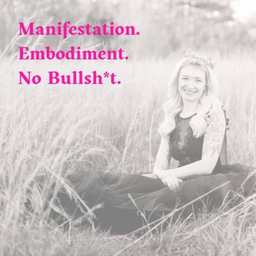
Hosted by Brittany Fleischer — nervous system specialist and author of The Regulated Woman — this podcast goes where most personal development doesn't: into the body. Into the nervous system patterns that keep high-achieving women bracing against the very success they've built. Into the somatic work that actually shifts it.
Each episode covers one of five core teachings: Safety. Capacity. Threat. Regulation.
Identity.
Because the problem was never your strategy.
It was never your discipline, your mindset, or your willingness to do the work.
It was a nervous system that learned — in completely logical, completely understandable ways - that expansion is dangerous.
And that can change.
Not by thinking differently.
By experiencing safety - in your body, in real time - until holding more stops feeling like threat and starts feeling like home.
This is where that work begins.
New episodes every week.
brittanyfleischer.substack.com (https://brittanyfleischer.substack.com?utm_medium=podcast)
An episode about procrastination, self-discipline, follow-through and people-pleasing — and why willpower keeps failing in one specific category.
You get up early when someone’s counting on it. You’ve never missed a deadline that mattered to another person. You’ve carried things for years that nobody knew you were carrying.
That’s discipline. A lot of it.
So why can’t you leave work at six, make the appointment, or take the afternoon?
Look at what those have in common: nobody will be disappointed if you don’t.
Your discipline isn’t missing. It’s allocated.
Your nervous system reads the social world as safety information, and it sorts obligations into two piles. Things another person is expecting get routed as survival-relevant — full resources, automatic, no deciding required. Things only you are expecting get routed as discretionary.
And the discretionary pile never comes up, because the survival pile is never finished.
You’ve been trying to solve a routing problem with effort. That’s why it hasn’t worked.
In this episode:
- The four-minute case that you have extraordinary discipline
- Why the things you skip are usually the easier ones
- How your body decides what’s survival-relevant and what’s optional
- Why “try harder” asks the weaker system to beat the stronger one
- Building witness instead of willpower — and why borrowing isn’t cheating
This week: pick one thing that’s only for you. Tell one person it’s happening. Notice how much easier it gets the moment someone else knows.
The whole framework is in the book — The Regulated Woman (https://www.amazon.com/dp/B0GY3Y12V7?ref_=cm_sw_r_ffobk_cp_ud_dp_JRQPWWA9DA97ZS6X3GZH_1&bestFormat=true), Amazon paperback and Kindle.
The Regulated Woman Collective opens soon. Subscribers hear first.
Everything in one place: [HERE (http://www.brittanyfleischer.com)]
This is a public episode. If you would like to discuss this with other subscribers or get access to bonus episodes, visit brittanyfleischer.substack.com (https://brittanyfleischer.substack.com?utm_medium=podcast&utm_campaign=CTA_1)
28 Sept 2026
The Flatness After the Win
I passed my licensure exam standing up in a testing center. They hand you a piece of paper that says pass or fail. Mine said pass.
Then I walked to the parking lot and drove home.
That was the day. Years of school, supervised hours, months of studying I barely remember — and it ended in a printout and a commute. I don’t remember celebrating. I remember being relieved.
It took me a long time to understand those aren’t the same thing.
This episode is about the flatness after the win, and why it isn’t ingratitude.
Your body wasn’t built to experience arrival. Arrival isn’t a physiological state — it’s a story we tell about a moment. Your body knows mobilization and the absence of mobilization, and if you’ve been mobilized for years, that becomes your baseline. So when the win lands, your body doesn’t register we made it. It registers the thing I was mobilized for is gone.
That’s why the honest emotion at the end of a long climb is so often relief rather than joy. Joy is expansion — something good arriving with room to feel it. Relief is a threat ending. And if what you feel is relief, that tells you something real about what the last two years actually cost you.
It also explains why it gets worse a day or two later. Mobilization needs a target. Take the target away and the activation doesn’t switch off — it just loses its explanation. Activation without an explanation has a name, and it’s anxiety.
So you find the next thing. Not consciously. And the restlessness resolves, because the activation has a job again.
In this episode:
* Why arrival isn’t something your nervous system can actually feel
* The difference between relief and joy, and what it means if you only ever get relief
* Why post-achievement anxiety shows up 48 hours later, not on the day
* How the next goal functions as a regulation strategy, not ambition
* What to do in the five minutes after — and why that’s where arrival gets encoded
The practice this week: when something lands, ask which feeling showed up — relief or joy. If it’s relief, sit down for five minutes before you go find the next thing. Let your body find out the chase is over.
You weren’t ungrateful. You were done.
The whole framework, in order, is in the book — The Regulated Woman (https://a.co/d/0cr2mka2), on Amazon in paperback and Kindle.
I’ve also been building a live room where women do this work together, with me — The Regulated Woman Collective. It opens soon, and subscribers hear first.
Everything in one place: [HERE] (https://linktr.ee/TheRegulatedWoman)
This is a public episode. If you would like to discuss this with other subscribers or get access to bonus episodes, visit brittanyfleischer.substack.com (https://brittanyfleischer.substack.com?utm_medium=podcast&utm_campaign=CTA_1)
21 Sept 2026
What Your Body Calls Safe Isn't What You'd Choose
There’s a version of your life you’ve already turned down.
Not dramatically. A door opened — a job, a move, a conversation, a rest — and something in you said not this one. And then you explained it. The timing. The fit. Too much going on. You’d get to it later.
None of that was a lie. It just wasn’t the reason.
This episode is about what your nervous system actually means by “safe” — and why it isn’t what you think.
Your body’s first job isn’t happiness or growth. It’s prediction. It’s constantly forecasting what happens next, and it uses that forecast to decide how much of you to spend. Which means it isn’t asking is this good for me. It’s asking do I know what happens next.
A familiar cost is fully mapped. You know exactly what it takes and when. An unfamiliar possibility has no data at all — and your body treats the absence of evidence as evidence of danger.
That’s why “just decide, just commit, do it scared” keeps failing you. When you force yourself across that line braced, your body doesn’t record I went somewhere new and I was fine. It records I went somewhere new and it was awful. Every forced expansion you survive on adrenaline becomes another entry in the file marked this is why we don’t.
You didn’t fail at changing. You taught your body something you didn’t mean to teach it.
In this episode:
* Why your body categorizes “known” as safe, even when known is costing you
* The difference between a real no and an unlit one — and how to tell them apart
* Why the size of the step matters less than the state you’re in while you take it
* The sixty seconds after the small thing, and why that’s where the learning actually happens
The practice: find one unlit thing this week. Take a dose small enough to be almost insulting. Then stay for the nothing — because nothing happened is the data that updates the map.
Your nervous system isn’t sabotaging you. It’s protecting you with the only map it has. The map is just out of date.
The whole framework, in order, is in the book — The Regulated Woman (https://www.amazon.com/dp/B0GY3Y12V7?ref_=cm_sw_r_ffobk_cp_ud_dp_QPEZY8DQFQSRTBY4KYJH_3&bestFormat=true), on Amazon in paperback and Kindle.
I’ve also been building a live room where women do this work together, with me — The Regulated Woman Collective. It opens soon, and subscribers hear first.
Everything in one place: HERE (https://linktr.ee/TheRegulatedWoman)
This is a public episode. If you would like to discuss this with other subscribers or get access to bonus episodes, visit brittanyfleischer.substack.com (https://brittanyfleischer.substack.com?utm_medium=podcast&utm_campaign=CTA_1)
Reach and audience
Public platform figures. Ratings count people who left a rating, not total listeners.
Apple Podcasts (US)
5.0 / 5
1 ratings
Contact Manifestation. Embodiment. No Bullsh*t.
Guest appearances
Does not typically book guests
Based on episode analysis; this does not confirm that the show is currently accepting guests.
Host of Manifestation. Embodiment. No Bullsh*t.?
Claim your podcast to manage its listing and keep your show details accurate.
Pod Engine is an independent podcast discovery and analytics service and is not affiliated with or endorsed by this podcast. Artwork and show content belong to their owners. Full legal notice.
Explore this show Podcast research with Pod Engine