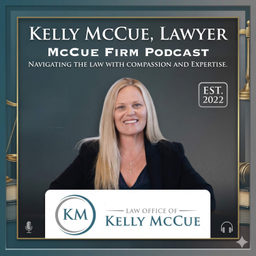
McCue Firm Podcast Personal Injury Attorney St. Petersburg FL
Kelly McCue
5.0from 2 ratings
- 14
- Episodes
- 2
- Ratings
- Daily
- Cadence
- 2026
- First episode
About McCue Firm Podcast Personal Injury Attorney St. Petersburg FL
Things to consider when you need a personal injury attorney in Tampa & St. Pete. This is not legal advice, but helpful reminders.
- Publisher
- Kelly McCue
- Category
- education
- Language
- en
- Explicit
- No
- First episode
- 25 Jun 2026
- Latest episode
- 6 Oct 2026
Latest episodes
14 episodes in the feed.
6 Oct 2026
The Most Dangerous Roads and Intersections in Tampa Bay
Hi everyone! Kelly McCue here, owner of The Law Office of Kelly McCue based in St. Petersburg. If you drive anywhere across the Tampa Bay area, you know that getting behind the wheel requires your full attention. From our busy beach routes in Pinellas County to major highway connections heading into Tampa, our local roads see heavy traffic every single day. Unfortunately, some of these streets and intersections see far more than their fair share of severe wrecks. Knowing where these trouble spots are—and why they are so risky—can help you stay safe on your daily drive. When talking about dangerous local roads, U.S. Highway 19 is always at the top of the list. Running straight through Pinellas County from Tarpon Springs down into St. Pete, where it becomes 34th Street North, this stretch of road sees a high volume of serious crashes every year. High speed limits mixed with constant commercial driveways mean drivers are frequently turning, stopping, or changing lanes suddenly. Intersections along this strip, especially around 22nd Avenue North and 38th Avenue North, are major trouble spots where heavy cross-traffic leads to frequent side-impact collisions. Over on the Tampa side of the bay, Dale Mabry Highway presents a similar hazard. It serves as a main vein for commuters, shoppers, and sports fans heading toward Raymond James Stadium. The intersection where Dale Mabry meets Hillsborough Avenue is notorious for bumper-to-bumper congestion, sudden lane changes, and drivers rushing through yellow lights. Further east, the spot where Sheldon Road crosses Waters Avenue in Town ‘N’ Country consistently ranks as one of the busiest collision points in the entire region due to heavy retail traffic and complex turning lanes. Back home in St. Petersburg, 4th Street North is another corridor that demands extra care. Connecting downtown St. Pete to northern highway ramps, this street mixes local neighborhood traffic with daily commuters. Stop-and-go driving near shopping plazas leads to frequent rear-end accidents, particularly during morning and evening rush hours. Meanwhile, high-speed travel on Interstate 275 creates serious risks around major exit ramps, like the I-4 interchange, where fast merging and sudden slowdowns often cause chain-reaction crashes. So, why do these specific locations see so many accidents? Most of the time, it comes down to three main factors: High Speeds and Sudden Stops: Wide lanes encourage drivers to go fast, but frequent stoplights force rapid braking. Complex Turning Points: Plazas and side streets create dozens of spots where cars are constantly pulling into busy traffic. Driver Distraction: Drivers who are unfamiliar with the area or focused on GPS navigation often miss sudden traffic changes. If you ever find yourself involved in a crash at one of these busy intersections, taking quick steps to protect yourself is essential. First, get medical care right away, even if you think your injuries are minor. Pain from neck and back strain often takes hours or days to fully show up. Second, take clear photos of the crash scene, the vehicle damage, and any visible road signs or traffic lights. Finally, obtain a copy of the official police report and avoid discussing who was at fault with insurance representatives until you have clear legal advice. Staying alert at these known hotspots is your best defense on the road. But if an unexpected collision happens, you don’t have to figure out the cleanup and paperwork by yourself. Until next time, this is Kelly McCue reminding you, if you’re dealing with this right now, you don’t have
29 Sept 2026
What Is a Bodily Injury Claim and How Does It Work?
Hi everyone! Kelly McCue here, owner of The Law Office of Kelly McCue based in St. Petersburg. If you’ve just been broadsided along 4th Street North or caught in a pileup near Park Boulevard, your life instantly splits into “before” and “after.” Suddenly, you are trying to figure out how to manage severe physical pain, arrange rental transportation, and answer endless calls from claims representatives. During all this chaos, someone likely advised you to file a “bodily injury claim.” Simply put, a bodily injury claim is the legal path that helps an injured crash victim seek financial support from the driver who caused the wreck. The bodily injury process begins the moment the crash happens. After a collision, your main focus should always be getting checked out by a doctor. Even if you think you just have minor bruises, serious neck or back pain can take days to show up. Having a professional medical record right from the start is the most important evidence you can have. It proves that your injuries came directly from the crash and not from something else. While you are focusing on getting better, your legal team starts looking into how the crash happened. Gathering crash site photos, vehicle damage records, and witness statements helps build a clear picture of who was at fault. Insurance companies often try to shift the blame onto you to avoid paying for your bills, so having solid proof early on keeps them from twisting the facts. Once your medical team has a clear idea of what care you will need to recover, it is time to calculate the true cost of the crash. A complete claim accounts for your emergency room bills, ongoing therapy costs, lost paychecks from missed work, and the physical pain you have been forced to deal with. This information goes into a formal request sent directly to the at-fault driver’s insurance provider. From there, negotiations begin. A local lawyer talks directly with the insurance adjuster to fight for a settlement that actually covers all your needs. If the insurance company refuses to be fair, your attorney can take the next step and file a formal lawsuit in court to protect your rights. Navigating a bodily injury claim does not have to feel confusing or overwhelming when you have someone experienced in your corner. Having a professional manage the paperwork, phone calls, and insurance adjusters lets you focus on what matters most: getting your health and your life back on track. Until next time, this is Kelly McCue reminding you, if you’re dealing with this right now, you don’t have to figure it out alone. Call me at 727-873-0910 and get clear answers today.
22 Sept 2026
Why Your Auto Accident Claim Might Be Denied and What To Do Next
Hi everyone! Kelly McCue here, owner of The Law Office of Kelly McCue based in St. Petersburg. If you open your mail after a crash on I-275 or along Gulf-to-Bay Boulevard and find a letter from an insurance company that says “DENIED,” your stomach instantly drops. Getting a rejection letter is frustrating, stressful, and scary—especially when you are dealing with a sore neck, missed work, and bills starting to pile up on your kitchen table. But receiving a denial letter from an insurance adjuster does not mean your case is over. In many situations, it is simply the insurance company’s initial strategy to protect their money. Understanding why these denials happen and knowing how to respond can completely change the outcome of your case. Insurance companies turn down claims for several common reasons, and many of them come down to simple paperwork issues or misunderstandings about how the crash happened. One of the biggest reasons for a denial is a delay in seeing a doctor. If you wait too long to get checked out after a wreck, the insurance company will argue that you were not actually hurt in the crash. They might claim your injuries happened somewhere else or that you are making them sound worse than they really are. Along those same lines, adjusters love to look through past medical records and claim that your back or neck pain is just an old injury from years ago, rather than something caused by the recent impact. Other times, the problem comes down to plain disagreement over who caused the crash. If the other driver gives a different story to their insurance provider, or if the police report is confusing, the insurance adjuster may simply refuse to pay, claiming their driver was not at fault. Even small mistakes, missed paperwork deadlines, or a lack of photo evidence from the crash scene can give an adjuster an easy excuse to reject a claim. If you receive a denial letter, the most important thing you can do right away is pause and take a deep breath. Do not panic, and do not call the insurance adjuster to argue with them on the phone. When people call back while angry or upset, they often say things that the insurance company can use against them later. Instead, a much better approach is to gather all your paperwork in one place. Keep the denial letter, your medical discharge papers, any doctor bills, and the police crash report together in a folder. Having a clean record of everything that happened makes it much easier to show where the insurance company got things wrong. Once you have your paperwork organized, reaching out for professional legal help is the smartest next step. An official denial letter is just the insurance adjuster’s opinion—it is not a judge’s decision, and it is definitely not the final word. A local lawyer can step in, demand to see the insurance company’s full file, figure out exactly why they turned you down, and gather the missing proof needed to fight back. Getting a denial letter in the mail feels overwhelming, but with the right steps and clear proof, many denied claims can be turned around. Until next time, this is Kelly McCue reminding you, if you’re dealing with this right now, you don’t have to figure
15 Sept 2026
What Information You Need Before Calling a Lawyer in Tampa
Hi everyone! Kelly McCue here, owner of The Law Office of Kelly McCue based in St. Petersburg. If you’ve just been involved in a collision or got rear-ended, your head is probably spinning. Between managing physical pain, trying to figure out how to get to work in Clearwater or Tampa, and dealing with a damaged car, picking up the phone to call a personal injury attorney can feel intimidating. Many people put off making that first call because they think they need to have every document organized in neat color-coded folders before speaking to a professional. The reality is much simpler, and understanding the basic details to have handy will give you the confidence to take that first step toward protecting your recovery. The most important thing to know is that you do not need a complete, finished file to make that initial phone call. An experienced attorney does not expect you to have all the answers on day one. Our job is to investigate, gather evidence, and build the case for you. However, having a few core pieces of information ready when you dial will help us evaluate your situation much faster and immediately start protecting you from aggressive insurance adjusters. First, you’ll want to have the basic accident and contact details. This includes the date, approximate time, and location of the crash, as well as the name of the police agency that responded, whether it was the Florida Highway Patrol or a local police department in Pinellas, Hillsborough, or Pasco county. If the officer handed you a driver exchange of information form or a crash report receipt with a report number, keep that paper right next to you. Having the other driver’s name and auto insurance provider name is also incredibly helpful, though don’t worry if you don’t have their full policy details yet. Second, be prepared to give a brief summary of your initial medical care and physical symptoms. You don’t need your complete medical records—we will request those directly from the hospitals or clinics later. Simply knowing where you were treated right after the wreck (such as an emergency room, urgent care center, or chiropractor in St. Pete or Largo) gives us a starting point. Remember, under Florida’s 14-day Personal Injury Protection (PIP) rule, seeking initial medical treatment within two weeks of the crash is mandatory to unlock your $10,000 in PIP medical coverage. Telling us when and where you were seen allows us to ensure your PIP coverage remains secure. Third, bring any photos, videos, or initial insurance communications you might have collected. If you snapped pictures of the vehicle damage, road conditions, or your visible injuries at the scene, those are invaluable. Similarly, if an insurance adjuster has already called you, left voicemails, or sent letters, have those dates and names ready. Under Florida’s modified comparative negligence laws, adjusters actively look for ways to shift more than 50% of the fault onto you to bar your recovery entirely. Knowing who has contacted you helps us step in immediately and stop those recorded statement traps before they start. Finally, do not let missing information stop you from reaching out. If you are missing the police report or aren’t sure of the other driver’s insurance details, call anyway. A dedicated local advocate knows how to track down missing crash reports, pull traffic camera footage, and locate insurance coverage that you might not even know exists. Time is of the essence, especially since Florida’s statute of limitations gives you only two years from the date of the crash to take legal action. Getting answers shouldn’t be stressful or expensive. Because my firm represents injured clients on a contingency fee basis, there are no fees or costs unless we win your case. Gathering what you have and making that initial call is the easiest way to take the burden off your shoulders and place it onto ours. Until next time, this is Kelly McCue reminding you, if you’re dealing with this right now, you don’t have to figure it out alone. Call me at 727-873-0910 and get clear answers today.
8 Sept 2026
How Doctors and Attorneys Work Together in Injury Cases
Hi everyone! Kelly McCue here, owner of The Law Office of Kelly McCue based in St. Petersburg. If you’ve been in a crash on the Howard Frankland Bridge or rear-ended on US-19, your first priority is naturally getting medical care. But as your medical bills start to mount, you might wonder how your doctor’s diagnosis actually connects with your legal claim. Many people assume that doctors and personal injury attorneys work completely independently of one another. Understanding how these two professions collaborate is vital to your recovery, because seamless teamwork between your medical providers and your legal advocate is often the single most important factor in securing a full financial recovery. While doctors focus on your physical healing, attorneys focus on your financial protection—and neither can succeed without the other. A doctor’s primary role is to examine, diagnose, and treat your physical injuries. However, in the eyes of an insurance company, an injury doesn’t legally exist unless it is thoroughly documented in your medical records. As a local advocate, I rely on your treating physicians to provide objective, expert evidence linking your specific injuries directly to the accident. If a doctor notes that your neck pain began immediately following a collision near Clearwater or Largo, that clinical documentation becomes the bedrock of your case, making it nearly impossible for an adjuster to claim your pain was a pre-existing condition. The collaboration begins early in the process when navigating access to care. If you exhaust your mandatory Personal Injury Protection (PIP) benefits or lack private health coverage, many doctors in Pinellas or Hillsborough County are hesitant to treat accident victims out-of-pocket. Historically, attorneys used Letters of Protection (LOPs), but due to legal changes in Florida, smart lawyers and doctors no longer use them. Insurance companies lobbied to make LOPs discoverable, using them to argue that medical bills shouldn’t be fully factored into your financial losses. Instead, we utilize deferred payment agreements. This allows you to receive immediate care from specialists without paying upfront or risking your legal standing. If you previously signed an LOP with a doctor, my office steps in to revoke it immediately. As your care progresses, doctors and attorneys communicate constantly behind the scenes to monitor your trajectory. Rather than rushing a settlement or relying on restrictive medical labels that insurance adjusters use to cut off future coverage, we work closely with your doctors to thoroughly document your long-term health needs. Your physicians provide detailed narrative reports outlining ongoing rehabilitation, potential future procedures, and lifetime care costs. I take that complex medical data and translate it into a compelling legal demand package that forces the insurance company to account for every single dollar you will need moving forward. Under Florida’s strict modified comparative negligence laws, insurance adjusters actively search for gaps in your medical treatment or minor inconsistencies in doctor notes to shift blame or devalue your claim. By maintaining an open line of communication with your care team, my office ensures that every medical record accurately reflects the true impact of the crash on your life. We handle the administrative burdens, record requests, and billing disputes so your medical team can focus entirely on helping you physically heal. When doctors and lawyers work in sync, you get the double benefit of top-tier healthcare and aggressive legal protection. Best of all, because my firm represents clients on a contingency fee basis, there are no fees or costs unless we win your case. You get a dedicated professional in your corner to coordinate the heavy lifting. Until next time, this is Kelly McCue reminding you, if you’re dealing with this right now, you don’t have to figure it out alone. Call me at 727-873-0910 and get clear answers today.
1 Sept 2026
What Happens If the Other Driver Doesn’t Have Insurance in Florida?
Hi everyone! Kelly McCue here, owner of The Law Office of Kelly McCue based in St. Petersburg. If you’re driving along I-275, taking the Bayside Bridge, or cruising down US-19, encountering an uninsured driver is far more common than you might think. Florida consistently ranks near the top of the nation for the highest percentage of uninsured motorists. To make matters worse, Florida is one of the few states that does not legally mandate standard drivers to carry Bodily Injury Liability insurance to register a vehicle. That means even if the person who hit you has a license plate and a standard insurance card, they might have zero dollars available on their policy to pay for your bodily injuries. Understanding how to recover financially after a collision with an uninsured or underinsured driver is essential to keeping your household protected. When an uninsured or underinsured driver causes a crash, your first line of financial defense is your own auto insurance policy. Under Florida’s no-fault system, your mandatory Personal Injury Protection (PIP) coverage kicks in right away. PIP covers 80% of your medically necessary treatment and 60% of lost wages up to a $10,000 cap, regardless of who caused the wreck. However, to access these benefits, you must seek initial medical treatment within 14 days of the crash. Between emergency room bills, diagnostic imaging, and follow-up appointments in Pinellas or Hillsborough County, that $10,000 limit gets swallowed up fast. So, what happens when your medical expenses and missed work quickly surpass your PIP limit? This is where an optional, but extraordinarily powerful, coverage comes into play: Uninsured/Underinsured Motorist (UM) coverage. UM coverage is designed specifically for this scenario. It steps directly into the shoes of the at-fault driver’s missing insurance, paying for your remaining medical bills, ongoing rehabilitation, lost income, and pain and suffering. If you elected to carry UM coverage on your own auto policy, your insurer effectively acts as the at-fault party’s insurance company. Navigating a UM claim can surprise many local drivers because your own insurance company suddenly becomes adversarial. Even though you’ve paid your premiums on time every month, the insurance company’s goal in a UM claim is still to minimize their payout. They will closely scrutinize your medical records, question the severity of your injuries, or try to use Florida’s modified comparative negligence rules to argue that you were partially to blame for the crash. Having a dedicated local advocate handle these negotiations ensures that your insurer treats your claim fairly and honors the coverage you paid for. What if neither you nor the other driver has sufficient coverage? In those situations, we explore every alternative legal avenue available. We check whether there are other insurance policies in the household that can be stacked, evaluate third-party liability, and arrange ongoing care through deferred payment agreements with medical providers so you can get treatment without paying out of pocket. We strictly avoid outdated tools like Letters of Protection (LOPs), which insurance adjusters now exploit in discovery to undermine claims. If you previously signed an LOP with a doctor, my office steps in to revoke it immediately to safeguard your financial recovery. Finding out that the person who hit you has no insurance can feel like a dead end, but you still have options. When you partner with my firm, we handle the heavy lifting of uncovering hidden coverage, negotiating with insurers, and fighting for every cent you deserve. Best of all, because we work on a contingency fee basis, there are no fees or costs unless we win your case. Until next time, this is Kelly McCue reminding you, if you’re dealing with this right now, you don’t have to figure it out alone. Call me at 727-873-0910 and get clear answers today.
25 Aug 2026
Can You Get Help After a Car Accident in Florida Even If You Don’t Have Health Insurance?
Hi everyone! Kelly McCue here, owner of The Law Office of Kelly McCue based in St. Petersburg. If you’ve recently been in a crash on the Howard Frankland Bridge or rear-ended near downtown Clearwater, your first thought is probably about your health—followed immediately by panic about how you are going to pay for it. If you don’t have private health insurance, the idea of stepping into an emergency room or scheduling physical therapy can feel terrifying. You might be tempted to just “tough it out” at home, but delaying medical care can permanently damage your body and destroy your legal rights. Understanding how medical billing works after a crash in Florida is vital, because you can absolutely get high-quality medical treatment after an accident even if you don’t have health insurance. The first safety net every Florida driver has is mandatory Personal Injury Protection (PIP) insurance. Florida is a no-fault state, meaning your own auto insurance policy is legally required to cover your initial medical bills after a crash, regardless of who caused it. Your PIP policy covers 80% of your medically necessary treatment up to $10,000. You don’t need health insurance to use your auto insurance PIP coverage. However, there is a strict procedural catch: you must seek initial treatment within 14 days of the crash. If you wait until day 15 because you were worried about not having health insurance, you forfeit that $10,000 benefit entirely. While $10,000 sounds like a lot of money, emergency room visits, MRIs, and specialist appointments in Pinellas or Hillsborough County will drain that PIP limit very quickly. Once PIP is exhausted, or to cover the remaining 20% gap, you might wonder how you can continue seeing doctors without private health coverage. In the past, many people relied on Letters of Protection (LOPs). However, due to legal changes in Florida, smart attorneys and doctors no longer use LOPs. Insurance companies lobbied to make LOPs discoverable in litigation, using them to argue that your medical bills shouldn’t be fully factored into your financial losses. In fact, if a client comes to my firm after already signing an LOP with a doctor, we step in and send a letter revoking it immediately to keep their claim protected. Instead of risky LOPs, we now secure your ongoing treatment through deferred payment agreements. Under a deferred payment agreement, trusted local medical specialists—such as orthopedic doctors, neurologists, and physical therapists—agree to provide the comprehensive care you need today while delaying all billing until your personal injury case resolves. This ensures you receive immediate, top-tier healthcare without paying out-of-pocket copays or facing collection agencies, all while preventing insurance adjusters from exploiting your medical arrangements during discovery. Using deferred payment agreements allows you to build an unbroken medical record, which provides the critical evidence needed to prove the true value of your claim against the driver who hit you. Furthermore, under Florida’s modified comparative negligence rules, having a clear, professional paper trail of your injuries prevents insurance adjusters from claiming you weren’t actually hurt in the crash. Navigating the healthcare system after an accident is confusing enough, but doing it without health insurance can make you feel completely helpless. When you partner with my firm, we connect you with reputable local doctors who utilize deferred payment agreements, coordinate your medical billing, and aggressively pursue the at-fault driver’s insurance company. Best of all, because we work on a contingency fee basis, there are no fees or costs unless we win your case. Lack of health insurance should never stand between you and the medical care you deserve. Until next time, this is Kelly McCue reminding you, if you’re dealing with this right now, you don’t have to figure it out alone. Call me at 727-873-0910 and get clear answers today.
10 Aug 2026
What Does “No Fault” Really Mean in Florida Accidents
Hi everyone! Kelly McCue here, owner of The Law Office of Kelly McCue based in St. Petersburg. If you drive anywhere in the Tampa Bay area, you have almost certainly heard the phrase “Florida is a no-fault state.” But if you’re like most people navigating the aftermath of a crash on I-275 or the Bayside Bridge, that phrase sounds completely backward. It makes it seem like nobody gets blamed for a wreck, or that bad drivers can just cause total chaos and walk away without any consequences. Understanding what “no-fault” actually means is the key to protecting your financial survival after a collision, because the reality behind this legal label is very different from what most drivers assume. In plain language, “no-fault” does not mean no one is at fault for the accident. Instead, it is a rule about who pays your initial medical bills. Under Florida’s long-standing auto insurance system, whenever you are injured in a car crash, your own insurance policy is legally required to pay for your medical care and lost wages first, regardless of who ran the red light or caused the impact. This coverage is called Personal Injury Protection (PIP), and carrying a minimum of $10,000 in PIP is mandatory for every single driver who registers a vehicle in the state. The original idea behind this system was to cut down on courtroom battles and get injured people quick access to medical care without waiting months for a judge to decide who was responsible. Your PIP policy is structured to pay for 80% of all reasonable, medically necessary treatment and 60% of your lost wages up to that $10,000 cap. However, the system is filled with hidden procedural traps. To access your PIP benefits at all, you must seek initial medical treatment within exactly 14 days of the crash. Furthermore, unless a medical professional determines that you suffered an Emergency Medical Condition (EMC), your insurance company can legally slash your medical benefits down to a maximum of just $2,500. Because PIP only covers 80% of your bills and caps out at $10,000, a serious injury from a crash in Tampa or Clearwater will drain that money within minutes of arriving at an emergency room. This is where the actual “fault” of the other driver comes heavily into play. To hold the at-fault driver financially responsible for your remaining medical bills, future care, lost income, and pain and suffering, your case must cross what Florida calls the “serious injury threshold.” This means your local advocate must prove that your injuries are permanent, cause significant scarring or disfigurement, or result in the loss of an important bodily function. Proving fault has become even more critical due to Florida’s strict modified comparative negligence system. Under these rules, if an insurance company can twist your words to argue that you were more than 50% responsible for the accident, you are legally barred from recovering a single penny from the at-fault driver’s insurance. This is why insurance adjusters love the “no-fault” confusion; they want you to let your guard down, make a casual statement, and accidentally destroy your right to file a claim against the reckless driver who hit you. Navigating the web of PIP deadlines, medical thresholds, and comparative fault while trying to heal from an accident in Pinellas, Hillsborough, or Pasco county is an overwhelming task. When you partner with my firm, you get a dedicated local advocate who takes over the legal battle for you. We handle the paperwork, stop the adjuster traps, and fight to ensure you get every dollar you deserve. Best of all, because we work on a contingency fee basis, there are no fees or costs unless we win your case. Until next time, this is Kelly McCue reminding you, if you’re dealing with this right now, you don’t have to figure it out alone. Call me at 727-873-0910 and get clear answers today.
3 Aug 2026
Who Pays for Your Medical Treatment After an Accident
Hi everyone! Kelly McCue here, owner of The Law Office of Kelly McCue based in St. Petersburg. If you’ve just left an emergency room or a walk-in clinic after a crash on the Howard Frankland Bridge, you are probably staring down a stack of multi-thousand-dollar medical invoices. When you are already dealing with a painful neck injury or a concussion, seeing those bills pile up can feel incredibly stressful. Understanding exactly how medical billing works after a car crash is vital because auto accidents do not follow standard health insurance rules. If you assume the at-fault driver’s insurance will simply pay your doctors as you go, you are going to face a massive financial shock when those bills get sent to collections. The most important thing to know is that Florida is a no-fault insurance state, which surprises many local drivers. This does not mean that nobody is to blame for the accident. Instead, it means that regardless of who caused the collision, your own auto insurance policy is always the first line of defense for your medical bills through Personal Injury Protection (PIP). By law, your PIP coverage is designed to pay for 80% of all reasonable, medically necessary expenses resulting from a covered injury, up to a maximum limit of $10,000. However, there are major statutory catches built into Florida’s PIP system that insurance adjusters use to slash payouts. First, you must receive your initial medical treatment within exactly 14 days of the accident. If you wait until day 15 to see a doctor in Clearwater or Largo, your auto insurance will completely deny coverage, leaving you personally responsible for the entire bill. Second, to unlock the full $10,000 limit, a qualified medical professional must determine that you suffered an Emergency Medical Condition (EMC). If your injuries are not formally documented as an EMC, your PIP medical benefits are legally capped at just $2,500. Because your auto insurance only covers 80% of your bills, you are immediately left with a 20% out-of-pocket gap, plus any deductibles you selected on your policy. This is where your health insurance or a secondary auto coverage called Medical Payments (MedPay) can step in to help bridge the financial divide. However, hospital billing departments in Hillsborough and Pinellas counties frequently make mistakes, accidentally routing bills to health insurance before PIP is exhausted, which can result in coverage denials and massive administrative headaches for you. So, when does the at-fault driver actually pay? The other driver’s Bodily Injury Liability (BIL) coverage does not pay your medical bills in real-time. Instead, their insurance company will only pay out in a single, lump-sum settlement at the very end of your case. To hold the at-fault driver financially responsible for that remaining 20% gap, your unpaid balances, and your pain and suffering, your injuries must cross Florida’s “serious injury threshold.” This means a local doctor must formally diagnose you with a permanent injury, significant scarring, or the loss of an important bodily function. Navigating this complicated multi-layered insurance maze while attempting to physically recover from a crash is an unfair burden. When you partner with my firm, we take over the administrative chaos completely. We coordinate between your auto insurer, your health insurance, and your medical providers to ensure your bills are submitted correctly and timely. Best of all, because we handle personal injury claims on a contingency fee basis, you pay no fees or costs unless we win your case. We handle the bill collectors and the insurance adjusters so you can focus entirely on getting better. Until next time, this is Kelly McCue reminding you, if you’re dealing with this right now, you don’t have to figure it out alone. Call me at 727-873-0910 and get clear answers today.
27 Jul 2026
What To Say and What Not To Say After an Accident
Hi everyone! Kelly McCue here, owner of The Law Office of Kelly McCue based in St. Petersburg. If you’ve ever had your car spun around on Gandy Boulevard or been rear-ended near downtown Clearwater, you know the absolute chaos that follows. Your hands are shaking, your chest is tight, and your brain is trying to process what just happened. In that exact moment of high stress, your words can easily become your own worst enemy. Understanding what to say—and precisely what not to say—in the minutes and days following a crash is one of the most critical factors in protecting your future. A single well-intentioned but poorly phrased comment at the scene can completely derail your ability to get your medical bills paid or recover the compensation you actually deserve. The absolute number one rule at the scene of any accident in Florida is never say “I’m sorry” or apologize. As human beings, our natural reflex after a scary event is to say something comforting to the other driver, like “I’m so sorry, I didn’t see you turning.” In the legal world, insurance companies do not view an apology as good manners; they view it as an official admission of fault. Under Florida’s modified comparative negligence system, if an insurance adjuster can use your words to prove you were even partially responsible for the crash, they can slash your payout. Worse yet, if they can twist your statement to argue you were more than 50% at fault, you are legally barred from recovering a single penny of compensation from the at-fault party. Another major trap is discussing your physical health at the scene. When the responding police officer or the other driver asks if you are hurt, do not say “I’m fine” or “I’m okay.” Immediately after a collision, your body is completely flooded with adrenaline and shock, which acts as a powerful, natural painkiller. You might honestly feel fine in the moment, but severe soft-tissue injuries, whiplash, or herniated discs frequently take two or three days to cause noticeable pain and inflammation. Instead, the correct thing to say is, “I’m not sure yet, I need to be checked out by a doctor.” If you tell the officer you aren’t hurt, and it goes into the official report, the insurance company will weaponize that statement later to claim your injuries didn’t actually happen during the accident. In the days following the wreck, the communication battlefield shifts to your phone. You will likely receive a call from the at-fault driver’s insurance adjuster asking you to give a recorded statement or to “just explain what happened in your own words.” The best thing to say to them is simple: “I am not prepared to give a statement, but you can speak with my attorney.” You are under absolutely no legal obligation to give a recorded statement to the other driver’s insurance company. Adjusters are highly trained corporate employees whose job is to steer the conversation into traps, getting you to agree to leading questions that minimize the severity of the impact or shift the blame onto you. So, what should you say? At the scene, restrict your conversation with the other driver strictly to the exchange of required legal information, such as names, driver’s license numbers, and insurance policies. When talking to law enforcement, stick strictly to the objective, physical facts of what happened—such as “I was stopped at the light, and I was struck from behind”—without guessing, speculating, or estimating speeds. Navigating these high-stakes conversations while trying to heal from an accident in Pinellas, Hillsborough, or Pasco county is an unnecessary burden. When you hire my firm, we immediately step in to do all the talking for you. We protect your words, manage the adjusters, and ensure your rights are guarded from day one. Best of all, because we work on a contingency fee basis, there are no fees or costs unless we win your case. You can focus on your medical recovery while we handle the legal defense. Until next time, this is Kelly McCue reminding you, if you’re dealing with this right now, you don’t have to figure it out alone. Call me at 727-873-0910 and get clear answers today.
20 Jul 2026
Should You Call a Lawyer After a Car Accident in Florida
Hi everyone! Kelly McCue here, owner of The Law Office of Kelly McCue based in St. Petersburg. If you’ve recently been in a fender-bender on US-19 or a multi-car collision near downtown St. Pete, you are likely dealing with a mountain of immediate headaches. Between getting your car towed, figuring out how to get to work in Tampa, and managing a stiff neck, the last thing you want to do is add another task to your to-do list. However, understanding exactly when and why to involve an attorney is the most critical decision you can make for your recovery. Many people assume they only need a lawyer for catastrophic crashes, but in Florida, trying to navigate the insurance maze alone even after a seemingly minor accident can easily leave you facing financial ruin. The reality of driving in Florida is that our insurance laws are specifically structured to protect the insurance companies’ bottom lines, not your health. Florida operates under a unique no-fault insurance system, which dictates that your own Personal Injury Protection (PIP) policy must pay for the first wave of your medical care. However, accessing that coverage requires navigating minefields like the strict 14-day medical treatment rule. Insurance adjusters from Clearwater to Largo are trained to look for any excuse to minimize or completely deny your claim. When you call a lawyer immediately, you instantly shift that communication burden. A dedicated attorney steps in as your shield, handling the adjusters and preserving critical evidence like traffic camera footage or witness statements before they disappear. Another massive reason to pick up the phone is the recent, drastic shift in Florida’s legal landscape. Our state recently slashed the statute of limitations for personal injury negligence claims from four years down to two years. Additionally, Florida moved to a modified comparative negligence system, which completely bars you from recovering any compensation if you are found to be more than 50% at fault for the accident. Insurance companies are fully aware of this new 51% rule and will actively use casual, recorded phone conversations to trick you into admitting fault. A local advocate knows these traps inside and out and ensures your words aren’t weaponized against you to destroy your case. Furthermore, calculating the true value of an injury is incredibly complex. If you accept a quick, “low-ball” settlement check from an adjuster a week after an accident near Safety Harbor, you are legally signing away your right to ever ask for more money. That initial check might cover your first emergency room visit, but it won’t cover the hidden herniated disc or the weeks of physical therapy that become necessary once your adrenaline fully wears off. A lawyer works directly with your medical providers in Pinellas, Hillsborough, or Pasco county to ensure that your future medical needs and lost wages are fully documented before a single settlement demand is made. The best part is that leveling the playing field doesn’t require any upfront investment from you. Because my firm handles personal injury cases on a contingency fee basis, there are no fees or costs unless we win your case. This means you get a professional advocate fighting for you with zero financial risk to your bank account. You don’t have to wonder if you can afford to protect your rights. If you are sitting at home wondering if your accident is “big enough” to justify a phone call, remember that the insurance company already has a team of professionals working to pay you as little as possible. You deserve a professional in your corner, too. Until next time, this is Kelly McCue reminding you, if you’re dealing with this right now, you don’t have to figure it out alone. Call me at 727-873-0910 and get clear answers today.
9 Jul 2026
What Tampa Drivers Need To Know About Florida Injury Laws
Hi everyone! Kelly McCue here, owner of The Law Office of Kelly McCue based in St. Petersburg. If you spend any time commuting down the Howard Frankland Bridge, navigating the crazy merges on I-4, or driving through the busy intersections near the University of South Florida, you already know that Tampa roads can feel like a contact sport. But what happens if your luck runs out on Dale Mabry Highway and you end up in a serious wreck? Understanding how our local traffic laws intersect with statewide legal statutes is the only way to protect your physical and financial health after a crash. Florida has some of the most unique and rapidly changing personal injury laws in the country, and being misinformed about them can leave you holding the bag for massive medical bills that someone else should have paid. The first major thing every Tampa driver must understand is Florida’s no-fault insurance system and your Personal Injury Protection (PIP) coverage. Many people mistakenly think “no-fault” means nobody is blamed for the accident. In reality, it simply means that regardless of who caused the crash, your own auto insurance company is responsible for paying the first wave of your medical bills and lost wages. Your PIP coverage pays 80% of necessary medical expenses and 60% of lost wages, up to a maximum of $10,000. However, there is a massive catch that catches local drivers off guard every single day: the 14-day medical rule. If you don’t seek medical treatment within exactly 14 days of the crash, you lose your PIP benefits entirely. Even if you think you just have minor whiplash after a rear-end collision near Ybor City, you need to get checked out by a doctor immediately to secure that coverage. But what happens if your medical bills easily clear that $10,000 mark, which is incredibly common with modern emergency room costs? To step outside of the no-fault system and file a lawsuit against the at-fault driver for your remaining medical bills, future care, and pain and suffering, your injuries must meet a specific “injury threshold.” Under Florida law, your injuries must be deemed permanent, involve significant and permanent scarring or disfigurement, or result in the loss of an important bodily function. Proving this requires a meticulous paper trail of medical records, which is why consistent treatment with local specialists in Hillsborough or Pinellas County is so vital to the success of your claim. Another massive shift that every driver in the Tampa Bay area needs to know about is Florida’s recent transition to a modified comparative negligence system. This is a technical way of saying that the state now bars you from recovering any money at all if you are found to be more than 50% at fault for the accident. If an insurance adjuster can twist your words to prove you were 51% responsible for a collision near Clearwater or Tampa, they don’t have to pay you a single dime. Even if you are less than 50% at fault, your final financial recovery will be reduced by your percentage of blame. Insurance companies know this rule inside and out, and they will use every recorded statement to shift the blame onto you. Furthermore, you don’t have all the time in the world to make up your mind about taking legal action. Florida recently slashed the statute of limitations for personal injury negligence cases from four years down to two years. Two years flies by incredibly fast when you are dealing with surgeries, physical therapy, and vehicle repairs. Waiting to hire a dedicated local advocate makes it much harder to track down traffic camera footage, secure black box data from the vehicles, and preserve witness statements before they disappear. Navigating this complex legal maze while trying to heal from an accident is exhausting. When you partner with my firm, we step in to handle the aggressive insurance adjusters, gather the necessary evidence, and ensure every legal deadline is met. Best of all, we operate on a contingency fee basis, meaning there are no fees or costs unless we win your case. You can focus on your recovery while a professional protects your rights. Until next time, this is Kelly McCue reminding you, if you’re dealing with this right now, you don’t have to figure it out alone. Call me at 727-873-0910 and get clear answers today.
2 Jul 2026
The Difference Between a High-Volume Firm and a Personal Attorney in Florida
Hi everyone! Kelly McCue here, owner of The Law Office of Kelly McCue based in St. Petersburg. If you’ve spent any time driving along I-275 or watching local television in the Tampa Bay area, you have undoubtedly seen the massive billboards and catchy commercials for giant law firms promising huge payouts. When you are dealing with the aftermath of a car accident, it is easy to assume that the biggest firm with the loudest advertisements must be the best choice. Understanding the operational differences between these massive, high-volume operations and a dedicated personal attorney is essential to your recovery, because the type of firm you choose directly impacts how much attention your case receives and the ultimate financial settlement you take home. High-volume firms, often referred to in the legal world as “settlement mills,” rely on a business model based entirely on turnover. They take on thousands of cases at a time and rely on massive advertising budgets to keep new clients walking through the door. Because they have so many files open at once, your case is rarely handled by the actual attorney whose face is on the billboard. Instead, your primary point of contact is usually a paralegal or a case manager who is juggling hundreds of other files. In these environments, cases are often processed on an assembly line. The primary goal is often to settle your claim as quickly as possible with minimal effort, even if that means accepting a lower offer from the insurance company just to clear the file off the desk. When your case is treated like a number on a spreadsheet, significant details get missed. A high-volume firm might not take the time to deeply investigate how a crash near Clearwater or Largo has uniquely impacted your daily life, your career, or your future medical needs. Under Florida’s complex modified comparative negligence rules, insurance adjusters are looking for any excuse to shift the blame onto you to lower their payout. Defeating these tactics requires a lawyer who actually digs into the specifics of your accident report, interviews witnesses, and builds a customized strategy. If your file is just sitting in a massive stack on a case manager’s desk, the insurance company knows they can offer a subpar settlement because the firm is unlikely to take the time to file a formal lawsuit and fight them in court. Choosing a dedicated personal attorney offers a completely different experience. At my firm, we intentionally limit the number of cases we accept so that I can personally oversee every single file. When you call my office, you speak to the attorney handling your case, not an automated system or a rotating cast of assistants. We take the time to understand the full scope of your medical treatment, working closely with your doctors in Pinellas, Hillsborough, or Pasco county to ensure your injuries are documented with precision. We don’t rush to accept the first low-ball offer the insurance adjuster throws our way just to meet a monthly quota. We treat your case with the individual care and aggressive advocacy it deserves, because we know that the outcome of this claim will affect your financial stability for years to come. Furthermore, personalized representation means we are always ready to take the fight to the next level. Because we work on a contingency fee basis where there are no fees or costs unless we win your case, our goals are perfectly aligned with yours. We advance all the litigation expenses necessary to build a powerhouse case, and the insurance companies know that we aren’t afraid to file a lawsuit in the local courts if they refuse to play fair. They know which firms are settlement mills that will fold under pressure, and they know which attorneys will stand their ground. When you are recovering from a crash, you deserve a local advocate who treats you like a human being, listens to your concerns, and fights for every penny you are legally owed. You don’t have to settle for being a case number in a giant corporate machine. Until next time, this is Kelly McCue reminding you, if you’re dealing with this right now, you don’t have to figure it out alone. Call me at 727-873-0910 and get clear answers today.
25 Jun 2026
Can You Still File a Claim Days After a Car Accident in Florida?
Hi everyone! Kelly McCue here, owner of The Law Office of Kelly McCue based in St. Petersburg. If you’ve been in a minor fender-bender on the Sunshine Skyway or a collision near downtown Clearwater, your first instinct might be to just go home and process what happened. It is incredibly common to wait a few days before thinking about insurance, especially if you think your vehicle damage is minor or you are just feeling a little stiff. Understanding how the clock works immediately after a crash is vital to your financial and physical future because Florida has some of the strictest legal deadlines in the country. Delaying your claim or medical evaluation by even a few days can completely alter your ability to get your medical bills covered, potentially leaving you on the hook for thousands of dollars out of pocket. The absolute most critical deadline to understand when deciding whether to file a claim days after an accident is Florida’s 14-day Personal Injury Protection (PIP) rule. Under Florida law, you must seek initial medical treatment from a qualified provider—like a medical doctor, chiropractor, or emergency room—within exactly 14 days of the crash. If you wait until day 15 because you thought your neck pain would just go away, you completely forfeit your right to access the $10,000 in PIP medical benefits you have been paying for in your insurance premiums. The insurance companies do not care if you had a good excuse or didn’t realize you were seriously hurt; the statute is unyielding, and missing it gives your insurer a free pass to deny your medical claims. Many people delay filing a claim because adrenaline and shock mask pain immediately after a wreck. Soft tissue injuries, whiplash, and concussions frequently take days to fully manifest as inflammation sets in. If you wait to report the accident, insurance adjusters in Tampa or Largo will use that gap in time as a weapon against you. They will argue that if you were truly injured, you would have gone to a doctor or filed a claim immediately. Filing your claim and getting evaluated by a professional as soon as possible creates an unbroken paper trail linking your injuries directly to the crash. Beyond the immediate 14-day medical window, there is the timeline for filing a personal injury lawsuit against the at-fault driver. Florida recently shortened this statute of limitations for negligence claims from four years down to two years. Building a winning case requires gathering traffic camera footage, police reports, and witness statements before they disappear. Furthermore, under Florida’s modified comparative negligence rules, insurance companies are highly motivated to push the blame onto you. If they can get you to make statements days after the accident before you’ve spoken to a lawyer, they can use your words to slash the compensation you are owed. This is why partnering with a dedicated local advocate right away is so important. When you hire my firm, we take over the burden of dealing with the insurance adjusters from day one. We ensure that your claim is filed correctly, your medical treatment is properly documented within the legal windows, and your rights are protected against predatory insurance tactics. Best of all, because we work on a contingency fee basis, there are no fees or costs unless we win your case. You do not have to worry about upfront legal bills while you are trying to recover from an accident in Pinellas, Hillsborough, or Pasco county. If you are sitting at home a few days after a crash wondering if it is too late, the answer is no—but you need to act immediately. Every day you wait gives the insurance company more leverage to devalue your claim. Until next time, this is Kelly McCue reminding you, if you’re dealing with this right now, you don’t have to figure it out alone. Call me at 727-873-0910 and get clear answers today.
Reach and audience
Public platform figures. Ratings count people who left a rating, not total listeners.
- Apple Podcasts (US)
- 5.0 / 5
- 2 ratings
Contact McCue Firm Podcast Personal Injury Attorney St. Petersburg FL
- Guest appearances
- Does not typically book guests
Based on episode analysis; this does not confirm that the show is currently accepting guests.
Host of McCue Firm Podcast Personal Injury Attorney St. Petersburg FL?
Claim your podcast to manage its listing and keep your show details accurate.
Pod Engine is an independent podcast discovery and analytics service and is not affiliated with or endorsed by this podcast. Artwork and show content belong to their owners. Full legal notice.
Explore this show
Podcast research with Pod Engine