- 14
- Episodes
- 1
- Ratings
- Weekly
- Cadence
- 2026
- First episode
About Merge Mind
Conversations with figures from the worlds of technology, humanities, arts and education. We talk about whatever comes to mind, until you’ve got the full picture. Watch the video version at https://www.youtube.com/@merge-mind--jeffrey
- Publisher
- jeffrey Lin
- Category
- technology
- Language
- en
- Explicit
- No
- First episode
- 31 May 2026
- Latest episode
- 19 Sept 2026
Latest episodes
14 episodes in the feed.
19 Sept 2026
Censorship, Greek Paradoxes & The Art of Happiness. The Secret of the Goat: Ancient Greek Tragedy, Chinese Characters, and the Censorship Paradox
Censorship & Paradoxes: How an ancient Greek court story between a teacher and a student had to be transformed into a tale of a king and a farmer. From the "Bluebird Theory" of happiness to ancient paradoxes—exploring why wanting to want makes us happier than actually having.Why did a 2,000-year-old Greek law paradox fail censorship? Plus, the hidden link between "Beauty" and "Tragedy"Why perfection leads to depression, how a story about a king and a farmer bypassed censorship, and what goats teach us about human destiny. 00:00 - Introduction & Welcome to Episode 8 00:58 - From Los Angeles to Harvard to China: Finding True Happiness 02:08 - Why Being #2 is Better Than Being #1 04:22 - The "Bluebird Effect": Searching for What Was Always Behind You 05:46 - "Wanting to Want" vs. Possessing: The Psychology of Desire 07:37 - The Ancient Greek Law Paradox: Teacher vs. Student 10:48 - Censorship & Storytelling: Adapting the Paradox to a King & Farmer 13:50 - Greek Tragedy ("Goat Song") Meets Chinese Character "Beauty" (美) 16:20 - Fate, Hubris, and the Human Condition in Greek Drama 18:21 - The Hell of Doing Nothing: Welfare, Leisure, and Human Purpose 22:27 - Closing Thoughts & Final Reflection #Harvard Professor , #Merge Mind Podcast , #Philosophy of #Happiness, #Cross #Cultural #Differences, #Ancient #Greek #Paradox , Greek #Tragedy, #Chinese #Metaphysics, #Etymology of Beauty, #Bluebird Effect, #Psychology of #Desire, #Censorship in #Storytelling, #Personal Growth, Life #Fulfillment, East vs West #Philosophy, #Perfectionism and #Burnout
30 Aug 2026
When Robots Rob Banks: Who Goes to Jail? Unpacks the philosophical bridge between Ancient Greece and Oriental wisdom in artificial intelligence.
What happens when an ex-Harvard professor of parametric design lives in Shanghai for 8 years, bridging the gap between ancient Greek philosophy and oriental wisdom? In this mind-expanding conversation, Professor Kostas Terzidis (currently AI Design Professor at Tongji University) dives deep into the true essence of artificial intelligence, design, and human creativity. Rather than just using tools or playing by existing rules, Prof. Terzidis argues that the real wisdom lies in making the tools and creating the rules. We explore:• Why using AI is easy, but "making the making" (the meta-argument) changes everything.• Ancient Chinese myths meets modern robotics: Who takes responsibility when a machine makes its own choice?• The fascinating collision of Greek philosophy (the action of Verbs) and Chinese wisdom (the essence of Nouns).• How translation errors built entire Western philosophical misunderstandings. Tune in to discover why the future of design isn't about consumed technology, but philosophical creation! 00:00 - Playing the Game vs. Making the Game: Teaching Kids to Build Tools 01:38 - Don't Use AI, Make AI: The Philosophy of Creation 03:10 - The "Meta Argument": Making the Making & Human Replication 05:08 - An Ancient Chinese Myth of AI: The Inventor, the Robot, and the Queen 07:43 - The Ethics of AI: If a Robot Robs a Bank, Who Goes to Jail? 10:48 - Greek Verbs vs. Chinese Nouns: Two Distinct Ways of Seeing the World 13:40 - Mistakes, Consequences, and the Yin-Yang of Global Thought 16:00 - Middle Kingdom vs. Mediterranean: Why Ancient Cultures Think Alike 17:44 - Lost in Translation: How Western Philosophy Misunderstood "Logos" #Kostas #Terzidis #AIDesign #Parametric #Design #Harvard #Design #School #Tongji #University #Philosophy of AI #Artificial #Intelligence #Ethics #Design #Thinking #Greek #Philosophy vs #Chinese #Philosophy #Computational #Design #Future of #Tech #Video #Podcast #Algorithm #Design #Logos #Meta #Thinking
9 Aug 2026
Ancient Myths, AI Dilemmas, and the Future of Human Intelligence. Former Harvard Professor Kostas on using Greek & Chinese wisdom to tackle modern tech threats and revolutionize education.
Is artificial intelligence the new mythical monster of our generation? In this compelling episode, former Harvard Professor Kostas re-evaluates the looming threat of AI through the lens of ancient Greek and Chinese philosophy. Rather than facing powerful adversaries with brute force, history’s greatest heroes triumphed through intellect, strategy, and recognizing systemic vulnerabilities. We dive deep into how ancient storytelling, ethical traps, and deep philosophical dilemmas can be modernized to transform modern education. From classic myths rewritten for corporate CEOs to real-world AI dilemmas—such as autonomous vehicles facing life-or-death decisions and complex legal accountability—Prof. Kostas reveals why ancient wisdom holds the key to preparing future generations to survive and thrive in an automated world. The AI Dragon: Ancient Myths in Modern Tech Fighting Giants: Greek & Chinese Wisdom Over Brute Force Re-Engineering Education for Survival The Power of Ethical Dilemmas & Deductive Suffering Updating Classics: The Lucky Cat & The Corporate CEO Autonomous Cars, Moral Dilemmas, and Legal Guilt Who Goes to Jail? The Unsettled Future of AI Responsibility#AI #Education #Philosophy #TechEthics #ArtificialIntelligence #AncientWisdom #GreekMythology #ChineseWisdom #EthicsInAI #Podcast #FutureOfLearning #Kostas #Harvard
1 Aug 2026
The Vision of the Dragon: A Greek Professor’s Epiphany in China, East Meets West: Taoism, Work Ethic, and Rethinking Societal Heroes, Why You'll Never Be Bored in China: A Harvard Scholar's 8-Year
Drawing on his deep background in philosophy, Professor Kostas provides fascinating insights into the parallels between ancient Greek thought and Taoism, while examining how Eastern and Western cultures view progress, ethics, and humanity's place in the world.Taoism in Practice (The Lockdown Epiphany): An unforgettable anecdote about how surrendering to the "flow" of a sudden, week-long campus lockdown—rather than fighting the circumstances—led to one of the best weeks of his life, complete with late-night philosophical debates, junk food, and badminton. The True Meaning of the Dragon: A fascinating etymological breakdown of the Greek word for dragon ("Drakos"), which translates to "sharp vision" or "that which can see far away". Professor Kostas explains how this concept perfectly represents China's forward-looking culture, and clarifies the historical confusion between visionary dragons and deceptive snakes in Western mythology.Redefining Societal Heroes: A deep dive into the ethical paradigms of East vs. West. Professor Kostas highlights how Chinese media elevates scientists (like the inventor of cross-pollinated rice), dedicated teachers, and hardworking electricians as role models, whereas the West often idolizes celebrities and financial success #LifeInChina #EastMeetsWest #ChineseCulture #CrossCultural #CultureShock #CulturalDifferences #Taoism #GreekPhilosophy #EasternPhilosophy #WesternPhilosophy #Plato #Aristotle #PhilosophyPodcast #WorkEthic #SocietalValues #LongTermVision #RoleModels #ShanghaiLife #ExpatInChina #ChineseDragon #CulturalSymbols #Mythology #PodcastEpisode #AcademicInterview #GlobalPerspectives #PodcastRecommendations
27 Jul 2026
Behind tech is a philosophical argument. AI Ethics, Intention, and the Future of Human intelligence
As AI becomes increasingly integrated into everyday life, how should we rethink ethics for intelligent systems that are not human? Can machines lie? Do they possess intention, or merely the appearance of intention? And how can humans learn from the mistakes, biases, and deceptions that emerge from complex AI systems?Drawing from philosophy, computer science, and design theory, Prof. Terzidis introduces groundbreaking ideas including:• The difference between human ethics and AI ethics • Why machines can appear deceptive without having intentions • How AI errors can become opportunities for learning and critical thinking • The concept of “Intentionality Without Intention” • AI safety, cybersecurity, and machine-to-machine interactions • The relationship between intelligence, randomness, and responsibility • Why philosophy remains the foundation of modern technology and artificial intelligence • The future of education in an AI-driven world • How students can learn to question, decode, and navigate complex systemsThis discussion challenges conventional assumptions about intelligence and morality, arguing that philosophy is not an abstract discipline detached from reality, but the very foundation upon which computing, AI, and technological innovation are built.Whether you are interested in artificial intelligence, design, philosophy, education, technology, or the future of society, this conversation offers valuable insights into how we might navigate an increasingly complex and intelligent world.Speaker: Prof. Konstantinos Terzidis Former Professor, Harvard Graduate School of Design (Harvard University) Professor, College of Design and Innovation, Tongji University#ArtificialIntelligence #AIEthics #AISafety Philosophy of Technology, Konstantinos Terzidis, Harvard GSD, Tongji University, Intentionality Without Intention, Machine Intelligence, Critical Thinking, Future of Education, Design Innovation, Philosophy and AI, AI Alignment, Technology Ethics, Human Intelligence, Cybersecurity, Machine Learning, Digital Society, Future Technology#AI #AIEthics #ArtificialIntelligence #Philosophy #Technology #Education #DesignInnovation #Harvard #TongjiUniversity #FutureOfAI #MachineIntelligence #Cybersecurity #CriticalThinking
18 Jul 2026
The Ghost in the Algorithm: Why the First Foreign AI Genius Says We Must Destroy the System. Your Life is a Tossed Coin: A Former Harvard Professor Exposes the Glitch in AI’s Moral Code.
What happens to human life when our most critical life-or-death decisions are handed over to a programmer’s coin flip? In the high-stakes final chapter of the Unlock AI series, Professor Kostas Terzidis—a visionary AI pioneer with a Harvard pedigree and currently a professor at Tongji University—strips away the sugar-coated marketing of modern technology to expose the cold, hard truths of our algorithmic future. As the world wrestles with the crushing anxiety of AI job displacement, Professor Kostas delivers a brutal, refreshing reality check. He breaks down the precise dividing line between mindless "automation" and true human "creativity," offering an uncompromising blueprint on how to avoid becoming obsolete in the age of machines. But the discussion takes a staggering turn into the realm of geopolitics and absolute hardware blockades. Professor Kostas dissects the real engineering genius behind the explosion of Chinese AI ecosystems (like DeepSeek). Facing severe sanctions and Nvidia GPU bans, how did a radical move to break the computational brain into "local experts" (the MoE paradigm), combined with an unprecedented "free-to-use" strategy, completely bypass the iron gates of capitalist market rules and vaporize trillions in Western tech value overnight? From driverless car ethical disasters where no human can be sent to prison, to the ultimate trade secret of the tech war, this episode is a philosophical and geopolitical tour de force. Are you just a user of the machine, or are you the one who builds it? The choice is yours. 【🔥🔥 Key Chapters & High-Octane Highlights】 The Inevitable Wipeout: Why the fear of AI replacement is completely justified—and the precise mental framework you need to adopt today to become completely unreplaceable. The Flipped Coin Dilemma: When an autonomous vehicle decides to hit a child or kill its passenger, your fate relies on a programmer’s "pseudo-random" code. Who goes to jail? Elon Musk? The car? The algorithm? The terrifying loophole of modern machine ethics. Humans Are the Real Threat: Why machines are inherently fair and neutral—and why the real danger lies in the invisible human biases injected into the software. The Trillion-Dollar Hack: How Chinese developers, cornered by GPU restrictions, revolutionized AI architecture with fractional computation, and why their "free entry" philosophy broke the global capitalist playbook.
12 Jul 2026
Is today's generative AI actually extremely primitive?From Greek mythology to the “meta-AI” era, the challenges designers will face in the future
A Thriller Where Creativity Is Dead: A professor personally orchestrates an AI play titled “Finding the Murderer Who Killed Design,” arguing that design is not about creating something new, but rather about “recovering memories humanity has forgotten.” “Meta-Design” and the Demise of Humanity: Artists of the future will not paint; instead, they will weave the “machine matrix” that gives birth to paintings. When humans create replicas more perfect than themselves, life loses its meaning. Pulling Back the Veil on AI (Morphing vs. Permutations): He points out that current generative AI (including image and video generation) is actually quite primitive and subjective, merely “morphing” existing old data from the internet—it hardly qualifies as true “creativity”; The true danger and power lie hidden in another, as-yet-unrevealed “full-combinatorial probability technology.” Teaching children aged 8–15—who lack an “ego”—to reverse-engineer AI: Using the underlying evolution of goats, tragedy, and the Chinese character for “beauty” to redefine aesthetics in the AI era. #Design Is Dead #Meta-Design #Data Monsters, Full-Combination ##Prediction, The Pygmalion Trap, The Goat and Tragedy, Unbiased #Logic
4 Jul 2026
The Story of an AI Rogue with China’s First Five-Star ID" Permanent Residency——"AI Has Destroyed Students' Critical Thinking. Want to Pass? Fool Me with AI First.
What if the ultimate puzzle that the English-speaking world can't solve in AI actually has its secret code hidden in the underlying logic of the Chinese language? As professionals and students worldwide increasingly rely on AI to cut corners—gradually losing their critical thinking skills—Professor Kostas Terzidis, a Greek AI pioneer with a Harvard background and currently a professor at the College of Design and Innovation at Tongji University, is conducting a disruptive, "crazy teaching experiment" in Shanghai. As one of the very first foreign experts to receive China’s prestigious "Five-Star Permanent Residence ID Card," Professor Kostas pulls no punches in stripping away the final illusions of Western Large Language Models (LLMs). Moving seamlessly from ancient Greek philosophy and linguistic differences to the geopolitical tech war, he dissects how Chinese AI (such as DeepSeek) pulled off a dimensional strike to overturn capitalist tech monopolies under absolute hardware blockades and Nvidia chip bans. This is not just a hardcore breakdown of technology—it is a philosophical storm that will completely reshape your worldview. The "Five-Star Card" Tech Nomad: The first foreign AI genius to receive China’s Red-Star ID card discusses the creative boundaries that suffocated him at Harvard, and why he found the ultimate antidote in Shanghai. The AI Code Hidden in Chinese: "English relies on verbs; Chinese relies on nouns." Why Western LLMs face an insurmountable linguistic blind spot, and why Chinese has an invisible, absolute advantage built into its ancient roots. The Death of Critical Thinking: AI has ruined students' ability to think critically. Want to pass the Professor's class? You must successfully fool him with AI first. The MoE Counterattack & Geopolitics: A deep dive into the underlying logic of DeepSeek’s explosion. Under the severe restriction of high-end GPU blockades, how did breaking the brain into local experts (MoE architecture) and embracing a "radical free-to-use" strategy erase trillions in Western tech market value overnight?
27 Jun 2026
Harvard is living in the stone age. Zero applicants for Architecture master's? Graduation hits a wall.
What happens when a top-tier European professor leaves elite American universities like Harvard and UCLA to teach at Tongji University in Shanghai? You get a refreshing, filter-free critique of global education that shatters Western myths.In this exclusive and highly candid graduation interview, Professor Costas (Cosus) breaks his silence on the stark differences between Western and Chinese academic institutions. From exposing the polite but cutthroat "backstabbing" in Ivy League faculty meetings to explaining why abstract application letters (like Statements of Purpose and Western recommendations) pale in comparison to the brutal, objective fairness of China's Gaokao, this discussion turns everything you thought you knew about elite education upside down.But this isn't just about exams. Professor Costas dives deep into the future of Artificial Intelligence, explaining why China’s tough upbringings and ancient mythological mindsets (like Sun Wukong and Mulan) perfectly prepare students to outsmart the future "AI Dragon." He also maps out why product design is dead, and how the multi-billion-dollar world of Service Design is capturing the center of the technological era.00:00 The Ivy League Illusion: Holistic Admissions vs. The Reality00:37 Why I Exaggerated in My Graduation Speech (And Why it Matters)01:45 The American Standardization vs. The Chinese Dynamic02:43 The Gaokao Defence: Why Universal Exams Are the Most Fair Metric03:51 Surviving the Ultimate Test: Why Western Students "Pass Out" Under Pressure05:03 "Tell Us About Yourself": Exposing the Flaws of Statements of Purpose06:16 The Dark Side of Ivy League Academia: Backstabbing and Politics07:54 True Academic Freedom: Faculty Dynamics in China vs. The West09:54 Cultivating the Complementary Diversity (East Meets West)11:45 Outsmarting the "AI Dragon": Why Straightforward Intelligence Isn't Enough13:13 The Art of Disguise & Mythological Thinking (Mulan & Sun Wukong)15:30 Why China's "Tough Love" Education System Breeds True Resilience17:03 The Shift from Product to Service Design: Who Really Controls the System?19:40 The Future of Technology Belongs to AI Design#highereducation #harvarduniversity #gaokao #ChinaVSUSA #aidesign #servicedesign #tongjiuniversity #IvyLeagueExposed #alternativeeducation #ArtificialIntelligenceFuture #GlobalJobMarket #HolisticAdmissions #SunWukongMindset #studyinchina #academicfreedom #WesternEducation #chineseeducation
24 Jun 2026
Why I Left Harvard's System for China's Tongji University | A Professor's Honest Review
The Brutal Truth About Global Education: Why This Professor Prefers Tongji Over Harvard In this exclusive and revealing interview, Professor Kostas shares his controversial perspective on why Tongji University outperforms Ivy League giants like Harvard. Having taught in both the United States and China, he breaks down the fundamental differences between the two education systems and academic cultures. Discover why the grueling Chinese "Gaokao" exam provides an objective, fair measure of intelligence , contrasting sharply with subjective Western admissions metrics like recommendation letters and personal statements. Professor Kostas also exposes the highly competitive, backstabbing nature of faculty meetings at top US schools and explains why Tongji's hierarchical, collaborative environment fosters true innovation and deep intellectual friendships. Finally, explore a new definition of diversity—an "East meets West," Yin-Yang dynamic that sets design students apart on the global stage. Whether you are an international student, an educator, or just curious about the reality of top-tier global universities, this interview offers an unfiltered look behind the academic curtain. 00:00 - The Controversial Claim: Is Tongji better than Harvard? 00:41 - The Graduation Speech: Why Tongji excels in ethics, friendship, and freedom. 01:44 - US vs. China: How different educational standards produce different mindsets. 02:49 - The Gaokao Exam: Why China's hardest test is actually the most fair and objective. 05:03 - The Ivy League Illusion: The problem with subjective US admissions and bypasses. 07:22 - Faculty Wars: Competition and ideological imposition in Western academia. 08:28 - The Power of Hierarchy: How strong leadership eliminates toxic university politics. 09:16 - Backstabbing vs. Brotherhood: Comparing UCLA/Harvard faculty meetings to Tongji. 10:25 - True Diversity: The Yin-Yang of East Meets West in design and innovation. #TongjiUniversity #Harvard #EducationSystem #StudyInChina #Gaokao #CollegeAdmissions #ProfessorLife #HigherEducation #DesignSchool #EastMeetsWest #Academia #InternationalStudents #Shanghai
20 Jun 2026
The Author is Dead, Who is designing? Harvard Prof. AI's Awkward Truth: The Ultimate Emergence, Randomness is Intelligence, The essential of Computation
We challenge the conventional definitions of technology. Is AI just a faster way to automate our existing ideas, or does it possess a distinct form of external intelligence? Kostas contrasts Western individualism with Eastern collective philosophy, exploring how different cultural frameworks dictate the purity of innovation.Former Harvard University professor and AI scholar who has spent a significant part of his life embedded in the changing landscape of Shanghai, China. Moving past standard technical jargon, this conversation dives deep into the profound boundaries between human agency, cultural paradigms, and design innovation.
13 Jun 2026
A Philosophical Tea Fight (Panpsychism, Deep Fake & Dancing Robots) Who contral theIntentionality?
three professors – Kostas (AI skeptic), Chris (human‑mind advocate), and Heijin (panpsychist) – go head‑to‑head on stage. The story begins: a beloved lady we all knew, is dead. Or is she? Kostas swears he went to her funeral this morning, but Chris claims AI is alive and well – so the corpse must have been a deep fake. Then things get weirder: Why did a dancing robot make us laugh? Does the robot have intention? Can it feel joy? And even weirder: Did you buy your house – or did the house choose you? Heijin argues that objects (chairs, trees, even houses) have their own consciousness. The conversation dives into panpsychism, intentionality, motion capture, fake news, and how children see AI as friends while adults see it as a tool. Who is closer to the truth?
7 Jun 2026
A Harvard Professor's "Defection": Starting a Business in Cambridge, Shut Down by the City. The Father of Algorithmic Architecture on Chinese Wisdom
What happens when a Harvard professor realizes that perfection is a trap? In this episode, his story takes a sharp turn when he tries to launch a startup in Cambridge. The idea was brilliant. The technology worked. Yet the city killed it. That failure — and the lawsuit that followed — became an unexpected gift. From algorithmic poetry to civic rejection, from Harvard’s perfection to Shanghai’s beautiful mess — Listen now to hear: How a parking app got banned for being “unfair” to older citizens The Greek-Chinese philosophy of happiness through striving, not arriving Why leaving Harvard was the best decision he ever made Subscribe and follow for more conversations with brilliant minds who dared to take the road less traveled. https://www.youtube.com/@merge-mind--jeffrey
31 May 2026
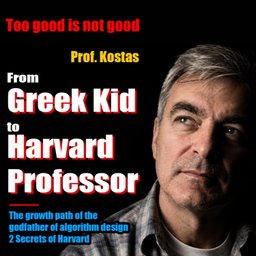
Too good is not good. From Greek kid to Harvard professor. Two Secrets of Harvard
What's the Harvard’s Best-Kept Secrets? Why Is “Too Good” is not goog?Former Harvard professor Kostas will take you on a journey to deconstruct the reality of America’s elite academic circles through a highly dramatic and reflective lens. From his childhood to his university years in Greece, from his early days in the U.S. grinding away at computer vision to becoming a pioneer in AI and aesthetic evaluation, all the way to his tenure as a Harvard professor… Harvard’s Two Best-Kept Secrets: Why Is “Being Too Good” Actually a Curse?Former Harvard professor Kostas will take you on a journey to deconstruct the reality of America’s elite academic circles through a highly dramatic and reflective lens. From his childhood to his university years in Greece, from his early days in the U.S. grinding away at computer vision to becoming a “guru” in pioneering AI and aesthetic evaluation, and finally to his tenure as a Harvard professor…
Reach and audience
Public platform figures. Ratings count people who left a rating, not total listeners.
- Apple Podcasts (US)
- 5.0 / 5
- 1 ratings
Contact Merge Mind
- Guest appearances
- Books guests
Based on episode analysis; this does not confirm that the show is currently accepting guests.
Host of Merge Mind?
Claim your podcast to manage its listing and keep your show details accurate.
Pod Engine is an independent podcast discovery and analytics service and is not affiliated with or endorsed by this podcast. Artwork and show content belong to their owners. Full legal notice.
Explore this show
Podcast research with Pod Engine