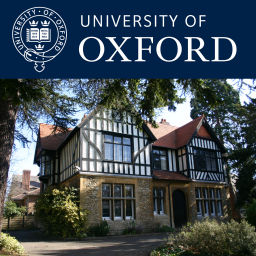
The Middle East Centre, founded in 1957 at St Antony’s College is the centre for the interdisciplinary study of the modern Middle East in the University of Oxford. Centre Fellows teach and conduct research in the humanities and social sciences with direct reference to the Arab world, Iran, Israel and Turkey, with particular emphasis on the nineteenth and twentieth centuries. However, during our regular Friday seminar series, attracting a wide audience, our distinguished speakers bring topics to light that touch on contemporary issues.
Spectral politics in the Middle East and North Africa: the afterlives of violence and the force of memory
Professor Charles RH Tripp (SOAS) delivered the 47th annual George Antonius Memorial Lecture on Friday 5th June 2026, chaired by Professor Eugene Rogan (St Antony’s).
15 Jun 2026
"Barbarian” Women: North African Literary Perspectives on Emancipation
Dr Farah Ben Jemaa (University of Manouba) delivered this seminar at the MEC, chaired by Professor Michael Willis (St Antony’s College), as part of the Gender and Sexuality Seminars series. This talk examines examples of North African literature, from early twentieth-century texts to more recent works. These writings question forms of female emancipation associated with Western norms and imaginaries, while opening space for alternatives rooted in affects and collective experience. The talk will also reflect on the methodological approaches — particularly spatial ones — that may help us read and understand these literary representations.
Farah Ben Jemaa is a professeure agrégée of French literature at the University of Tunis. Her research focuses on space and representations of the self in modern and contemporary literature. She completed a PhD in French Literature at the University of Manouba, with a dissertation on spatiality in the work of Valery Larbaud. She has published on authors including Georges Perec, René Char, and Valery Larbaud, as well as on contemporary cultural productions and artistic practices. Her recent work explores alternative cartographies, and the intersections of literature, politics, and feminist critique. She is currently a visiting academic at St Antony’s College for the Trinity term, thanks to the support of the Hazem Ben-Gacem Tunisia-Oxford Cooperation Programme.
12 May 2026
Contingency of Structures: Triggers and the Social Geography of Revolutionary Episodes in Iran 2017–2022
This MENA Politics Seminar was delivered at the Middle East Centre on Thursday 7 May 2026 by Dr Ali Kadivar (Boston College) and chaired by Professor Neil Ketchley (St Antony’s College). What drives the uneven geographic spread of revolutionary episodes? While structural approaches emphasize
pre-existing fault lines, contingency approaches highlight emergent processes. We synthesize these
perspectives, arguing that specific triggers shape a revolutionary episode's social geography by activating certain
fault lines while leaving others dormant. Through a comparative analysis of three revolutionary episodes in Iran
(2017–2022), each with a distinct trigger, we demonstrate how different triggers shape patterns of contention.
Using event-history and spatial regression analysis of subnational protest data alongside socioeconomic and
political variables, we show that a fuel price hike activated grievances in oil-producing areas, while a repressive
event targeting a woman from an ethnic and religious minority mobilized protests in minority-populated districts.
Our findings illustrate how triggers structure revolutionary mobilization, offering broader insights into the
interaction between structural conditions and contingent events in contentious politics.
BIOGRAPHY
Mohammad Ali Kadivar is a Fellow at the **Radcliffe Institute for Advanced Study at Harvard University and an
Associate Professor of Sociology and International Studies at Boston College. He received his PhD in sociology
from the University of North Carolina at Chapel Hill and previously held a postdoctoral fellowship at the Watson
Institute for International and Public Affairs at Brown University.
His work contributes to political and comparative-historical sociology by examining the causes, dynamics, and
consequences of protest movements. While growing out of his experience as a participant-observer of the pro-
democracy movement in Iran, his research agenda extends comparatively to explore these processes globally
using historical analysis, case studies, and statistical methods.
His book Popular Politics and the Path to Durable Democracy (2022) was published by Princeton University
Press. His research has appeared in journals including American Sociological Review, Social Forces,
Comparative Political Studies, European Sociological Review, and Comparative Politics, and has received
awards from multiple sections of the American Sociological Association.
Who has been a guest on Middle East Centre
Names identified in recent episode analyses. Showing up to five guests.
Rana Husseini
Rev Dr Mitri Alraheb
Dr Hamdan Taha
Munira Khayyat
Dr Iman Saca
Reach and audience
Public platform figures. Ratings count people who left a rating, not total listeners.
YouTube views
36,210
Score snapshot 15 Sept 2025
Apple Podcasts (US)
4.3 / 5
13 ratings
Spotify
5.0 / 5
2 ratings
Podcast Authority Score: 50 / 100
A composite of feed quality, social presence, YouTube performance and engagement. Read the methodology.
Pod Engine is an independent podcast discovery and analytics service and is not affiliated with or endorsed by this podcast. Artwork and show content belong to their owners. Full legal notice.
Explore this show Podcast research with Pod Engine