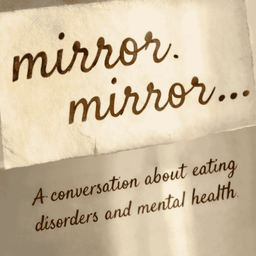
Podcast thumbnail for Mirror Mirror

Mirror Mirror

Claim This Podcast

by Sunol Hills

6 episodes
Updated Daily
Accepts GuestsHas Sponsors

Podcast Overview

This podcast explores eating disorders and mental health through a compassionate, evidence informed lens. Each episode blends clinical insight with real-world understanding, helping listeners make sense of complex experiences around food, body image, trauma, mood, and recovery. Grounded in psychiatry, neuroscience, and lived experience, conversations focus on reducing shame, challenging stigma, and offering clarity without pressure or perfection. Rather than quick fixes, this space emphasizes curiosity, safety, and the slow work of healing. Whether you’re navigating recovery, supporting someone you love, or working in mental health care, this podcast offers thoughtful discussion, gentle education, and reminders that change is possible and you don’t have to do it alone.

Language

🇺🇲

Publishing Since

12/24/2025

2 verified phone numbers on file for Mirror Mirror

Pitch yourself as a guest, propose sponsorships, or reach out directly to the host.

Recent Episodes

Episode thumbnail for Mirror Mirror: The One About Levels of Care (Reaction)

June 3, 2026

Mirror Mirror: The One About Levels of Care (Reaction)

<p>What actually happens when someone with an eating disorder ends up in a hospital — and how does the system decide what kind of help they need?</p><p>In this reaction episode of Mirror Mirror, Dr. Vikas Duvvuri and Maddie Young watch and respond to a previously filmed conversation between Dr. Duvvuri and Stephanie Needleman, CEO of an inpatient psychiatric hospital and licensed therapist with over 15 years of experience. Maddie adds her perspective as someone who has personally navigated the full spectrum of eating disorder care.</p><p>You'll hear about:</p><ul><li>Why eating disorders are so often missed in emergency settings</li><li>How inpatient psychiatric care works — and what it can and can't do</li><li>The difference between inpatient, residential, IOP, and outpatient treatment</li><li>What resistance to treatment really looks like, and how to work with it</li><li>The role of family advocacy, especially for adolescents</li><li>Practical ways caregivers can support a loved one between discharge and program entry</li><li>Why structure matters so much in early recovery</li></ul><br/><p>Two perspectives, one conversation — clinical expertise meets lived experience.</p><p>🔗 Learn more about support and treatment: <a href="https://www.sunolhills.com" rel="noopener noreferrer" target="_blank">www.sunolhills.com</a></p><p>Subscribe for more conversations on eating disorder recovery, mental health, and body image.</p>

Episode thumbnail for The One About Recovery

March 30, 2026

The One About Recovery

<p><strong>What does eating disorder recovery really feel like?</strong></p><p>In this episode of Mirror Mirror, Maddie shares her personal experience with eating disorder recovery — including the isolation, challenges with treatment, and what actually helped her begin to heal.</p><p>This conversation breaks down the reality of eating disorders beyond what people see on the outside, and why support, structure, and connection matter so much in recovery.</p><p>You’ll hear about:</p><p>• The hidden emotional experience of eating disorders</p><p>• Why recovery can feel isolating</p><p>• Challenges navigating treatment, especially as a teen</p><p>• The role of structure and support in recovery</p><p>• What actually helps people stay engaged in treatment</p><p>• How parents and families can better support loved ones</p><p>If you or someone you care about is struggling with an eating disorder, this episode offers insight, honesty, and hope.</p><p>Recovery is possible — and you’re not alone.</p><p>🔗 Learn more about support and treatment:</p><p><a href="http://www.sunolhills.com" rel="noopener noreferrer" target="_blank">www.sunolhills.com</a></p><p>Subscribe for more conversations on:</p><ul><li>Eating disorder recovery, mental health, and body image.</li></ul><br/>

Episode thumbnail for The One About Being Perfect

February 18, 2026

The One About Being Perfect

<p>The discourse we engage in today revolves around the intricate question, "Why don't I look perfect?" This inquiry serves as a catalyst for a profound exploration into the societal constructs surrounding the notion of perfection, particularly as influenced by pervasive media messaging. As we delve into the complexities of self-image, Dr. Vikas Duvvuri articulates that the crux of the issue lies not merely in the desire to achieve an idealized physique but rather in the methodologies individuals employ to reach such ends, which often exacerbate underlying mental health challenges. We emphasize the importance of understanding that societal standards of beauty are frequently distorted, leading individuals to adopt harmful behaviors in their pursuit of acceptance. Through this episode, we aspire to illuminate the necessity of redefining personal health goals and recognizing the inherent value in one's unique body, thereby fostering a healthier relationship with oneself amidst the cacophony of external expectations.</p><p>Takeaways:</p><ol><li data-list="bullet"><span class="ql-ui" contenteditable="false"></span>In contemporary society, perceptions of perfection are profoundly influenced by pervasive media representations and social trends.</li><li data-list="bullet"><span class="ql-ui" contenteditable="false"></span>Individuals often feel inadequate when they perceive a disconnect between societal ideals and their own realities of appearance or health.</li><li data-list="bullet"><span class="ql-ui" contenteditable="false"></span>The pursuit of specific weight loss targets can inadvertently exacerbate or trigger the onset of eating disorders in vulnerable individuals.</li><li data-list="bullet"><span class="ql-ui" contenteditable="false"></span>Health professionals advocate for a focus on holistic well-being rather than rigid numerical goals in weight management and health.</li><li data-list="bullet"><span class="ql-ui" contenteditable="false"></span>Media's portrayal of beauty often emphasizes unrealistic standards, perpetuating harmful stereotypes that can lead to disordered eating behaviors.</li><li data-list="bullet"><span class="ql-ui" contenteditable="false"></span>Recognizing the unique genetic and personal diversity among individuals is crucial for developing effective and personalized health strategies.</li></ol><br/><p>Dr. Vikas Duvvuri and Alex Haynes engage in a compelling dialogue that interrogates the societal constructs surrounding beauty and perfection. They delve into the notion that perfection, as defined by contemporary media and cultural narratives, is often an elusive and unattainable ideal, which can lead to detrimental mental health outcomes, particularly for those grappling with eating disorders. Dr. Duvvuri articulates that the pressures exerted by these societal standards can create a chasm between individual self-perception and the idealized images portrayed in media, exacerbating feelings of inadequacy and self-doubt. This dissonance is particularly pronounced in the context of individuals who are already vulnerable to body image issues, where the relentless pursuit of perfection becomes a damaging cycle of self-criticism and unhealthy behaviors. Throughout the conversation, the hosts emphasize the importance of shifting the focus from rigid numerical targets to a more nuanced understanding of health that encompasses emotional and psychological well-being. Dr. Duvvuri advocates for a holistic approach to health that prioritizes personal agency and self-acceptance, urging listeners to recognize that beauty cannot be distilled into mere statistics or conformist ideals. The episode further explores the role of media in perpetuating narrow definitions of beauty, highlighting the dangers of consuming content that promotes unrealistic standards. Dr. Duvvuri calls for a collective resistance against these pervasive narratives, encouraging individuals to challenge societal norms and embrace their unique identities as a form of empowerment. In conclusion, this episode serves as both a critique of the prevailing beauty standards and a beacon of hope for those struggling with self-image issues. Dr. Duvvuri and Haynes provide a thoughtful framework for understanding the complexities of body image, advocating for a paradigm shift that values diversity and individuality in the pursuit of health and well-being. By fostering open dialogues about these critical issues, the hosts aspire to inspire a movement toward self-acceptance and resilience against the often toxic messages disseminated by society.</p><p>Links referenced in this episode:</p><ol><li data-list="bullet"><span class="ql-ui" contenteditable="false"></span><a href="https://sunolhills.com" rel="noopener noreferrer" target="_blank">sunolhills.com</a></li></ol><br/><p>Companies mentioned in this episode:</p><ol><li data-list="bullet"><span class="ql-ui" contenteditable="false"></span>Sunol Hills</li><li data-list="bullet"><span class="ql-ui" contenteditable="false"></span>Dove</li><li data-list="bullet"><span class="ql-ui" contenteditable="false"></span>Victoria's Secret</li></ol><br/>

6 total episodes available

Deep-dive analytics for Mirror Mirror

Frequently asked questions

Have a different question and can't find the answer you're looking for? Reach out to our support team by sending us an email and we'll get back to you as soon as we can.

What is Mirror Mirror?

This podcast explores eating disorders and mental health through a compassionate, evidence informed lens. Each episode blends clinical insight with real-world understanding, helping listeners make sense of complex experiences around food, body image, trauma, mood, and recovery.

Grounded in psychiatry, neuroscience, and lived experience, conversations focus on reducing shame, challenging stigma, and offering clarity without pressure or perfection. Rather than quick fixes, this space emphasizes curiosity, safety, and the slow work of healing.

Whether you’re navigating recovery, supporting someone you love, or working in mental health care, this podcast offers thoughtful discussion, gentle education, and reminders that change is possible and you don’t have to do it alone.

How often does this podcast release new episodes?

This podcast updates daily.

Where can I listen to this podcast?

This podcast is available on 4 platforms including Apple Podcasts, Spotify, and more. You can also use the RSS feed directly.

Does this podcast accept guests?

Yes, this podcast regularly features guests.

Legal Disclaimer

Pod Engine is not affiliated with, endorsed by, or officially connected with any of the podcasts displayed on this platform. We operate independently as a podcast discovery and analytics service.

All podcast artwork, thumbnails, and content displayed on this page are the property of their respective owners and are protected by applicable copyright laws. This includes, but is not limited to, podcast cover art, episode artwork, show descriptions, episode titles, transcripts, audio snippets, and any other content originating from the podcast creators or their licensors.

We display this content under fair use principles and/or implied license for the purpose of podcast discovery, information, and commentary. We make no claim of ownership over any podcast content, artwork, or related materials shown on this platform. All trademarks, service marks, and trade names are the property of their respective owners.

While we strive to ensure all content usage is properly authorized, if you are a rights holder and believe your content is being used inappropriately or without proper authorization, please contact us immediately at hey@podengine.ai for prompt review and appropriate action, which may include content removal or proper attribution.

By accessing and using this platform, you acknowledge and agree to respect all applicable copyright laws and intellectual property rights of content owners. Any unauthorized reproduction, distribution, or commercial use of the content displayed on this platform is strictly prohibited.