- 90
- Episodes
- Weekly
- Cadence
- 2024
- First episode
About Moga with Dr Peter Nortier
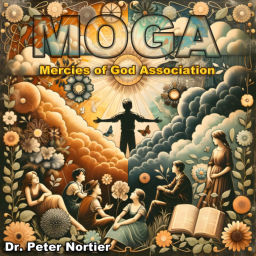
The Mercies of God Association, otherwise known as MOGA, has been involved in radio since 1961. What started off as a radio program evolved into a Full-Time 501C-3 Ministry in 1995. The Founder of MOGA was Dr. Peter Nortier. Upon his passing, the Ministry has continued the radio broadcast on some radio stations and through various social media sites. Our mission is to help create safe places for those who are dealing with mental health issues by building homes, or safe places, especially for our younger generation between the ages of 18 and 30. This generation will know there is hope and they can conquer their pain through the hope that is brought through God's Mercies.
- Publisher
- Dr. Peter Nortier
- Category
- history · religion & spirituality · society & culture
- Language
- en
- Explicit
- No
- First episode
- 18 May 2024
- Latest episode
- 18 Oct 2026
Latest episodes
90 episodes in the feed.
18 Oct 2026
Moga - Mercies of God Association, October 18, 2026
Moga with Dr Peter Nortier The Price of Illicit Sex and David's Downfall The Price of Illicit Sex: David, Bathsheba, and the Downfall of a Saint Dr. Peter Nortier preaches from Second Samuel eleven on David's adultery with Bathsheba, tracing the steps that led a man after God's own heart into sin, murder, and broken fellowship, and warning any believer that the same downfall can happen to them. Opening Scripture and a Timely Question Dr. Peter Nortier opens the broadcast by telling the congregation that tonight's study in Second Samuel chapter eleven will show David's downfall, and that everyone ought to hear it. He recalls a woman stopping him earlier that day to ask whether a professing Christian living in adultery could truly be saved, and he answers plainly that something is wrong, since God's people cannot continue that way. He concedes David committed adultery but stresses that David did not remain in that condition, and that God judged him severely for it. He then asks the congregation to stand as he reads Second Samuel chapter eleven, verses one through ten, the account of David staying behind in Jerusalem while his army fights, seeing Bathsheba washing from his rooftop, and sending for her. He closes the opening with a prayer asking God for listening ears, for strength for believers, and for blessing on those hearing the broadcast over the radio, then invites everyone to sit for the message. Gods Design For Sex In Marriage Nortier announces his subject as the price of illicit sex and says the lesson will first examine what God says about sex between husband and wife, a subject he says churches fail to teach amid what he calls a sex-crazed society. He reads Genesis chapter two on God forming Eve from Adam's rib and declaring the two one flesh, insisting woman was made for man and resisting any modern reversal of that order. Turning to First Corinthians chapter seven, he reads that husband and wife each owe the other due benevolence toward the body, rejecting the claim that a woman's body belongs to her alone. He adds First Corinthians chapter eleven on covering and glory, then reads Hebrews chapter thirteen that marriage is honorable and the bed undefiled, while whoremongers and adulterers God will judge. He tells the congregation sex within marriage is beautiful, meant for enjoyment and procreation, citing Isaac and Rebekah in Genesis twenty-five, but that sex outside marriage, even before a wedding, is fornication in God's sight. David Sees Bathsheba And Sends For Her Nortier returns to the text, retelling how David, a man after God's own heart, stayed home instead of leading his army, slept through the afternoon, and rose in the evening to walk on his roof, where he saw Bathsheba washing herself. He says David sent and inquired after her, learned she was the wife of Uriah the Hittite, and still sent messengers who brought her to him, where he lay with her and she conceived. Nortier insists a believer can fall into grievous sin after conversion, and he warns the congregation never to assume it cannot happen to them, telling of a man he knows who blamed God after being refused by a woman he wished to marry and has not attended church since. He calls this laxity with regard to duty the first step toward David's downfall, reading Matthew twenty-five's parable of the virgins who slumbered while the bridegroom tarried and applying it to a sleeping modern church that neglects evangelism and visitation. Lust, Murder, And Broken Commandments Nortier names looking and lusting after forbidden things as David's second downfall, reading how David inquired after Bathsheba despite learning she belonged to Uriah, and he warns against anything that invites temptation, naming the Ouija board as something no believer should touch. He quotes James chapter one that lust, once conceived, brings forth sin, and sin finished brings forth death. He then describes the spoiling of Bathsheba's virtue and the murder that
11 Oct 2026
Moga - Mercies of God Association, October 11, 2026
Moga with Dr Peter Nortier Drinking at the Fountain of Grace: The Woman of Samaria and the Waterpots That Never Satisfy Dr. Peter Nortier continues his series on John chapter four, preaching on "Drinking at the Fountain of Grace" and showing how the waterpots of religion, lust, education, money, and government leave every heart thirsty until it drinks of Christ. Opening Reading and the Subject Dr. Peter Nortier opens the broadcast by asking the congregation to turn to John chapter four and to stand as he reads verses one through fifteen, the account of Jesus meeting the woman of Samaria at Jacob's well. He announces the subject as Drinking at the Fountain of Grace, telling listeners that being saved does not end the believer's need to keep drinking from that fountain through daily communion with the Lord. He describes his own forty-five minute walk earlier that morning, saying he spent the time talking with the Lord about everyone in the congregation, and he urges anyone without a regular time alone with God to make one, warning it will be one of the hardest habits to build. After a short prayer asking God to open understanding, he seats the congregation and outlines three parts to the lesson ahead: the woman of Samaria herself, the fountain of grace pictured in water, and finally the likelihood of that grace for every listener. Outside the Promises of God Nortier turns to the first point of the lesson, that the woman of Samaria pictures every person outside the Lord Jesus Christ. He insists that only those who know Christ as Lord and Savior are under grace, while everyone else remains under God's law, and he reads Ephesians chapter two, verses eleven through thirteen, on Gentiles once without Christ, strangers from the covenants of promise, having no hope and without God in the world. He rejects the popular claim that everyone today is automatically under grace, saying people want God's promises without wanting his restrictions or his lordship. Turning to Ephesians chapter four, he reads of Gentiles walking in the vanity of their mind with understanding darkened. He recalls a deacon's wife, a preacher's own daughter, who was only saved last week, insisting that no amount of Christian upbringing puts a person under grace until they personally know Christ, and that God alone appoints the timing of each person's conversion. Blind to Spiritual Values and the Jews Nortier moves to the woman's claim in verse twenty that her fathers worshipped on this mountain while the Jews say Jerusalem is the place to worship, calling it evidence that she was blind to spiritual values, just as many are today. He compares her reasoning to people who pray to the moon under a full moon, worship trees, or worship what he calls mother Earth, and to those who insist one church is as good as another. He insists the Bible is the supreme authority and that anything contrary to it is wrong. Reading the Lord's reply that the hour comes when worship will be neither in that mountain nor at Jerusalem, and that salvation is of the Jews, Nortier stresses that the only Savior God ever provided is a Jew, and he warns that anyone who hates the Jews should examine whether they have truly been converted. He adds that the gospel remains hidden only to those who are lost, tying the woman's blindness directly to the condition of unbelievers listening that morning. The Sixth Hour and the Waterpot of Religion Nortier turns to the third mark of the woman, that she was continually thirsty, noting the detail in verse six that she came to the well at the sixth hour. He sets aside the common explanation that other women shunned her, saying instead that six is the number of man and that the hour marks God's own appointment for this harlot to meet Christ, just as God appoints a time and place for every unsaved listener. He then returns to a theme from an earlier message, the different waterpots people carry, beginning with the waterpot of religion. Reading
4 Oct 2026
Moga - Mercies of God Association, October 4, 2026
Moga with Dr Peter Nortier The Woman of Samaria 1 The Woman at Jacob's Well: Predestinated Grace and Living Water Dr. Peter Nortier opens his Moga broadcast with a sermon on John chapter four, the story of Jesus meeting a Samaritan woman at Jacob's well. He uses her life to describe every person outside Christ, and he presses listeners to ask whether they know the Lord personally and to share what Christ has done for them. Opening Reading, Prayer, and the Subject Dr. Peter Nortier opens the broadcast by asking the congregation to take their Bibles and stand as he reads John chapter four, verses one through fourteen. He announces the subject as the woman of Samaria and says the passage will occupy several weeks, asking listeners to read the whole chapter at least three or four times before the next study. After a brief prayer asking God to open hearts and understandings, he invites the congregation to be seated and sketches the geography of the land in Jesus's day. Judea lay to the south around Bethlehem and Jerusalem, Galilee to the north, and Samaria between them, and Jews travelling from Galilee to Judea would not pass through it. Nortier explains that the Samaritans were a mixed people, half Jewish, whom the Jews looked down upon, and that the two groups had no dealings with one another. Outside Christ as a Gentile Stranger Nortier argues that the woman of Samaria stands for every person outside the Lord Jesus Christ. He reads Ephesians chapter two, verses eleven through thirteen, on being Gentiles without Christ, aliens from the commonwealth of Israel, strangers from the covenants of promise, having no hope and without God in the world. He rejects the idea that everyone is already under grace, saying only those who know Christ personally are, and he cites Galatians on all being children of God by faith in Christ Jesus. He points to a religious leader featured on a national television program that day, arguing that religion alone does not save. Then he pauses the message with a direct question to the listener: do you know Christ, and are you depending on him alone to take you to heaven? If not, he says, you stand in the same category as the woman at the well. A Vagabond With Six Husbands Nortier turns to the woman's life and calls her a vagabond who would fit easily into modern society. He explains that the Old Testament Hebrew word for harlot carries the sense of a sturdy, idle beggar who flits from place to place. Quoting verses sixteen through eighteen, he notes that Jesus told her to call her husband, that she had five husbands, and that the man she now lived with was not her husband, which he counts as the sixth. He reads Ephesians chapter four on walking as other Gentiles walk, and he states that about half of modern marriages end in divorce, with couples entering vows already planning an exit. He also warns against church-hoppers who blame every congregation for their problems, saying churches split when too many such vagabonds refuse sound doctrine. He closes the point by saying the woman's deepest need was that nobody could please her, and that she did not find the right person until the seventh, the Lord Jesus Christ. Prejudice in Religion and Salvation of the Jews Nortier moves to verse nineteen, where the woman tells Jesus that her fathers worshipped on the mountain while the Jews said Jerusalem was the place to worship. He hears in her words a prejudice that her religion was as good as true worship, and he applies it to the present day. Quoting First Corinthians chapter eight, verse four, he insists there is only one God, the triune God of Father, Son, and Holy Spirit, and that every person must have a personal encounter with Christ. He names several movements and figures, among them Christian Science, Ellen White, the Baha'i faith, Confucianism, Islam, and Roman Catholic teaching on Mary, arguing that each falls short of the Lord Jesus. He rejects the claim that England and the United
Contact Moga with Dr Peter Nortier
- Guest appearances
- Does not typically book guests
Based on episode analysis; this does not confirm that the show is currently accepting guests.
Host of Moga with Dr Peter Nortier?
Claim your podcast to manage its listing and keep your show details accurate.
Pod Engine is an independent podcast discovery and analytics service and is not affiliated with or endorsed by this podcast. Artwork and show content belong to their owners. Full legal notice.
Explore this show
Podcast research with Pod Engine