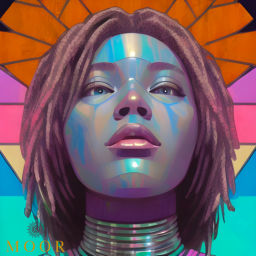
Podcast thumbnail for MOOR
5.0(5 reviews)
29 episodes
Updated Bi-weekly
Accepts GuestsHas Sponsors
23

Podcast Authority

Beta
PoorBased on show quality, social media presence, reviews, charts, and more
Pod Engine
Quality18
Social0
YouTube0
Engagement68

Podcast Overview

This podcast is dedicated toward MOOR empowerment through engaging conversations on community projects and opportunities to develop and organize to ensure justice and equity. This podcast is dedicated to the humanitarian work of justice and equity worldwide. Our voice brings forth our visions but our visions are not possible without each other. We live in abundance if we tap in the network and resources all around.

Language

🇺🇲

Publishing Since

4/1/2021

Unlock The Full Podcast Authority Score Report

See how your podcast performs across key metrics

23

Podcast Authority

Beta
PoorBased on show quality, social media presence, reviews, charts, and more
Pod Engine
Quality18
Social0
YouTube0
Engagement68
6
Excellent Areas
1
Good Performance
12
Growth Opportunities
excellent
Episode Length
5 minutes
Performing excellently!
good
iTunes Tags
6.5/10

Recommendations available

Unlock the full report to see detailed tips

poor
Publishing Consistency
Every 48 days

Recommendations available

Unlock the full report to see detailed tips

+16 More Metrics

Unlock comprehensive insights including:

  • • YouTube presence analysis
  • • Social media reach metrics
  • • RSS compliance scoring
  • • Podcast 2.0 features
  • • Technical standards
What's Included in Your Full Report

Detailed Analytics

  • Complete breakdown of all 19 authority metrics
  • Personalized recommendations for each metric
  • Industry benchmarks and comparisons
  • Technical RSS feed analysis and compliance scoring

Growth Strategies

  • Step-by-step action plans for improvement
  • Quick wins to boost your score immediately
  • Pro tips from successful podcasters
Get your free podcast insights report

See how your show performs across every key metric

Instant delivery
No spam
Attract Better Guests

High authority scores make your podcast more attractive to industry leaders and influencers who want to appear on credible shows.

Secure Sponsorships

Sponsors look for podcasts with proven authority and engagement. Your score demonstrates your podcast's value to potential partners.

Grow Your Audience

Understanding your strengths and weaknesses helps you make data-driven decisions to expand your listener base effectively.

2 verified contact emails on file for MOOR

Pitch yourself as a guest, propose sponsorships, or reach out directly to the host.

Recent Episodes

Episode thumbnail for The Poor Vs. The Poor Drafted Vietnam Veteran Interview Reported from Chocolate City

January 13, 2025

The Poor Vs. The Poor Drafted Vietnam Veteran Interview Reported from Chocolate City

MOOR host MbeziThis interviews a Vietnam War veteran and coining the phrase 'the poor fighting the poor,' explores the intersections of capitalism, class disparities, and the psychological toll of war on communities.

Episode thumbnail for Prisoners of War| Chocolate City| Income Tax featuring Jabari Zakiya

May 7, 2024

Prisoners of War| Chocolate City| Income Tax featuring Jabari Zakiya

Meet Jabari Zakiya, a seasoned engineer whose journey spans from the hallowed halls of Cornell to the innovative corridors of Georgia Tech, and even the celestial realms of NASA. Hailing from the vibrant streets of Washington, D.C. in 1955, Jabari's passion for engineering was ignited early on. However, his path took an unexpected turn when he found himself entangled in a legal battle, wrongfully accused of tax evasion. Refusing to succumb to injustice, Jabari adamantly maintained his innocence, drawing inspiration from a diverse array of literature. From Erwin Shift's "How Anyone Can Stop Paying Income Tax" to George Schuyler's "Black Empire," each page turned fueled his resolve to challenge the status quo. As he navigated through legal complexities, Jabari delved into provocative works such as Sam Greenlee's "The Spook Who Sat Next to the Door" and Benson's "The Law That Never Was," seeking insights into the intricacies of governance and power dynamics. Yet, his intellectual pursuits extended beyond the realm of literature. Engaging in spirited discussions with peers, Jabari explored concepts of home rule, taxation without representation, and the enduring legacy of slavery. Drawing parallels between ancient Kmt and contemporary society, he contemplated the evolution of societal structures and the role of individuals within them. Amidst these discussions, Jabari's passion for mathematics shone brightly, particularly in his fascination with the twin primes conjecture. As he grappled with complex equations, he found solace in the beauty of numerical patterns, transcending the confines of his circumstances. Through it all, Jabari's unwavering commitment to justice and intellectual exploration serves as a testament to the resilience of the human spirit. In his quest for truth and understanding, he embodies the essence of perseverance and intellectual curiosity, inspiring those around him to challenge convention and embrace the pursuit of knowledge.

Episode thumbnail for Generational document: Black & Indian Connection Ft. Granny Gladys

March 17, 2024

Generational document: Black & Indian Connection Ft. Granny Gladys

This podcast is based on the historical interaction between Native American and African-American communities, exemplified by events like the "Desire" ship's arrival and the Pequot Massacre aftermath. Through analysis and personal narratives, such as those shared in this episode featuring Granny Gladys, we can bring attention to hidden histories, confront systemic injustices, and work towards solidarity. This episode explores how division within these communities, perpetuated by racial classification and lateral violence, has deepened psychological trauma and hindered communal unity. It also delves into the impact of cultural erasure, exemplified by paper genocide, and its role in shaping a new social construct to subjugate marginalized groups. Division within Communities: Carl Linnaeus's racial classification system, initiated in 1735, contributed to the internal division within both Native American and African-American communities. By categorizing individuals based on physical traits, this system entrenched stereotypes and fueled self-identity issues, perpetuating self-destructive behavior and inter-community conflicts. In African-American corporate culture, the Willie Lynch Theory exacerbates competition and lateral violence, perpetuating inequality and hindering collective progress. Similarly, within Native American communities, stereotypes perpetuated by European colonization have led to internal divisions, with individuals aligning themselves with either the "good Indian" or "bad Indian" stereotypes. This tribalism fosters inequality, with those fitting the "good Indian" stereotype gaining access to resources and opportunities while those labeled as "bad Indians" face exclusion and marginalization. Paper Genocide and Cultural Erasure: Paper genocide, a tool of the racial power structure, aims to erase heritage and history to create a new social construct. This process, evident in historical assimilation efforts and the systematic removal of Indigenous and African identities, perpetuates confusion and indoctrination, further subjugating marginalized groups.

29 total episodes available

Deep-dive analytics for MOOR

Frequently asked questions

Have a different question and can't find the answer you're looking for? Reach out to our support team by sending us an email and we'll get back to you as soon as we can.

What is MOOR?

This podcast is dedicated toward MOOR empowerment through engaging conversations on community projects and opportunities to develop and organize to ensure justice and equity. This podcast is dedicated to the humanitarian work of justice and equity worldwide. Our voice brings forth our visions but our visions are not possible without each other. We live in abundance if we tap in the network and resources all around.

How often does this podcast release new episodes?

This podcast updates bi-weekly.

Where can I listen to this podcast?

This podcast is available on 8 platforms including Apple Podcasts, Spotify, and more. You can also use the RSS feed directly.

Does this podcast accept guests?

No, this podcast does not typically feature guests.

Legal Disclaimer

Pod Engine is not affiliated with, endorsed by, or officially connected with any of the podcasts displayed on this platform. We operate independently as a podcast discovery and analytics service.

All podcast artwork, thumbnails, and content displayed on this page are the property of their respective owners and are protected by applicable copyright laws. This includes, but is not limited to, podcast cover art, episode artwork, show descriptions, episode titles, transcripts, audio snippets, and any other content originating from the podcast creators or their licensors.

We display this content under fair use principles and/or implied license for the purpose of podcast discovery, information, and commentary. We make no claim of ownership over any podcast content, artwork, or related materials shown on this platform. All trademarks, service marks, and trade names are the property of their respective owners.

While we strive to ensure all content usage is properly authorized, if you are a rights holder and believe your content is being used inappropriately or without proper authorization, please contact us immediately at hey@podengine.ai for prompt review and appropriate action, which may include content removal or proper attribution.

By accessing and using this platform, you acknowledge and agree to respect all applicable copyright laws and intellectual property rights of content owners. Any unauthorized reproduction, distribution, or commercial use of the content displayed on this platform is strictly prohibited.