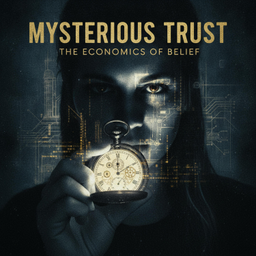
This AI-generated podcast explores the transformative power of extraordinary acts. What makes us believe in a stranger’s promise to repay a loan? Why do some brands inspire loyalty while others crumble overnight? This series examines trust as an economic force—tracing how belief systems shape markets, influence consumer behavior, and determine the success or failure of institutions. Through conversations with economists, psychologists, entrepreneurs, and everyday people, we uncover the hidden architecture of trust and explore what happens when it fractures.
This AI-generated podcast explores the transformative power of extraordinary acts. Throughout this series, we've examined trust as essential to economic function—yet we've also seen how trust enables exploitation, creates inequality, and persists despite evidence of institutional failure. This concluding investigation asks whether there might be economic models that move beyond the trust-distrust binary. We explore alternative frameworks: some economists argue for systems based on transparency and accountability rather than trust, others propose radical decentralization that eliminates the need for trust in central institutions, and still others suggest that trust might be less important than we believe. The episode synthesizes insights from previous investigations, examining what we've learned about trust's role in markets, institutions, and human behavior. We interview economists and philosophers who propose alternatives to trust-dependent systems, and we explore whether those alternatives are actually achievable or merely theoretical. The investigation includes a provocative question: if we designed economic systems from scratch knowing everything we now know about trust failures, what would we create? Would we build more trust-dependent systems or fewer? The episode concludes by examining the paradox at the heart of this entire series: trust is simultaneously essential for economic function and a source of systematic exploitation, and we cannot eliminate one without losing the other. We explore whether accepting this paradox and learning to navigate it wisely might be more realistic than seeking to transcend it.
Learn more about your ad choices. Visit megaphone.fm/adchoices
3 Oct 2026
Artificial Intelligence and the Future of Trust in Automated Systems
This AI-generated podcast explores the transformative power of extraordinary acts. As artificial intelligence systems make increasingly consequential decisions—approving loans, diagnosing diseases, determining criminal sentences—we face a new trust problem: can we trust systems we cannot understand? This episode examines how trust functions in relationships with AI, and what happens when we must rely on systems whose decision-making processes remain opaque even to their creators. We investigate the specific trust challenges: AI systems trained on biased historical data perpetuate discrimination, AI systems can fail in unexpected ways when encountering situations outside their training data, and AI systems provide no explanation for their decisions. The investigation includes interviews with AI researchers who study interpretability and trust, and with people harmed by AI systems' decisions. We examine specific cases: credit scoring algorithms that deny loans based on opaque criteria, facial recognition systems that misidentify people, and medical AI systems that make recommendations doctors cannot verify. The episode explores whether transparency about AI limitations builds or undermines trust—does knowing that a system is imperfect make us trust it less, or does transparency enable appropriate trust calibration? We also investigate whether we should trust AI systems at all, or whether some domains require human judgment and accountability that AI cannot provide. The investigation includes a controversial argument that our rush to deploy AI systems has outpaced our ability to understand and trust them.
Learn more about your ad choices. Visit megaphone.fm/adchoices
24 Sept 2026
Employment as Asymmetric Trust Between Workers and Employers
This AI-generated podcast explores the transformative power of extraordinary acts. Employment relationships are fundamentally built on trust asymmetry—workers must trust employers to pay fairly, provide safe conditions, and treat them with respect, while employers trust workers to perform competently and not exploit company resources. This episode examines how employment trust has evolved and deteriorated over time. We trace the shift from long-term employment relationships where workers and employers built genuine trust over decades, to contemporary gig economy arrangements where trust is minimal and transactional. The investigation includes perspectives from labor economists who study how employment relationships affect worker well-being, and from workers who describe their experiences of trust and betrayal. We examine specific trust failures: wage theft where employers simply don't pay workers for hours worked, unsafe working conditions that employers knowingly maintain, and the rise of automated monitoring that signals employers' distrust of workers. The episode explores how the decline of employment trust affects worker loyalty, productivity, and well-being. We also investigate how workers respond to employment distrust—through unionization, quiet quitting, or exit to other employment. The investigation includes a controversial argument that contemporary employment practices have become so exploitative that trust between workers and employers has become impossible, and that this represents a fundamental failure of market mechanisms.
Learn more about your ad choices. Visit megaphone.fm/adchoices
Contact Mysterious Trust The Economics of Belief
Guest appearances
Books guests
Based on episode analysis; this does not confirm that the show is currently accepting guests.
Host of Mysterious Trust The Economics of Belief?
Claim your podcast to manage its listing and keep your show details accurate.
Pod Engine is an independent podcast discovery and analytics service and is not affiliated with or endorsed by this podcast. Artwork and show content belong to their owners. Full legal notice.
Explore this show Podcast research with Pod Engine