


Weitere Informationen finden Sie auf www.psychologie-lernen.de oder dem gleichnamigen Youtube-Kanal.
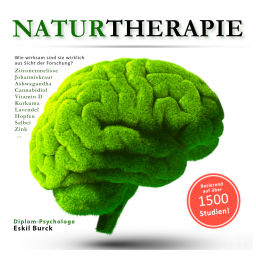
Naturtherapie bei Angst und Depression - Der Podcast zum Buch!
Claim This Podcastby Dipl. Psych. Eskil Burck
4.6(9 reviews)
72 episodes
Updated Weekly
Accepts GuestsHas SponsorsLocation 🇩🇪
Podcast Overview
Weitere Informationen finden Sie auf www.psychologie-lernen.de oder dem gleichnamigen Youtube-Kanal.
Language
🇩🇪
Publishing Since
4/10/2021
1 verified contact email on file for Naturtherapie bei Angst und Depression - Der Podcast zum Buch!
Pitch yourself as a guest, propose sponsorships, or reach out directly to the host.
Recent Episodes
April 3, 2026
Vermeide diese (meine) Fehler, um soziale Angst loszuwerden.
Im Umgang mit sozialen Ängsten bin ich früher immer wieder in die gleichen Fallen getappt: 1. Ich habe (verzweifelt) versucht, die Angst zu unterdrücken. Doch was passiert, wenn wir unsere Emotionen einfach wegsperren wollen? Studien wie die von Levitt et al. (2004) zeigen, dass dieses Unterdrücken die Symptome nicht mildert, sondern verstärkt – ähnlich wie ein Wasserball, den man unter Wasser drückt und der dann mit umso mehr Geschwindigkeit nach oben schnellt. Statt gegen die Angst zu kämpfen, könnte Akzeptanz der Schlüssel sein. Eifert und Heffner (2003) haben eindrucksvoll bewiesen, dass Akzeptanzstrategien weitaus effektiver sind als verzweifelte Kontrollversuche, um panikartige Symptome zu lindern. Fehler Nummer zwei war die gigantische Selbstaufmerksamkeit... __________________ Studien und Bücher (nur kleine Auswahl; weitere Studien sind im Buch: "Angst – was hilft wirklich..." zu finden): Eifert, G. H., and Heffner, M. (2003). The effects of acceptance versus control contexts on avoidance of panic-related symptoms. Journal of Behavior Therapy and Experimental Psychiatry, 34(3-4), 293-312. Levitt, J. T., Brown, T. A., Orsillo, S. M., and Barlow, D. H. (2004). The effects of acceptance versus suppression of emotion on subjective and psychophysiological response to carbon dioxide challenge in patients with panic disorder. Behavior therapy, 35(4), 747-766. Goldin, P. R., Morrison, A., Jazaieri, H., Brozovich, F., Heimberg, R., and Gross, J. J. (2016). Group CBT versus MBSR for social anxiety disorder: A randomized controlled trial. Journal of consulting and clinical psychology, 84(5), 427. Nordahl, H. M., Borkovec, T. D., Hagen, R., Kennair, L. E., Hjemdal, O., Solem, S., ... and Wells, A. (2018). Metacognitive therapy versus cognitive–behavioural therapy in adults with generalised anxiety disorder. BJPsych open, 4(5), 393-400. Nordahl, H. M., Vogel, P. A., Morken, G., Stiles, T. C., Sandvik, P., and Wells, A. (2016). Paroxetine, cognitive therapy or their combination in the treatment of social anxiety disorder with and without avoidant personality disorder: a randomized clinical trial. Psychotherapy and psychosomatics, 85(6), 346-356. Goldin, P. R., Morrison, A., Jazaieri, H., Brozovich, F., Heimberg, R., and Gross, J. J. (2016). Group CBT versus MBSR for social anxiety disorder: A randomized controlled trial. Journal of consulting and clinical psychology, 84(5), 427. Webb, T. L., Miles, E., and Sheeran, P. (2012). Dealing with feeling: a meta-analysis of the effectiveness of strategies derived from the process model of emotion regulation. Psychological bulletin, 138(4), 775. Bücher und Podcasts von Dipl. Psych. Eskil Burck: Buch: Angst - Was hilft wirklich gegen Angst und Panikattacken? (https://psychologie-lernen.de/buecher/angst-was-hilft-wirklich-das-buch/) Buch: Naturtherapie bei Angst und Depression (https://psychologie-lernen.de/naturtherapie-bei-angst-und-depression-das-buch-diplom-psychologe-eskil-burck/) Audio-Podcast: Angst – Was hilft wirklich? https://podcasts.apple.com/de/podcast/angst-was-hilft-wirklich-gegen-angst-und-panikattacken/id1450856027
January 3, 2026
Neue Studie: Hilft Yoga gegen Angst und Panikattacken?
Yoga bietet nicht nur körperliche Vorteile, sondern kann auch bei psychischen Herausforderungen wie Panikstörungen eine wichtige Rolle spielen. Eine aktuelle Studie von Yadla et al. (2024) untersuchte, wie Yoga als ergänzende Behandlung zu Standardtherapien bei Panikstörungen wirken kann. In der Studie wurden 64 Teilnehmer*innen zufällig in zwei Gruppen aufgeteilt: eine erhielt lediglich die übliche Behandlung (Medikamente, kognitive Verhaltenstherapie etc.), während die andere zusätzlich ein 12-wöchiges Yogaprogramm absolvierte. Dieses umfasste Atemübungen (Pranayama), Meditation und körperliche Übungen wie Sonnengrüße und verschiedene Asanas. Ziel war es, sowohl die physischen als auch psychologischen Aspekte von Panikstörungen anzugehen. Die Ergebnisse zeigten, dass die Yoga-Gruppe signifikant bessere Werte in der Reduktion von Angst (gemessen mit der Hamilton Anxiety Rating Scale; beeindruckende Effektstärke d= 7.02) und der Lebensqualität erzielte als die Kontrollgruppe. Insbesondere wurden psychologische, soziale und umweltbezogene Verbesserungen dokumentiert. Dies zeigt, dass Yoga eine wertvolle Ergänzung in der Behandlung von Panikstörungen darstellen kann, indem es sowohl Stress reduziert als auch das allgemeine Wohlbefinden fördert (Yadla et al., 2024). Einige Fragen bleiben jedoch noch offen... __________________ Studien und Bücher (nur kleine Auswahl; weitere Studien sind im Buch: "Angst – was hilft wirklich..." zu finden): Broocks, A., Bandelow, B., Pekrun, G., George, A., Meyer, T., Bartmann, U., ... and Rüther, E. (1998). Comparison of aerobic exercise, clomipramine, and placebo in the treatment of panic disorder. American Journal of Psychiatry, 155(5), 603-609. Gaudlitz, K., Plag, J., Dimeo, F., and Ströhle, A. (2015). Aerobic exercise training facilitates the effectiveness of cognitive behavioral therapy in panic disorder. Depression and anxiety, 32(3), 221-228. Machado, S., Telles, G., Magalhaes, F., Teixeira, D., Amatriain-Fernandez, S., Budde, H., ... and Sa Filho, A. S. (2022). Can regular physical exercise be a treatment for panic disorder? A systematic review. Expert Review of Neurotherapeutics, 22(1), 53-64. Saeed, S. A., Cunningham, K., and Bloch, R. M. (2019). Depression and anxiety disorders: benefits of exercise, yoga, and meditation. American family physician, 99(10), 620-627. Yadla, V. S., Patil, N. J., Kamarthy, P., Matti, M. R., YADLA, V. S., Patil, N. J., and Matti, M. (2024). Effect of integrated yoga as an adjuvant to standard care for panic disorder: A randomized control trial study. Cureus, 16(1). Vorkapic, C. F., and Rangé, B. (2014). Reducing the symptomatology of panic disorder: the effects of a yoga program alone and in combination with cognitive-behavioral therapy. Frontiers in psychiatry, 5, 177. Bücher und Podcasts von Dipl. Psych. Eskil Burck: Buch: Angst - Was hilft wirklich gegen Angst und Panikattacken? (https://psychologie-lernen.de/buecher/angst-was-hilft-wirklich-das-buch/) Buch: Naturtherapie bei Angst und Depression (https://psychologie-lernen.de/naturtherapie-bei-angst-und-depression-das-buch-diplom-psychologe-eskil-burck/) Audio-Podcast: Angst – Was hilft wirklich? https://podcasts.apple.com/de/podcast/angst-was-hilft-wirklich-gegen-angst-und-panikattacken/id1450856027
April 5, 2025
Weniger INSTAGRAM und TIKTOK, mehr Lebensfreude? – Was besagt die Forschung wirklich?
Was würde passieren, wenn wir unsere Zeit auf Social Media drastisch reduzieren würden? Würde es uns dann besser gehen? Mehrere Studien legen nahe, dass dies durchaus der Fall sein könnte. Hunt et al. (2018) fanden heraus, dass das Begrenzen der Nutzung von Social Media zu signifikant weniger Einsamkeit und Depressionen führte. In einer ähnlichen Untersuchung berichteten Lambert et al. (2022), dass bereits eine einwöchige Pause von Social Media das Wohlbefinden steigern und Ängste reduzieren könnte. Allerdings ist unklar, ob diese Effekte langfristig anhalten oder ob sie lediglich kurzfristige Verbesserungen darstellen. Brown und Kuss (2020) untersuchten speziell die Rolle der Angst, etwas zu verpassen (FOMO), und fanden heraus, dass diese nach einigen Tagen ohne soziale Medien deutlich abnimmt. Eine weitere Studie von Smith et al. (2024) zeigte, dass junge Frauen nach einer Social-Media-Auszeit Verbesserungen im Selbstwertgefühl und Körperbild berichteten... Ist ein "Social Media Detox" also eine der besten Interventionen für unsere Lebensfreude, die man durchführen kann? Es kommt darauf an... __________________ Studien und Bücher (nur kleine Auswahl; weitere Studien sind im Buch: "Angst – was hilft wirklich..." zu finden): Brown, L., and Kuss, D. J. (2020). Fear of missing out, mental wellbeing, and social connectedness: a seven-day social media abstinence trial. International Journal of Environmental Research and Public Health, 17(12), 4566. Hunt, M. G., Marx, R., Lipson, C., and Young, J. (2018). No more FOMO: Limiting social media decreases loneliness and depression. Journal of Social and Clinical Psychology, 37(10), 751-768. Smith, O. E., Mills, J. S., and Samson, L. (2024). Out of the loop: Taking a one-week break from social media leads to better self-esteem and body image among young women. Body image, 49, 101715. Vally, Z., and D'Souza, C. G. (2019). Abstinence from social media use, subjective well‐being, stress, and loneliness. Perspectives in Psychiatric Care, 55(4), 752-759. Lambert, J., Barnstable, G., Minter, E., Cooper, J., and McEwan, D. (2022). Taking a one-week break from social media improves well-being, depression, and anxiety: a randomized controlled trial. Cyberpsychology, Behavior, and Social Networking, 25(5), 287-293. Bücher und Podcasts von Dipl. Psych. Eskil Burck: Buch: Angst - Was hilft wirklich gegen Angst und Panikattacken? (https://psychologie-lernen.de/buecher/angst-was-hilft-wirklich-das-buch/) Buch: Naturtherapie bei Angst und Depression (https://psychologie-lernen.de/naturtherapie-bei-angst-und-depression-das-buch-diplom-psychologe-eskil-burck/) BUCH: WAS TUN, WENN KINDER NICHT HÖREN? https://psychologie-lernen.de/was-tun-wenn-kinder-nicht-hoeren-wie-die-psychologische-forschung-eltern-und-lehrern-dabei-hilft-die-beste-erziehung-zu-finden/ Audio-Podcast: Angst – Was hilft wirklich? https://podcasts.apple.com/de/podcast/angst-was-hilft-wirklich-gegen-angst-und-panikattacken/id1450856027
72 total episodes available
Similar Podcasts
Discover related shows you might enjoy
Deep-dive analytics for Naturtherapie bei Angst und Depression - Der Podcast zum Buch!
Frequently asked questions
Have a different question and can't find the answer you're looking for? Reach out to our support team by sending us an email and we'll get back to you as soon as we can.
- What is Naturtherapie bei Angst und Depression - Der Podcast zum Buch!?
- How often does this podcast release new episodes?
This podcast updates weekly.
- Where can I listen to this podcast?
This podcast is available on 9 platforms including Apple Podcasts, Spotify, and more. You can also use the RSS feed directly.
- Does this podcast accept guests?
No, this podcast does not typically feature guests.
Legal Disclaimer
Pod Engine is not affiliated with, endorsed by, or officially connected with any of the podcasts displayed on this platform. We operate independently as a podcast discovery and analytics service.
All podcast artwork, thumbnails, and content displayed on this page are the property of their respective owners and are protected by applicable copyright laws. This includes, but is not limited to, podcast cover art, episode artwork, show descriptions, episode titles, transcripts, audio snippets, and any other content originating from the podcast creators or their licensors.
We display this content under fair use principles and/or implied license for the purpose of podcast discovery, information, and commentary. We make no claim of ownership over any podcast content, artwork, or related materials shown on this platform. All trademarks, service marks, and trade names are the property of their respective owners.
While we strive to ensure all content usage is properly authorized, if you are a rights holder and believe your content is being used inappropriately or without proper authorization, please contact us immediately at hey@podengine.ai for prompt review and appropriate action, which may include content removal or proper attribution.
By accessing and using this platform, you acknowledge and agree to respect all applicable copyright laws and intellectual property rights of content owners. Any unauthorized reproduction, distribution, or commercial use of the content displayed on this platform is strictly prohibited.