- 14
- Episodes
- 5
- Ratings
- Weekly
- Cadence
- 2026
- First episode
About Navigating Dementia
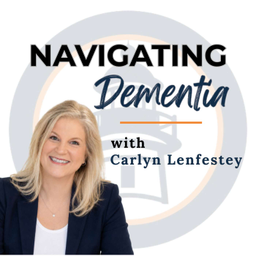
Navigating Dementia is a weekly podcast for anyone caring for someone with dementia, family and professional caregivers alike. Host Carlyn Lenfestey, a physical therapist and dementia care specialist with 25 years of clinical experience, uses real stories and everyday moments to show that behavior is never the problem. It's always the signal. Each episode teaches one meaningful insight through her Wheel of Function Framework™, delivered like a conversation over coffee, not a lecture. There is always a better way.
- Publisher
- Carlyn Lenfestey
- Category
- education · health & fitness
- Language
- en
- Explicit
- No
- First episode
- 19 Jul 2026
- Latest episode
- 19 Oct 2026
Latest episodes
14 episodes in the feed.
19 Oct 2026
Lewy Body Dementia Symptoms: Sleep Changes, Hallucinations, and Fluctuating Alertness
What happens when something has clearly changed, but forgetting isn’t the first thing a family notices? With Lewy body dementia, someone may follow a conversation over breakfast and need much more help getting dressed a little later. Add disrupted sleep, changes in movement, or seeing things that aren’t there, and families can be left wondering what’s happening and how to respond. In Episode 12 of Navigating Dementia, Carlyn Lenfestey explores Lewy body dementia through Know the Waters, the first step in The Signal Guide Navigation System™. We follow an imagined morning to understand how the diagnosis can affect everyday life, what support might help, and what to bring up with the healthcare team, even if you’re still seeking a diagnosis. In this episode, we talk about: Why attention and alertness can change throughout the day. How Lewy body dementia can look different from Alzheimer’s disease. Sleep changes, including long stretches awake, daytime sleepiness, and acting out dreams. Why the care partner’s sleep needs to be part of the care conversation too. Responding when someone sees something you don’t see. How stiffness, slower movement, and dizziness can affect daily tasks. Why medication sensitivity matters and sudden changes need medical attention. Preparing for appointments when what happens at home doesn’t show up in the doctor’s office. A question to carry into your week: “What part of the day do we most need help with?” Start with one example. Maybe getting dressed has become harder, sleep is interfering with meals, or you’re awake much of the night. Write down what’s happening and how it’s affecting both of you. You don’t need the right medical words to ask for help. Free Doctor Visit Guide Use this free guide to organize your observations and questions before the next appointment. You don’t need a diagnosis to use it. Download the Doctor Visit Guide (https://abetterwaydementiacaresolutions.com/page/copy-of-navigating-the-doctor-s-office-landing-page) Next week, we’ll explore frontotemporal dementia, or FTD, including why changes in behavior, judgment, personality, or language may appear before memory becomes the main concern. Connect with Carlyn FREE Weekly Newsletter, Finding Our Way In Dementia Care -> https://abetterwaydementiacaresolutions.com/page/weekly-sign-up-1?utm_source=podcast&utm_medium=shownotes&utm_campaign=ep12_shownotes (https://abetterwaydementiacaresolutions.com/page/weekly-sign-up-1?utm_source=podcast&utm_medium=shownotes&utm_campaign=ep12_shownotes) Website -> https://www.abetterwaydementiacaresolutions.com (https://www.abetterwaydementiacaresolutions.com) Facebook -> https://www.facebook.com/profile.php?id=61562478140551 (https://www.facebook.com/profile.php?id=61562478140551) Instagram -> https://www.instagram.com/abetterwaydementiacaresolution/ (https://www.instagram.com/abetterwaydementiacaresolution/) LinkedIn -> https://www.linkedin.com/in/carlyn-lenfestey-abetterwaydementiacaresolutions (https://www.linkedin.com/in/carlyn-lenfestey-abetterwaydementiacaresolutions) Pinterest -> https://www.pinterest.com/carlyn0832/ (https://www.pinterest.com/carlyn0832/) YouTube -> https://www.youtube.com/@NavigatingDementia (https://www.youtube.com/@NavigatingDementia) If this episode helped you understand a difficult moment, share it with someone who could use that same support. DISCLAIMER The information provided in this episode is for educational purposes only and should not be considered medical advice. Always consult with a doctor or a licensed physical therapist before starting any new exercise routine, using assistive devices, or following the recommendations mentioned. Every individual's needs are different, and professional guidance is essential to ensure safety and appropriateness of care.
6 Oct 2026
Alzheimer's and Memory Loss: Why They Remember the Past but Forget Today 11
How can someone with Alzheimer’s remember an old song but forget a conversation from five minutes ago? That difference can be confusing, especially when you’re answering the same question again or trying to help with an appointment they don’t remember discussing. In Episode 11 of Navigating Dementia, Carlyn Lenfestey explores Alzheimer’s disease through Know the Waters, the first step in The Signal Guide Navigation System™. We look at what the diagnosis can tell us about everyday challenges and how to offer support that fits the abilities available right now. In this episode, we talk about: Why familiar songs and older memories may remain accessible when recent information doesn’t. How Alzheimer’s can affect attention, language, judgment, sequencing, and visual-spatial processing. Why making coffee or getting dressed involves more brain work than we realize. Ways to offer information without depending entirely on memory. How to make conversation feel less like a memory test. Why sudden confusion needs immediate medical attention. A question to carry into your week: “How can I make this easier to do with the abilities that are available right now?” Try noticing one moment that asks the person to remember something. Could you offer the information when it’s needed, show the next step, or use a reminder they can understand? Next week, we’ll explore Lewy body dementia, including changes in attention, alertness, movement, and visual experience. Connect with Carlyn FREE Weekly Newsletter, Finding Our Way In Dementia Care -> https://abetterwaydementiacaresolutions.com/page/weekly-sign-up-1?utm_source=podcast&utm_medium=shownotes&utm_campaign=ep11_shownotes (https://abetterwaydementiacaresolutions.com/page/weekly-sign-up-1?utm_source=podcast&utm_medium=shownotes&utm_campaign=ep9_shownotes) Website -> https://www.abetterwaydementiacaresolutions.com (https://www.abetterwaydementiacaresolutions.com/) Facebook -> https://www.facebook.com/profile.php?id=61562478140551 (https://www.facebook.com/profile.php?id=61562478140551) Instagram -> https://www.instagram.com/abetterwaydementiacaresolution/ (https://www.instagram.com/abetterwaydementiacaresolution/) LinkedIn -> https://www.linkedin.com/in/carlyn-lenfestey-abetterwaydementiacaresolutions (https://www.linkedin.com/in/carlyn-lenfestey-abetterwaydementiacaresolutions) Pinterest -> https://www.pinterest.com/carlyn0832/ (https://www.pinterest.com/carlyn0832/) YouTube -> https://www.youtube.com/@NavigatingDementia (https://www.youtube.com/@NavigatingDementia) If this episode helped you understand a difficult moment, share it with someone who could use that same support.
5 Oct 2026
Alzheimer's and Memory Loss: Why They Remember the Past but Forget Today
How can someone with Alzheimer’s remember an old song but forget a conversation from five minutes ago? That difference can be confusing, especially when you’re answering the same question again or trying to help with an appointment they don’t remember discussing. In Episode 11 of Navigating Dementia, Carlyn Lenfestey explores Alzheimer’s disease through Know the Waters, the first step in The Signal Guide Navigation System™. We look at what the diagnosis can tell us about everyday challenges and how to offer support that fits the abilities available right now. In this episode, we talk about: Why familiar songs and older memories may remain accessible when recent information doesn’t. How Alzheimer’s can affect attention, language, judgment, sequencing, and visual-spatial processing. Why making coffee or getting dressed involves more brain work than we realize. Ways to offer information without depending entirely on memory. How to make conversation feel less like a memory test. Why sudden confusion needs immediate medical attention. A question to carry into your week: “How can I make this easier to do with the abilities that are available right now?” Try noticing one moment that asks the person to remember something. Could you offer the information when it’s needed, show the next step, or use a reminder they can understand? Next week, we’ll explore Lewy body dementia, including changes in attention, alertness, movement, and visual experience. Connect with Carlyn FREE Weekly Newsletter, Finding Our Way In Dementia Care -> https://abetterwaydementiacaresolutions.com/page/weekly-sign-up-1?utm_source=podcast&utm_medium=shownotes&utm_campaign=ep11_shownotes (https://abetterwaydementiacaresolutions.com/page/weekly-sign-up-1?utm_source=podcast&utm_medium=shownotes&utm_campaign=ep9_shownotes) Website -> https://www.abetterwaydementiacaresolutions.com (https://www.abetterwaydementiacaresolutions.com/) Facebook -> https://www.facebook.com/profile.php?id=61562478140551 (https://www.facebook.com/profile.php?id=61562478140551) Instagram -> https://www.instagram.com/abetterwaydementiacaresolution/ (https://www.instagram.com/abetterwaydementiacaresolution/) LinkedIn -> https://www.linkedin.com/in/carlyn-lenfestey-abetterwaydementiacaresolutions (https://www.linkedin.com/in/carlyn-lenfestey-abetterwaydementiacaresolutions) Pinterest -> https://www.pinterest.com/carlyn0832/ (https://www.pinterest.com/carlyn0832/) YouTube -> https://www.youtube.com/@NavigatingDementia (https://www.youtube.com/@NavigatingDementia) If this episode helped you understand a difficult moment, share it with someone who could use that same support.
28 Sept 2026
Dementia Behaviors: 3 Things to Know Before You Respond
When something changes in dementia care, it is easy to focus on the part we can see. Someone refuses help, becomes upset, or repeatedly says, “I need to go home.” Our first instinct may be to correct the words or stop the behavior. But before we decide what the signal means or how to respond, we need some context. In this episode, Carlyn introduces the first part of The Signal Guide Navigation System™: Know the Waters. She shares why it helps to look at three things together: the diagnosis, the person, and what is happening in this particular moment. A diagnosis can give us a useful place to start, but it cannot tell us everything about the person in front of us. Their history, routines, roles, preferences, and the conditions around them all shape what they may need. When we widen the frame, we have a better chance of offering support that actually fits. In this episode, we talk about: Why dementia does not look the same in every person What a specific diagnosis can help us understand How to move forward when you do not have a clear diagnosis Why knowing the person matters just as much as knowing the disease How sleep, noise, timing, routine, and other details can change the moment A different way to respond when someone says, “I need to go home” What is coming next in the Know the Waters mini-series How stages and retrogenesis will fit into future conversations The three questions to carry with you What do I know about the diagnosis? What do I know about this person? What is happening in this moment? You will not always have complete answers. This is not a test you have to pass before you can help someone. It is a way to use what you know, notice what you do not know, and stay open to what the person is showing you. Connect with Carlyn FREE Weekly Newsletter, Finding Our Way In Dementia Care -> https://abetterwaydementiacaresolutions.com/page/weekly-sign-up-1?utm_source=podcast&utm_medium=shownotes&utm_campaign=ep10_shownotes (https://abetterwaydementiacaresolutions.com/page/weekly-sign-up-1?utm_source=podcast&utm_medium=shownotes&utm_campaign=ep9_shownotes) Website -> https://www.abetterwaydementiacaresolutions.com (https://www.abetterwaydementiacaresolutions.com/) Facebook -> https://www.facebook.com/profile.php?id=61562478140551 (https://www.facebook.com/profile.php?id=61562478140551) Instagram -> https://www.instagram.com/abetterwaydementiacaresolution/ (https://www.instagram.com/abetterwaydementiacaresolution/) LinkedIn -> https://www.linkedin.com/in/carlyn-lenfestey-abetterwaydementiacaresolutions (https://www.linkedin.com/in/carlyn-lenfestey-abetterwaydementiacaresolutions) Pinterest -> https://www.pinterest.com/carlyn0832/ (https://www.pinterest.com/carlyn0832/) YouTube -> https://www.youtube.com/@NavigatingDementia (https://www.youtube.com/@NavigatingDementia)
21 Sept 2026
Why Stopping a Dementia Behavior Doesn't Solve the Real Problem
Before you focus on getting a behavior to stop, ask the question that actually changes things: what is it trying to tell you? In this episode, Carlyn picks up a thread from the woman and the playlist story from last week, then widens it into something bigger. Someone keeps standing up during a meal. You sit them back down, remind them it's time to eat, move the chair in, and a minute later they're up again. If we only look at what we can see, the goal quietly becomes keeping them in the chair. But the standing up might be a full bladder, a sore hip, a too loud room, food they don't recognize, or someone across the room they're trying to follow. The person may not have the words to explain any of that, so their response becomes the explanation instead. The problem was never just about making a behavior stop. Carlyn makes the case that behavior, and its absence, is information, and that safety always comes first when there's real danger, but once that danger has passed, the real work is asking what changed, not just how to make it stop. She also introduces something new: The Signal Guide™ navigation system, six words that sit around the Wheel of Function™ for the moments when a tip doesn't work and you need a way to think it through instead. In This Episode Why "how do I stop this" is the wrong first question The lunch table story: a behavior that kept coming back Change is communication, in both directions Introducing The Signal Guide™ navigation system What's coming next: knowing the waters you're navigating Connect with Carlyn FREE Weekly Newsletter, Finding Our Way In Dementia Care -> https://abetterwaydementiacaresolutions.com/page/weekly-sign-up-1?utm_source=podcast&utm_medium=shownotes&utm_campaign=ep9_shownotes (https://abetterwaydementiacaresolutions.com/page/weekly-sign-up-1?utm_source=podcast&utm_medium=shownotes&utm_campaign=ep9_shownotes) Website -> https://www.abetterwaydementiacaresolutions.com (https://www.abetterwaydementiacaresolutions.com) Facebook -> https://www.facebook.com/profile.php?id=61562478140551 (https://www.facebook.com/profile.php?id=61562478140551) Instagram -> https://www.instagram.com/abetterwaydementiacaresolution/ (https://www.instagram.com/abetterwaydementiacaresolution/) LinkedIn -> https://www.linkedin.com/in/carlyn-lenfestey-abetterwaydementiacaresolutions (https://www.linkedin.com/in/carlyn-lenfestey-abetterwaydementiacaresolutions) Pinterest -> https://www.pinterest.com/carlyn0832/ (https://www.pinterest.com/carlyn0832/) YouTube -> https://www.youtube.com/@NavigatingDementia (https://www.youtube.com/@NavigatingDementia) The wheel is only half the picture. Follow the show, because next week we start knowing the waters, the first step in actually using it.
14 Sept 2026
Why a Busy Room Can Make Dementia Symptoms Look Worse Than They Are.
Before you decide someone "can't do that anymore," ask the question that actually changes things: did anything change in them, or just around them? In this episode, Carlyn tells the story of a woman in an adult day program whose mornings kept falling apart. The moment staff approached to help her wash and dress, she'd become agitated and shut down, and once that happened, there was no bringing her back into the task. An occupational therapist could have focused on the task itself, a different cue, a different way of laying out the clothes. Instead, she looked at what was happening before the task even started. She found the music this woman loved, built it into a calm, familiar playlist, and had staff turn it on twenty to thirty minutes before they ever approached her. By the time they did, she was calmer, more open, and able to do far more of the washing and dressing herself. That story opens the fifth and final spoke of the Wheel of Function™: the environment. The problem was never just the room, the noise, or the lighting. Carlyn walks through why the same person can feed herself just fine at her kitchen table but struggle in a busy dining room, why a dim bathroom or a dark mat can quietly work against someone, and why a drawer with twelve shirt choices can feel like less independence, not more. She also makes the case that care partners are part of the environment too, our voice, our pace, our touch, even how rushed we feel, and that with all five spokes now on the table, the wheel is finally whole. In This Episode The playlist that changed a woman's whole morning Why "the environment" means a lot more than the room Everyday moments where the environment quietly makes things harder You're part of the environment too What's coming next: behavior as a signal Connect with Carlyn FREE Weekly Newsletter, Finding Our Way In Dementia Care -> https://abetterwaydementiacaresolutions.com/page/weekly-sign-up-1?utm_source=podcast&utm_medium=shownotes&utm_campaign=ep6_shownotes (https://abetterwaydementiacaresolutions.com/page/weekly-sign-up-1?utm_source=podcast&utm_medium=shownotes&utm_campaign=ep6_shownotes) Website -> https://www.abetterwaydementiacaresolutions.com (https://www.abetterwaydementiacaresolutions.com/) Facebook -> https://www.facebook.com/profile.php?id=61562478140551 (https://www.facebook.com/profile.php?id=61562478140551) Instagram -> https://www.instagram.com/abetterwaydementiacaresolution/ (https://www.instagram.com/abetterwaydementiacaresolution/) LinkedIn -> https://www.linkedin.com/in/carlyn-lenfestey-abetterwaydementiacaresolutions (https://www.linkedin.com/in/carlyn-lenfestey-abetterwaydementiacaresolutions) Pinterest -> https://www.pinterest.com/carlyn0832/ (https://www.pinterest.com/carlyn0832/) YouTube -> https://www.youtube.com/@NavigatingDementia (https://www.youtube.com/@NavigatingDementia) All five spokes of the Wheel of Function™ are on the table now, sensory, emotional, physical, cognitive, and environmental. Follow the show, because next week is where we start putting them to work.
7 Sept 2026
Dementia and Cognition: Why Everyday Tasks Become Harder
Before you break another task into five careful steps, ask the question that actually changes things: is breaking it down helping her brain, or asking it to do more? In this episode, Carlyn goes back to a story from the adult day program, a woman who could not get out of her chair. Standing in front of her and walking through it step by step, "scoot forward, bring your feet back, lean forward, push, stand," made her more stuck with every instruction. But walking over, holding out a hand, and saying "come with me" gave her a much better chance of standing. Same woman, same chair, same legs. What changed was the demand on her brain, and that is where this episode opens up the third spoke of the Wheel of Function™: cognition, the spoke Carlyn calls the driver of function. The problem was never just about memory. Cognition is what lets us pay attention long enough to act, understand what is being asked, start a task and stay with it, know what comes next, and notice when something is not working. Carlyn walks through how much of that happens automatically when you get dressed in the morning, and how differently it can look once that process starts to change. Sometimes the shirt can't be found against a bedspread of the same color, that's sensory. Sometimes embarrassment about needing help gets in the way, that's emotion. Sometimes a sore shoulder makes the sleeve painful, that's physical. And sometimes the person can dress beautifully once you hand her the shirt, she just couldn't start on her own, that's cognition. She makes the case for asking "what part is getting in the way?" instead of only "can she do it?", and for changing the task to fit the brain in front of you instead of expecting that brain to adapt to everything around it. In This Episode The chair story, revisited, and what actually changed Why breaking a task into steps can make it harder, not easier Getting dressed, and everything the brain does without being asked A simple shift: "what part is getting in the way?" instead of "can she do it?" This week's practice: pick one hard moment and get curious Connect with Carlyn FREE Weekly Newsletter, Finding Our Way In Dementia Care -> https://abetterwaydementiacaresolutions.com/page/weekly-sign-up-1?utm_source=podcast&utm_medium=shownotes&utm_campaign=ep6_shownotes (https://abetterwaydementiacaresolutions.com/page/weekly-sign-up-1?utm_source=podcast&utm_medium=shownotes&utm_campaign=ep6_shownotes) Website -> https://www.abetterwaydementiacaresolutions.com (https://www.abetterwaydementiacaresolutions.com/) Facebook -> https://www.facebook.com/profile.php?id=61562478140551 (https://www.facebook.com/profile.php?id=61562478140551) Instagram -> https://www.instagram.com/abetterwaydementiacaresolution/ (https://www.instagram.com/abetterwaydementiacaresolution/) LinkedIn -> https://www.linkedin.com/in/carlyn-lenfestey-abetterwaydementiacaresolutions (https://www.linkedin.com/in/carlyn-lenfestey-abetterwaydementiacaresolutions) Pinterest -> https://www.pinterest.com/carlyn0832/ (https://www.pinterest.com/carlyn0832/) YouTube -> https://www.youtube.com/@NavigatingDementia (https://www.youtube.com/@NavigatingDementia) If this one changed how you'll look at "he can't do this anymore," follow the show so you catch what's next: the cognitive spoke, and the story that's been waiting for it since this episode's opening scene.
31 Aug 2026
Why Physical Function in Dementia Isn't Just About Strength
Before you decide someone "just can't do this anymore," ask the question that actually changes things: what's different about this moment, not this person? In this episode, Carlyn tells the story of a woman at an adult day program who had the hardest time getting out of a chair. Staff would walk her through it step by step, scoot forward, feet back, lean forward, push, stand, and the more instructions she got, the more stuck she became. But if Carlyn simply held out her hand and said "come with me," she had a much better chance of standing up on her own. Same woman. Same chair. Same legs. What changed wasn't her strength, it was what her brain was being asked to do with the information coming at her. That's the doorway into the third spoke of the Wheel of Function™: physical function, and why it is so much more than a question of "is she strong enough." The problem was never just about the chair, or the six-step instruction, or the sweater that didn't get finished. Carlyn walks through why "he did it this morning" doesn't mean "he can do it tonight," why a couch can be a harder physical task than a dining chair even for the exact same person, why unexplained pain often hides behind "he doesn't want to," and why more help isn't always better help. She makes the case that physical function fluctuates the same way it does in any of us, and that the real question is never "can they or can't they," it's "what do they need to be successful right now." In This Episode The chair everyone assumed was a strength problem The six-step instruction that got in the way Why "he did it this morning" doesn't mean "he can do it tonight" What "how much help is actually helpful" really means What's coming next in the series Connect with Carlyn FREE Weekly Newsletter, Finding Our Way In Dementia Care -> https://abetterwaydementiacaresolutions.com/page/weekly-sign-up-1?utm_source=podcast&utm_medium=shownotes&utm_campaign=ep6_shownotes (https://abetterwaydementiacaresolutions.com/page/weekly-sign-up-1?utm_source=podcast&utm_medium=shownotes&utm_campaign=ep6_shownotes) Website -> https://www.abetterwaydementiacaresolutions.com (https://www.abetterwaydementiacaresolutions.com) Facebook -> https://www.facebook.com/profile.php?id=61562478140551 (https://www.facebook.com/profile.php?id=61562478140551) Instagram -> https://www.instagram.com/abetterwaydementiacaresolution/ (https://www.instagram.com/abetterwaydementiacaresolution/) LinkedIn -> https://www.linkedin.com/in/carlyn-lenfestey-abetterwaydementiacaresolutions (https://www.linkedin.com/in/carlyn-lenfestey-abetterwaydementiacaresolutions) Pinterest -> https://www.pinterest.com/carlyn0832/ (https://www.pinterest.com/carlyn0832/) YouTube -> https://www.youtube.com/@NavigatingDementia (https://www.youtube.com/@NavigatingDementia) If this one changed how you'll look at "he can't do this anymore," follow the show so you catch what's next: the cognitive spoke, and the story that's been waiting for it since this episode's opening scene.
24 Aug 2026
Why Dementia Behavior Is Never Just About the Task
Before you label another moment "just agitation" or "a behavior problem," ask the question that actually changes things: what might this person be feeling right now? In this episode, Carlyn tells the story of a resident in long-term care who kept ending up on the floor, not from a stumble, not from a lost transfer, just a sudden trip to the floor, usually right after a loud noise. No reaching, no sliding, no lost balance, nothing about it looked like a normal fall. The pattern didn't make sense until Carlyn learned what was underneath it: a man with severe PTSD, taking cover from a sound only he could really hear. What started as a mystery about falls became the doorway into the second spoke of the Wheel of Function™: emotional function, and how much of dementia behavior is actually emotion wearing a different name. The problem was never just about the falls, or the anger, or the shower that got refused. Carlyn walks through why a mom might pull away from a shower, why a dad might insist he has to get home to a mother who's been gone for twenty years, and why "leave me alone" might be less about agitation and more about a very human need for control. She traces the shift from asking "how do we stop this behavior" to asking "what might this person be feeling right now," and why that one change opens up entirely different options for care. In This Episode The "falls" that weren't falls What "hit the deck" had to do with it Why the truth isn't always the kindest thing to say Why anger might be about control, not confusion What's coming next in the series Connect with Carlyn FREE Weekly Newsletter, Finding Our Way In Dementia Care -> https://abetterwaydementiacaresolutions.com/page/weekly-sign-up-1?utm_source=podcast&utm_medium=shownotes&utm_campaign=ep5_shownotes (https://abetterwaydementiacaresolutions.com/page/weekly-sign-up-1?utm_source=podcast&utm_medium=shownotes&utm_campaign=ep5_shownotes) Website -> https://www.abetterwaydementiacaresolutions.com (https://www.abetterwaydementiacaresolutions.com) Facebook -> https://www.facebook.com/profile.php?id=61562478140551 (https://www.facebook.com/profile.php?id=61562478140551) Instagram -> https://www.instagram.com/abetterwaydementiacaresolution/ (https://www.instagram.com/abetterwaydementiacaresolution/) LinkedIn -> https://www.linkedin.com/in/carlyn-lenfestey-abetterwaydementiacaresolutions (https://www.linkedin.com/in/carlyn-lenfestey-abetterwaydementiacaresolutions) Pinterest -> https://www.pinterest.com/carlyn0832/ (https://www.pinterest.com/carlyn0832/) YouTube -> https://www.youtube.com/@NavigatingDementia (https://www.youtube.com/@NavigatingDementia) If this one hit close to home, follow the show so you catch what's next: another spoke of the Wheel of Function™, and how it connects to everything we covered today.
17 Aug 2026
Why Dementia Behavior Doesn't Make Sense (Until You Look at the Senses)
Before you label another moment "just the dementia," ask the question that actually changes things: what is this person's brain actually taking in right now? In this episode, Carlyn tells the story of a resident in long-term care who kept ending up on the floor, and the evaluation that turned up nothing: strong legs, steady balance, a normal gait. The falls didn't make sense until she started asking a different set of questions, not just how he was falling, but where and when. What she found in his room became the doorway into the first spoke of the Wheel of Function: sensory function, and how much more it covers than most caregivers ever think to ask about. The problem was never just about falls. Carlyn walks through why a person might suddenly refuse a shower, stop answering questions in a noisy room, or pull away from a familiar touch, and why each of those moments might be the brain's sensory system trying to communicate something the words can't. She traces the shift from asking "how do we stop this behavior" to asking "what is this person's brain actually seeing, hearing, and feeling right now," and why that one change opens up entirely different options for care. In This Episode The evaluation that found nothing wrong What a maroon bedspread had to do with it Why "refusing" a shower might be a sensory response The question that turns behavior into a clue What's coming next in the series Connect with Carlyn FREE Weekly Newsletter, Finding Our Way In Dementia Care -> https://abetterwaydementiacaresolutions.com/page/weekly-sign-up-1?utm_source=podcast&utm_medium=shownotes&utm_campaign=ep4_shownotes (https://abetterwaydementiacaresolutions.com/page/weekly-sign-up-1?utm_source=podcast&utm_medium=shownotes&utm_campaign=ep4_shownotes) Website -> https://www.abetterwaydementiacaresolutions.com (https://www.abetterwaydementiacaresolutions.com/)Facebook -> https://www.facebook.com/profile.php?id=61562478140551 (https://www.facebook.com/profile.php?id=61562478140551)Instagram -> https://www.instagram.com/abetterwaydementiacaresolution/ (https://www.instagram.com/abetterwaydementiacaresolution/)LinkedIn -> https://www.linkedin.com/in/carlyn-lenfestey-abetterwaydementiacaresolutions (https://www.linkedin.com/in/carlyn-lenfestey-abetterwaydementiacaresolutions)Pinterest -> https://www.pinterest.com/carlyn0832/ (https://www.pinterest.com/carlyn0832/) YouTube -> https://www.youtube.com/@NavigatingDementia (https://www.youtube.com/@NavigatingDementia) If this one hit close to home, follow the show so you catch what's next: another spoke of the Wheel of Function, and how it connects to everything we covered today.
10 Aug 2026
Why Does Dementia Information Feel So Scattered and Overwhelming?
Before you take another course or read another article, ask the question that actually changes things: how does this all connect? In this episode, Carlyn tells the story of a dementia course she took in Nashville almost ten years before she ever started A Better Way, and the question that followed her home afterward: she believed everything she'd just learned, so why couldn't she picture how any of it fit together? That question sat with her through years of treating patients and leading family workshops, watching good, true information pile up in disconnected pieces instead of one usable picture. The problem was never a lack of information. Most families and professionals already have plenty of it, scattered across courses, research, and well-meaning advice that rarely agrees on where to start. Carlyn walks through the bicycle wheel she used to teach families, and why it worked right up until the next important idea refused to fit next to it. She traces the years of quietly testing, sketching, and rethinking that followed, and the unexpected question, sparked by her own logo, that finally connected everything into what she now calls the Wheel of Function Framework. In This Episode Why more information rarely solves the real problem The bicycle wheel that worked, until it didn't The question a lighthouse accidentally asked How ten years of scattered ideas became one framework What's coming next in the series Connect with Carlyn FREE Weekly Newsletter, Finding Our Way In Dementia Care -> https://abetterwaydementiacaresolutions.com/page/weekly-sign-up-1?utm_source=podcast&utm_medium=shownotes&utm_campaign=ep3_shownotes (https://abetterwaydementiacaresolutions.com/page/weekly-sign-up-1?utm_source=podcast&utm_medium=shownotes&utm_campaign=ep3_shownotes) Website -> https://www.abetterwaydementiacaresolutions.com (https://www.abetterwaydementiacaresolutions.com) Facebook -> https://www.facebook.com/profile.php?id=61562478140551 (https://www.facebook.com/profile.php?id=61562478140551) Instagram -> https://www.instagram.com/abetterwaydementiacaresolution/ (https://www.instagram.com/abetterwaydementiacaresolution/) LinkedIn -> https://www.linkedin.com/in/carlyn-lenfestey-abetterwaydementiacaresolutions (https://www.linkedin.com/in/carlyn-lenfestey-abetterwaydementiacaresolutions) Pinterest -> https://www.pinterest.com/carlyn0832/ (https://www.pinterest.com/carlyn0832/) YouTube -> https://www.youtube.com/@NavigatingDementia (https://www.youtube.com/@NavigatingDementia) If this one hit close to home, follow the show so you catch what's next: how each spoke of the Wheel of Function actually works.
3 Aug 2026
Why Won't Any Dementia Strategy Work Anymore?
Before you try another redirect or distraction, ask the one question that actually changes things: what's going on? In this episode, Carlyn tells the story of a husband in one of her support groups who'd tried everything, redirecting, distracting, reassuring, validating, and still felt like nothing worked. That conversation cracked open a shift in how she thinks about every hard moment in dementia care. The strategies most of us are taught (redirect, distract, validate, reassure) aren't wrong. But handing them out before understanding what's actually happening is like a physical therapist prescribing exercises before ever evaluating what's causing the pain. Carlyn walks through why the same behavior, like refusing a shower, can come from five completely different causes, and why the question "what's really going on?" has to come before any response. In This Episode Why "I've tried everything" usually means someone skipped a step, not that they failed The physical therapy parallel: evaluate before you treat Why the same behavior can have completely different causes The one question to ask before reaching for another strategy What's coming next in the series Connect with Carlyn FREE Weekly Newsletter, Finding Our Way In Dementia Care -> https://abetterwaydementiacaresolutions.com/page/weekly-sign-up-1?utm_source=podcast&utm_medium=shownotes&utm_campaign=ep2_shownotes (https://abetterwaydementiacaresolutions.com/page/weekly-sign-up-1?utm_source=podcast&utm_medium=shownotes&utm_campaign=ep2_shownotes) Website -> https://www.abetterwaydementiacaresolutions.com (https://www.abetterwaydementiacaresolutions.com/) Facebook -> https://www.facebook.com/profile.php?id=61562478140551 (https://www.facebook.com/profile.php?id=61562478140551) Instagram -> https://www.instagram.com/abetterwaydementiacaresolution/ (https://www.instagram.com/abetterwaydementiacaresolution/) LinkedIn -> https://www.linkedin.com/in/carlyn-lenfestey-abetterwaydementiacaresolutions (https://www.linkedin.com/in/carlyn-lenfestey-abetterwaydementiacaresolutions) Pinterest -> https://www.pinterest.com/carlyn0832/ (https://www.pinterest.com/carlyn0832/) YouTube -> https://www.youtube.com/@NavigatingDementia (https://www.youtube.com/@NavigatingDementia) If this one hit close to home, follow the show so you catch what's next: how to organize the answers once you're asking better questions.
27 Jul 2026
Why Does Someone With Dementia Try to Go to Work? Learning to Read the Signal
Everyone around him called it confusion. Carlyn came to see it differently, and that shift changed everything. In this first episode of Navigating Dementia, Carlyn shares the story that started it all: her grandfather Steve, a small-town shopkeeper in Limestone, Maine, who spent his mornings getting dressed for work, for a store that had burned down years before. That shift in perspective became the foundation for A Better Way: Dementia Care Solutions. It's the story behind why this show exists, and why Carlyn believes behavior is never the problem, it's always the signal. In This Episode The story of Carlyn's grandfather Steve and the store that burned down Why what looked like confusion wasn't confusion at all How that shift in perspective became the foundation of A Better Way: Dementia Care Solutions What to expect from Navigating Dementia going forward Connect with Carlyn FREE Weekly Newsletter, Finding Our Way In Dementia Care -> https://abetterwaydementiacaresolutions.com/page/weekly-sign-up-1?utm_source=podcast&utm_medium=shownotes&utm_campaign=ep1_shownotes (https://abetterwaydementiacaresolutions.com/page/weekly-sign-up-1?utm_source=podcast&utm_medium=shownotes&utm_campaign=ep1_shownotes) Website -> https://www.abetterwaydementiacaresolutions.com (https://www.abetterwaydementiacaresolutions.com/) Facebook -> https://www.facebook.com/profile.php?id=61562478140551 (https://www.facebook.com/profile.php?id=61562478140551) Instagram -> https://www.instagram.com/abetterwaydementiacaresolution/ (https://www.instagram.com/abetterwaydementiacaresolution/) LinkedIn -> https://www.linkedin.com/in/carlyn-lenfestey-abetterwaydementiacaresolutions (https://www.linkedin.com/in/carlyn-lenfestey-abetterwaydementiacaresolutions) Pinterest -> https://www.pinterest.com/carlyn0832/ (https://www.pinterest.com/carlyn0832/) YouTube -> https://www.youtube.com/@NavigatingDementia (https://www.youtube.com/@NavigatingDementia) If this story sat with you, follow the show so you don't miss what's next.
19 Jul 2026
A Personal Welcome: There Has to Be a Better Way
Welcome to Navigating Dementia. If you've ever found yourself thinking, There has to be a better way, you're in the right place. Most care partners are not looking for more information. They're looking for someone to help them make sense of what they're seeing. When dementia changes the way a person thinks, communicates, or responds to the world around them, it can leave you feeling overwhelmed, uncertain, and wondering if you're doing enough. You are not alone. Join physical therapist, dementia educator, and coach Carlyn Lenfestey each week for practical guidance, heartfelt stories, and a fresh perspective on dementia care. Drawing from more than 25 years of clinical experience and her own family's journey with dementia, Carlyn helps care partners look beyond the behavior, understand what it may be communicating, and respond with greater confidence and compassion. Whether you're caring for a parent, spouse, friend, neighbor, or supporting people professionally, you'll find practical tools, encouragement, and a reminder that you don't have to navigate this journey alone. Welcome. I'm so glad you're here. In This Trailer Why Navigating Dementia was created What you can expect from future episodes A different way to think about dementia care How this podcast will help you make sense of what you're experiencing Connect with Carlyn FREE Weekly Newsletter, Finding Our Way In Dementia Care ->https://abetterwaydementiacaresolutions.com/page/weekly-sign-up-1?utm_source=podcast&utm_medium=shownotes&utm_campaign=trailer_shownotes (https://abetterwaydementiacaresolutions.com/page/weekly-sign-up-1?utm_source=podcast&utm_medium=shownotes&utm_campaign=trailer_shownotes) Website -> https://www.abetterwaydementiacaresolutions.com (https://www.abetterwaydementiacaresolutions.com/) Facebook -> https://www.facebook.com/profile.php?id=61562478140551 (https://www.facebook.com/profile.php?id=61562478140551) Instagram -> https://www.instagram.com/abetterwaydementiacaresolution/ (https://www.instagram.com/abetterwaydementiacaresolution/) LinkedIn -> https://www.linkedin.com/in/carlyn-lenfestey-abetterwaydementiacaresolutions (https://www.linkedin.com/in/carlyn-lenfestey-abetterwaydementiacaresolutions) Pinterest -> https://www.pinterest.com/carlyn0832/ (https://www.pinterest.com/carlyn0832/) YouTube -> https://www.youtube.com/@NavigatingDementia (https://www.youtube.com/@NavigatingDementia) If this sounds like the kind of support you've been looking for, be sure to follow the show so you don't miss an episode. I can't wait to navigate this journey with you.
Reach and audience
Public platform figures. Ratings count people who left a rating, not total listeners.
- Apple Podcasts (US)
- 5.0 / 5
- 3 ratings
- Spotify
- 5.0 / 5
- 2 ratings
Contact Navigating Dementia
- Guest appearances
- Does not typically book guests
Based on episode analysis; this does not confirm that the show is currently accepting guests.
Host of Navigating Dementia?
Claim your podcast to manage its listing and keep your show details accurate.
Pod Engine is an independent podcast discovery and analytics service and is not affiliated with or endorsed by this podcast. Artwork and show content belong to their owners. Full legal notice.
Explore this show
Podcast research with Pod Engine