
NeuroLeadership. Leadership trifft Nervensystem. Nervensystembasierte Führung, mentale Gesundheit & Neuroinklusion für Führungskräfte. Wie beeinflusst das Nervensystem unsere Entscheidungen? Welche Signale erzeugen Sicherheit und wann schaltet das Team in Alarm? In diesem Podcast verbinde ich neurowissenschaftliche Erkenntnisse mit konkreter Führungspraxis: kurze wissenschaftliche Einordnungen, illustrative Fallbeispiele und umsetzbare Impulse für den Alltag. Die Folgen richten sich an Führungskräfte, HR-Verantwortliche und Entscheider:innen, die ihre Führungsqualität stärken, psychologische Sicherheit fördern und die Leistung ihres Teams nachhaltig verbessern wollen. Themen sind u. a.: Selbst- und Co-Regulation, Resilienz, Kommunikation in Stress, neuroinklusive Strukturen und die praktische Haltung, die aus Worten Wirkung macht. Kurz, dicht und handlungsorientiert — ideal für Busy Leaders: 15–25 Minuten pro Folge. Timecodes, Shownotes und Download-Materialien findest Du in den Episodenbeschreibungen.
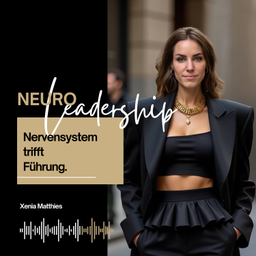
NeuroLeadership
Claim This Podcastby Xenia Matthies
Podcast Overview
NeuroLeadership. Leadership trifft Nervensystem. Nervensystembasierte Führung, mentale Gesundheit & Neuroinklusion für Führungskräfte. Wie beeinflusst das Nervensystem unsere Entscheidungen? Welche Signale erzeugen Sicherheit und wann schaltet das Team in Alarm? In diesem Podcast verbinde ich neurowissenschaftliche Erkenntnisse mit konkreter Führungspraxis: kurze wissenschaftliche Einordnungen, illustrative Fallbeispiele und umsetzbare Impulse für den Alltag. Die Folgen richten sich an Führungskräfte, HR-Verantwortliche und Entscheider:innen, die ihre Führungsqualität stärken, psychologische Sicherheit fördern und die Leistung ihres Teams nachhaltig verbessern wollen. Themen sind u. a.: Selbst- und Co-Regulation, Resilienz, Kommunikation in Stress, neuroinklusive Strukturen und die praktische Haltung, die aus Worten Wirkung macht. Kurz, dicht und handlungsorientiert — ideal für Busy Leaders: 15–25 Minuten pro Folge. Timecodes, Shownotes und Download-Materialien findest Du in den Episodenbeschreibungen.
Language
🇩🇪
Publishing Since
9/27/2025
1 verified contact email on file for NeuroLeadership
Pitch yourself as a guest, propose sponsorships, or reach out directly to the host.
Recent Episodes
July 8, 2026
„Deine Emotionen sind nicht Dein Feind, sondern Deine Landkarte" — Emotionale Selbstführung auf Nervensystem-Ebene
<p>Worum geht's<span style="font-weight: 400;"> </span></p> <p><span style="font-weight: 400;">Die meisten von uns haben gelernt, mit Emotionen zu „arbeiten" statt mit ihnen zu sein. Wut wegatmen. Angst wegdenken. Trauer terminieren. Egal ob im Streit mit dem Partner, beim Blick aufs Handy oder im Konfliktgespräch im Team. Das Problem: Emotionen sind keine Störung im System — sie sind das System, das Dir etwas mitteilt. In dieser Folge übersetzt Du Deine eigenen wiederkehrenden Emotionen in Signale, verstehst, wo sie sich im Nervensystem festsetzen, wenn sie nicht durchlaufen dürfen, und lernst konkrete, nervensystembasierte Regulationstechniken für jede einzelne.</span></p> <p>In dieser Episode lernst Du:</p> <ul> <li style="font-weight: 400;"><span style="font-weight: 400;">Warum Emotionen keine Fehlfunktion, sondern evolutionär codierte Botschaften sind</span></li> <li style="font-weight: 400;"><span style="font-weight: 400;">Was Wut, Angst (akut und anhaltend), Scham, Schuld, Trauer, Traurigkeit, Einsamkeit und Grübeln Dir jeweils zeigen — körperlich, gedanklich und nervensystemisch</span></li> <li style="font-weight: 400;"><span style="font-weight: 400;">Wo Emotionen „steckenbleiben", wenn die körperliche Handlungsbereitschaft nicht abgeschlossen werden kann</span></li> <li style="font-weight: 400;"><span style="font-weight: 400;">Den Unterschied zwischen Regulation und Dysregulation — an vier (plus zwei) konkreten Satzpaaren</span></li> <li style="font-weight: 400;"><span style="font-weight: 400;">Konkrete Regulationstechniken je Emotion, mit Kennzeichnung der Evidenzlage</span></li> <li style="font-weight: 400;"><span style="font-weight: 400;">Eine Kompakt-Landkarte für sechs weitere zentrale Signalemotionen</span></li> </ul> <p>Timestamps</p> <p><span style="font-weight: 400;">00:00 - Intro<br></span><span style="font-weight: 400;">02:00 - Wozu dienen Emotionen <br></span><span style="font-weight: 400;">03:00 - Wenn Emotion zur chronischen Anpassung wird <br></span><span style="font-weight: 400;">05:00 - Körperliche Regulation von Emotionen <br></span><span style="font-weight: 400;">07:00 - Die acht Signal-Emotionen im Detail<br></span><span style="font-weight: 400;">07:44 - Wut <br></span><span style="font-weight: 400;">10:00 - Angst <br></span><span style="font-weight: 400;">15:00 - Schuld <br></span><span style="font-weight: 400;">17:00 - Scham <br></span><span style="font-weight: 400;">21:00 - Trauer <br></span><span style="font-weight: 400;">24:00 - Einsamkeit <br></span><span style="font-weight: 400;">26:00 - Grübeln <br></span><span style="font-weight: 400;">31:00 - Unterschied Dysregulation vs. Regulation <br></span><span style="font-weight: 400;">33:00 - Mini-Übung<br></span><span style="font-weight: 400;">35:00 - Beispiel Wut Regulation & Ressourcing <br></span><span style="font-weight: 400;">36:00 - 3 Takeaways </span></p> <p> </p> <p>Keywords</p> <p><span style="font-weight: 400;">Emotionale Selbstführung, Nervensystem Regulation, Emotionsregulation Führung, Polyvagal Theorie, Neurozeption, Appraisal Theorie Emotionen, Handlungstendenz, Wut regulieren, Angst Nervensystem, Scham Schuld Unterschied, Trauer verarbeiten, Einsamkeit Führungskraft, Grübeln stoppen, Selbstregulation Leadership, NeuroLeadership Podcast</span></p> <h3>Kontakt</h3> <p>LinkedIn: Xenia Matthies<br>E-Mail:<span> </span><a href="mailto:xenia@matthiesonline.com">xenia@matthiesonline.com</a><br>Webseite:<span> </span><a href="https://www.xeniamatthies.com/">http://www.xeniamatthies.com<br></a>Workshops:<span> </span><a href="http://www.neurosynergyhub.com/">www.neurosynergyhub.com</a> <br><br><strong>Du willst mehr zum Thema Neuroinformierte Führung erfahren? </strong></p> <p>Sichere Dir<span> </span><a href="https://www.xeniamatthies.com/neuroinklusion-playbook-auszug" target="_blank" rel="noopener noreferrer">jetzt 3 kostenlose Führungstools</a><span> </span>aus dem Playbook.<br>Einstieg in das Thema Neurodivergenz & Führung –<span> </span><a href="https://www.xeniamatthies.com/impulsvortrag-klarheit" target="_blank" rel="noopener noreferrer">hier geht's zur Online-Keynote</a></p> <p><strong>Dienstleistungen</strong></p> <ul> <li>Keynotes, die bewegen und verändern </li> <li>Führungskräftekompetenztrainings zu NeuroLeadership & Neuroinklusion</li> <li>Workshops für eine bessere Zusammenarbeit</li> <li>1:1-Sparring/Coaching</li> </ul> <p><strong>Produkte </strong></p> <ul> <li>Neuroinklusion Starter-Kit:<a href="https://www.xeniamatthies.com/impulsvortrag-klarheit" target="_blank" rel="noopener noreferrer"><span> </span>Führung brauch Klarheit.</a><span> </span>Ein Erlebniskurs, der Wissen nicht vermittelt, sondern Wahrnehmung verändert. </li> <li><a href="https://www.xeniamatthies.com/playbook-neuroinklusion" target="_blank" rel="noopener noreferrer">Playbook Neuroinklusion</a><span> </span>mit über 30 praxisnahen Tools und Formaten für mehr Neuroinklusion im Führungsalltag und in der Organisation</li> <li><a href="https://amzn.eu/d/jiZOv0s" target="_blank" rel="noopener noreferrer">Mein Kind hat ADHS, und jetzt?<span> </span></a>Wie traumasensible Kindererziehung gelingen kann. Ein Booklet zur Begleitung der Kindererziehung.</li> <li>Von Wunsch zur Wirklichkeit - Manifestieren beginnt im Nervensystem.<span> </span><a href="https://amzn.eu/d/hH7PiRF" target="_blank" rel="noopener noreferrer">The Inner Code<span> </span></a>ist Dein Journal auf dem Weg zu mehr Sicherheit</li> </ul> <p><strong>Quellenverweise </strong></p> <p>Appraisal-Theorie & Handlungstendenz</p> <ul> <li style="font-weight: 400;"><span style="font-weight: 400;">Frijda, N. H. (1986). </span><span style="font-weight: 400;">The Emotions.</span><span style="font-weight: 400;"> Cambridge University Press. — Grundlage der Handlungstendenz-Theorie.</span></li> <li style="font-weight: 400;"><span style="font-weight: 400;">Lazarus, R. S. (1991). </span><span style="font-weight: 400;">Emotion and Adaptation.</span><span style="font-weight: 400;"> Oxford University Press. — Appraisal als kognitive Grundlage von Emotion.</span></li> <li style="font-weight: 400;"><span style="font-weight: 400;">Übersichtsartikel: „The Feeling of Action Tendencies: On the Emotional Regulation of Goal-Directed Behavior" —</span><a href="https://pmc.ncbi.nlm.nih.gov/articles/PMC3246364/"> <span style="font-weight: 400;">https://pmc.ncbi.nlm.nih.gov/articles/PMC3246364/</span></a></li> </ul> <p>Neurozeption & Polyvagal-Theorie</p> <ul> <li style="font-weight: 400;"><span style="font-weight: 400;">Porges, S. W. (2007/2011). Polyvagal-Theorie — Grundkonzept der Neurozeption.</span></li> <li style="font-weight: 400;"><span style="font-weight: 400;">Einordnung zur aktuellen wissenschaftlichen Debatte: „Polyvagal Theory Has Not Been 'Debunked'" —</span><a href="https://www.psychologytoday.com/us/blog/the-hope-circuit/202604/polyvagal-theory-has-not-been-debunked"> <span style="font-weight: 400;">https://www.psychologytoday.com/us/blog/the-hope-circuit/202604/polyvagal-theory-has-not-been-debunked</span></a><span style="font-weight: 400;"> (unabhängig von der Debatte um den Mechanismus bestätigt: rhythmische Bewegung, Humming und verlängerte Ausatmung wirken nachweislich auf den autonomen Zustand)</span></li> </ul> <p>Physiologischer Seufzer / verlängerte Ausatmung</p> <ul> <li style="font-weight: 400;"><span style="font-weight: 400;">Balban, M. Y., Neri, E., Kogon, M. M., et al. (2023). „Brief structured respiration practices enhance mood and reduce physiological arousal." </span><span style="font-weight: 400;">Cell Reports Medicine</span><span style="font-weight: 400;">, 4(1), 100895. —</span><a href="https://hubermanlab.stanford.edu/publications/brief-structured-respiration-practices-enhance-mood-and-reduce-physiological-arousal"> <span style="font-weight: 400;">https://hubermanlab.stanford.edu/publications/brief-structured-respiration-practices-enhance-mood-and-reduce-physiological-arousal</span></a></li> </ul> <p>Humming & Herzratenvariabilität</p> <ul> <li style="font-weight: 400;"><span style="font-weight: 400;">Übersicht zu Vagustonus-Aktivierung durch Vokalisation:</span><a href="https://www.frontiersin.org/journals/psychology/articles/10.3389/fpsyg.2017.00213/full"> <span style="font-weight: 400;">https://www.frontiersin.org/journals/psychology/articles/10.3389/fpsyg.2017.00213/full</span></a><span style="font-weight: 400;"> (Laborde, Mosley & Thayer, 2017)</span></li> </ul> <p>Schuld vs. Scham</p> <ul> <li style="font-weight: 400;"><span style="font-weight: 400;">Tangney, J. P., & Dearing, R. L. (2002). </span><span style="font-weight: 400;">Shame and Guilt.</span><span style="font-weight: 400;"> Guilford Press.</span></li> <li style="font-weight: 400;"><span style="font-weight: 400;">Tangney, J. P. (1995). „Constructive and Destructive Aspects of Shame and Guilt." —</span><a href="http://www.rpforschools.net/articles/ASP/Tangney%201995%20Constructive%20and%20Destructive%20Aspects%20of%20Shame%20and%20Guilt.pdf"> <span style="font-weight: 400;">http://www.rpforschools.net/articles/ASP/Tangney%201995%20Constructive%20and%20Destructive%20Aspects%20of%20Shame%20and%20Guilt.pdf</span></a></li> <li style="font-weight: 400;"><span style="font-weight: 400;">Übersichtsartikel zu Fokus-Unterschied und Handlungstendenzen:</span><a href="https://pmc.ncbi.nlm.nih.gov/articles/PMC3083636/"> <span style="font-weight: 400;">https://pmc.ncbi.nlm.nih.gov/articles/PMC3083636/</span></a></li> </ul> <p>Trauer / Dual-Process-Modell</p> <ul> <li style="font-weight: 400;"><span style="font-weight: 400;">Stroebe, M., & Schut, H. (1999). Dual Process Model of Coping with Bereavement — etabliertes Modell zur oszillierenden Trauerverarbeitung (Grundlagenwerk, keine Einzelquelle mit Direktlink verifiziert — hier gemäß Standard „Forschung zeigt" formuliert).</span></li> </ul> <p>Einsamkeit / Evolutionäre Theorie der Einsamkeit</p> <ul> <li style="font-weight: 400;"><span style="font-weight: 400;">Cacioppo, J. T., & Cacioppo, S. (2018). „Loneliness in the Modern Age: An Evolutionary Theory of Loneliness (ETL)." —</span><a href="https://www.researchgate.net/publication/325362716"> <span style="font-weight: 400;">https://www.researchgate.net/publication/325362716</span></a></li> <li style="font-weight: 400;"><span style="font-weight: 400;">Cacioppo, S., et al. (2015). „Loneliness and implicit attention to social threat." —</span><a href="https://pubmed.ncbi.nlm.nih.gov/26274315/"> <span style="font-weight: 400;">https://pubmed.ncbi.nlm.nih.gov/26274315/</span></a></li> </ul> <p>Unsicherheitsintoleranz, Sorge & Grübeln</p> <ul> <li style="font-weight: 400;"><span style="font-weight: 400;">Freeston, M. H., et al. (1994). Definition der Unsicherheitsintoleranz (IU).</span></li> <li style="font-weight: 400;"><span style="font-weight: 400;">Übersichtsstudie zu IU, Sorge und Rumination:</span><a href="https://www.sciencedirect.com/science/article/abs/pii/S0887618510000848"> <span style="font-weight: 400;">https://www.sciencedirect.com/science/article/abs/pii/S0887618510000848</span></a></li> </ul>
May 21, 2026
Das Nervensystem als Betriebssystem - was Führung wirklich steuert
<h2>Worum geht's</h2> <p><span style="font-weight: 400;">Psychisch bedingte Fehlzeiten sind in 18 Jahren um 159 Prozent gestiegen – und die meisten Antworten darauf greifen zu kurz. Denn das Problem ist kein individuelles: Es ist ein struktureller Konflikt zwischen moderner Arbeitsorganisation und der Neurobiologie des menschlichen Nervensystems. Diese Episode legt das Fundament – wissenschaftlich präzise, praxisnah, ohne Wellness-Rhetorik.</span></p> <p>In dieser Episode lernst Du:</p> <ul> <li style="font-weight: 400;"><span style="font-weight: 400;">Was das autonome Nervensystem ist und warum es das Betriebssystem menschlicher Leistungsfähigkeit ist</span></li> <li style="font-weight: 400;"><span style="font-weight: 400;">Was Neurozeption ist und warum Zustände nicht gewählt, sondern aktiviert werden</span></li> <li style="font-weight: 400;"><span style="font-weight: 400;">Welche drei Zustandsmuster das ANS aktiviert – und wie sie sich in Führung und Teamdynamik zeigen</span></li> <li style="font-weight: 400;"><span style="font-weight: 400;">Was HPA-Achse und allostatische Last mit chronischer Erschöpfung zu tun haben</span></li> <li style="font-weight: 400;"><span style="font-weight: 400;">Wie aktuelle Arbeitsstrukturen neurobiologisch inkompatibel sind: Lärm, Unterbrechungen, Meetingkulturen, Unkontrollierbarkeit, Bewertungsdruck</span></li> <li style="font-weight: 400;"><span style="font-weight: 400;">Was chronische Dysregulation neurobiologisch mit Depression und Angststörungen verbindet</span></li> <li style="font-weight: 400;"><span style="font-weight: 400;">Warum Neuroinklusion kein Sonderformat ist, sondern Qualitätsmaßstab für Organisationsdesign</span></li> <li style="font-weight: 400;"><span style="font-weight: 400;">Wie Du mit dem Struktur-Audit Deine eigene Führungsumgebung durch die neurobiologische Linse betrachtest</span></li> </ul> <h2>Timestamps</h2> <ul> <li style="font-weight: 400;">00:00 –<span> </span><span style="font-weight: 400;">Deep Dive Intro</span></li> <li style="font-weight: 400;"><span style="font-weight: 400;"><strong>01:00 </strong>–<span> </span>Der Mechanismus der hinter Leistung steckt </span></li> <li style="font-weight: 400;">02:00 –<span> </span><span style="font-weight: 400;">Hook: 159 Prozent – und was wir falsch diagnostizieren</span></li> <li style="font-weight: 400;">04:00 –<span> </span><span style="font-weight: 400;">Das Betriebssystem Mensch: ANS, Neurozeption, Polyvagaltheorie</span></li> <li style="font-weight: 400;"><span style="font-weight: 400;"><strong>07:00</strong> –<span> </span><span> </span>Zustandsmuster </span></li> <li style="font-weight: 400;">12:00 –<span> </span><span style="font-weight: 400;">Stress, HPA-Achse und allostatische Last</span></li> <li style="font-weight: 400;">15:00 –<span> </span><span style="font-weight: 400;">Co-Regulation: Kurzbrücke</span></li> <li style="font-weight: 400;">16:30 –<span> </span><span style="font-weight: 400;">Gefahrensignale </span></li> <li style="font-weight: 400;"><span style="font-weight: 400;"><strong>21:00 </strong>–<span> </span>Struktureller Konflikt: Arbeitswelt vs. Nervensystem</span></li> <li style="font-weight: 400;">24:00 –<span> </span><span style="font-weight: 400;">Dysregulation und psychische Gesundheit – die Datenlage</span></li> <li style="font-weight: 400;">27:00 –<span> </span><span style="font-weight: 400;">Neurodivergenz als Frühwarnsystem</span></li> <li style="font-weight: 400;">29:00 –<span> </span><span style="font-weight: 400;">Neuroinklusion als universelles Designprinzip</span></li> <li style="font-weight: 400;">30:00 –<span> </span><span style="font-weight: 400;">Struktur-Audit: 5 Fragen durch die neurobiologische Linse</span></li> <li style="font-weight: 400;">35:00 –<span> </span><span style="font-weight: 400;">Takeaways</span></li> <li style="font-weight: 400;">37:00 –<span> </span><span style="font-weight: 400;">Wochenaufgabe: Kalender-Audit</span></li> </ul> <h2>Keywords</h2> <p><span style="font-weight: 400;">Autonomes Nervensystem, Führung, Nervensystemregulation, Co-Regulation, Neurozeption, Polyvagaltheorie, Neuroinklusion, Dysregulation, HPA-Achse, allostatische Last, psychologische Sicherheit, mentale Gesundheit, Attention Residue, Selbstregulation, Burnout, kognitive Ergonomie, neurodivergent, Organisationsdesign, Struktur-Audit, erlernte Hilflosigkeit</span></p> <p><br><br></p> <h2>Über Xenia</h2> <p><span style="font-weight: 400;">Ich bin Xenia Matthies – Wirtschaftspsychologin, systemische Beraterin und Neuroinclusion & Mental Wellbeing Strategin. Ich arbeite mit Führungskräften und Organisationen daran, mentale Gesundheit nicht als Benefit, sondern als Infrastruktur für Leistung zu verstehen.<br>Mein Fokus: neuroinklusive Führung, Selbst- und Co-Regulation und Arbeitsstrukturen, die Menschen nicht dysregulieren – sondern stärken.</span></p> <p> </p> <h2>Kontakt & Links</h2> <ul> <li style="font-weight: 400;"><span style="font-weight: 400;">LinkedIn: Xenia Matthies</span></li> <li style="font-weight: 400;"><span style="font-weight: 400;">E-Mail: xenia@matthiesonline.com</span></li> <li style="font-weight: 400;"><span style="font-weight: 400;">Website: www.xeniamatthies.com</span></li> <li style="font-weight: 400;"><span style="font-weight: 400;">Workshops & Tools: www.neurosynergyhub.com</span></li> </ul> <p> </p> <h2>Mehr zum Thema</h2> <p>Was Du heute gehört hast, ist das Fundament. Das Buch NeuroSynergy – erscheint 2026 bei Springer Gabler – geht den nächsten Schritt: Es übersetzt die Neurobiologie in einen konkreten Framework für Organisation, Führung und Zusammenarbeit. Wenn Du auf dem Laufenden bleiben möchtest, trag Dich in die Warteliste ein: https://www.xeniamatthies.com/fur-fuhrungskrafte</p> <h2> </h2> <h2>QUELLENVERZEICHNIS</h2> <p>[1]<span> </span><span style="font-weight: 400;">Techniker Krankenkasse (2025). Gesundheitsreport 2025. Hamburg: TK.<span> </span></span><a href="https://www.tk.de/presse/themen/praevention/gesundheitsstudien/gesundheitsreport-2025-2161392"><span style="font-weight: 400;">https://www.tk.de/presse/themen/praevention/gesundheitsstudien/gesundheitsreport-2025-2161392</span></a></p> <p>[2]<span> </span><span style="font-weight: 400;">Porges, S. W. (2011). The Polyvagal Theory: Neurophysiological Foundations of Emotions, Attachment, Communication, and Self-Regulation. Norton. | Porges, S. W. (2004). Neuroception: A subconscious system for detecting threats and safety. Zero to Three, 24(5), 19–24.<span> </span></span><a href="https://www.ncbi.nlm.nih.gov/pmc/articles/PMC3108032/"><span style="font-weight: 400;">https://www.ncbi.nlm.nih.gov/pmc/articles/PMC3108032/</span></a></p> <p>[3]<span> </span><span style="font-weight: 400;">McEwen, B. S. (1998). Protective and damaging effects of stress mediators. New England Journal of Medicine, 338(3), 171–179. | McEwen, B. S. (2004). Protection and damage from acute and chronic stress. Annals of the New York Academy of Sciences, 1032, 1–7.<span> </span></span><a href="https://www.nejm.org/doi/full/10.1056/NEJM199801153380307"><span style="font-weight: 400;">https://www.nejm.org/doi/full/10.1056/NEJM199801153380307</span></a></p> <p>[4]<span> </span><span style="font-weight: 400;">Grupe, D. W., & Nitschke, J. B. (2013). Uncertainty and anticipation in anxiety: an integrated neurobiological and psychological perspective. Nature Reviews Neuroscience, 14, 488–501.<span> </span></span><a href="https://www.nature.com/articles/nrn3524"><span style="font-weight: 400;">https://www.nature.com/articles/nrn3524</span></a></p> <p>[5]<span> </span><span style="font-weight: 400;">Maier, S. F., & Seligman, M. E. P. (2016). Learned helplessness at fifty: Insights from neuroscience. Psychological Review, 123(4), 349–367.<span> </span></span><a href="https://pubmed.ncbi.nlm.nih.gov/27337390/"><span style="font-weight: 400;">https://pubmed.ncbi.nlm.nih.gov/27337390/</span></a></p> <p>[6]<span> </span><span style="font-weight: 400;">Coan, J. A., & Sbarra, D. A. (2015). Social baseline theory: The social regulation of risk and effort. Current Opinion in Psychology, 1, 87–91.<span> </span></span><a href="https://www.sciencedirect.com/science/article/abs/pii/S2352250X14000232"><span style="font-weight: 400;">https://www.sciencedirect.com/science/article/abs/pii/S2352250X14000232</span></a></p> <p>[7]<span> </span><span style="font-weight: 400;">Eisenberger, N. I., Lieberman, M. D., & Williams, K. D. (2003). Does rejection hurt? An fMRI study of social exclusion. Science, 302(5643), 290–292.<span> </span></span><a href="https://www.science.org/doi/10.1126/science.1089134"><span style="font-weight: 400;">https://www.science.org/doi/10.1126/science.1089134</span></a></p> <p>[8]<span> </span><span style="font-weight: 400;">Stansfeld, S., & Matheson, M. P. (2003). Noise pollution: non-auditory effects on health. British Medical Bulletin, 68(1), 243–257. | Münzel, T. et al. (2018). Environmental noise and the cardiovascular system. Journal of the American College of Cardiology, 71(6), 688–697.<span> </span></span><a href="https://academic.oup.com/bmb/article/68/1/243/341682"><span style="font-weight: 400;">https://academic.oup.com/bmb/article/68/1/243/341682</span></a></p> <p>[9]<span> </span><span style="font-weight: 400;">Mark, G., Gudith, D., & Klocke, U. (2008). The cost of interrupted work: More speed and stress. Proceedings of the SIGCHI Conference on Human Factors in Computing Systems, 107–110.<span> </span></span><a href="https://ics.uci.edu/~gmark/chi08-mark.pdf"><span style="font-weight: 400;">https://ics.uci.edu/~gmark/chi08-mark.pdf</span></a></p> <p>[10]<span> </span><span style="font-weight: 400;">Leroy, S. (2009). Why is it so hard to do my work? The challenge of attention residue when switching between work tasks. Organizational Behavior and Human Decision Processes, 109(2), 168–181.<span> </span></span><a href="https://www.sciencedirect.com/science/article/abs/pii/S0749597809000399"><span style="font-weight: 400;">https://www.sciencedirect.com/science/article/abs/pii/S0749597809000399</span></a></p> <p>[11]<span> </span><span style="font-weight: 400;">Sonnentag, S., & Bayer, U.-V. (2005). Switching off mentally: Predictors and consequences of psychological detachment from work during off-job time. Journal of Occupational Health Psychology, 10(4), 393–414.<span> </span></span><a href="https://pubmed.ncbi.nlm.nih.gov/16248685/"><span style="font-weight: 400;">https://pubmed.ncbi.nlm.nih.gov/16248685/</span></a></p> <p>[12]<span> </span><span style="font-weight: 400;">World Health Organization (2023). Mental health at work. WHO Fact Sheet.<span> </span></span><a href="https://www.who.int/news-room/fact-sheets/detail/mental-health-at-work"><span style="font-weight: 400;">https://www.who.int/news-room/fact-sheets/detail/mental-health-at-work</span></a></p> <p>[13]<span> </span><span style="font-weight: 400;">Gallup (2024). State of the Global Workplace Report.<span> </span></span><a href="https://www.gallup.com/workplace/349484/state-of-the-global-workplace.aspx"><span style="font-weight: 400;">https://www.gallup.com/workplace/349484/state-of-the-global-workplace.aspx</span></a></p> <p> </p>
February 17, 2026
Wenn Sicherheit in der Führung zur Illusion wird
<h3>Worum geht's</h3> <p>Viele Führungskräfte versuchen gerade, Teams „Sicherheit zu geben“. Das Problem: In einer Welt aus Tempo, Komplexität, KI und Dauerkrisen ist Certainty nicht nur rar – sie ist oft schlicht unmöglich.</p> <p>In dieser Folge zeige ich Dir, warum das Streben nach Vorhersagbarkeit Teams sogar schwächen kann – und warum Agency (Handlungsfähigkeit) der wirksamere Führungsanker ist: neurobiologisch, psychologisch und ganz praktisch.</p> <p>In dieser Episode lernst Du:</p> <ul> <li>warum Certainty in modernen Systemen nicht mehr trägt (Tempo, Komplexität, KI, kollektive Dysregulation)</li> <li>den Unterschied zwischen kognitiver Certainty und nervensystemischer Safety</li> <li>was Agency wirklich ist (und warum es mehr ist als Autonomie)</li> <li>die 3 Komponenten von Agency: Entscheidungsspielräume, Guardrails, Selbstsicherheit</li> <li>wie Agency als Regulationshebel wirkt: raus aus Paralyse, rein in Handlung</li> <li>4 sofort anwendbare Strategien, um Agency im Team aufzubauen</li> </ul> <h3>Timestamps </h3> <p>00:00 - Warum Sicherheit nicht mehr tragfähig ist <br>02:00 - Kontext und aktuelle Herausforderungen <br>03:30 - Dynamiken die Sicherheit gefährden<br>06:00 - Warum das Gehirn Sicherheit braucht <br>07:00 - Was heute wichtiger wird <br>09:00 - Kosten falscher Sicherheitsversprechen <br>10.55 - Agency verstehen <br>15:00 - Agency auf neurobioloigscher Ebene <br>16:00 - Agency vs. Certainty <br>17:25 - Agency in der Führung - praktische Umsetzung<br>29:00 - 3 wichtigsten Erkenntnisse</p> <h3>Keywords</h3> <p>Emotionsregulation, Führung unter Stress, Nervensystem, Polyvagal, ventraler Vagus, Sympathikus, dorsaler Vagus, limbisches System, Präfrontaler Kortex, Co-Regulation, Konfliktmeeting, Teamdynamik, psychologische Sicherheit</p> <h3>Über Xenia</h3> <p>Ich bin Xenia Matthies – Wirtschaftspsychologin, systemische Beraterin und Neuroinclusion & Mental Wellbeing Strategin. Ich arbeite mit Führungskräften und Organisationen daran, mentale Gesundheit nicht als Benefit, sondern als Infrastruktur für Leistung zu verstehen.<br><strong>Mein Fokus:</strong><span> </span>neuroinklusive Führung, Selbst- und Co-Regulation und Arbeitsstrukturen, die Menschen nicht dysregulieren – sondern stärken. NeuroLeadership verbindet Wissenschaft, Wirkung – und Werkzeuge. Klar, praxisnah und ohne Wellness-Floskeln.<br><br></p> <h3>Kontakt</h3> <p>LinkedIn: Xenia Matthies<br>E-Mail:<span> </span><a href="mailto:xenia@matthiesonline.com">xenia@matthiesonline.com</a><br>Webseite:<span> </span><a href="https://www.xeniamatthies.com/">http://www.xeniamatthies.com<br></a>Workshops:<span> </span><a href="http://www.neurosynergyhub.com/">www.neurosynergyhub.com</a> <br><br><strong>Du willst mehr zum Thema Neuroinformierte Führung erfahren? </strong></p> <p>Sichere Dir<span> </span><a href="https://www.xeniamatthies.com/neuroinklusion-playbook-auszug" target="_blank" rel="noopener noreferrer">jetzt 3 kostenlose Führungstools</a><span> </span>aus dem Playbook.<br>Einstieg in das Thema Neurodivergenz & Führung –<span> </span><a href="https://www.xeniamatthies.com/impulsvortrag-klarheit" target="_blank" rel="noopener noreferrer">hier geht's zur Online-Keynote</a></p> <p><strong>Dienstleistungen</strong></p> <ul> <li>Keynotes, die bewegen und verändern </li> <li>Führungskräftekompetenztrainings zu NeuroLeadership & Neuroinklusion</li> <li>Workshops für eine bessere Zusammenarbeit</li> <li>1:1-Sparring/Coaching</li> </ul> <p><strong>Produkte </strong></p> <ul> <li>Neuroinklusion Starter-Kit:<a href="https://www.xeniamatthies.com/impulsvortrag-klarheit" target="_blank" rel="noopener noreferrer"><span> </span>Führung brauch Klarheit.</a><span> </span>Ein Erlebniskurs, der Wissen nicht vermittelt, sondern Wahrnehmung verändert. </li> <li><a href="https://www.xeniamatthies.com/playbook-neuroinklusion" target="_blank" rel="noopener noreferrer">Playbook Neuroinklusion</a><span> </span>mit über 30 praxisnahen Tools und Formaten für mehr Neuroinklusion im Führungsalltag und in der Organisation</li> <li><a href="https://amzn.eu/d/jiZOv0s" target="_blank" rel="noopener noreferrer">Mein Kind hat ADHS, und jetzt?<span> </span></a>Wie traumasensible Kindererziehung gelingen kann. Ein Booklet zur Begleitung der Kindererziehung.</li> <li>Von Wunsch zur Wirklichkeit - Manifestieren beginnt im Nervensystem.<span> </span><a href="https://amzn.eu/d/hH7PiRF" target="_blank" rel="noopener noreferrer">The Inner Code<span> </span></a>ist Dein Journal auf dem Weg zu mehr Sicherheit</li> </ul> <p> </p>
14 total episodes available
Deep-dive analytics for NeuroLeadership
Frequently asked questions
Have a different question and can't find the answer you're looking for? Reach out to our support team by sending us an email and we'll get back to you as soon as we can.
- What is NeuroLeadership?
- How often does this podcast release new episodes?
This podcast updates daily.
- Where can I listen to this podcast?
This podcast is available on 4 platforms including Apple Podcasts, Spotify, and more. You can also use the RSS feed directly.
- Does this podcast accept guests?
No, this podcast does not typically feature guests.
Legal Disclaimer
Pod Engine is not affiliated with, endorsed by, or officially connected with any of the podcasts displayed on this platform. We operate independently as a podcast discovery and analytics service.
All podcast artwork, thumbnails, and content displayed on this page are the property of their respective owners and are protected by applicable copyright laws. This includes, but is not limited to, podcast cover art, episode artwork, show descriptions, episode titles, transcripts, audio snippets, and any other content originating from the podcast creators or their licensors.
We display this content under fair use principles and/or implied license for the purpose of podcast discovery, information, and commentary. We make no claim of ownership over any podcast content, artwork, or related materials shown on this platform. All trademarks, service marks, and trade names are the property of their respective owners.
While we strive to ensure all content usage is properly authorized, if you are a rights holder and believe your content is being used inappropriately or without proper authorization, please contact us immediately at hey@podengine.ai for prompt review and appropriate action, which may include content removal or proper attribution.
By accessing and using this platform, you acknowledge and agree to respect all applicable copyright laws and intellectual property rights of content owners. Any unauthorized reproduction, distribution, or commercial use of the content displayed on this platform is strictly prohibited.