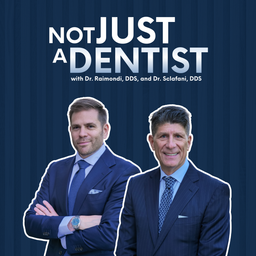
Not Just a Dentist
Dr. Rob Raimondi, DDS and Dr. Marc Scalfani, DDS
5.0from 5 ratings
- 9
- Episodes
- 5
- Ratings
- Bi-weekly
- Cadence
- 2026
- First episode
About Not Just a Dentist
You don't think much about your teeth until something goes wrong. Then suddenly you're deep in a world of crowns, implants, bite alignment, and decisions that affect how you eat, speak, and feel for the next twenty years. Not Just a Dentist is here for exactly that moment, and for everything that leads up to it. Hosted by Dr. Raimondi and Dr. Sclafani of One Manhattan Dental, this show goes past the routine cleaning and into the parts of dentistry most people never hear explained. How your mouth is wired into your whole-body health. What full-mouth restoration actually involves and who really needs it. Why cosmetic work is about function and confidence in equal measure. Why some jaw and TMJ pain gets dismissed for years before anyone actually fixes it. What's genuinely changing in the field, and what's just hype. And the questions patients always think of on the elevator ride home, too late to ask. Each episode pairs the precision of specialist-level care with the kind of plain conversation you'd want from a dentist who has time to actually talk. You'll hear the stories too, the patients who got their bite, their confidence, and their willingness to smile in photos back after years of avoiding all three. Whether you're weighing a major restorative case, curious what separates a prosthodontist from a general dentist, or you just want to stop nodding along at appointments and start understanding your own mouth, you'll leave knowing more than when you arrived. Subscribe wherever you listen.
- Publisher
- Dr. Rob Raimondi, DDS and Dr. Marc Scalfani, DDS
- Category
- health & fitness
- Language
- en
- Explicit
- No
- First episode
- 13 Jul 2026
- Latest episode
- 3 Nov 2026
Latest episodes
9 episodes in the feed.
3 Nov 2026
Whiter Teeth for the Holidays—and Answers to Your Everyday Dental Questions
How far ahead of the holidays should you whiten your teeth? Why does your breath still smell after brushing? And if you haven't been to the dentist in years, what happens when you finally go back? In this Ask Me Anything episode of Not Just a Dentist, Dr. Rob Raimondi and Dr. Marc Sclafani answer questions from patients and listeners about the everyday decisions that shape oral health. They start with whitening: professional cleanings, over-the-counter options, custom trays, in-office treatment, and why sensitivity and your routine matter when choosing an approach. With the holidays coming up, they also discuss frequent snacking, acidic drinks, and what a dentist may be able to do when a chipped tooth threatens a big event. The conversation moves into bad breath, dry mouth, cleaning between the teeth, tongue cleaning, and why a quick rinse is not the same as understanding the cause of a persistent problem. Rob and Marc also share their approach to patients returning after years away: start with where you are now, without embarrassment, and build a plan around what your mouth actually needs. They compare manual and electric toothbrushes, explain the role of habits alongside genetic susceptibility, and discuss why cosmetic dentistry for a young person requires careful judgment—especially when the choice is between bonding and veneers. They close by weighing root canals against implants and the importance of asking what can be preserved before a tooth is removed. It's a conversation about asking better questions, finding a dental team you trust, and making the basics a consistent part of your routine. IN THIS EPISODE ——————————————— - Planning teeth whitening before holidays or a special event - Whitening strips, custom trays, in-office treatment, and sensitivity - Holiday snacking, acidic drinks, and keeping your routine - Chipped teeth and planning care before a dental emergency - Bad breath, dry mouth, and cleaning beyond the toothbrush - Mouthwash and why the fundamentals still matter - Returning to the dentist after a long gap without feeling judged - Electric versus manual toothbrushes and brushing for two minutes - Flossing, water flossers, and the hosts' own routines - Genetics, shared family habits, and dental disease risk - Bonding, veneers, and treatment decisions for younger patients - When to preserve a natural tooth and when an implant may be appropriate LINKS ————— Watch on YouTube: https://www.youtube.com/@notjustadentistpodcast Listen on Apple Podcasts: https://podcasts.apple.com/us/podcast/not-just-a-dentist/id6790479420 Listen on Spotify: https://open.spotify.com/show/033ORDB1HvbYhRPF8JxohW Explore the podcast: https://onemanhattandental.com/podcast/ One Manhattan Dental: https://onemanhattandental.com/ Schedule an appointment: https://app.nexhealth.com/appt/onemanhattandental This episode is for educational purposes only and is not a substitute for individualized dental or medical diagnosis or treatment.
20 Oct 2026
How to Feel Heard at the Doctor with Dr. Jonathan Fader
What helps you feel heard at a doctor's appointment—and how do you speak up when a recommendation leaves you unsure? In this episode of Not Just a Dentist, clinical psychologist and performance coach Dr. Jonathan Fader joins Dr. Rob Raimondi and Dr. Marc Sclafani to explore the relationship between patients and the people caring for them. Drawing on his work in psychology and professional sports, Dr. Fader talks about listening as a skill that can be practiced. The conversation explores open-ended questions, the impulse to jump straight to a solution, and what it means to give someone your full attention. Rob and Marc share how those ideas show up in dental care, where trust, comfort, and clear communication are part of the appointment. For patients, the discussion offers language to bring into the room: "Can you help me understand that choice?" and "Why would you recommend that?" The group considers why people hesitate to question an expert, how clinicians can invite participation, and why a patient's preferences matter when weighing treatment options. They also discuss bringing online research into a conversation, sharing questions ahead of an appointment, and recognizing whether a practice feels like the right fit. The final part of the conversation looks at dental anxiety, acknowledging delays or mistakes, and closing a visit with clear instructions and room for questions. It ends with a personal discussion of trust, empathy, and what the hosts and Dr. Fader hope their patients remember about them. Throughout, the focus is on a partnership where clinical expertise and the patient's own experience both have a place. In this episode What performance psychology can teach us about communication Why clinical excellence and listening belong together One open-ended question as a starting point for connection Pausing and resetting before entering the room Redirecting a conversation without dismissing a concern Why patients sometimes hesitate to disagree or ask questions Inviting patients to share priorities, fears, and discomfort Preparing for an appointment and communicating with the whole team Asking for an explanation of a treatment choice Bringing online research into a discussion with your clinician Listening before trying to fix everything Motivational interviewing and the "righting reflex" Giving a patient 60 seconds of full attention Understanding why a clinician would recommend an option Coaching, feedback, and improving communication The team's role in understanding a patient's concerns Acknowledging delays, mistakes, and uncertainty Dental anxiety and avoiding assumptions about how someone feels Clear instructions, follow-up, and questions at the end of a visit What it means to earn a patient's trust About the guest Jonathan Fader, PhD, is a clinical and performance psychologist and co-founder of Union Square Practice. His work includes motivational interviewing and performance coaching, and he previously served as a sport psychologist for the New York Mets and New York Giants. Guest profile: https://unionsquarepractice.com/clinician/jonathan-fader-phd/ Guest website: https://jonathanfader.com/ Performance coaching: https://strataperformance.com/ Book mentioned: Life as Sport, by Jonathan Fader. Connect with the show Watch on YouTube: https://www.youtube.com/@notjustadentistpodcast Listen on Apple Podcasts: https://podcasts.apple.com/us/podcast/not-just-a-dentist/id6790479420 Listen on Spotify: https://open.spotify.com/show/033ORDB1HvbYhRPF8JxohW Explore the podcast: https://onemanhattandental.com/podcast/ Learn about One Manhattan Dental: https://onemanhattandental.com/ Schedule an appointment: https://app.nexhealth.com/appt/onemanhattandental This conversation is for educational purposes and does not replace individualized medical, dental, or mental health advice.
6 Oct 2026
The Mouth–Heart Connection with Cardiologist Dr. Jennifer Haythe
What does gum disease have to do with your heart—and what should your dentist and cardiologist know about each other's care? In this episode of Not Just a Dentist, Dr. Rob Raimondi and Dr. Marc Sclafani are joined by Columbia cardiologist Dr. Jennifer Haythe for a conversation about oral health, inflammation, cardiovascular risk, and the value of healthcare professionals working together. They begin with an important distinction: gum disease and cardiovascular disease are associated, but that does not mean gum disease has been proven to cause heart attacks. Dr. Haythe explains why shared risk factors and inflammation matter, how bacteria entering the bloodstream can pose a separate concern for certain patients with heart-valve conditions, and what she would like to hear from a patient's dentist. The conversation expands into women's heart health and why pregnancy complications can remain relevant long after delivery. They discuss preeclampsia, gestational hypertension, and gestational diabetes, along with the importance of appropriate medical follow-up and dental care during pregnancy. Dr. Raimondi, Dr. Sclafani, and Dr. Haythe also unpack some of the cardiovascular terms patients encounter online: LDL, HDL, triglycerides, lipoprotein(a), ApoB, calcium scoring, and VO2 max. They explain how testing fits into an individual's history and risk, why a wearable estimate differs from a formal exercise test, and how strength and balance affect day-to-day function as people age. Throughout the episode, the focus comes back to practical ways to participate in your care: bring an accurate medication list, share existing test results, understand the questions your doctors are trying to answer, and seek a second opinion when you need one. In this episode, they cover: The association between gum disease, inflammation, and cardiovascular disease Why dentists and physicians benefit from sharing information Preparing for appointments with medication lists and prior test results Smoking, nicotine pouches, and oral inflammation Pregnancy history as part of a long-term cardiovascular risk assessment Dental care during pregnancy and the importance of medical follow-up Finding healthcare professionals you trust and getting a second opinion Lipoprotein(a), ApoB, cholesterol testing, and statins Home blood-pressure monitoring and follow-up after an elevated reading Calcium scores, stress testing, and individualized screening decisions VO2 max, wearable estimates, and formal cardiopulmonary exercise testing Strength, balance, and the effects of falls and inactivity Cholesterol medications, GLP-1s, and questions about emerging treatments Coordinating antibiotics before dental procedures with the treating team About the guest: Jennifer H. Haythe, MD, is a cardiologist at Columbia University Irving Medical Center. She is the Irene and Sidney B. Silverman Associate Professor of Cardiology, director of the Adult Pulmonary Hypertension Program and the Cardio-Obstetric Program, and co-director of the Columbia Women's Heart Center. Her clinical interests include heart failure, pulmonary hypertension, cardio-obstetrics, and cardiovascular disease in women. Guest profile: https://doctors.columbia.edu/us/ny/new-york/jennifer-h-haythe-md-173-fort-washington-avenue Connect with the show: Watch on YouTube: https://www.youtube.com/@notjustadentistpodcast Listen on Apple Podcasts: https://podcasts.apple.com/us/podcast/not-just-a-dentist/id6790479420 Listen on Spotify: https://open.spotify.com/show/033ORDB1HvbYhRPF8JxohW Explore the podcast: https://onemanhattandental.com/podcast/ Learn about One Manhattan Dental: https://onemanhattandental.com/ Schedule an appointment: https://app.nexhealth.com/appt/onemanhattandental This episode is for educational purposes only and is not a substitute for individualized dental or medical diagnosis or treatment.
22 Sept 2026
The Truth About Root Canals, Grinding, and Ozempic Mouth
Can a root canal make you sick? Is teeth grinding always caused by stress? And what does taking a GLP-1 medication have to do with your mouth? In this episode of Not Just a Dentist, Dr. Rob Raimondi and Dr. Marc Sclafani take on three dental conversations that are spreading quickly online but often lose the clinical context patients need. First, they examine the renewed claim that root canals cause cancer, autoimmune disease, or other systemic illnesses. Rob and Marc discuss the century-old focal infection theory behind the controversy, why correlation is not causation, and what modern root canal treatment is actually designed to do. They also explain why removing a restorable natural tooth is not automatically the more "biological" option and how a root canal should be evaluated when it is painful, fractured, poorly sealed, or truly failing. Next, they explore the relationship between nighttime teeth grinding and the airway. Stress can contribute to clenching and grinding, but in some patients the jaw may also be responding to restricted airflow or sleep-disordered breathing. The doctors explain what dentists notice in the teeth, tongue, palate, muscles, and bite, why a standard nightguard does not diagnose or treat sleep apnea, and when a sleep study or medical evaluation may be appropriate. Finally, they discuss "Ozempic mouth" and other potential oral-health considerations for patients using GLP-1 medications. Dry mouth, dehydration, nausea, reflux, vomiting, changes in eating patterns, and reduced saliva protection can increase the risk of enamel erosion, sensitivity, cavities, and gum problems. The answer is not to fear an effective medication. It is to make oral health part of the treatment conversation. In this episode: Where the root-canal and systemic-disease claim originated Why a patient having both a root canal and an illness does not establish causation What modern root canal therapy removes and seals When a root-canal-treated tooth may truly need retreatment or extraction Why implants are valuable but are not biologically identical to natural teeth How grinding can sometimes signal an airway or sleep problem What a dentist may notice before a patient suspects sleep apnea Why a nightguard protects teeth but may not address the reason for grinding How GLP-1 medications may contribute to dry mouth and acid exposure Why saliva is essential for controlling bacteria and remineralizing teeth What patients taking GLP-1s should discuss with their dentist This episode is for educational purposes only and is not a substitute for individualized dental or medical diagnosis or treatment.not replace an individualized periodontal or dental evaluation.
8 Sept 2026
Why Are My Gums Receding? When to Worry and What Actually Helps
You look in the mirror and notice that one tooth suddenly appears longer than the others. Maybe the root looks darker, cold water causes sensitivity, or the edge of an older crown or veneer has become visible. Does that mean you have gum disease? Did you brush too hard? Will it continue getting worse? And can the gum grow back? In this episode of Not Just a Dentist, Dr. Rob Raimondi and Dr. Marc Sclafani are joined by board-certified periodontist Dr. Hector Sarmiento for a detailed conversation about gum recession. They explain why recession is not one single diagnosis. It is a visible finding that can have several possible causes, including naturally thin tissue, limited supporting bone, tooth position, inflammation, periodontal disease, orthodontic movement, brushing habits, trauma, and existing dental restorations. The conversation covers: What is actually happening when the gumline recedes Why an exposed tooth root may look darker or feel sensitive Whether recession automatically means gum disease Why one tooth may recede while the surrounding teeth do not The role of genetics, tissue thickness, bone, and tooth position Whether brushing too hard is really the primary cause How braces and clear aligners may affect vulnerable gum tissue When a small area can simply be monitored Signs that recession may be progressing Whether receding gums can grow back naturally What gum grafting can and cannot accomplish Tissue from the palate versus donor materials What patients can expect during recovery Why gum stability matters before veneers, crowns, or orthodontics How recession around an implant differs from recession around a natural tooth The goal of treatment is not always to cover every millimeter of exposed root. Depending on the patient, the priority may be stopping progression, strengthening the tissue, reducing sensitivity, protecting the tooth, improving cleansability, or preparing the area for future dental treatment. This episode is intended for educational purposes only and does not replace an individualized periodontal or dental evaluation.
25 Aug 2026
Inside the Dental Office We're Building Around the Patient
What does it really take to build a dental office from scratch in Manhattan? Dr. Rob Raimondi and Dr. Marc Sclafani sit inside One Manhattan Dental's unfinished new space to explain why the practice is moving and how they approached the design. The project began when a change in ownership at their existing building triggered a lease termination clause. Instead of simply recreating the current office somewhere else, the doctors used the move as an opportunity to reconsider the entire patient and clinical experience. They discuss: • Why One Manhattan Dental is moving • Renovating an office versus building from scratch • Finding a new location under a compressed timeline • Choosing hospitality designers and dental specialists • Why dental construction is technically complicated • Designing patient flow before choosing finishes • Rethinking reception, waiting, check-in, and checkout • Protecting patient privacy • Creating warm spaces without overdesigning them • Standardizing treatment rooms for more consistent care • Building an office that works better for the clinical team • Lessons for other dentists and practice owners The new space is not being designed as a showroom. It is being built as a working clinical environment centered on comfort, privacy, efficiency, and the quality of care patients receive. Schedule an appointment: https://app.nexhealth.com/appt/onemanhattandental Learn more about One Manhattan Dental: https://onemanhattandental.com/ (https://onemanhattandental.com/)
11 Aug 2026
What Is a Prosthodontist? Aging, Sleep, and the Whole-Mouth Difference
Most patients know what an orthodontist does. Far fewer know what a prosthodontist does, or why that distinction can matter when dental problems become more complex. In this episode of Not Just a Dentist, Dr. Rob Raimondi and Dr. Marc Sclafani explain the training, perspective, and clinical judgment behind prosthodontics. They discuss why the mouth cannot always be treated one tooth at a time and how the teeth, bite, muscles, joints, bone, facial structure, airway, and sleep can all influence the right treatment plan. The conversation covers: What separates a prosthodontist from a general dentist Why cosmetic dentistry and prosthodontics are not interchangeable terms How advanced training creates more treatment options Why knowing when not to treat is part of good dentistry The importance of mentorship, repetition, and clinical judgment What the "age" of your teeth can reveal How tooth wear and bite collapse can affect the face Why restoring function can matter at any age The relationship between jaw development, breathing, sleep, and grinding Why a mouthguard may not address the underlying cause of clenching The doctors also share the story of restoring function for a 99-year-old patient, illustrating why dentistry is ultimately about much more than appearance. It can affect nutrition, communication, confidence, comfort, and quality of life. Have a question you would like Dr. Rob and Dr. Marc to answer in a future episode? Send it to One Manhattan Dental or leave it in the comments. This podcast is intended for educational purposes only and does not replace an individualized examination, diagnosis, or treatment plan from a qualified healthcare professional.
28 Jul 2026
Teeth Grinding, Facial Aging, and Gum Disease: What Your Mouth Reveals
Your mouth can influence how your face ages, how well you sleep, and what may be happening throughout the rest of your body. This episode connects all three. We start with a connection most people never consider: the relationship between worn teeth and facial aging. Years of grinding and clenching can shorten the teeth and reduce the vertical dimension of your bite, changing the proportions and support of the lower face. Dr. Raimondi and Dr. Sclafani explain why carefully planned full mouth reconstruction is about more than creating a better smile. It can restore function, facial support, comfort, and confidence. Then we explore why a mouth guard is not always the complete answer to teeth grinding. A guard can protect your teeth from additional damage, but it does not necessarily explain why you are grinding. Stress, sleep quality, breathing, muscle tension, and other factors may all contribute. You'll learn why finding the underlying driver matters, especially when grinding is accompanied by jaw pain, worn teeth, or poor sleep. Finally, we look at gum disease as a whole-body health issue. Periodontal disease is a chronic inflammatory condition, not simply a sign that someone failed to brush or floss well enough. We discuss its associations with cardiovascular and cognitive health, why some people are more susceptible than others, and how to become a more informed participant in your periodontal care. In this episode: How grinding and worn teeth can change facial proportions. What dentists mean by the vertical dimension of your bite. How full mouth reconstruction can restore function and facial support. Why Botox and mouth guards may manage symptoms without addressing the cause. The connections between teeth grinding, sleep, breathing, stress, and muscle pain. Why gum disease is more than a cleaning issue. How periodontal inflammation may relate to cardiovascular and cognitive health. Questions to ask your dentist about bone levels, inflammation, and long-term periodontal risk. Listen to Not Just a Dentist everywhere you get your podcasts.
13 Jul 2026
Why Your Tooth Pain Might Be Lying to You (Plus Iced Coffee Staining, Wedding Whitening, and More Summer Smile Questions)
Can a perfectly healthy tooth hurt? Dr. Raimondi and Dr. Sclafani open the patient mailbag with a question about pain that shows up in the ear, the head, and the jaw, and the answer runs through the trigeminal nerve and the strange ways the brain mislocalizes pain. They explain why some patients chase root canals for teeth with nothing wrong, and why persistent pain sometimes calls for a team that includes more than a dentist. From there, they cover a spectrum of summer smile inquiries. Does iced coffee stain less than hot? Why is orange juice before your morning coffee a bad sequence? Where does sparkling water fall on the acidity scale, and what does chewing ice actually do to your enamel? Planning a wedding or a big event? They break down exactly when to whiten, how long to skip coffee and red wine afterward, and the truth about laser whitening. They close out the mailbag with cold sensitivity red flags, the sinus infection that convinced a patient she needed a root canal, what belongs in your dental travel kit, how dehydration affects your breath and cavity risk, and one listener's question about musical hallucinations. Because it's never just about teeth. Have a question for a future episode? Message us on Instagram or reply to the newsletter.
Reach and audience
Public platform figures. Ratings count people who left a rating, not total listeners.
- Apple Podcasts (US)
- 5.0 / 5
- 4 ratings
- Spotify
- 5.0 / 5
- 1 ratings
Contact Not Just a Dentist
- Guest appearances
- Books guests
Based on episode analysis; this does not confirm that the show is currently accepting guests.
Host of Not Just a Dentist?
Claim your podcast to manage its listing and keep your show details accurate.
Pod Engine is an independent podcast discovery and analytics service and is not affiliated with or endorsed by this podcast. Artwork and show content belong to their owners. Full legal notice.
Explore this show
Podcast research with Pod Engine