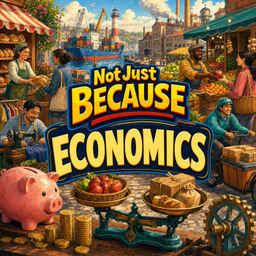
Everyday economics for kids around 7 to 10, exploring money, trade, saving, and choices with concrete examples and honest, non-partisan explanations of how people and markets make decisions.
One free afternoon, three fun plans, and only enough time for one—so what happens to the other two? The idea of opportunity cost gets unpacked with kid-scale examples: the next-best thing you give up whenever you choose.
2 Sept 2026
The Piggy Bank Grows Up
A bank is really just a safe place to keep money until you want it again, with deposits going in and withdrawals coming out. Using a piggy bank as a tiny example, this episode walks through what saving means, why people set money aside for later, and how a big bank does the same job on a bigger scale.
15 Jul 2026
Four Big Ideas About Who Owns What
Every economy on Earth has to answer the same basic questions: who owns the factories, farms, and shops, and who gets to decide what they make? Capitalism, socialism, communism, and mercantilism each give a different answer — and each has actually been tried in real places.
15 Jul 2026
The Real Price Tag: What It Costs to Make Stuff
Every object on a store shelf has a hidden story of ingredients, work, and choices baked into its price. From the wood in a pencil to the wages of the person who packed it, the cost of making something adds up long before a customer picks it up.
15 Jul 2026
The Invisible Handshake: Why Trust Makes Money Work
Every coin, every bill, every tap of a card depends on something you can't see or touch: trust. Without it, money would just be paper and metal, and trade between strangers would grind to a halt.
15 Jul 2026
Swiping, Borrowing, and Paying It Back
When someone swipes a card at a store, where does the money actually come from? Debit cards pull money you already have, but credit cards let you borrow from a bank—and that borrowed money comes with rules, fees, and a promise to pay it back.
15 Jul 2026
Before Coins: Debt, Favors, and the Real Story of Money
Most textbooks say money began when people swapped goods in a barter system, but anthropologists and historians tell a more complicated story involving debts, favors, and IOUs long before the first coin was ever struck.
15 Jul 2026
Tiny Slices of a Giant Pizza: How the Stock Market Works
When someone buys a share of a company, they own a tiny piece of that business — almost like holding one slice of an enormous pizza. Share prices rise and fall based on how many people want to buy or sell, what the company is doing, and even how people feel about the future.
15 Jul 2026
What Is Trade, and Why Do People and Countries Swap Things?
Why do people swap things instead of making everything themselves? From trading snacks at lunch to countries shipping bananas and computers across oceans, trade shapes everyday life in surprising ways.
15 Jul 2026
Supply, Demand, and Why Prices Change
A single apple might cost one amount at a farm stand and a completely different amount at an airport — but why? This episode breaks down supply and demand, the two big forces that push prices up or pull them down, using kid-friendly examples like lemonade stands, rare trading cards, and snow-day hot chocolate.
Contact Not Just Because - Economics
Guest appearances
Does not typically book guests
Based on episode analysis; this does not confirm that the show is currently accepting guests.
Host of Not Just Because - Economics?
Claim your podcast to manage its listing and keep your show details accurate.
Pod Engine is an independent podcast discovery and analytics service and is not affiliated with or endorsed by this podcast. Artwork and show content belong to their owners. Full legal notice.
Explore this show Podcast research with Pod Engine