- 12
- Episodes
- 5
- Ratings
- Bi-weekly
- Cadence
- 2026
- First episode
About Not Like Me
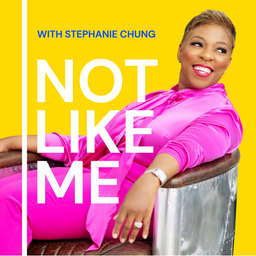
Not Like Me is a podcast that challenges how people think. Stephanie Chung is a former aviation executive who led global teams and drove billions in revenue at companies like Wheels Up, Bombardier Aerospace, and American Airlines. She also made history as the first African American to run a major private jet company in the U.S. when she took the helm as President of JetSuite. Now, as a keynote speaker and author of Ally Leadership: How to Lead People Who Are Not Like You, she’s pulling a seat out at the table, giving you access to the real, behind-the-scenes conversations she has with top leaders and thinkers. That kind of access changes how you think. Growth does not come from hearing the same ideas repeated. It comes from being exposed to and executing on different ways of thinking. In each episode, you will hear perspectives that challenge your thought process and expand how you understand others, especially those who are not like you.
- Publisher
- Stephanie Chung
- Category
- business
- Language
- en
- Explicit
- No
- First episode
- 6 May 2026
- Latest episode
- 21 Oct 2026
Latest episodes
12 episodes in the feed.
21 Oct 2026
The Neuroscience of High Performance: What Formula 1 and Aviation Teach Us About Pressure
What separates high-performing teams from everyone else when the pressure is on? It is not just talent. It is how well people can access that talent, make decisions, and work together when the stakes are high. In this episode of Not Like Me, Stephanie Chung sits down with Dr. James Hewitt, human performance scientist and founder of the Knowledge Work Lab, to explore what neuroscience reveals about performing under pressure. Drawing on lessons from Formula 1 pit crews, aviation, and executive leadership, Dr. Hewitt explains why sustainable high performance depends on three essential elements: capacity, control, and coordination. Together, Stephanie and James explore why even talented professionals can struggle under pressure, how recovery supports better thinking, and what exceptional teams do to build trust and prepare for moments that matter. They also challenge a common leadership assumption: that hiring talented people is enough to create a high-performing team. Because when the pressure rises, your team needs more than individual expertise. It needs preparation, clear roles, and the ability to work together. If you lead people who are expected to deliver under pressure, this conversation will change how you think about preparing them to succeed. 📌 Mentioned in this episode: Ally Leadership by Stephanie Chung → https://www.amazon.com/dp/B0D9ZRMMZH (https://www.amazon.com/dp/B0D9ZRMMZH) 📌 Regenerative Performance by Dr. James Hewitt → https://drjameshewitt.com/book/ (https://drjameshewitt.com/book/) 🔔 Subscribe so you never miss an episode of Not Like Me. 📲 Follow Stephanie: https://learn.stephaniechung.com/stephanie-chung-social (https://learn.stephaniechung.com/stephanie-chung-social)
7 Oct 2026
Why Leaders Wait Too Long to Have the Hard Conversation
There is a conversation you have been rehearsing in your head for weeks. You know exactly who it needs to be with but you have not had it yet. After 30 years of leading teams in some of the most demanding rooms in corporate America, here is what I have learned about that conversation. Whatever is slowing your team down right now is rarely a strategy problem. It is usually something nobody has said out loud yet. In this solo episode of Not Like Me, I pick up where my conversation with Annie Lalla left off and get specific about what avoidance actually costs. I tell the story of my number one sales director. He hit every number I gave him. He was also berating people across the company when he was under pressure, and I kept having polite conversations with him instead of the real one, partly because I needed his results. Then another department head called and played me a recording of how he spoke to one of her employees. That employee should never have had to sit through that call, and the reason she did was me. I also get into an executive meeting that went sideways, where I was the only woman in the room, and what I would do differently now that I understand what was actually happening in my own nervous system. In this episode: → Why the conversation you are postponing usually costs someone other than the person you are avoiding → How to tell the difference between good timing and your own discomfort wearing a nice outfit → What to do when a top performer produces results and damage at the same time → How to catch yourself at a 3 or 4 instead of an 8, and why that one skill changes the room → The part of psychological safety nobody talks about, and the work it requires from you first → Three things you can do this week, starting today This one is for every leader carrying a conversation they know they should have had months ago. 📌 Mentioned in this episode: Ally Leadership by Stephanie Chung 🔔 Subscribe so you never miss an episode of Not Like Me. 📲 Follow Stephanie: https://learn.stephaniechung.com/stephanie-chung-social (https://learn.stephaniechung.com/stephanie-chung-social)
23 Sept 2026
What Leaders Get Wrong About Conflict at Work
Most leaders know how to avoid conflict. Far fewer know how to move through it well. And there is a reason for that. The moment tension enters a conversation, you are not just dealing with the issue in front of you. Your brain is assessing threat, pulling from past experiences, and deciding how to respond. Sometimes before you have had a chance to think through what you actually want to say. In this episode of Not Like Me, I sit down with Annie Lalla, known as the "Cartographer of Love." Annie is a philosopher, conflict resolution expert, and certified coach whose work sits at the intersection of neuroscience, psychology, emotional intelligence, and human development. She teaches a method called "The Art of Fighting," and one of her ideas really stayed with me: sometimes the intensity of our reaction has very little to do with what is happening in front of us and a whole lot to do with what that moment brings up in us. I have seen that firsthand. Years ago, I coached an executive who could trace one of his biggest professional triggers all the way back to being embarrassed in a fourth-grade math class. Decades later, that feeling of inadequacy was still showing up in rooms where the stakes were much higher. That is why self-regulation matters in leadership. In this episode: → What can happen in your brain and body when conflict triggers a threat response → Why avoiding a difficult conversation usually does not make the problem disappear → How to turn a complaint into something the other person can actually hear → What jealousy and competitive energy may be telling you → Why psychological safety starts with how leaders respond when people disagree → Practical ways to catch yourself before a trigger starts running the conversation Conflict is not automatically evidence that something has gone wrong. Sometimes it is evidence that something important needs to be said. The question is whether you have developed the skill to say it well. This episode is for every leader who has ever walked out of a meeting thinking, "I wish I had handled that differently." 📌 Mentioned in this episode: Ally Leadership by Stephanie Chung 🔔 Subscribe so you never miss an episode of Not Like Me. 📲 Follow Stephanie: https://learn.stephaniechung.com/stephanie-chung-social (https://learn.stephaniechung.com/stephanie-chung-social)
9 Sept 2026
Your Brand Is Being Built Without You: What Leaders Need to Know
Your results got you the seat. But they will not keep you in it. Nobody tells you that part. I found that out the hard way, in a room I worked hard to get into, when I heard what people were actually saying about me when I wasn't around. Not my numbers. My energy. How I showed up. And it was not the story I thought I was writing. That is what this episode is about. In this solo episode of Not Like Me, I'm getting into the brand you think you have versus the one that is actually circulating without you. I'm also breaking down the difference between having a voice and owning one, because those are not the same job, and most people never hear that named out loud. We'll get into the neuroscience too. That cortisol spike telling you to stay quiet in a meeting is not weakness. It's biology. The problem is when you let biology run your career. Then I flip it on the leaders listening. Because if your people are showing up smaller, quieter, more careful, that's not a personality thing. That's an environment you built. Yes, you. In this episode: Why your brand is the story other people tell when you leave the room, not the one you tell about yourself The real difference between having a voice and owning it, and why most professionals never make it past the first one The neuroscience behind why staying quiet feels safe, and why that safety has a cost How to tell when your team is editing themselves, and why that's on you, not them Three moves you can make this week to close a brand gap and actually create room for people to speak up If you've ever wondered what gets said about you when you're not in the room, or if you're a leader wondering whether you're the reason someone on your team stopped talking, this one's for you. 📌 Mentioned in this episode: Ally Leadership by Stephanie Chung → https://www.amazon.com/dp/B0D9ZRMMZH (https://www.amazon.com/dp/B0D9ZRMMZH) 🔔 Subscribe so you never miss an episode of Not Like Me. 📲 Follow Stephanie: https://learn.stephaniechung.com/stephanie-chung-social (https://learn.stephaniechung.com/stephanie-chung-social)
26 Aug 2026
Why Imposter Syndrome Never Actually Goes Away (And What to Do About It)
Picture this: you are sitting at the table with SVPs and VPs, you are the only woman in the room, and a good idea just crossed your mind. Do you say it? Do you wait? That half-second of hesitation is not a confidence problem. It is a leadership environment problem, and most companies have no idea it is happening inside their own walls. In this episode of Not Like Me, I sit down with Ebony Russ, an HR expert with 20 years inside some of the most recognizable organizations in the country. She has sat on both sides of the table, as the person navigating corporate culture and as the professional who knows exactly how that culture gets built. She literally wrote the book on it: Tea, Tactics, and Tenacity: 10 Tips to Thrive in Corporate America. We get into what imposter syndrome actually costs a company when leadership ignores it, and why it never fully disappears, it just changes shape at every level you climb. Confidence is not a feeling. It is a track record your brain keeps score of, one small win at a time, and most leaders never teach their teams how to build it. Ebony also breaks down the real difference between having a voice and owning it, and pulls back the curtain on what leadership actually discusses behind closed doors when your name comes up. Spoiler: it has less to do with your KPIs than you think. In this episode: → What imposter syndrome actually costs an organization when it goes unaddressed → The real difference between having a voice and owning it, and why so many people confuse the two → A tactical way to prep before a high-stakes meeting so you are never blindsided → What HR is really discussing about you when the door closes → Why "there is no such thing as after hours," and why the open bar at your company holiday party is not a stage for your one-woman show → The generational tension around tenacity, and what every generation actually owes the other This episode is for every leader and every rising professional who has ever wondered what is really being said about them in the room they are not in. 📌 Mentioned in this episode: Tea, Tactics, and Tenacity: 10 Tips to Thrive in Corporate America by Ebony Russ 🔔 Subscribe so you never miss an episode of Not Like Me. 📲 Follow Stephanie: https://learn.stephaniechung.com/stephanie-chung-social (https://learn.stephaniechung.com/stephanie-chung-social)
12 Aug 2026
Are you Wrong or Lost? The Question Too Many Leaders Cannot Answer About Their Own Team
In our last episode, Clint told me his favorite weapon was never a gun. It was a map. Because with a map, the worst you can ever be is wrong. Not lost. That sentence has not left me alone since we wrapped that conversation. So this week I am going solo to unpack what it actually means for you, in your seat, leading the team you have right now. I have spent thirty years walking into rooms where nobody handed me trust on sight. What I learned is that the fastest way in was never proving I belonged. It was saying the three words most leaders refuse to say: I don't know. That is what this episode is built around. In this episode: → The difference between wrong and lost, and why one of them you can fix and the other one you cannot even see → Why busy is not a direction, it is a disguise, and the trap almost every new leader falls into the moment they get promoted → Why the three words most leaders avoid saying out loud are actually the fastest way to earn a room → The currency question. Why you might be paying your best people in a currency they are not spending → The monoculture problem hiding on most leadership teams, and the honest question to ask yourself about your own direct reports → Two things I want you to do this week, no philosophy, just action This episode is for any leader who has ever wondered whether their team is winning because of them or in spite of them. 📌 Mentioned in this episode: Ally Leadership by Stephanie Chung → stephaniechung.com/ally (http://stephaniechung.com/ally) 🔔 Subscribe so you never miss an episode of Not Like Me. 📲 Follow Stephanie: https://learn.stephaniechung.com/stephanie-chung-social (https://learn.stephaniechung.com/stephanie-chung-social)
29 Jul 2026
The Navy SEAL Trust-Building Method Every Leader Should Know
What if you had only 60 seconds to earn a stranger's trust? In this episode, my guest has faced that exact scenario with life or death stakes on the line. Clint Bruce has built trust in foreign countries, in combat missions, and in rooms full of people who did not speak his language and had no reason to believe him. And he did not do it slowly. What Clint learned downrange has nothing to do with rank. It has everything to do with how fast you can earn someone's confidence when you don't have the luxury of time. In this episode of Not Like Me, I sit down with Clint Bruce. Naval Academy grad. NFL linebacker. Then he walked away from football to become a Navy SEAL, ran counterterrorism deployments after 9/11, and brought every bit of it into the boardroom, founding TRG and Hold Fast to help veterans and elite athletes lead at the highest levels of business. On paper, Clint and I have almost nothing in common. In person, he's one of the people I trust most in the world. This conversation goes underneath the leadership advice you've already heard, into the parts most people skip because they're harder to talk about. In this episode: Why Clint says the fastest way to lose someone's trust is to act like you have all the answers The "map" framework Clint uses to explain why the battlefield, the boardroom, and the breakfast table all require completely different leadership What ROPE (Return on Period of Effort) reveals about why so many high-performers struggle to adjust to corporate life The eighth-grade formula Clint still uses to make every major decision: Angles + Allies + Advantages = Achievements Why "differences make us durable," and what that actually looks like on a team that's built to win A real story about a coffee shop, a hug, and a room full of strangers who got the wrong idea This episode is for any leader who has ever had to earn someone's trust fast, and wants to know how to do it without faking it. 📌 Mentioned in this episode: The Ready4 Handout by Clint Bruce → https://stephaniechung.com/wp-content/uploads/2026/07/Ready4-Handout-2026.pdf (https://stephaniechung.com/wp-content/uploads/2026/07/Ready4-Handout-2026.pdf) Ally Leadership by Stephanie Chung → https://www.amazon.com/dp/B0D9ZRMMZH (https://www.amazon.com/dp/B0D9ZRMMZH) 🔔 Subscribe so you never miss an episode of Not Like Me. 📲 Follow Stephanie: https://learn.stephaniechung.com/stephanie-chung-social (https://learn.stephaniechung.com/stephanie-chung-social)
15 Jul 2026
The Conversation Nobody Wants to Have
Most leaders are having half the neurodiversity conversation. The half that feels good. Build a better environment. Create psychological safety. Recognize that different brains process differently. All of that is right. None of it prepares you for the moment when the framework runs out, the team is afraid, and you have to make a call with no protocol and no training to back you up. That's the half this episode covers. I share the full story of managing a neurodivergent employee through a crisis I was not equipped for, including how I had to consider the rest of my team. And what inclusion actually requires when both sides of the table have something at stake. I also make the case that the biggest structural barrier for neurodivergent employees in most organizations isn't just culture. It's hiding inside your meeting calendar. Somewhere out there is a calendar packed so tight it needs its own union rep. Back to back meetings with no recovery time are not a minor inconvenience. They are a daily cognitive tax that compounds by Wednesday and shows up as disengagement by Friday. In this episode: Why inclusive leadership means holding two responsibilities at once, and what happens when leaders only hold one What your meeting structure is actually doing to your team's cognitive capacity Changes you can make this week with no budget and no approval required This is the action episode. Come ready to be challenges. 📌 Mentioned in this episode: Ally Leadership by Stephanie Chung → https://www.amazon.com/dp/B0D9ZRMMZH (https://www.amazon.com/dp/B0D9ZRMMZH) 🔔 Subscribe so you never miss an episode of Not Like Me. 📲 Follow Stephanie: https://learn.stephaniechung.com/stephanie-chung-social (https://learn.stephaniechung.com/stephanie-chung-social)
17 Jun 2026
What Leaders Get Wrong About Neurodiversity
Most leaders have a plan for a fire drill. Almost none have a plan for a mental health crisis. That gap is not a values problem. It is a systems problem. And I promise you, it is already showing up in your workplace whether you can see it or not. In this episode of Not Like Me, I sit down with two experts who work where behavior, the brain, and real-world performance intersect. Sarah McFarland is a board certified behavior analyst with over 13 years of experience training teams to respond with skill instead of emotion. Dr. Alicia Hodge is a clinical psychologist specializing in cognitive behavioral therapy and wellness innovation, and her work is grounded in one core truth: what we think drives how we feel, and how we feel drives how we behave. We get into the conversation most leaders are not having. And probably should have started years ago. In this episode: What neurodiversity actually means and who it already includes on your team How anxiety shows up at work in ways most leaders completely misread The perfectionism trap: what it looks like, what it costs, and what to do about it Why companies have protocols for physical emergencies but almost nothing for mental health crises Why rapport is not a soft skill but the foundation of trust, disclosure, and results How to reframe rest as a leadership strategy, not a reward This episode is for every leader who has ever misread someone on their team and wondered what they missed. 📌 Mentioned in this episode: Ally Leadership by Stephanie Chung → https://www.amazon.com/dp/B0D9ZRMMZH (https://www.amazon.com/dp/B0D9ZRMMZH) 🔔 Subscribe so you never miss an episode of Not Like Me. 📲 Follow Stephanie: https://learn.stephaniechung.com/stephanie-chung-social (https://learn.stephaniechung.com/stephanie-chung-social)
27 May 2026
Is Allyship Just a Conversation? Real Stories, Real Tools, Real Leadership
In this solo episode of Not Like Me, I reflect on my conversation with Dr. Brad Johnson and go deeper on what allyship actually looks like in practice…for men, for women, and for every leader navigating today's complex workplace. I share personal stories from my 40-year career in corporate America, including my time in the airline and private aviation industries, that illustrate why the conversation around workplace inclusion, gender equity, and allyship is not just still relevant, it is more urgent than ever. Women are still making 80 cents on the dollar. Leaders are still staying silent in the moments that matter. And most of us still do not know what to do when we are interrupted, overlooked, or talked past in a meeting. In this episode I cover: Why allyship has a real cost and what leaders need to understand about that What to say when you get interrupted in a meeting How to show up as an ally without overcomplicating it Why awareness without action is just noise The ALLY framework: Ask, Listen, Learn, You Take Action What real allyship looks like in the moments most leaders miss This episode is for leaders at every level who are ready to stop talking about inclusion and start doing something about it. If this conversation is landing, The Modern Leader’s Toolkit is the practical next step to learn the five disciplines built around A.L.L.Y. Download The Modern Leader’s Toolkit → https://learn.stephaniechung.com/leader-toolkit (https://learn.stephaniechung.com/leader-toolkit)
13 May 2026
Men as Allies? When Leadership Gets Uncomfortable with Dr. Brad Johnson
Most men believe they are supporting women at work. In fact, studies show about 60% of men think they are strong allies. But only about 30% of women agree. Now I don’t know about you, but to me, that is not a small gap we should be brushing over. To me, that is a major leadership problem. Thankfully, it’s also a problem for others, like my friend Dr. Brad Johnson - who’s doing something about it. In this episode of Not Like Me, I sit down with Dr. Brad to talk about what it actually looks like for men to show up as allies for women in the workplace. Because support is easy when nothing is happening. It gets real when a woman gets interrupted… When her idea gets repeated and credited to someone else… Or when something is said that makes the room go quiet. And here is what the research shows: Men are significantly more likely to speak in meetings and less likely to be interrupted Women are interrupted more often and have their ideas overlooked or hijacked And in those moments… most people notice, but very few step in So the question is not “Do you care?” It is: “What do you actually do about it?” Not in theory. Not in a company required training. But in the real-time moments where it counts. Brad and I get into: Why so many well-intentioned men believe they are showing up… and where that breaks down What the data actually says about who gets heard, who gets interrupted, and who actually gets credit What is happening in your brain in that split-second hesitation and why silence is the default How to step in without making it awkward, performative, or about you The difference between being a “good guy” and being a leader your team actually trusts We talk about why men stepping up as allies is not all unicorns and rainbows. It’s uncomfortable. Nobody wants to be “that guy.” But we both know that you do not get judged by what you intend to do. You get judged by what you actually do. And saying nothing is still a decision. Brad brings the research. I bring what I actually see happening in these rooms. And if it makes you a little uncomfortable, good. That usually means we are getting somewhere. If you want to go deeper, Dr. Brad Johnson’s book The Fair Share is a strong next step. It comes out June 30th. Pre-order it HERE. (https://www.amazon.com/Fair-Share-Equitable-Workplace-Together/dp/1647826829)
6 May 2026
Not Like Me Official Trailer
Most of the challenges you are dealing with right now are not about strategy. They are about people. People who think differently, lead differently, and see the world through a completely different lens than you do. And nobody is talking about that part. Not really. This show is not a leadership lecture series. It is not a highlight reel of things you already agree with. And it is definitely not another podcast where everyone nods along and nobody says anything that makes you put down your coffee and think, wait, did they really just say that? Not Like Me is about what happens when you get genuinely curious about people who do not think, live, lead, or see the world the way you do. That shows up at work, yes. But it also shows up at the dinner table, in your neighborhood, in your friendships, and in the quiet assumptions you carry around without even realizing they are there. Every guest I bring into this conversation has taught me something I would not have learned on my own. Someone whose experience cracked open a blind spot, challenged a belief I did not know I was holding, or gave me language for something I had felt but never quite been able to say out loud. That is what I want for you. I am Stephanie Chung. And I am really, really glad you are here. Episode 1 is coming soon, y'all. And trust me, we are starting with a good one. Follow and subscribe so you are first in line when we drop.
Reach and audience
Public platform figures. Ratings count people who left a rating, not total listeners.
- Apple Podcasts (US)
- 5.0 / 5
- 3 ratings
- Spotify
- 5.0 / 5
- 2 ratings
Contact Not Like Me
- Guest appearances
- Books guests
Based on episode analysis; this does not confirm that the show is currently accepting guests.


Host of Not Like Me?
Claim your podcast to manage its listing and keep your show details accurate.
Pod Engine is an independent podcast discovery and analytics service and is not affiliated with or endorsed by this podcast. Artwork and show content belong to their owners. Full legal notice.
Explore this show
Podcast research with Pod Engine