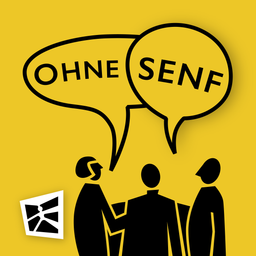
Ohne Senf – der Wissenspodcast des St.Gallen Collegiums
University of St.Gallen
- 11
- Episodes
- Monthly
- Cadence
- 2025
- First episode
About Ohne Senf – der Wissenspodcast des St.Gallen Collegiums
Herzlich willkommen bei «Collegium Conversations», dem Wissenspodcast des St.Gallen Collegium! Führende Wissenschaftlerinnen und Wissenschaftler denken ein Jahr gemeinsam über ein weltbewegendes Thema nach und entwickeln ihre Gedanken hier im Dialog. Thema des aktuellen Jahrgangs: Digital Sovereignty. Mein Name ist Thomas Ramge, ihr Host für diese Saison.
- Publisher
- University of St.Gallen
- Category
- education · science · society & culture
- Language
- en
- Explicit
- No
- First episode
- 4 Nov 2025
- Latest episode
- 15 Oct 2026
Latest episodes
11 episodes in the feed.
15 Oct 2026
Folge 1 – Dr. Julian Eckl: «Souveränität lebt vom Grundgedanken, dass die anderen gleichberechtigt sind»
Was bedeutet Souveränität in einer von digitalen Systemen durchdrungenen Welt? Wer sollte eigentlich souverän sein: Individuen, der Staat oder Unternehmen? Und wie stehen eigentlich die Begriffe “Souveränität” und “Macht” in Beziehung miteinander? Zum Auftakt der zweiten Staffel spricht unser Host und Senior Outreach Fellow Dr.Thomas Ramge mit Dr. Julian Eckl, dem neuen akademischen Leiter des St.Gallen Collegium, über das Jahresthema der aktuellen Fellow-Kohorte: digitale Souveränität. Eckl erklärt, warum es ein Wissenschaftskolleg wie das Collegium braucht, was das diesjährige Thema mit dem Vorjahresthema «Re-Interpreting Freedom» verbindet und weshalb jahrhundertealte Begriffe wie Freiheit und Souveränität immer wieder neu gedacht werden müssen. Für Eckl heisst digitale Souveränität zunächst, auch in einer digitalisierten Welt handlungsfähig zu bleiben: zu erkennen, in welchen Abhängigkeiten man steht und an welchen man arbeiten kann. Als Politikwissenschaftler erinnert er daran, dass Souveränität immer auch souveräne Gleichheit meint. Kann ein Staat digital souverän sein, ohne dies auch seinen Nachbarn zuzugestehen? Und welchen Platz haben Tech-Konzerne und Milliardäre in einem «Club», der bisher Staaten vorbehalten war? Auch die Schweiz kommt zur Sprache, wo Souveränität seit jeher ein Balanceakt zwischen Öffnung und Rückzug ist. Und wo sich zeigt: Autarkie klingt gut, bis man die Rechnung serviert bekommt. Ausserdem geht es darum, wie Zusammenarbeit über Disziplinen hinweg gelingt, wie viel Streit sie verträgt, was die Lagune «Toiva» als Gedankenexperiment leisten kann und warum Eckl in seinem preisgekrönten Seminar «Spiele und Weltpolitik» bewusst auf Brettspiele statt auf digitale Spiele setzt. Denn mit Bernard Suits gesprochen: Spielen ist der freiwillige Versuch, unnötige Probleme zu lösen. Dr. Julian Eckl ist Politikwissenschaftler an der Universität St.Gallen und seit diesem akademischen Jahr Akademischer Leiter des St.Gallen Collegium. In seiner Forschung arbeitet er unter anderem ethnografisch und hat in Genf Verhandlungen innerhalb der Weltgesundheitsorganisation begleitet. Für sein Lehrkonzept zum spielbasierten Lernen wurde er mit dem Lehrpreis der Deutschen Vereinigung für Politikwissenschaft (DVPW) ausgezeichnet.
14 Jul 2026
Episode 7 – Dr. Robby Kapesa: «Sustainable extraction is possible, but there are many challenges.»
Can a country be rich in resources and poor in prosperity? And why do nations blessed with vast mineral wealth so often struggle to translate it into broad-based development? In this episode, Wolfram Eilenberger speaks with Dr. Robby Kapesa, peace and conflict researcher, Early Career Fellow at the St. Gallen Collegium, and expert on natural resource governance in Zambia, about one of the defining challenges of the twenty-first century: who benefits from the global race for critical minerals? As one of Africa’s largest producers of copper, cobalt, and other strategic resources, Zambia occupies a central place in the global economy. Yet despite decades of extraction and soaring demand, many Zambians continue to experience poverty, environmental degradation, and limited economic opportunities. Kabeza argues that this paradox cannot be explained by the presence of natural resources alone. At the center of the conversation is the concept of extractivism, an economic model focused on maximizing resource extraction while externalizing environmental, social, and political costs. Kapesa explains how global value chains, multinational corporations, international financial institutions, and domestic political structures have combined to create a system in which immense wealth leaves the country while only a fraction remains behind. Rejecting simplistic narratives of natural resources as either a blessing or a curse, Kapesa instead focuses on questions of governance, accountability, and fairness. Why do countries rich in minerals often remain heavily indebted? Why do communities living next to mines continue to lack basic infrastructure? And what responsibilities do multinational companies, governments, and international institutions bear in creating more sustainable outcomes? A recurring theme throughout the discussion is the importance of leadership and integrity. Sustainable extraction, Kapesa insists, is possible, but only if environmental protection, social justice, economic development, and political accountability are treated as equally important pillars of resource governance. Drawing on his extensive fieldwork, Kabeza reflects on the challenges of building trust, amplifying local voices, and transforming research into practical impact. Ultimately, the episode asks a deceptively simple question: How can resource-rich countries ensure that their wealth benefits the people who live there? In an era of global competition for critical minerals, the answer may shape not only Africa’s future, but the future of the green transition itself. Dr. Robby Kapesa holds a PhD in Peace and Conflict Studies from the Copperbelt University in Zambia and is affiliated with the Dag Hammarskjöld Institute for Peace and Conflict Studies. As an Early Career Fellow at the St. Gallen Collegium, his research focuses on extractivism, global value chains, natural resource governance, and the political, social, and environmental consequences of mineral extraction in Africa. His work seeks pathways toward more equitable and sustainable resource management in resource-rich countries.
23 Jun 2026
Sonderfolge – live mit Special Guests Manfred Lütz und Annette Kehnel: «Die Gier hat uns gelehrt, mehr zu produzieren, mehr zu konsumieren und mehr zu erreichen, aber nicht, wie man zufrieden ist.»
Ist Gier einer der größten Fehler der Menschheit oder ihre treibende Kraft? Und wenn Gier unsere Zivilisation aufgebaut hat, bleibt die Frage: Kann sie diese auch erhalten? In dieser Sonderfolge, die während des St. Gallen Symposium in Town live in der historischen Stiftsbibliothek St. Gallen aufgezeichnet wurde, setzen sich unsere Gäste mit einem der umstrittensten und beständigsten Aspekte der menschlichen Natur auseinander: der Gier. Gemeinsam mit der Historikerin Annette Kehnel und dem Theologen, Psychiater und Bestsellerautor Manfred Lütz untersucht Moderator Wolfram Eilenberger, ob Gier lediglich ein zerstörerisches Laster oder eine unverzichtbare Quelle für Innovation, Ehrgeiz und gesellschaftliche Entwicklung darstellt. Das Gespräch reicht von mittelalterlichen Klöstern und dem Humanismus der Renaissance bis hin zum modernen Kapitalismus, zur Nachhaltigkeit, zur Sucht und zur Rolle der Religion bei der Prägung unseres Verständnisses menschlicher Wünsche. Dabei hinterfragen die Gäste gängige Annahmen über Fortschritt, Erfüllung und die Grenzen des Wirtschaftswachstums. Gier wird oft als eines der ältesten Laster der Menschheit verurteilt. Doch würde die Zivilisation, wie wir sie kennen, ohne das Verlangen nach mehr – mehr Wissen, mehr Reichtum, mehr Möglichkeiten – überhaupt existieren? In dieser Sonderfolge diskutieren unsere drei Referenten live über das Spannungsfeld zwischen Ehrgeiz und Zurückhaltung, Fortschritt und Zufriedenheit sowie Wachstum und Nachhaltigkeit. Indem die Bedeutung von Gier vom Mittelalter bis zur Gegenwart nachverfolgt wird, untersucht das Gespräch, wie sich Gier von einer Todsünde zu einer gefeierten wirtschaftlichen Tugend entwickelte, wie mittelalterliche Gesellschaften langfristiges Denken und Nachhaltigkeit pflegten und warum moderne Gesellschaften zunehmend Schwierigkeiten haben, zu definieren, was „genug“ ist. Ausgehend von Geschichte, Philosophie, Psychologie und Religion bietet diese Folge Einblicke in den Zusammenhang zwischen Gier und Sucht, die Rolle von Technologie und Algorithmen bei der Förderung von Unzufriedenheit sowie die Frage, ob die heutige Gesellschaft die Fähigkeit verloren hat, über die heutige Generation hinauszudenken. Letztendlich stellt die Folge eine zentrale Frage: Wenn das Streben nach mehr zum Aufbau unserer Zivilisation beigetragen hat, kann es dann auch dazu beitragen, sie zu erhalten? Die Bühne in der Stiftsbibliothek St. Gallen, die zu den ältesten und bedeutendsten Klosterbibliotheken der Welt zählt, bietet den passenden Rahmen. Die Bibliothek erinnert uns daran, dass manche Schätze ihren wahren Wert nicht durch Besitz, sondern durch den Austausch von Wissen offenbaren. Dies ist eine Mission, die das St. Gallen Symposium in Town und das St. Gallen Collegium verbindet. Angetrieben von dem gemeinsamen Glauben an die Kraft des Dialogs schaffen solche Kooperationen Räume für Gespräche, die Fachgrenzen und Generationen überschreiten, und uns ermutigen, die Zukunft nicht nur zu diskutieren, sondern aktiv mitzugestalten. Prof. Dr. Annette Kehnel ist Professorin für mittelalterliche Geschichte an der Universität Mannheim und Fellow am St. Galler Collegium. Ihre Forschungsschwerpunkte sind mittelalterliche Sozial- und Wirtschaftsgeschichte, Nachhaltigkeit und kulturelles Gedächtnis. Sie ist Autorin mehrerer vielbeachteter Bücher, darunter „Die sieben Todsünden – Menschheitswissen für das Zeitalter der Krise“ (2024) sowie des preisgekrönten Buches „Wir konnten auch anders – Eine kurze Geschichte der Nachhaltigkeit“ (2021). Prof. Dr. Manfred Lütz ist Psychiater, Theologe, Autor und öffentlicher Intellektueller. Als ehemaliger Chefarzt und Bestsellerautor hat er zahlreiche Werke zu den Themen Psychologie, Religion und Gesellschaft verfasst, darunter „Irre!“, „Der Skandal der Skandale“ und „Der Sinn des Lebens“. Dr. Wolfram Eilenberger ist Philosoph, Autor, öffentlicher Intellektueller und Fellow am St. Galler Collegium. In seiner Arbeit beschäftigt er sich mit der Ideengeschichte, der Kultur und der Rolle der Philosophie in der heutigen Gesellschaft.
10 Jun 2026
Episode 6 – Dr. Khanyile Joseph Mlotshwa: «We are there to work and develop back home, so that those who come after us have access to a better life.»
Migration is often discussed as a movement toward Europe. But what does migration look like within Africa itself, and what does freedom mean for those who cross borders in search of work, safety, and dignity? In this episode, Wolfram Eilenberger speaks with Khanyile, a journalist, migration scholar, and Early Career Fellow at the St. Gallen Collegium, about Zimbabwean migration to South Africa and the broader political realities of mobility on the African continent. Drawing on his own experience as a migrant scholar and on extensive fieldwork in Johannesburg, Khanyile explains how migration from Zimbabwe has deep historical roots, stretching back to the colonial labor system of the late nineteenth century. Economic collapse, political repression, and limited opportunities have intensified these movements, while South Africa’s comparatively stronger economy continues to attract migrants seeking what many describe simply as a better life. A central theme of the conversation is the meaning of freedom. For many migrants, freedom is not primarily an abstract political ideal but the practical ability to work, support family members, access healthcare, and build a future. The episode also explores the uncomfortable topic of xenophobia within Africa and discusses how African migrants in South Africa are often stereotyped as job-takers, criminals, or competitors for relationships, despite evidence that citizens commit most crimes. Khanyile argues that these patterns of “othering” resemble anti-immigrant discourses found across the world. Beyond migration, the conversation turns to the African philosophy of Ubuntu — the idea that a person exists through their relationships with others. Khanyile reflects on both the appeal and the limits of Ubuntu, emphasizing that concern for community is not uniquely African but a broader human phenomenon. The episode offers a nuanced perspective on migration that moves beyond headlines and statistics, asking how borders, economies, and everyday experiences shape the human search for freedom. Dr. Khanyile Joseph Mlotshwa is a journalist and migration scholar from Zimbabwe. He completed his master’s degree in Journalism and Media Studies in South Africa and is currently pursuing research on migration, freedom, and discourse analysis. As an Early Career Fellow at the St. Gallen Collegium, his work examines how migrants narrate their experiences and aspirations under conditions of inequality, border control, and economic uncertainty.
21 May 2026
Episode 5 – Daniel Trusilo: «AI is coming to the battlefield. The question is whether meaningful human judgment will come with it.»
Is artificial intelligence merely the latest chapter in humanity’s long history of military innovation, or does it represent something fundamentally new? In this episode, Wolfram Eilenberger speaks with Dan Trusillo — West Point graduate, Iraq War veteran, and AI security researcher at the St. Gallen Collegium — about war, artificial intelligence, and the future of human responsibility. Together, they explore why meaningful decision-making and human judgement may become even more essential in an age increasingly shaped by autonomous systems. While wars have always been testing grounds for technological innovation, Trusillo explains how AI differs from previous “dual-use” technology, arguing that it is rather “omni-use.” The same frontier model can design a weapon, optimize its deployment, compress the kill chain, and transform the tactics of entire armies, all with only minor modifications. This unprecedented versatility not only accelerates cycles of military innovation at extraordinary speed but also raises urgent questions about what “meaningful human judgment” can still mean in conflict related decision-making. Drawing on his experiences as an officer in Iraq and later as a humanitarian advisor to the U.S. AID in Africa, Trusillo discusses not only the abstract architecture of AI ethics but also the human aspect of the military. What motivates someone to voluntarily enlist in the military? What distinguishes patriotism from selflessness? And can moral responsibility ever be delegated to machines? The conversation ranges from the paradoxes of military training to the promises and dangers of embodied AI and humanoid robotics; from command responsibility and the ethics of autonomous weapons to the broader challenge of defending democratic values in an increasingly automated world. A hopeful yet pragmatic conversation about technology, warfare, and perhaps the defining question of our time: how to preserve humanity and defend democracies in the age of artificial intelligence. Dan Trusillo is a Fellow at the St. Gallen Collegium, holds a PhD in International Relations from the University of St. Gallen, and a BSc from the United States Military Academy at West Point. A veteran of the Iraq War, he has advised USAID and US Africa Command, and published widely on AI and dual-use policy. He is currently completing a book on AI and human (in)security.
1 Mar 2026
Episode 4 – Tanja Artiga-González: «It's very important that shareholder voices are heard.»
Who gets to decide how corporations act, when companies increasingly shape our lives as profoundly as states? In this episode, Wolfram Eilenberger speaks with Tania Artiga-González, Associate Professor of Finance at Vrije Universiteit Amsterdam and SEN Fellow of the St. Gallen Collegium, about the often misunderstood idea of corporate democracy. At the heart of the conversation lies the question of how firms are governed, what role shareholders truly play, and why corporate decisions have long become political decisions. Starting from the practice of shareholder voting, Artiga-González explores how far the language of participation and voice in corporate governance resembles – or fundamentally diverges from – democracy in the political sense, and whether corporate democracy represents a favourable governance structure or functions primarily as an image-enhancing narrative. At the same time, she argues that precisely in an era of privatized infrastructures, global corporations, and regulatory gaps, the issue of voice, responsibility, and legitimacy must be reconsidered. Based on her empirical research, Artiga-González’s discusses how corporations respond to shifts in the political environment. Do companies genuinely change their actions, or do they merely adjust their language? The focus of that discussion lies on the subtle mechanisms shaping corporate decision-making: from nudging in voting processes to the limits of financially driven thinking, and from corporate social responsibility to debates on stakeholder governance. Along the way, Artiga-González challenges widespread myths, including the simplified reading of Milton Friedman’s shareholder doctrine, and calls for a more sober, empirically grounded understanding of corporate responsibility. The episode makes one thing clear: With corporations becoming ever more powerful in our lives, we must also confront the question of who governs them — and by which rules. Understanding corporate democracy, in this sense, is less a solution than a starting point for a necessary debate about power, freedom, and responsibility in the twenty-first century. Tanja Artiga-González is Associate Professor of Finance at Vrije Universiteit Amsterdam. Her research bridges corporate governance, finance, and behavioral economics, with a particular focus on shareholder rights, voting processes, and the political implications of corporate power. As a SEN Fellow, she is part of the current cohort of the St. Gallen Collegium.
26 Jan 2026
Folge 3 – Andreas Lingg: «Unsere Epoche enthemmter Ökonomie steht vor einem tiefgreifenden Umbruch»
Was hat spätmittelalterlicher Bergbau mit unserer Gegenwart zu tun? Warum ist die Geschichte von Silberminen, Fürsten und „wimmelnden“ Grubenbildern zentral, wenn wir über Freiheit, Wachstum und die Krise der Gegenwart nachdenken? In dieser Folge spricht Wolfram Eilenberger mit Dr. Andreas Friedolin Lingg, Philosoph und Historiker der Frühen Neuzeit, über Epochenschwellen, Überflussversprechen und die Frage, ob unsere Obsession mit „Wachstum“ nicht bereits ein historischer Restposten ist. Andreas Ling erklärt nach, wie der Bergbau eine “enthemmte Ökoomie” hervorbrachte, die von prinzipiell steigerbarem Reichtum und scheinbar unerschöpflichen Ressourcen ausging. Gleichzeitig verschränkten sich politische Herrschaft und ökonomische Investition, womit traditionelle Ordnungen gerieten ins Rutschen gerieten und neue Formen von Vielfalt, Dynamik und Risiko entstanden. Diese Konstellation erinnert an aktuelle Debatten um Digitalisierung und künstliche Intelligenz, in denen erneut die Frage virulent wird, wie viel Ungleichheit demokratische Gemeinwesen aushalten können. Dr. Andreas Friedolin Lingg ist Philosoph und Historiker mit Schwerpunkt auf ökonomischer Ideengeschichte, Wirtschafts- und Wissensgeschichte der Frühen Neuzeit. Er lehrt und forscht u.a. an der Universität Witten/Herdecke, wo er als wissenschaftlicher Mitarbeiter, Projektleiter und Forschungsbeauftragter am WittenLab. Zukunftslabor Studium fundamentale tätig ist, und ist Mitglied des Direktoriums am International Center for Sustainable and Just Transformation (tra:ce). Zuvor war er Kenneth E. Boulding Fellow an der Universität Mannheim und ist derzeit als Hans Christoph Binswanger Fellow Teil des St.Gallen Collegium.
2 Dec 2025
Episode 2 – Arpad Szakolczai: «Our rationality is not reasonable!»
What does it mean to be free – in an age of artificial intelligence, total transparency, and the permanent carnival of modern life? Political anthropologist Arpad Szakolczai explores the cultural roots of our understanding of freedom in this conversation with Wolfram Eilenberger – from the Greek ideas of autonomia, autarkia, and eleutheria to the paradoxes of technology and modernity. Szakolczai sees our world in a state of “permanent carnival”: everything becomes spectacle, stage, and simulation of freedom, while we increasingly become slaves to technology. And an economy in which escaping nature is mistaken for being free. Yet true freedom, he argues, does not arise from fleeing nature but from living consciously within it. In his critique of liberalism, Szakolczai traces how markets grew out of medieval fairs, how rationality can turn into unreason, and what charis – the Greek notion of “grace” – can teach us about a more humane future. Szakolczai reminds us: Freedom must be lived, not programmed. Arpad Szakolczai is Professor Emeritus of Sociology at University College Cork in Ireland and Michael Hilti Fellow at the St. Gallen Collegium. His work combines political anthropology, sociology, and philosophy, focusing on liminality, charisma, and the crises of modernity. Among his numerous publications are Permanent Liminality and Modernity: Analysing the Sacrificial Carnival through Novels (2017) and Comedy and the Public Sphere: The Rebirth of Theatre as Comedy and the Genealogy of the Modern Public Arena (2013).
18 Nov 2025
Busting Free Market Myths With Jacob Soll – A Joint Episode of "Grüezi Amerika", "Ohne Senf" and "SQUARE Talks" - Grüezi Amerika. Views from the Sister Republic
"The Free Market" has been a dominant concept in 20th century political and economic discourse – so dominant in fact that it has remained unquestioned. It has become both ambition and panacea as is reflected by the conditionalities of development banks. Let the "invisible Hand" reign supreme and all shall be well, seems to be the mantra. Yet in the 21st century, even the US right, once stalwart defenders of libertarianism, have fallen out of love with "the free market." We dissect the history of the "free market" with historian Jacob Soll whose recent book "The Free Market: History of an Idea" busts many a myth. Jacob Soll is Professor of Philosophy, History, and Accounting at the University of Southern California. He received a BA from the University of Iowa, a D.E.A. from the École des Hautes Études en Sciences Sociales in Paris, France, and a Ph.D. from Magdalene College, Cambridge University. He has taught at Cambridge University, Princeton University, Rutgers University, and the European University Institute in Fiesole, Italy, and USC. Soll has been awarded numerous prestigious prizes including the Jacques Barzun Prize from the American Philosophical Society, two NEH Fellowships, a Guggenheim Fellowship, and, in 2011, the $500,000 MacArthur "Genius Prize" Fellowship. His book "The Reckoning: Financial Accountability and the Rise and Fall of Nations" (2014) has been a global best seller.
7 Nov 2025
Folge 1 – Annette Kehnel: «Wir haben die Ressourcen für einen grundlegenden Wandel!»
«Wir stehen an einer Zeitenwende!» Davon ist die Historikerin Annette Kehnel überzeugt. Vor allem mit Blick auf unserer Freiheitsverständnis. Doch sieht sie darin auch eine Chance in ein neues, nachhaltigeres Wirtschaften. Vor allem, wenn wir unsere Vorstellungskraft nicht auf Lösungen und Gedanken der letzten 200 Jahre begrenzen. Selbst oder gerade Wirtschaftsformen des Mittelalters, ist Kehnel überzeugt, enthalten wertvolle Zukunftsinspirationen für eine ökologische Wende. Was heutige Welthandelsorganisationen von Bodenseefischern des 14. Jahrhunderts lernen könnten, warum «ungeordnetes Begehren» die Mutter aller Sünden ist, Diogenes die Tiny-House-Bewegung gegründet hat und welche alten Teufel gerade heut wieder unseren Verstand vernebeln, erklärt sie in diesem Gespräch mit Wolfram Eilenberger. Denn: «Geschichte schult unseren Möglichkeitssinn» – und gerade diesen Sinn gilt es gegenwärtig neu zu schärfen! Prof. Annette Kehnel ist Inhaberin des Lehrstuhls für mittelalterliche Geschichte und Ria & Arthur Dietschweiler Fellow am St.Gallen Collegium (https://collegium.unisg.ch/de/). Zu ihren Werken zählt neben «Die sieben Todsünden – Menschheitswissen für das Zeitalter der Krise» (2024) auch das preisgekrönte Buch «Wir konnten auch anders – Eine kurze Geschichte der Nachhaltigkeit» (2021).
4 Nov 2025
Ohne Senf – der Wissenspodcast des St.Gallen Collegiums
Herzlich willkommen bei «Ohne Senf», dem Wissenspodcast des St.Gallen Collegiums (https://collegium.unisg.ch/de/)! Führende Wissenschaftlerinnen und Wissenschaftler denken ein Jahr gemeinsam über ein weltbewegendes Thema nach und entwickeln ihre Gedanken hier im Dialog. Thema des aktuellen Jahrgangs: Freiheit im 21. Jahrhundert - was sie bedeutet, wer sie bedroht und wie sie bewahrt werden kann. Mein Name ist Wolfram Eilenberger, ihr Host für diese Saison.
Contact Ohne Senf – der Wissenspodcast des St.Gallen Collegiums
- Guest appearances
- Books guests
Based on episode analysis; this does not confirm that the show is currently accepting guests.
Shows with a similar audience


Host of Ohne Senf – der Wissenspodcast des St.Gallen Collegiums?
Claim your podcast to manage its listing and keep your show details accurate.
Pod Engine is an independent podcast discovery and analytics service and is not affiliated with or endorsed by this podcast. Artwork and show content belong to their owners. Full legal notice.
Explore this show
Podcast research with Pod Engine