
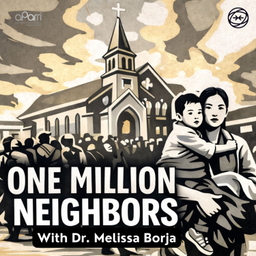
One Million Neighbors w/ Dr. Melissa Borja
Claim This Podcastby Axis Mundi Media + IRMCE
Podcast Overview
<p>One Million Neighbors is a limited podcast series about how American faith communities mobilized to do the impossible: resettling more than a million Southeast Asian refugees, in the face of widespread hostility toward migrants.</p><p><span>Dr. Melissa Borja is </span><a href="https://lsa.umich.edu/ac/people/faculty/mborja.html" rel="nofollow">Associate Professor</a><span> of American Culture and Director of the Asian/Pacific Islander American Studies at the University of Michigan. Trained at Harvard, the University of Chicago, and Columbia, she is a historian of migration, religion, race, and politics and author of </span><a href="https://www.hup.harvard.edu/books/9780674989788" rel="nofollow">Follow the New Way: American Refugee Resettlement Policy and Hmong Religious Change</a><span> (Harvard University Press), which won the </span><span>Thomas Wilson Memorial Prize, the Frank S. and Elizabeth D. Brewer Prize from the American Society of Church History, and the Outstanding Achievement Award in History from the Association for Asian American Studies</span><span>. Dr. Borja has advised Princeton's </span><a href="https://www.rfmi.princeton.edu/" rel="nofollow">Religion and Forced Migration Initiative</a><span> and </span><a href="https://bridgingdivides.princeton.edu/" rel="nofollow">Bridging Divides Initiative</a><span>. An expert on anti-Asian racism during the Covid-19 pandemic, she leads the </span><a href="https://virulenthate.org/" rel="nofollow">Virulent Hate Project</a><span> and has contributed research to Stop AAPI Hate. She is a co-founder of </span><a href="https://hoosieraap.org/" rel="nofollow">Hoosier Asian American Power</a><span> and has been active in faith-based refugee resettlement efforts in Indianapolis, where she lives with her family. In honor of her research and advocacy about Asian Americans, USA Today honored her as one of its 2022 Women of the Year.</span></p><p>This podcast is part of AAPI Stories of Faith & Life, an Asian Pacific American Religions Research Initiative (APARRI) project funded by Lilly Endowment Incorporated. </p><p><a href="http://www.aparri.org" rel="nofollow">www.aparri.org</a></p>
Language
🇺🇲
Publishing Since
3/24/2026
1 verified contact email on file for One Million Neighbors w/ Dr. Melissa Borja
Pitch yourself as a guest, propose sponsorships, or reach out directly to the host.
Recent Episodes
April 16, 2026
006: Legacies
<p>In this final episode of One Million Neighbors from Axis Mundi Media, the story comes full circle—linking the refugee resettlement efforts of the 1970s and 80s to present-day struggles over immigration, enforcement, and community resistance. Centered on voices like Reverend Ashley Horan in Minneapolis, the episode captures a moment of moral urgency as neighbors organize to protect one another in the face of ICE raids, detention, and violence. Faith communities, once partners with the government in resettlement, now often stand in opposition, forming networks of mutual aid, direct action, and solidarity. The question that has echoed throughout the series returns with new force: in moments of crisis, who do we choose to be?</p><p>At the same time, Legacies highlights how the children of refugees are carrying forward the values planted decades earlier. Through stories like Don Hua’s activism and Phimmasone Owens’ refugee-led community garden, the episode shows how acts of welcome can ripple across generations, shaping identities and commitments to justice. These are the fruits of earlier choices—evidence that hospitality can grow into leadership, resilience, and care for others. As the series concludes, it leaves listeners with a challenge: the legacy of “one million neighbors” is still being written, and the responsibility to protect, include, and stand with the vulnerable now belongs to all of us.</p><p><br></p><p>Dr. Melissa Borja is <a href="https://lsa.umich.edu/ac/people/faculty/mborja.html" rel="nofollow">Associate Professor</a> of American Culture and Director of the Asian/Pacific Islander American Studies at the University of Michigan. Trained at Harvard, the University of Chicago, and Columbia, she is a historian of migration, religion, race, and politics and author of <a href="https://www.hup.harvard.edu/books/9780674989788" rel="nofollow">Follow the New Way: American Refugee Resettlement Policy and Hmong Religious Change</a> (Harvard University Press), which won the Thomas Wilson Memorial Prize, the Frank S. and Elizabeth D. Brewer Prize from the American Society of Church History, and the Outstanding Achievement Award in History from the Association for Asian American Studies. Dr. Borja has advised Princeton's <a href="https://www.rfmi.princeton.edu/" rel="nofollow">Religion and Forced Migration Initiative</a> and <a href="https://bridgingdivides.princeton.edu/" rel="nofollow">Bridging Divides Initiative</a>. An expert on anti-Asian racism during the Covid-19 pandemic, she leads the <a href="https://virulenthate.org/" rel="nofollow">Virulent Hate Project</a> and has contributed research to Stop AAPI Hate. She is a co-founder of <a href="https://hoosieraap.org/" rel="nofollow">Hoosier Asian American Power</a> and has been active in faith-based refugee resettlement efforts in Indianapolis, where she lives with her family. In honor of her research and advocacy about Asian Americans, USA Today honored her as one of its 2022 Women of the Year.</p><p><br></p><p>One Million Neighbors is brought to you by Apari, the Asian Pacific American Religions Research Initiative. It's part of the Under Gods Project funded by the Henry Luce Foundation and the AAPI Stories of Faith and Life Project funded by the Lilly Endowment Incorporated. </p><p><br></p><p><a href="http://www.aparri.org/" rel="nofollow">www.aparri.org</a></p><p>www.axismundi.us</p><p><br></p><p>Executive Producer: Dr. Bradley Onishi</p><p>Producer: Andrew Gill</p><p>Original Music, Composition, and Mixing: Scott Okamoto</p><p>Production Assistance: Kari Onishi</p>
April 16, 2026
005: Bridges
<p>Bridges is ultimately about what it takes to move beyond fear into relationship. From cultural education guides to shared meals, from Lutheran congregations hosting Buddhist monks to volunteers participating in Hmong rituals, the episode highlights the messy, human work of building trust across deep differences. The story of Diane Anderson and First Lutheran Church in St. Paul embodies this shift—from uncertainty to friendship—showing how proximity, humility, and sustained contact can transform strangers into neighbors. In a moment when refugees were often treated as outsiders or threats, these communities modeled a different vision: one where pluralism is practiced, not just preached, and where hospitality becomes a force powerful enough to reshape both individuals and the nation.</p><p>Through the story of the Hiawatha Valley Farm Cooperative in Winona, Minnesota, we hear how fear, misinformation, and racialized anxiety shaped local resistance to Southeast Asian refugees—especially Hmong families who had been U.S. allies during wartime. Yet even amid protests and hostility, churches and faith communities stepped into the breach, not just as service providers but as moral actors, framing resettlement as a theological commitment to “love thy neighbor” in the face of public backlash.</p><p><br></p><p>Dr. Melissa Borja is <a href="https://lsa.umich.edu/ac/people/faculty/mborja.html" rel="nofollow">Associate Professor</a> of American Culture and Director of the Asian/Pacific Islander American Studies at the University of Michigan. Trained at Harvard, the University of Chicago, and Columbia, she is a historian of migration, religion, race, and politics and author of <a href="https://www.hup.harvard.edu/books/9780674989788" rel="nofollow">Follow the New Way: American Refugee Resettlement Policy and Hmong Religious Change</a> (Harvard University Press), which won the Thomas Wilson Memorial Prize, the Frank S. and Elizabeth D. Brewer Prize from the American Society of Church History, and the Outstanding Achievement Award in History from the Association for Asian American Studies. Dr. Borja has advised Princeton's <a href="https://www.rfmi.princeton.edu/" rel="nofollow">Religion and Forced Migration Initiative</a> and <a href="https://bridgingdivides.princeton.edu/" rel="nofollow">Bridging Divides Initiative</a>. An expert on anti-Asian racism during the Covid-19 pandemic, she leads the <a href="https://virulenthate.org/" rel="nofollow">Virulent Hate Project</a> and has contributed research to Stop AAPI Hate. She is a co-founder of <a href="https://hoosieraap.org/" rel="nofollow">Hoosier Asian American Power</a> and has been active in faith-based refugee resettlement efforts in Indianapolis, where she lives with her family. In honor of her research and advocacy about Asian Americans, USA Today honored her as one of its 2022 Women of the Year.</p><p><br></p><p><br></p><p>One Million Neighbors is brought to you by Apari, the Asian Pacific American Religions Research Initiative. It's part of the Under Gods Project funded by the Henry Luce Foundation and the AAPI Stories of Faith and Life Project funded by the Lilly Endowment Incorporated. </p><p><br></p><p><a href="http://www.aparri.org/" rel="nofollow">www.aparri.org</a></p><p>www.axismundi.us</p><p><br></p><p>Executive Producer: Dr. Bradley Onishi</p><p>Producer: Andrew Gill</p><p>Original Music, Composition, and Mixing: Scott Okamoto</p><p>Production Assistance: Kari Onishi</p>
April 16, 2026
004: Terror
<p>In this episode of One Million Neighbors from Axis Mundi Media, the realities of anti-refugee violence come into sharp focus through the story of Linda Nguyen, who arrived in Oregon as a child after the fall of Saigon. What should have been a new beginning was instead marked by harassment, isolation, and confusion, as she and other Southeast Asian refugees became targets of blame and resentment. From playground bullying to brutal persecution across communities in California and Texas, the episode traces how the aftermath of the Vietnam War, economic anxiety, and long-standing anti-Asian racism fueled a wave of hostility—sometimes erupting into deadly attacks and organized terror, including campaigns led by the Ku Klux Klan.</p><p><br></p><p>Yet even amid fear and injustice, Terror highlights the resilience of refugee communities and the importance of resistance. Stories like the Vietnamese Fishermen’s Association’s legal victory against the Klan reveal how refugees and their allies fought back using the tools of the American legal system. The episode also draws connections to the present, reminding listeners that anti-immigrant violence and fear continue to shape lives today. Ultimately, it raises urgent questions about responsibility, belonging, and moral courage: in a nation defined by both welcome and exclusion, what does it mean to stand with those who are most vulnerable—and what kind of society will we choose to become?</p><p><br></p><p>Dr. Melissa Borja is <a href="https://lsa.umich.edu/ac/people/faculty/mborja.html" rel="nofollow">Associate Professor</a> of American Culture and Director of the Asian/Pacific Islander American Studies at the University of Michigan. Trained at Harvard, the University of Chicago, and Columbia, she is a historian of migration, religion, race, and politics and author of <a href="https://www.hup.harvard.edu/books/9780674989788" rel="nofollow">Follow the New Way: American Refugee Resettlement Policy and Hmong Religious Change</a> (Harvard University Press), which won the Thomas Wilson Memorial Prize, the Frank S. and Elizabeth D. Brewer Prize from the American Society of Church History, and the Outstanding Achievement Award in History from the Association for Asian American Studies. Dr. Borja has advised Princeton's <a href="https://www.rfmi.princeton.edu/" rel="nofollow">Religion and Forced Migration Initiative</a> and <a href="https://bridgingdivides.princeton.edu/" rel="nofollow">Bridging Divides Initiative</a>. An expert on anti-Asian racism during the Covid-19 pandemic, she leads the <a href="https://virulenthate.org/" rel="nofollow">Virulent Hate Project</a> and has contributed research to Stop AAPI Hate. She is a co-founder of <a href="https://hoosieraap.org/" rel="nofollow">Hoosier Asian American Power</a> and has been active in faith-based refugee resettlement efforts in Indianapolis, where she lives with her family. In honor of her research and advocacy about Asian Americans, USA Today honored her as one of its 2022 Women of the Year.</p><p><br></p><p><br></p><p>One Million Neighbors is brought to you by Apari, the Asian Pacific American Religions Research Initiative. It's part of the Under Gods Project funded by the Henry Luce Foundation and the AAPI Stories of Faith and Life Project funded by the Lilly Endowment Incorporated. </p><p><br></p><p><a href="http://www.aparri.org/" rel="nofollow">www.aparri.org</a></p><p>www.axismundi.us</p><p><br></p><p>Executive Producer: Dr. Bradley Onishi</p><p>Producer: Andrew Gill</p><p>Original Music, Composition, and Mixing: Scott Okamoto</p><p>Production Assistance: Kari Onishi</p>
7 total episodes available
Deep-dive analytics for One Million Neighbors w/ Dr. Melissa Borja
Frequently asked questions
Have a different question and can't find the answer you're looking for? Reach out to our support team by sending us an email and we'll get back to you as soon as we can.
- What is One Million Neighbors w/ Dr. Melissa Borja?
<p>One Million Neighbors is a limited podcast series about how American faith communities mobilized to do the impossible: resettling more than a million Southeast Asian refugees, in the face of widespread hostility toward migrants.</p><p><span>Dr. Melissa Borja is </span><a href="https://lsa.umich.edu/ac/people/faculty/mborja.html" rel="nofollow">Associate Professor</a><span> of American Culture and Director of the Asian/Pacific Islander American Studies at the University of Michigan. Trained at Harvard, the University of Chicago, and Columbia, she is a historian of migration, religion, race, and politics and author of </span><a href="https://www.hup.harvard.edu/books/9780674989788" rel="nofollow">Follow the New Way: American Refugee Resettlement Policy and Hmong Religious Change</a><span> (Harvard University Press), which won the </span><span>Thomas Wilson Memorial Prize, the Frank S. and Elizabeth D. Brewer Prize from the American Society of Church History, and the Outstanding Achievement Award in History from the Association for Asian American Studies</span><span>. Dr. Borja has advised Princeton's </span><a href="https://www.rfmi.princeton.edu/" rel="nofollow">Religion and Forced Migration Initiative</a><span> and </span><a href="https://bridgingdivides.princeton.edu/" rel="nofollow">Bridging Divides Initiative</a><span>. An expert on anti-Asian racism during the Covid-19 pandemic, she leads the </span><a href="https://virulenthate.org/" rel="nofollow">Virulent Hate Project</a><span> and has contributed research to Stop AAPI Hate. She is a co-founder of </span><a href="https://hoosieraap.org/" rel="nofollow">Hoosier Asian American Power</a><span> and has been active in faith-based refugee resettlement efforts in Indianapolis, where she lives with her family. In honor of her research and advocacy about Asian Americans, USA Today honored her as one of its 2022 Women of the Year.</span></p><p>This podcast is part of AAPI Stories of Faith & Life, an Asian Pacific American Religions Research Initiative (APARRI) project funded by Lilly Endowment Incorporated. </p><p><a href="http://www.aparri.org" rel="nofollow">www.aparri.org</a></p> - How often does this podcast release new episodes?
This podcast updates daily.
- Where can I listen to this podcast?
This podcast is available on 4 platforms including Apple Podcasts, Spotify, and more. You can also use the RSS feed directly.
- Does this podcast accept guests?
Information about guest appearances is not available.
Legal Disclaimer
Pod Engine is not affiliated with, endorsed by, or officially connected with any of the podcasts displayed on this platform. We operate independently as a podcast discovery and analytics service.
All podcast artwork, thumbnails, and content displayed on this page are the property of their respective owners and are protected by applicable copyright laws. This includes, but is not limited to, podcast cover art, episode artwork, show descriptions, episode titles, transcripts, audio snippets, and any other content originating from the podcast creators or their licensors.
We display this content under fair use principles and/or implied license for the purpose of podcast discovery, information, and commentary. We make no claim of ownership over any podcast content, artwork, or related materials shown on this platform. All trademarks, service marks, and trade names are the property of their respective owners.
While we strive to ensure all content usage is properly authorized, if you are a rights holder and believe your content is being used inappropriately or without proper authorization, please contact us immediately at hey@podengine.ai for prompt review and appropriate action, which may include content removal or proper attribution.
By accessing and using this platform, you acknowledge and agree to respect all applicable copyright laws and intellectual property rights of content owners. Any unauthorized reproduction, distribution, or commercial use of the content displayed on this platform is strictly prohibited.